We do not judge difficulty chewing by the shape of the denture alone.
- "Even with my dentures in, I can't chew properly."
- "It hurts when I bite, and I worry about them coming out."
- "However many times they're remade, they never feel right."
- "Will I be able to chew with complete dentures?"
This page is for people with concerns like these, and for their families.
Even when people find chewing similarly difficult,
the condition of their remaining teeth, the mucosa that supports the denture, the degree of bone resorption and the movement of the jaw differ from person to person.
At Yoshimi Dental Clinic, we also review your treatment history and plan denture treatment from the condition of the mouth as a whole.
What we value is this:
"Measure first. Then design the denture to suit the movement of the jaw and the tissues that support it."
That is our way of thinking.
We carry the examination data on skeletal structure and jaw movement into the position of the artificial teeth, the bite and the structure of the denture.
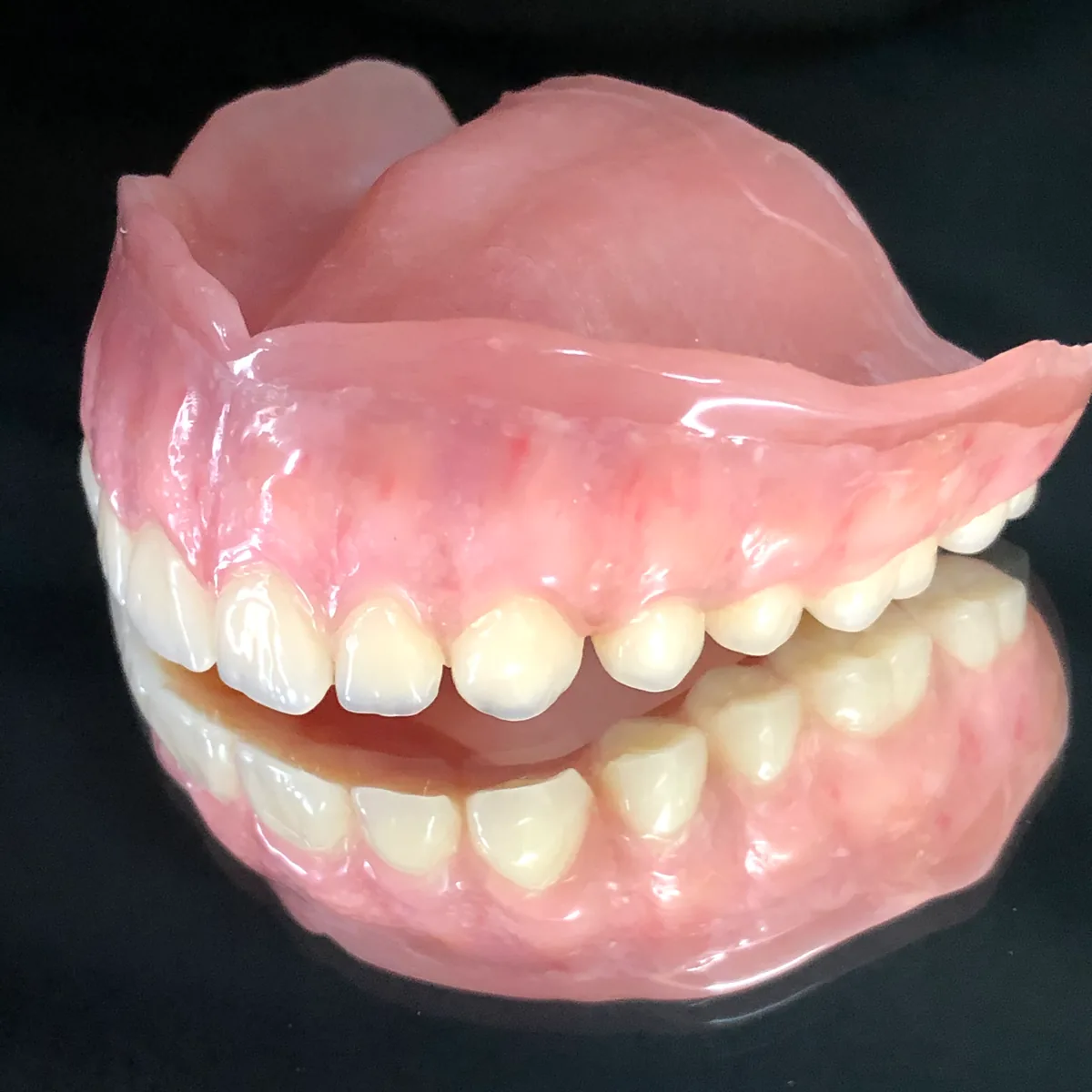
How we make dentures
- ①
Measure
We examine the skeletal structure, jaw movement, the remaining teeth and the condition of the mucosa.
We also look at how the teeth came to be lost and at any problems you have with your current dentures.
- ②
Design
Based on the examination results, we work out the relationship between the upper and lower jaws and the bite.
At the same time, we consider how forces will be transmitted to the teeth and mucosa that support the denture.
- ③
Build
We arrange the artificial teeth on the cast and shape the framework and the gums.
The director is involved in the design, fabrication and adjustment, checking the examination data throughout.
- ④
Verify
We check function and appearance with a provisional denture, then work out the final denture.
After the denture is fitted, we continue to check its condition and adjust it as needed.
- ⑤
Follow up
After the denture is made, we continue with adjustments, repairs and follow-up checks.
We care about both the state of the denture on the day it is completed and its state after continued use.
Do you have any of these concerns?
- Your dentures feel uncomfortable, or you are concerned about how they look
- When you use your dentures, your jaw also feels uncomfortable
- Since getting complete dentures, you are no longer sure how to chew
We look into concerns like these together with the current condition of your mouth and the treatment you have had so far.
Having these symptoms does not necessarily mean that the bite is the cause.
We start with examinations to find where the problem lies, whether in the teeth, the mucosa, the skeletal structure or the movement of the jaw, before considering how to treat it.
Why do we examine in detail, even for dentures?
The jaw moves even without teeth
Even in people with complete dentures, the jaw joints are moving.
Having no teeth does not mean there is no need to examine how the jaw moves.
When we make complete dentures too, we plan the bite based on data on the skeletal structure and jaw joints.
Orthodontics, TMD treatment and denture making differ in the appliances used and in what is made.
But they share the same basis of examination and diagnosis: examining the skeletal structure and jaw movement, and working out the bite from the results.
With dentures, we also take into account the properties of the mucosa and how far it is displaced when force is applied.
We also look at how the teeth were lost
Before making dentures, we examine why the teeth were lost.
We believe it is important to check several factors, such as biting force and the condition of the periodontal tissues, not only how well the teeth have been cleaned.
If any remaining teeth need treatment, that treatment is also included in the treatment plan.
Rather than deciding only the shape of the denture, we move on to fabrication after checking the condition of the mouth that will support it.
Measuring jaw movement
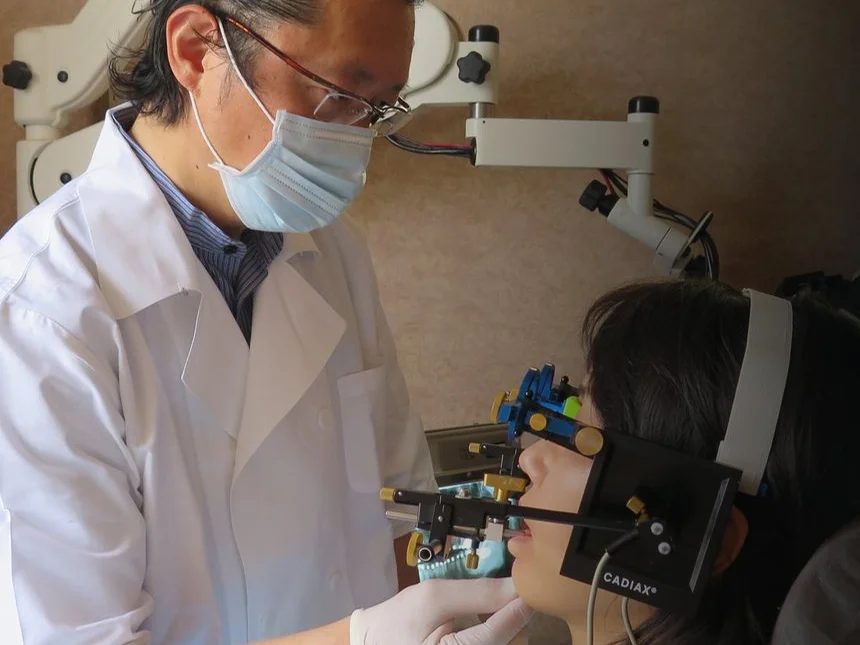
Cadiax
This device records, in three dimensions, how the left and right jaw joints move as the mouth opens and closes.
Movement that cannot be judged by appearance is checked as numerical data.
We use this information when planning the bite of the dentures.
What Cadiax can record is the movement of the jaw joints in a relaxed state, with the muscles at rest.
However, the force on the gums (mucosa) is completely different when you bite with the muscles relaxed and when you clench as hard as you can.
For this reason, we consider that making dentures requires records of both the relaxed state and the state under muscular force.
Examining the skeletal structure
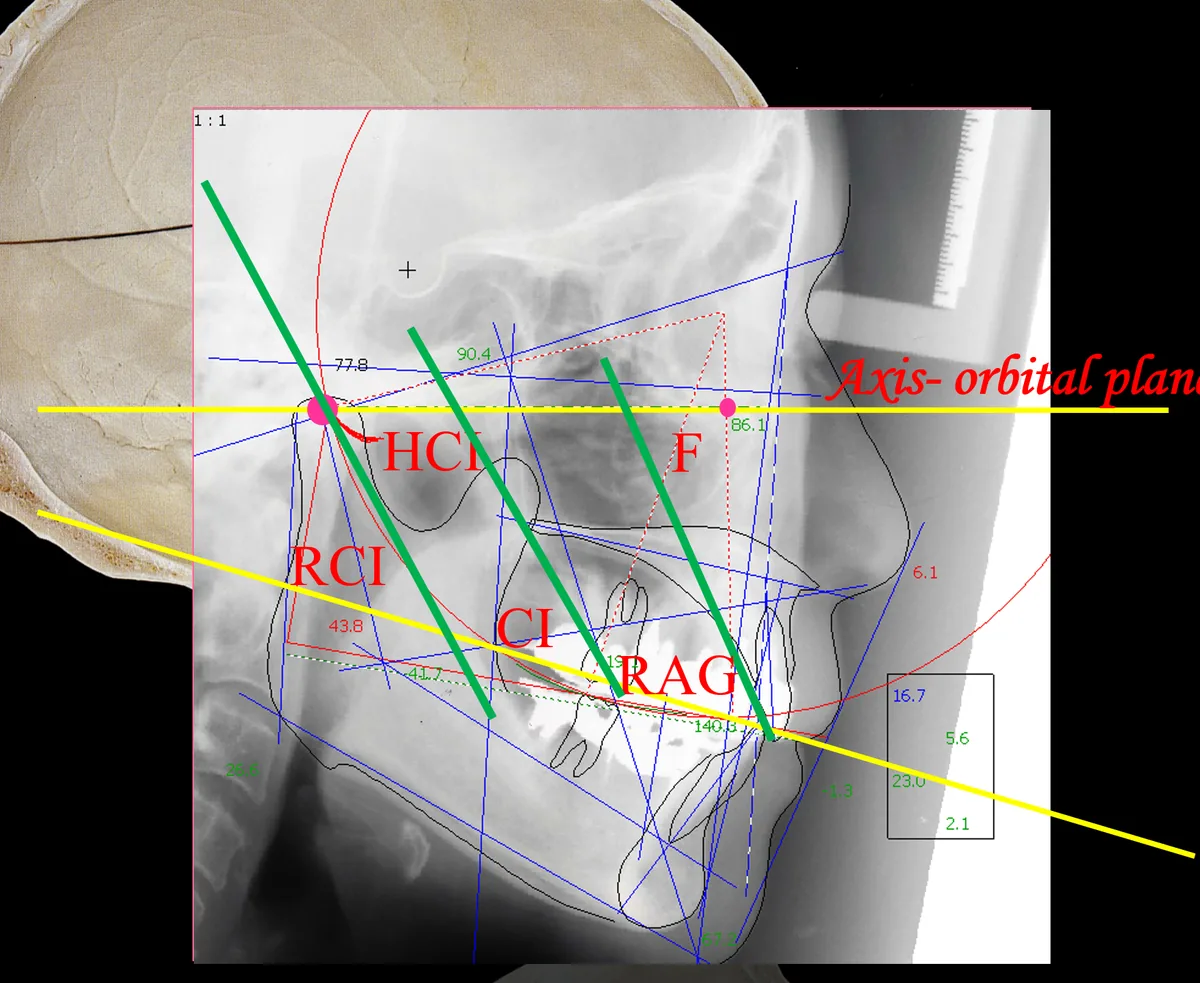
Lateral cephalogram
From an X-ray of the head taken from the side, we check points such as the relationship between the upper and lower jaws, facial height and the front-to-back position of the lower jaw.
Rather than looking only at where the teeth used to be, we examine the mouth starting from the skeleton that forms its foundation.
For dentures, we use it as information for working out the height between the upper and lower jaws and the orientation of the plane on which the artificial teeth are arranged.
In technical terms, the height between the upper and lower jaws when biting is called the "vertical dimension of occlusion", and the plane connecting the biting surfaces of the teeth is called the "occlusal plane".
Recording jaw movement under muscular force
Intraoral gothic arch tracing
The movement of the jaw joints under muscular force cannot be recorded with Cadiax.
So we use a method called intraoral gothic arch tracing to record the movement of the jaw joints at close to maximum muscular force.
We then design the denture by combining the jaw joint data recorded in this way, in both the relaxed state and under muscular force, with data on the mucosa.
Reproducing the measured information on dental casts
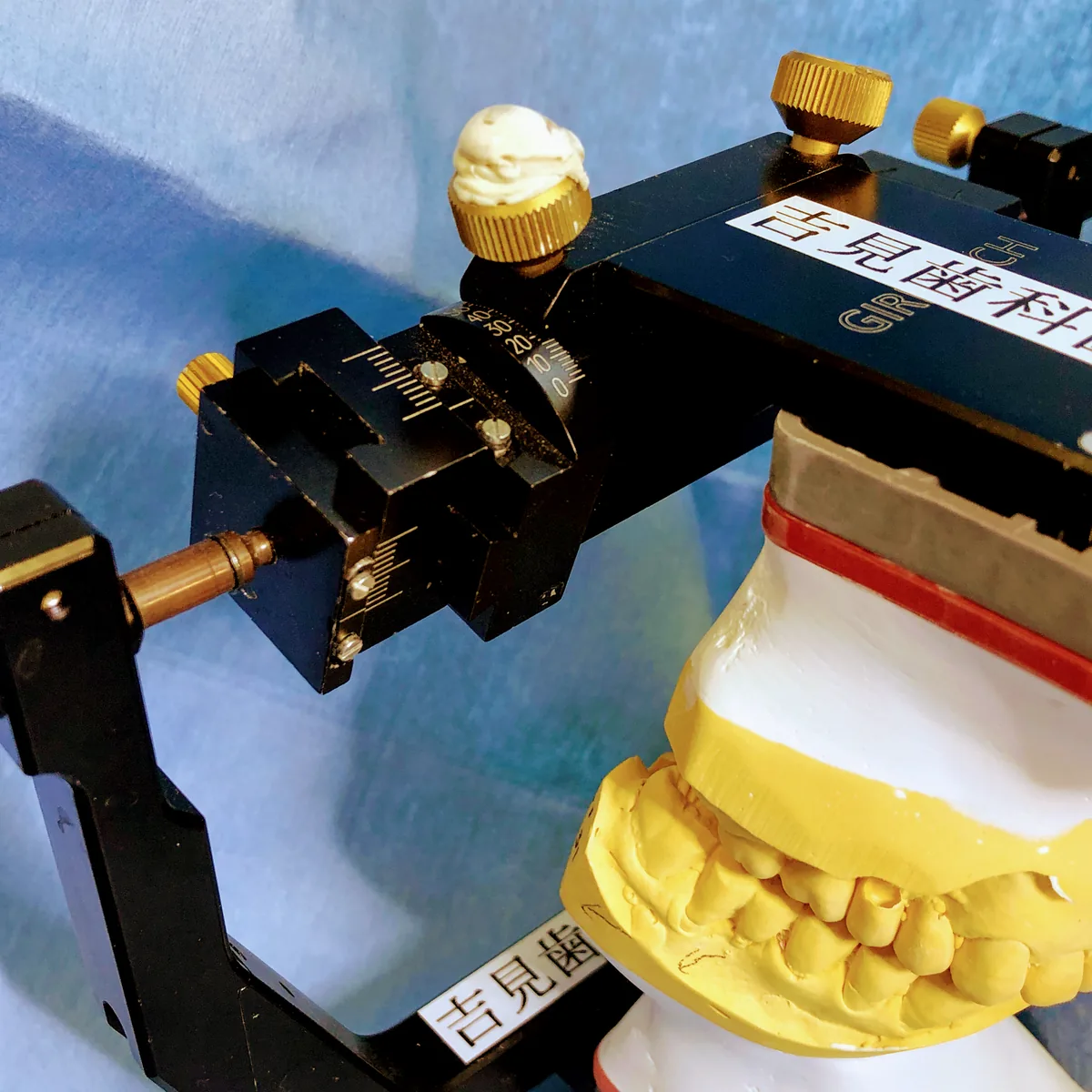
Girrbach Reference SL articulator
An articulator is a device that holds casts of the upper and lower mouth and reproduces the position and movement of the jaws in relation to each other.
We set it up with the patient's own data measured in the examination, and check the bite on the casts as well.
Based on the skeletal analysis and the jaw movement records, we work out the position of the artificial teeth and the inclination of their biting surfaces.
This step links the measured information to the shape of the denture to be made.
Examining the remaining teeth
For people who still have some of their own teeth, we also check the position and inclination of those teeth and how they make contact.
A sectioned cast is a cast of the dental arch divided into individual teeth, so that each tooth can be checked.
Examinations are chosen to suit the condition of your mouth.
We do not carry out the same full set of examinations uniformly for complete and partial dentures.
We explain which examinations are needed and what each one checks.
We carry the examination data into the shape of the denture
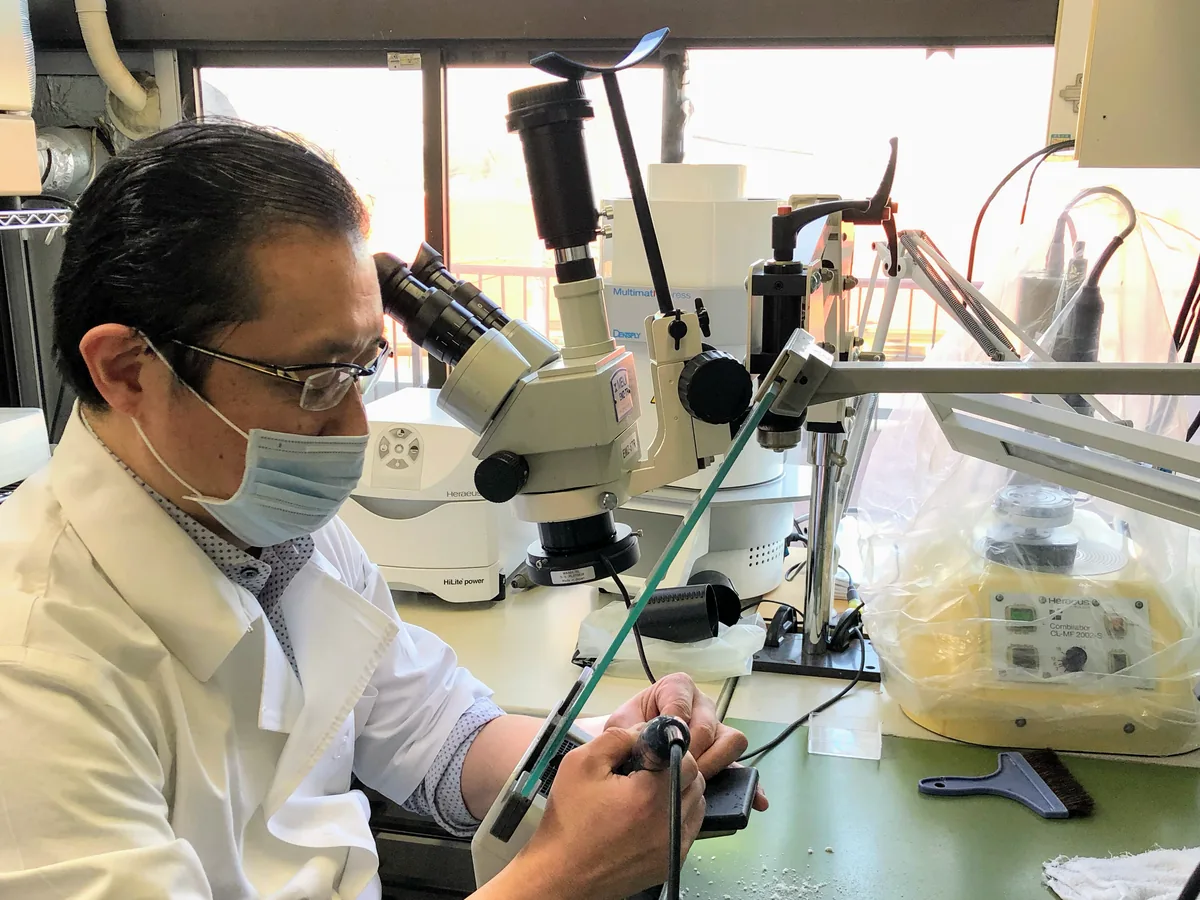
In our in-house dental laboratory, the director is involved in design and fabrication
Our clinic has a dental laboratory next to the treatment room.
The director is involved in the design, fabrication and adjustment of dentures, working from the examination results.
Why do this in-house?
Because we want information such as jaw movement, skeletal structure and the condition of the teeth and mucosa to be reflected in the shape of the denture.
We treat what we confirm in the examination and what we do in fabrication as one connected process.
Photos: fabrication steps
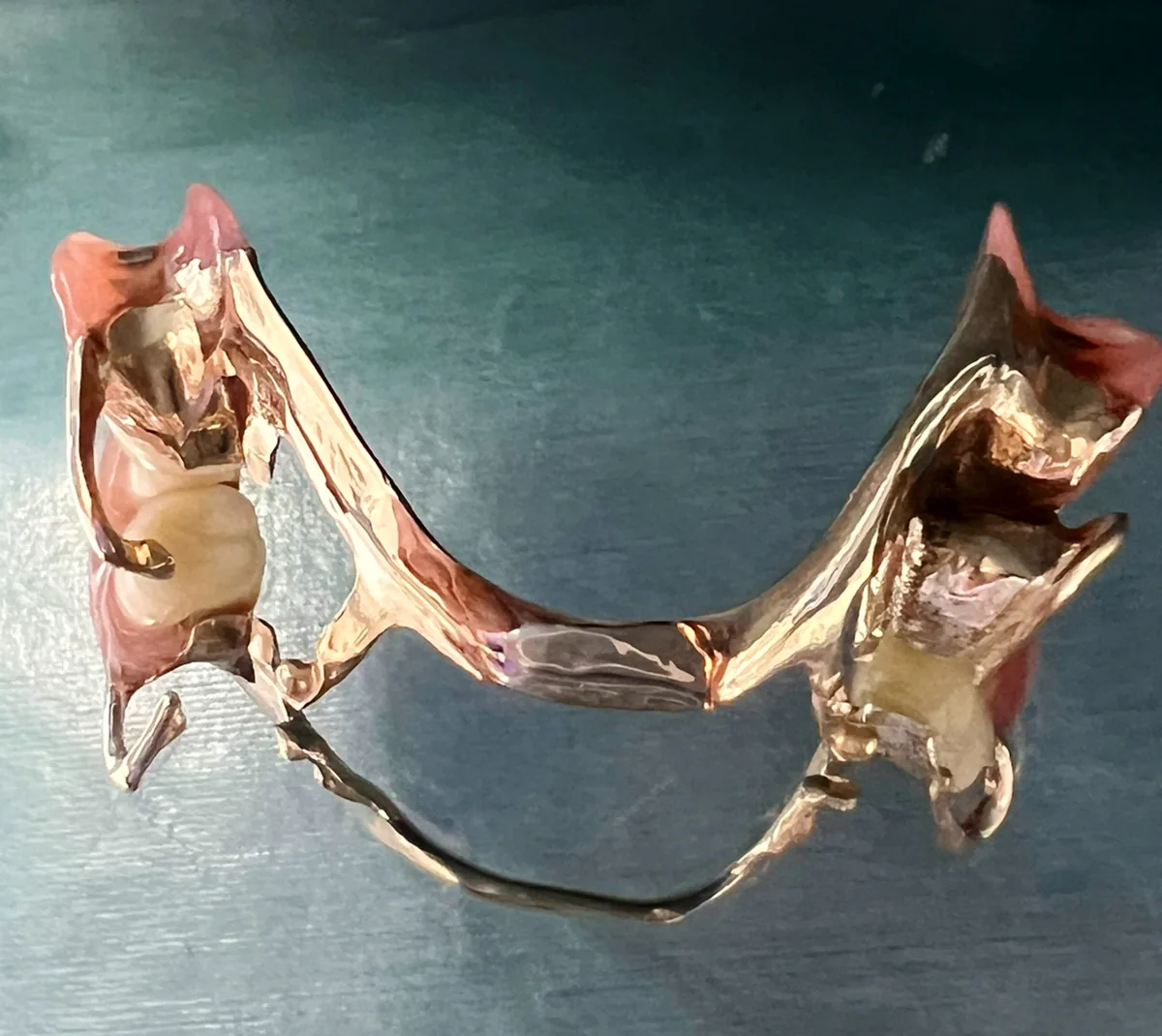
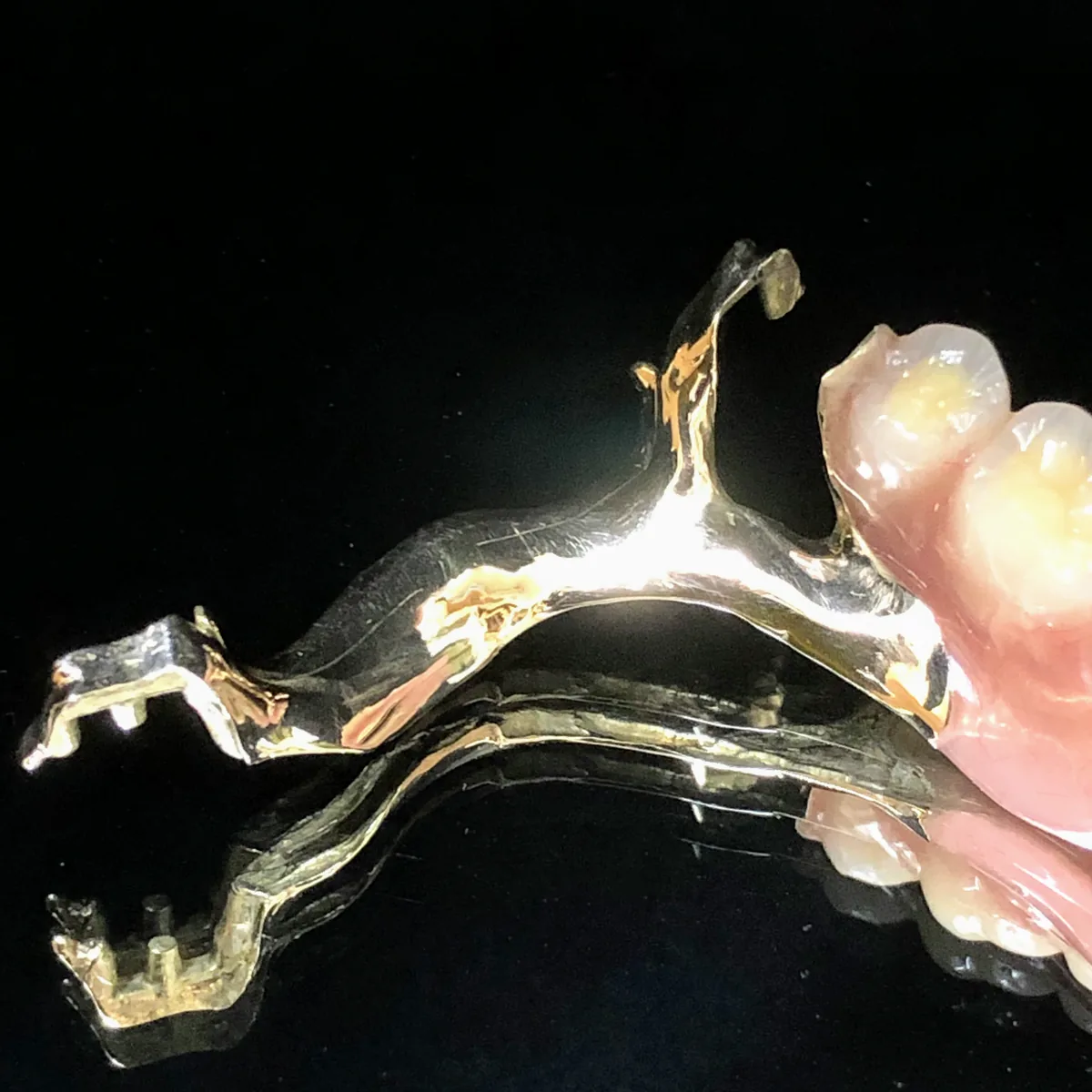
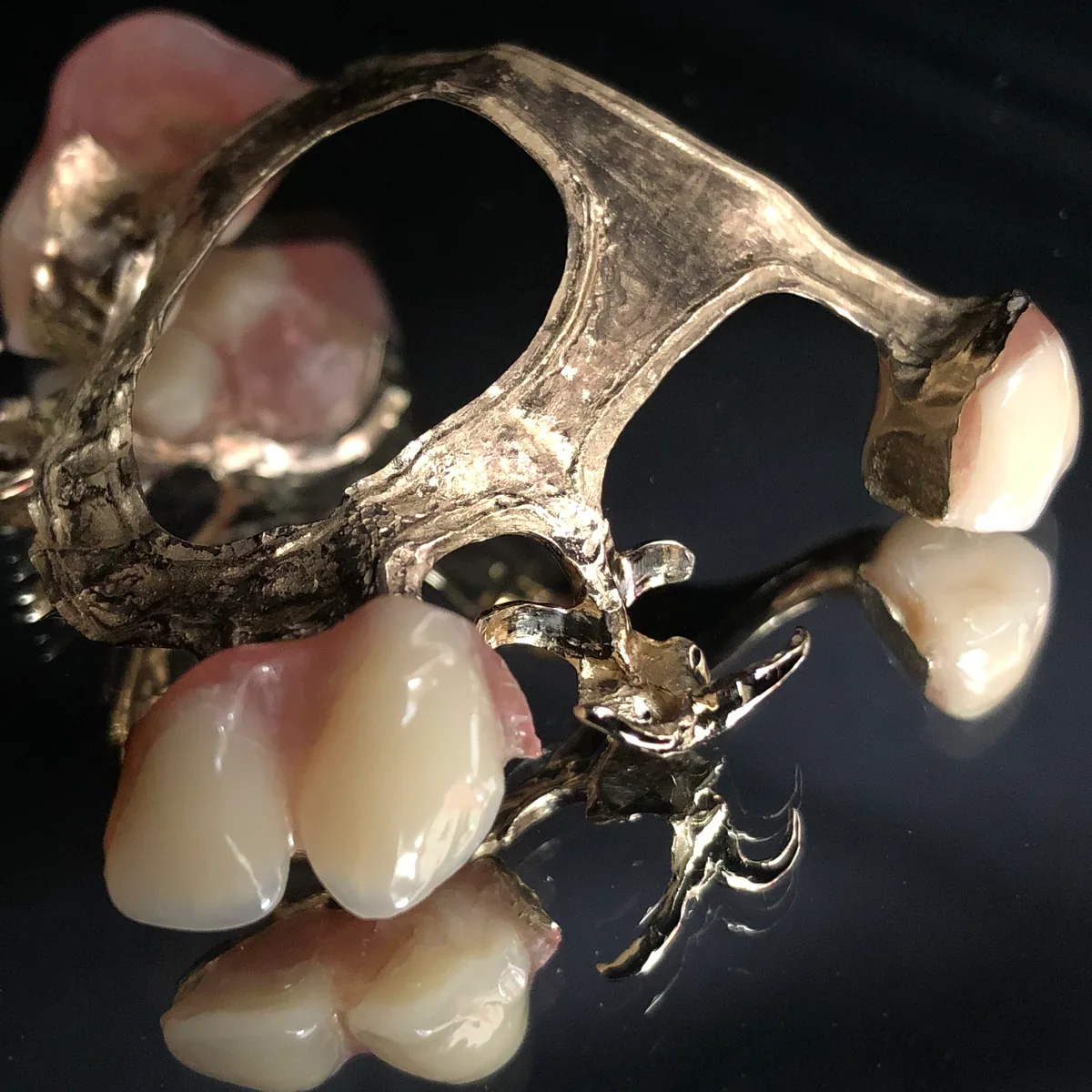
We design the framework from how forces are transmitted
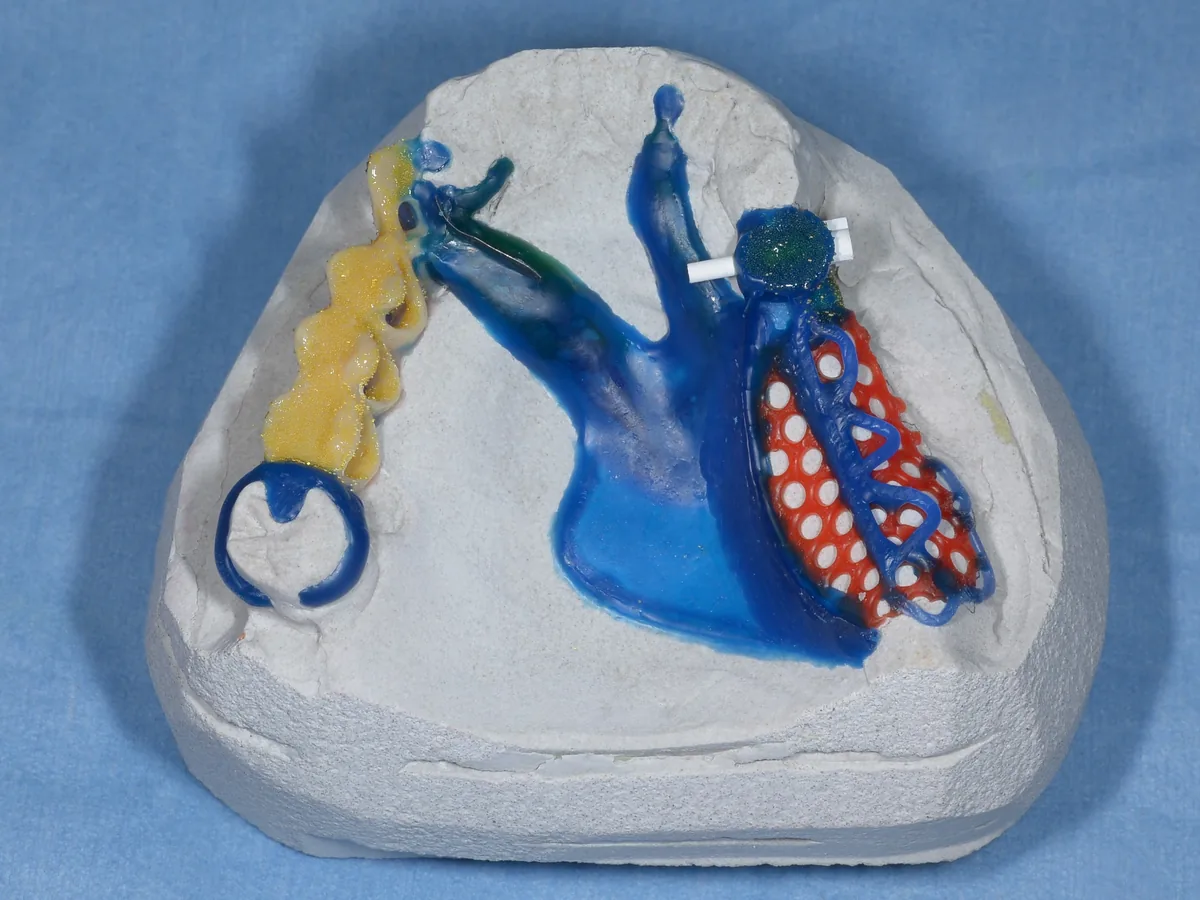
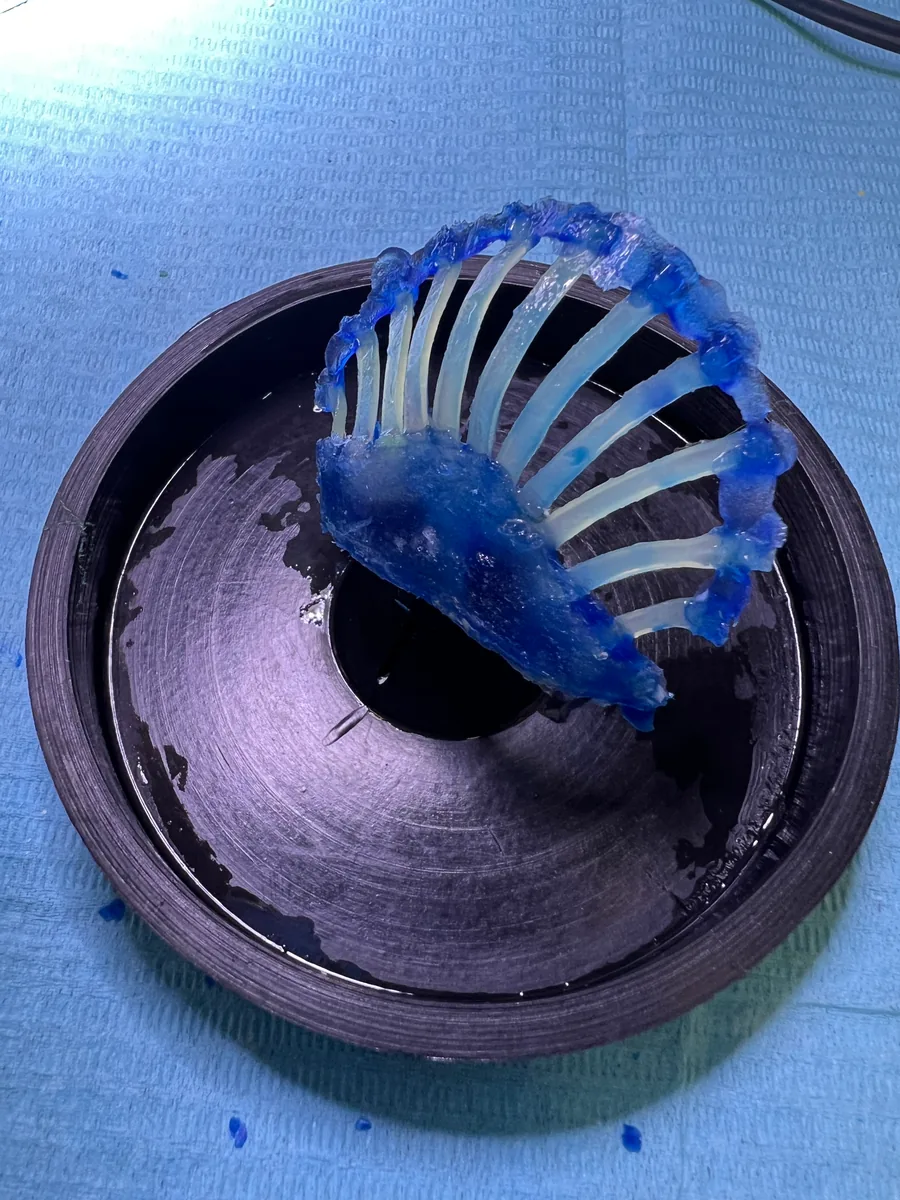
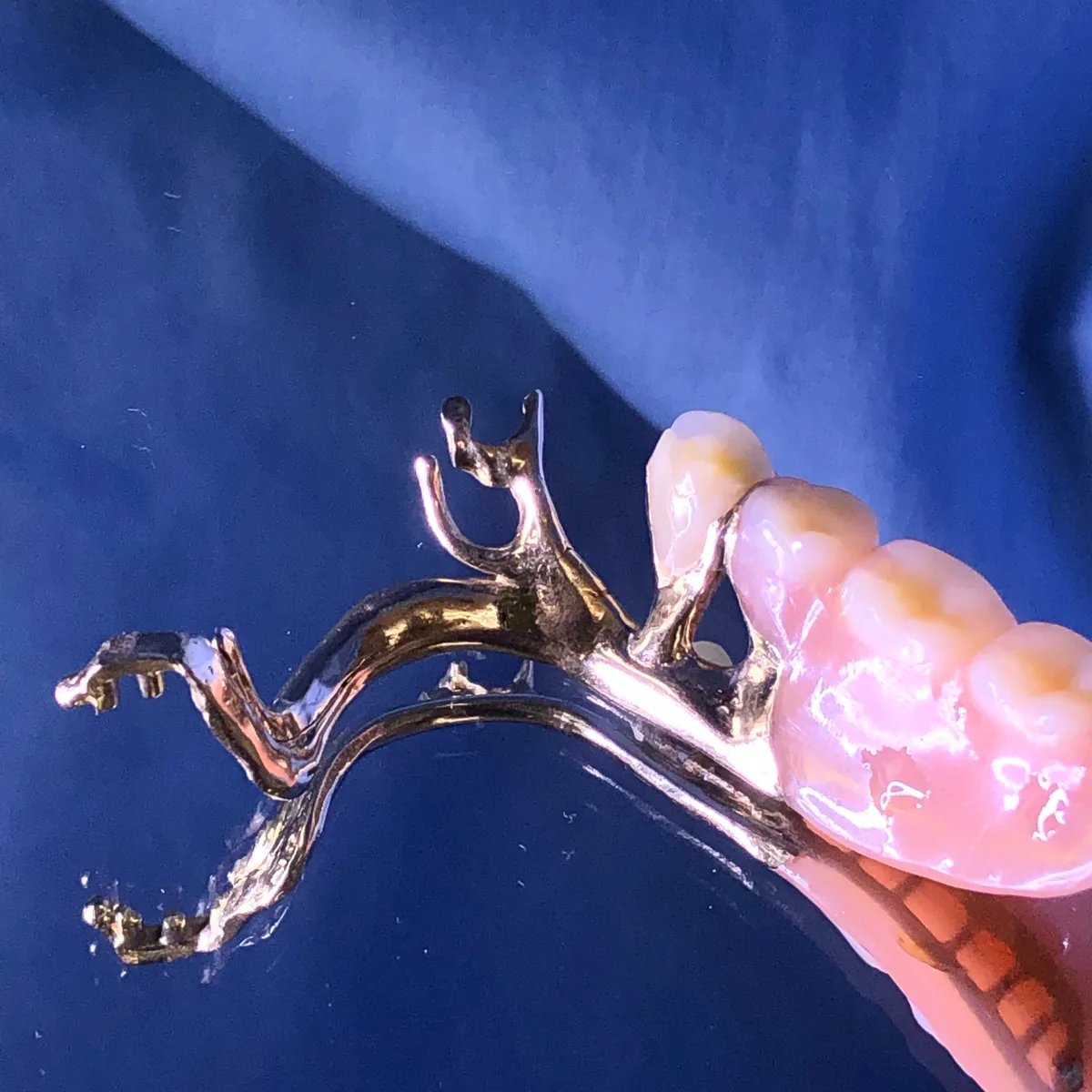
The framework is the part that forms the skeleton of the denture.
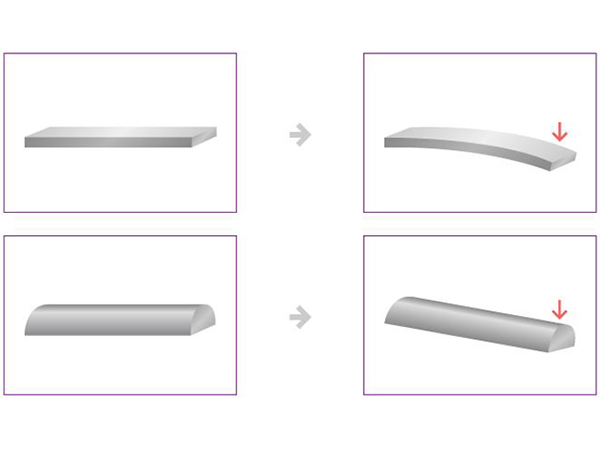
Even with the same material, changing the cross-sectional shape changes how easily it flexes.
A flat plate and a thicker, half-round cross-section behave differently when force is applied.
We design separately the parts that need rigidity to support the whole denture and the parts where we plan for movement to relieve force.
Rather than simply making it sturdy, we consider how the denture moves when you bite and where that force is transmitted.
Our design is based on the denture design concept of Professor Rudolf Slavicek of the University of Vienna.
It is a design concept based on analysis using the finite element method.
The finite element method divides a shape into small parts and calculates how it deforms and how force is distributed when a load is applied.
What matters to us here is considering the load on the teeth and tissues that support the denture.
Building on this design concept, we work out the framework to suit the condition of each person's teeth and mucosa.
Photos: metal frameworks
We take into account the different movement of teeth and mucosa
A partial denture is supported by the remaining teeth and by the mucosa where there are no teeth.
When biting force is applied, these two do not move by the same amount.
We design dentures with this difference in mind.
A tooth that supports a denture is called an "abutment tooth".
We consider forces that pull the tooth upward, tip it and push it, and work out a structure that keeps the load on it as low as possible.
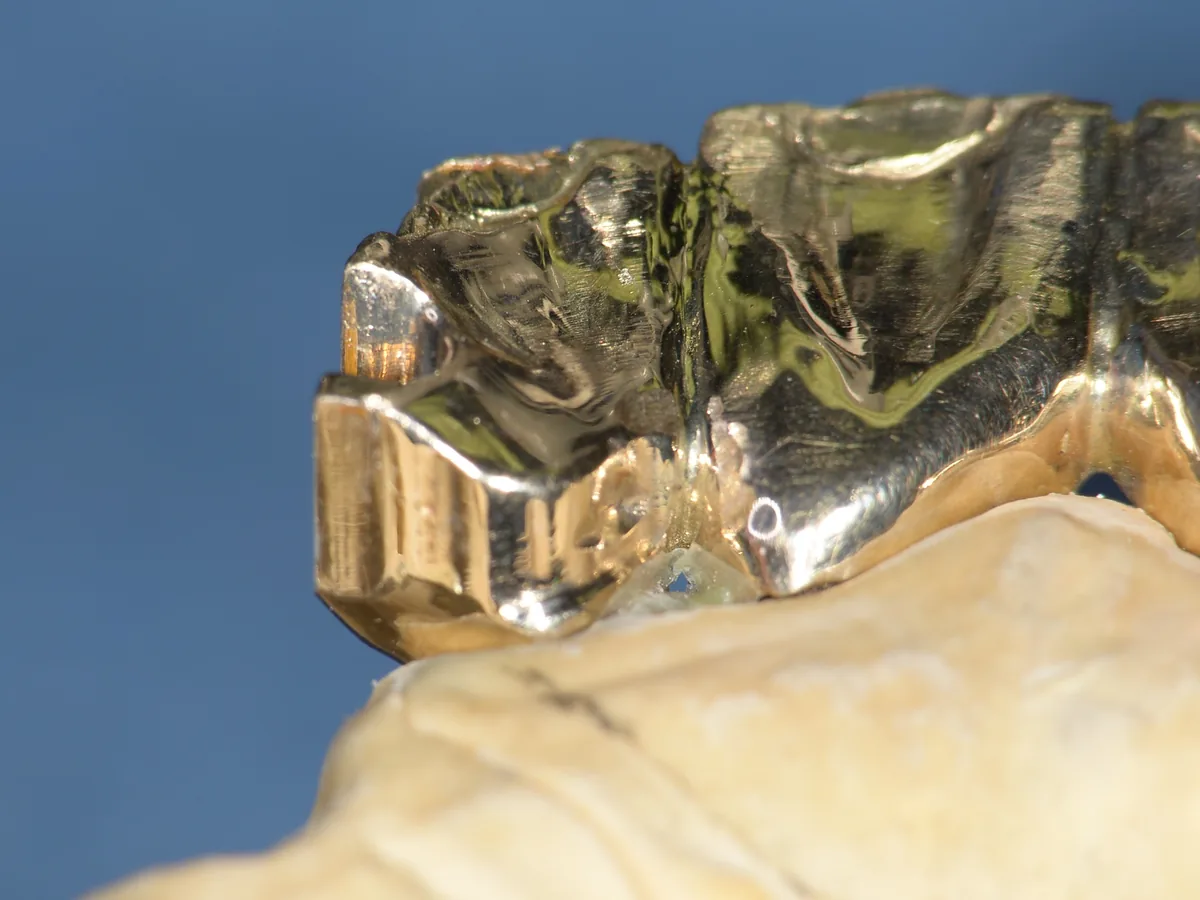
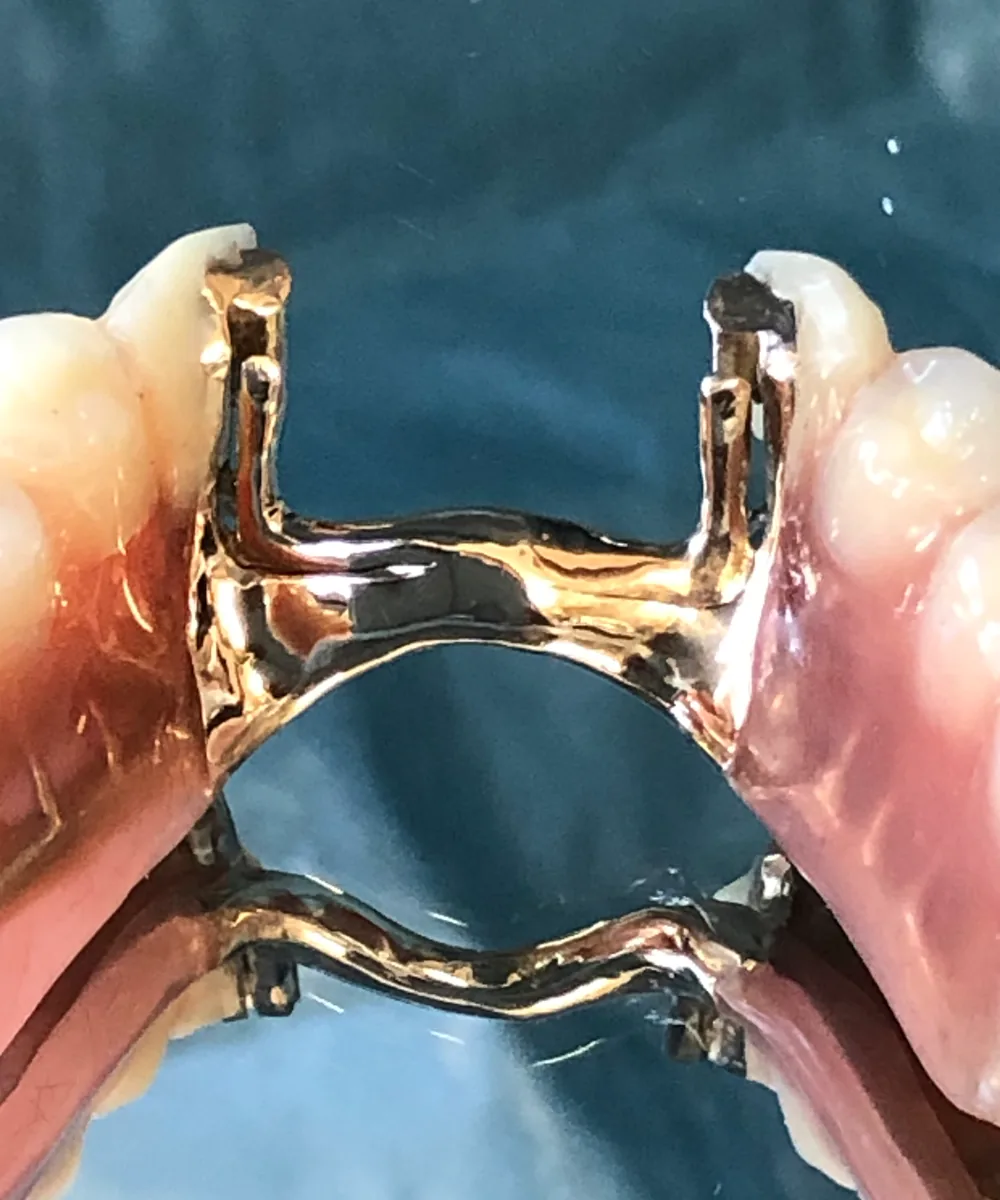
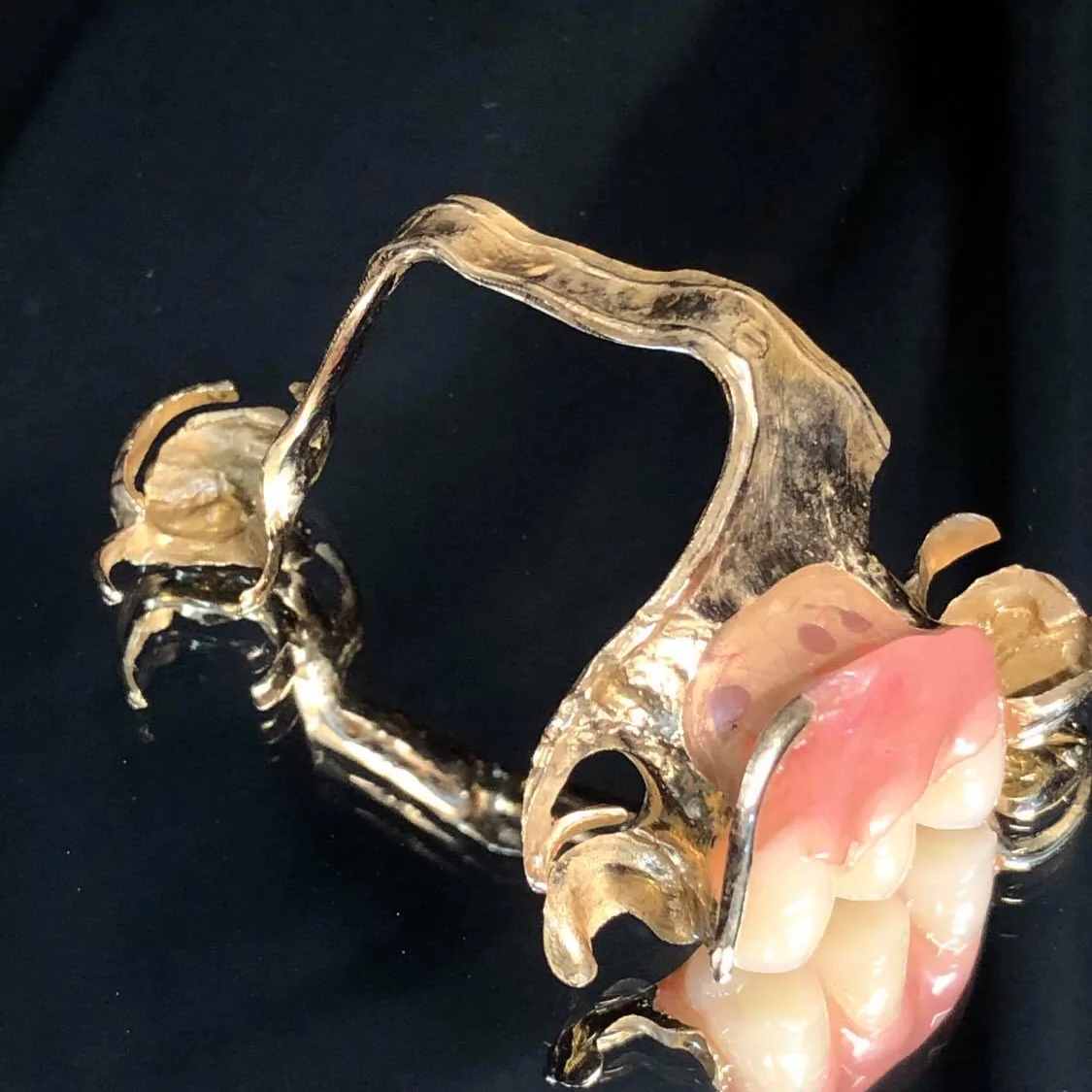
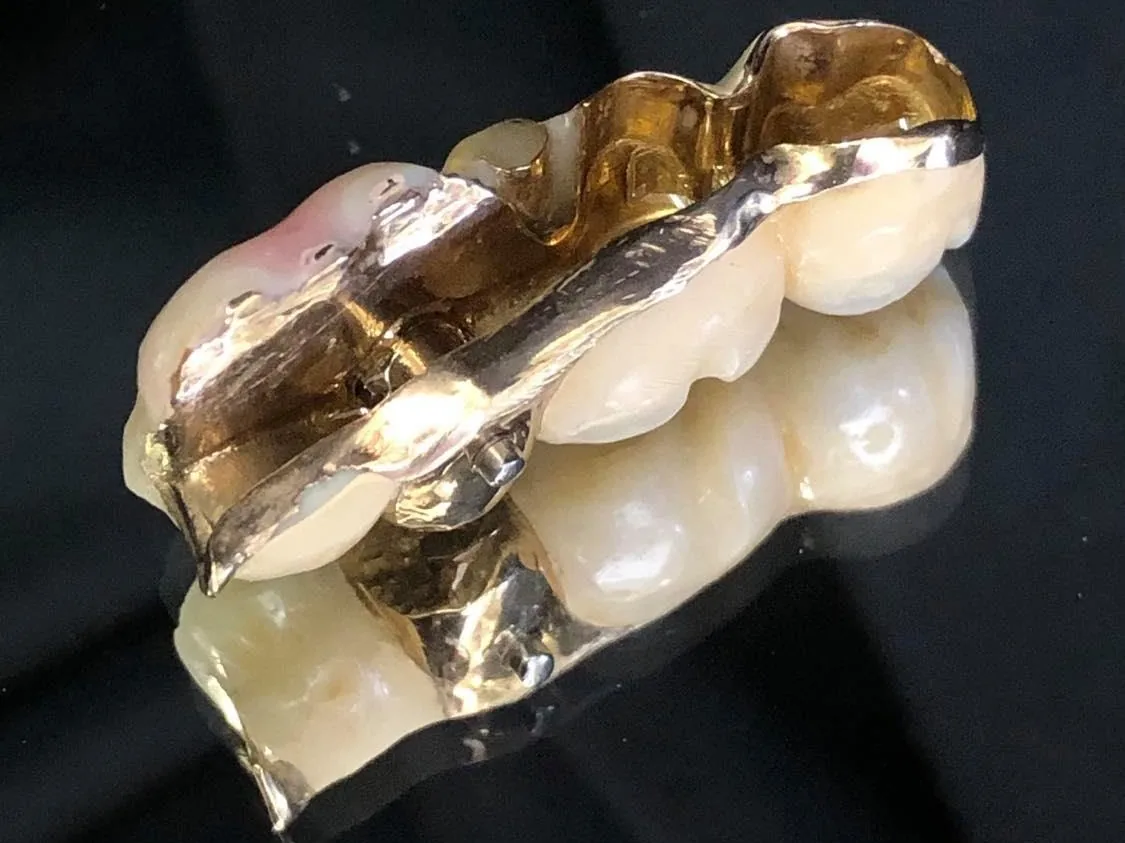
An attachment is a device that connects the denture to the parts that support it.
We use attachments to regulate how force is transmitted, in line with the movement of the supporting teeth and mucosa.
Which structure we use depends on the condition of the mouth.
Photos: attachments
The direction of insertion and removal is also adjusted during fabrication
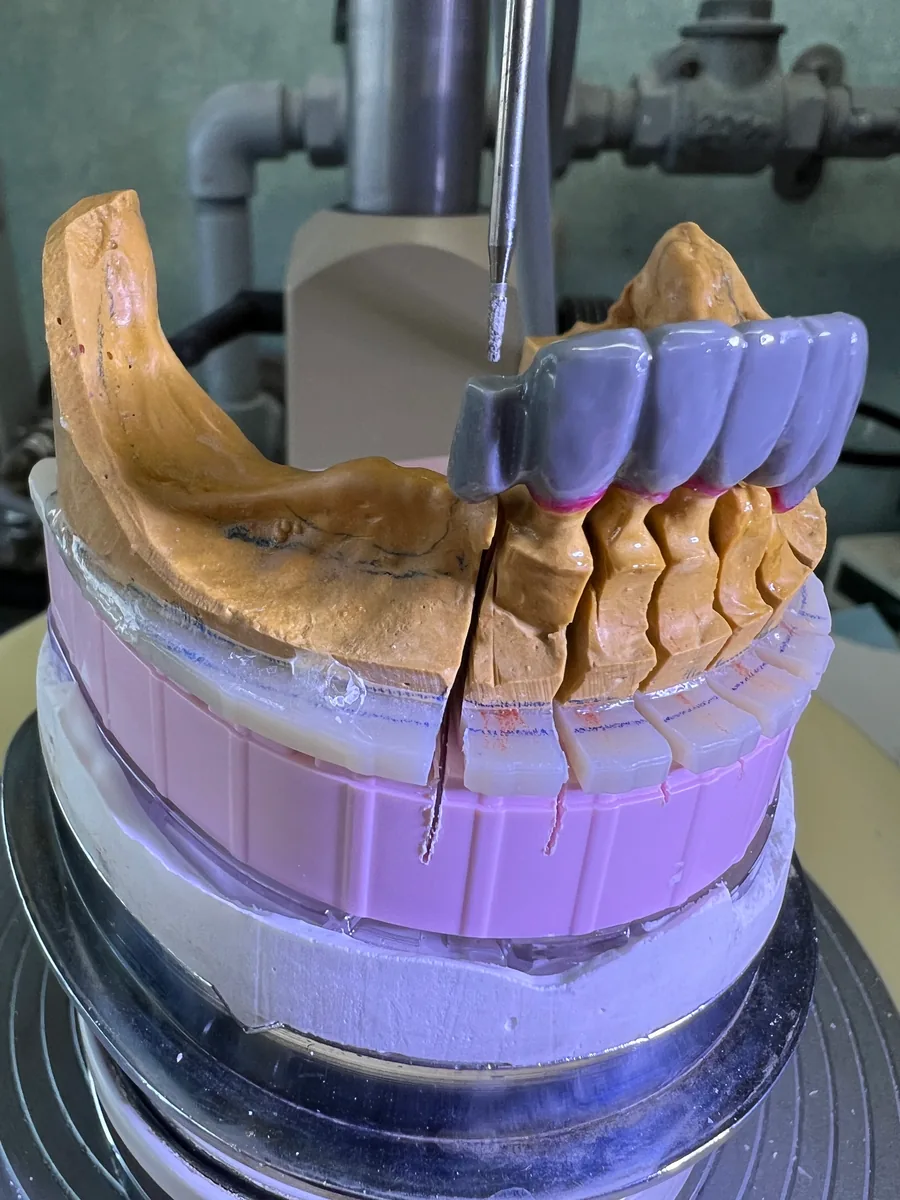
Dentures are something patients put in and take out themselves.
We take into account the direction in which the denture goes in and comes out, and how it feels to put in and take out.
During fabrication, we use a machining instrument called a milling machine to adjust the parallelism of the components.
We refine the shape with both its function when biting and daily insertion and removal in mind.
We choose materials and structure together
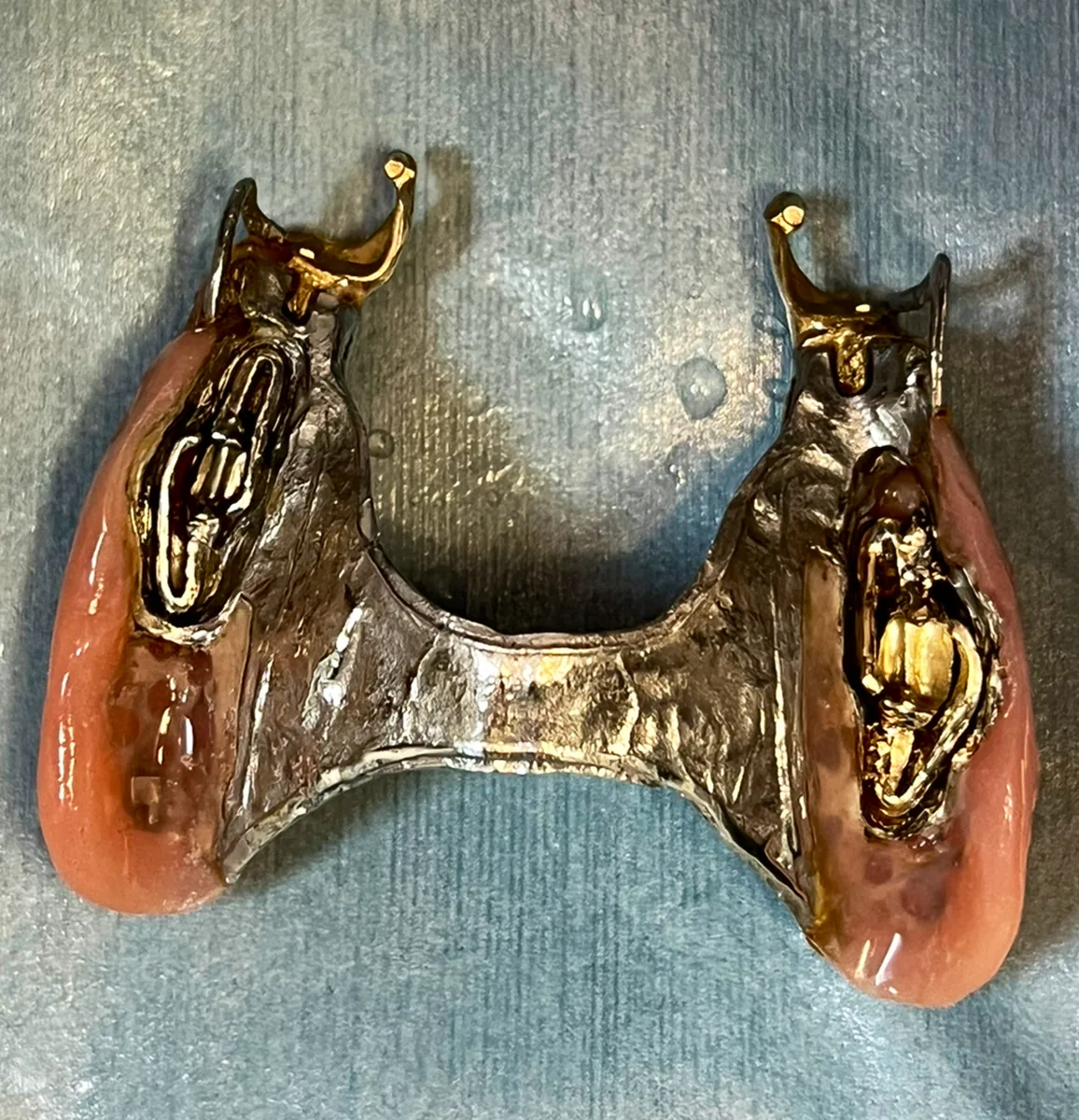
We make dentures using platinum-gold alloy, and frameworks that combine platinum-gold alloy with cobalt-chromium.
Rather than choosing a treatment by the name of the material alone, we consider it together with the shape needed and how forces are transmitted.
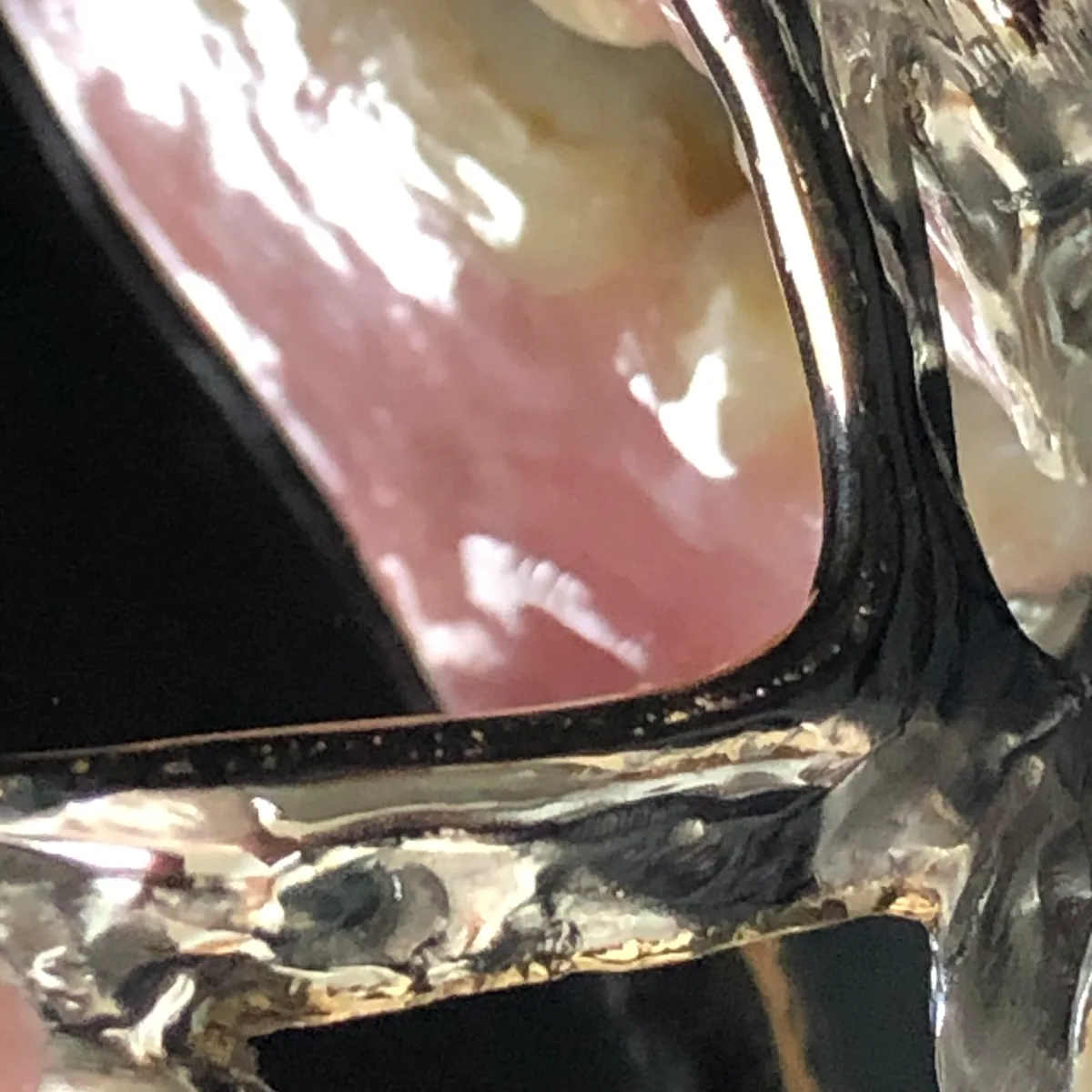
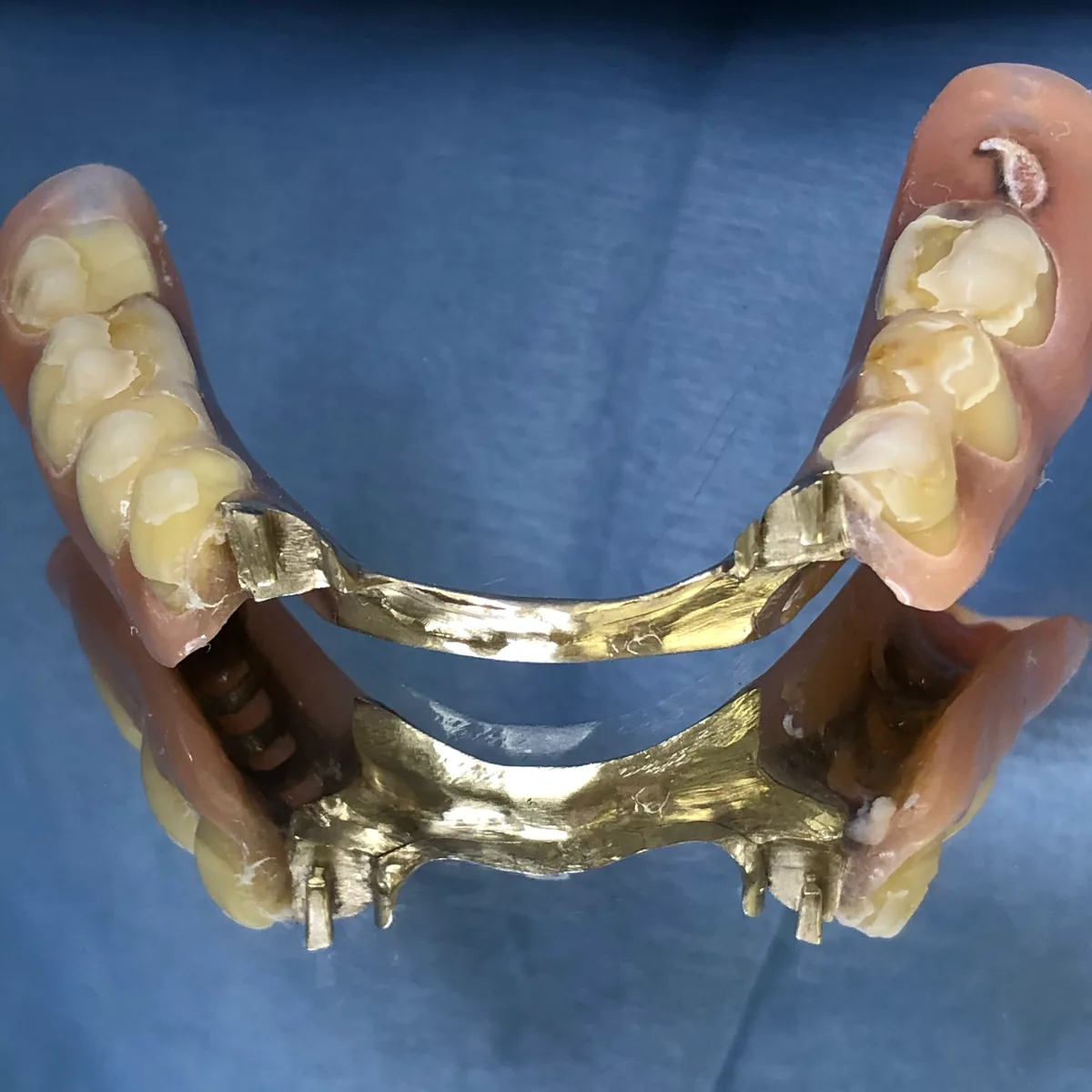
For example, for the lingual bar, the component that connects the left and right sides of a lower denture, we have made examples with a hollow structure.
To achieve the rigidity needed, we consider both the material and the cross-sectional shape.
We decide the position of the artificial teeth from the skeletal structure and jaw movement
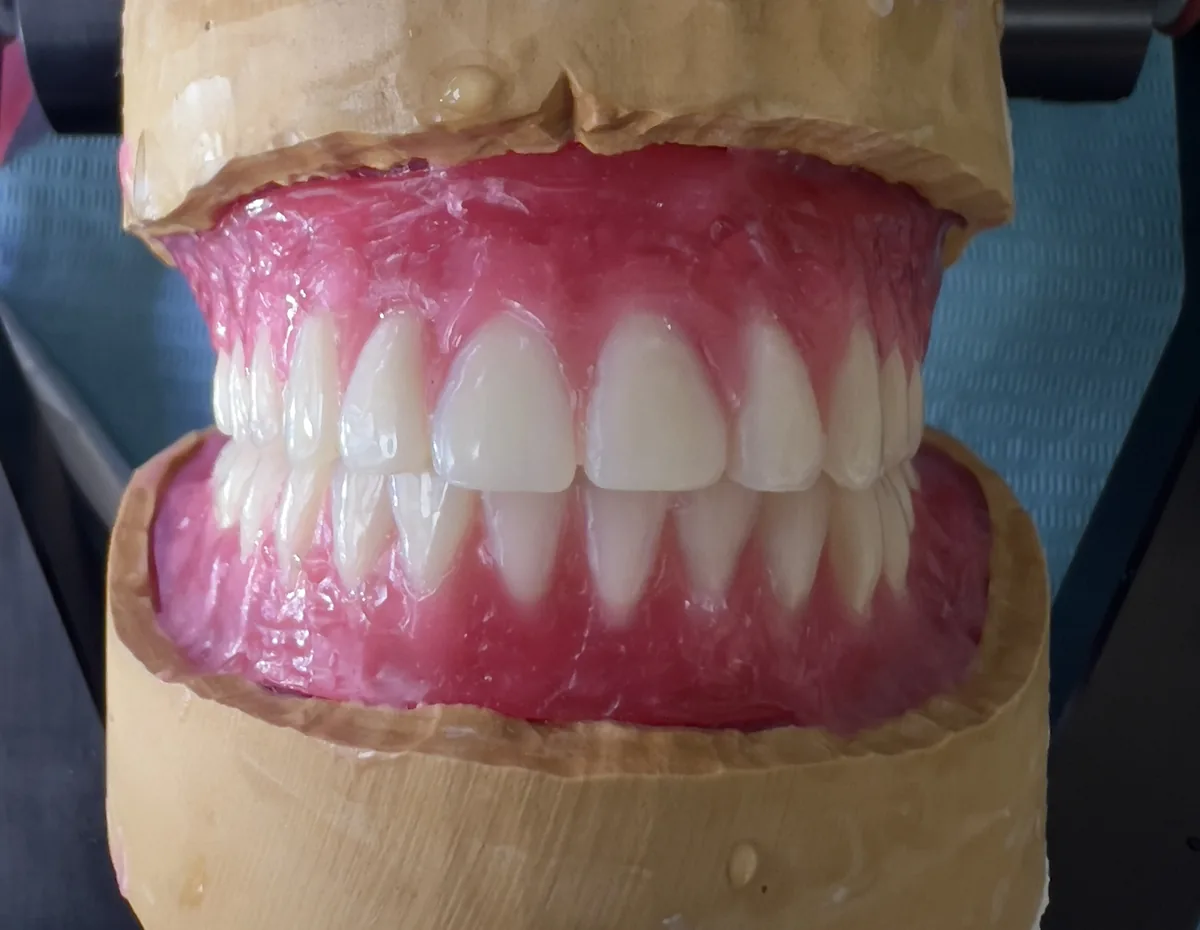
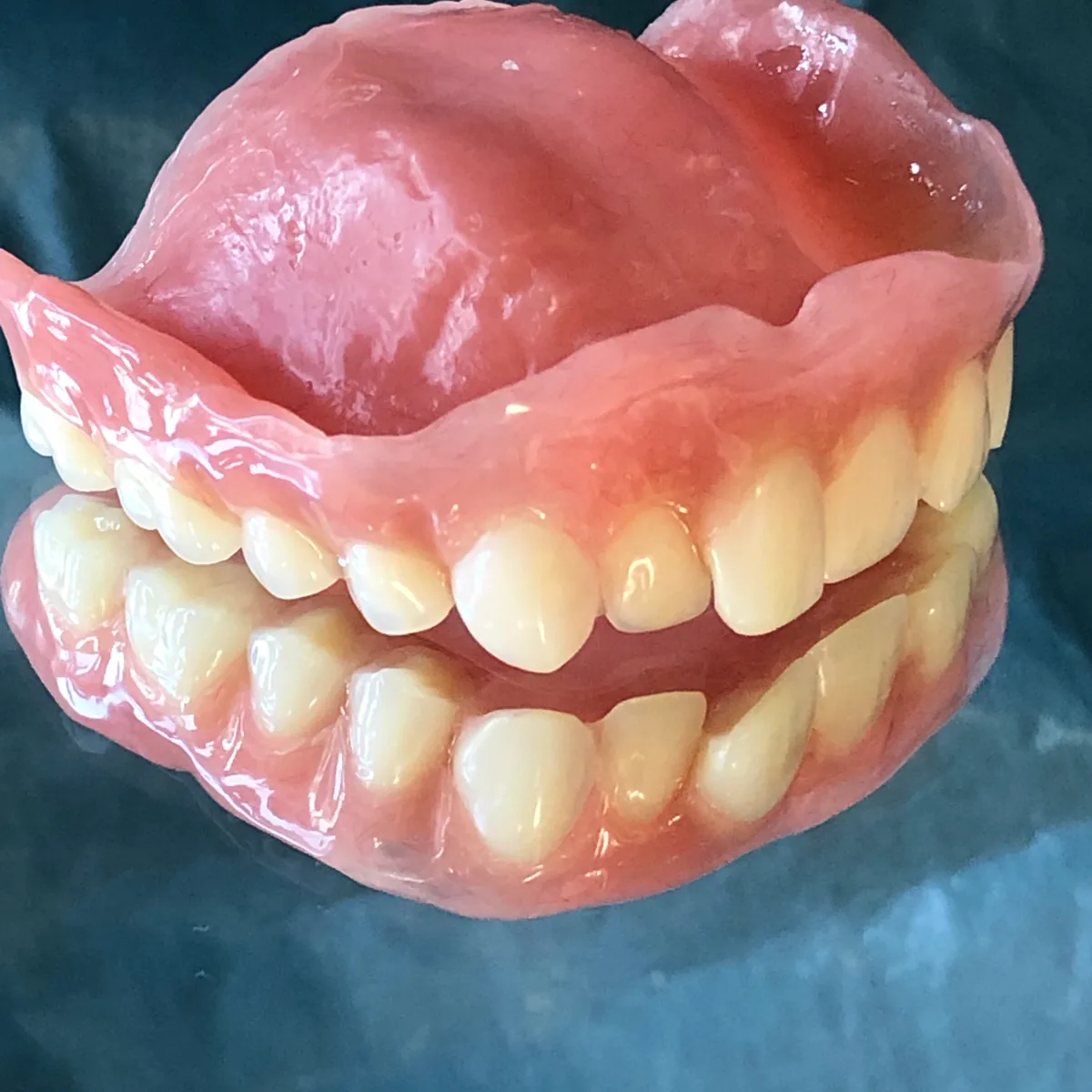
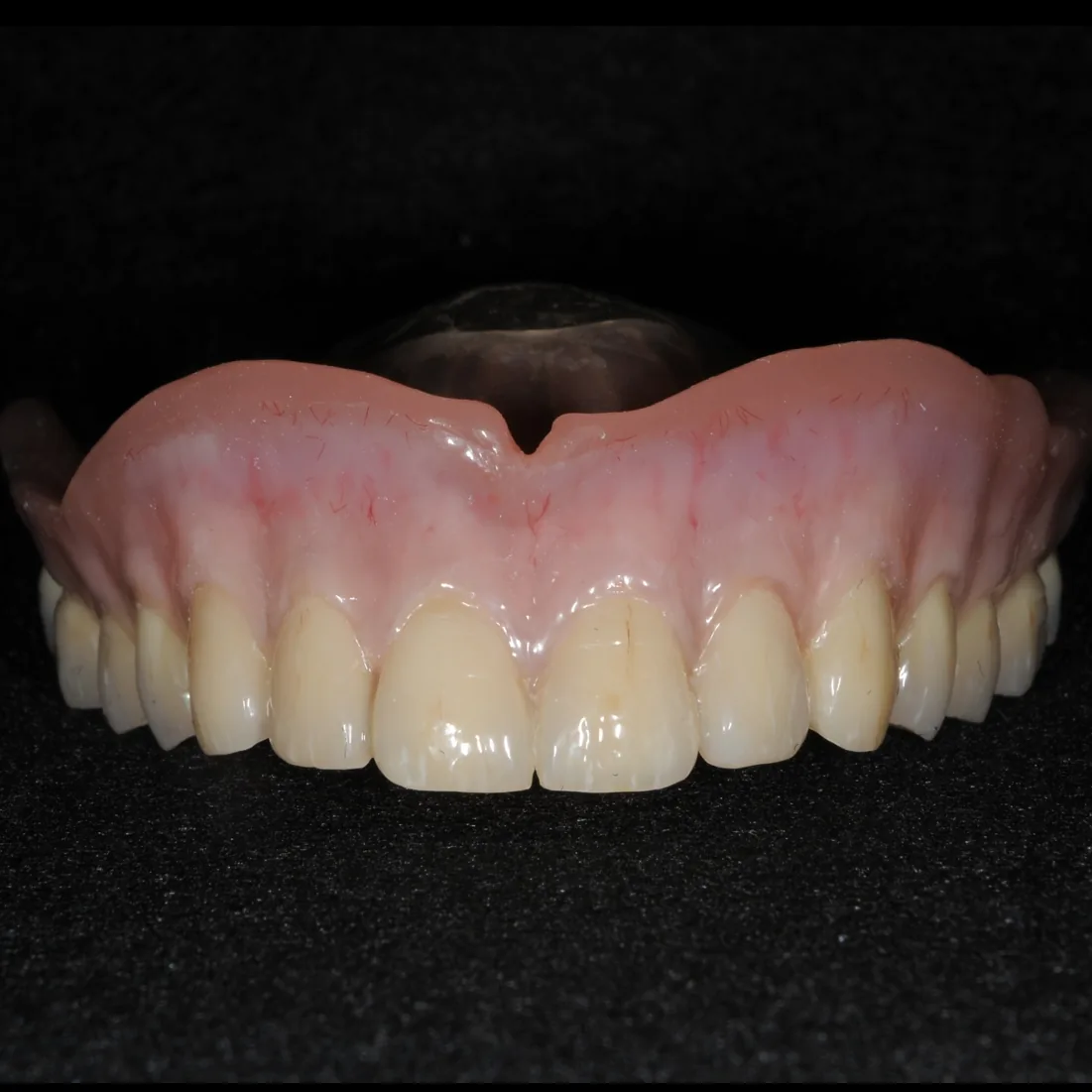
Placing the artificial teeth in position is called "tooth arrangement".
Based on the skeletal analysis and records of jaw movement, we work out the position of the artificial teeth and the inclination of their biting surfaces.
The way teeth are arranged also differs from person to person.
Checking the relationship with the skeleton, we consider both function and appearance.
The shape and colour of the teeth and gums are adjusted in discussion with the patient.
In the part that represents the gums, we reproduce not only the colour but also the fine surface texture.
We bring the arrangement of the artificial teeth and the shaping of the gums together, finishing the denture as something that will be worn in the mouth.
Photos: artificial tooth arrangement and gum shaping
Provisional dentures are for confirming function
A provisional denture is a preparatory stage for working out the final denture.
We use it to check the bite, function and appearance.
We do not make it the easy way just because it is provisional; we make it with the functions the final denture will need in mind.
Please tell us about anything that bothers you in use when you come in for adjustments.
We work out the final denture based on what we confirm with the provisional denture.
How much function can be restored, and how the denture feels in use, vary from person to person.
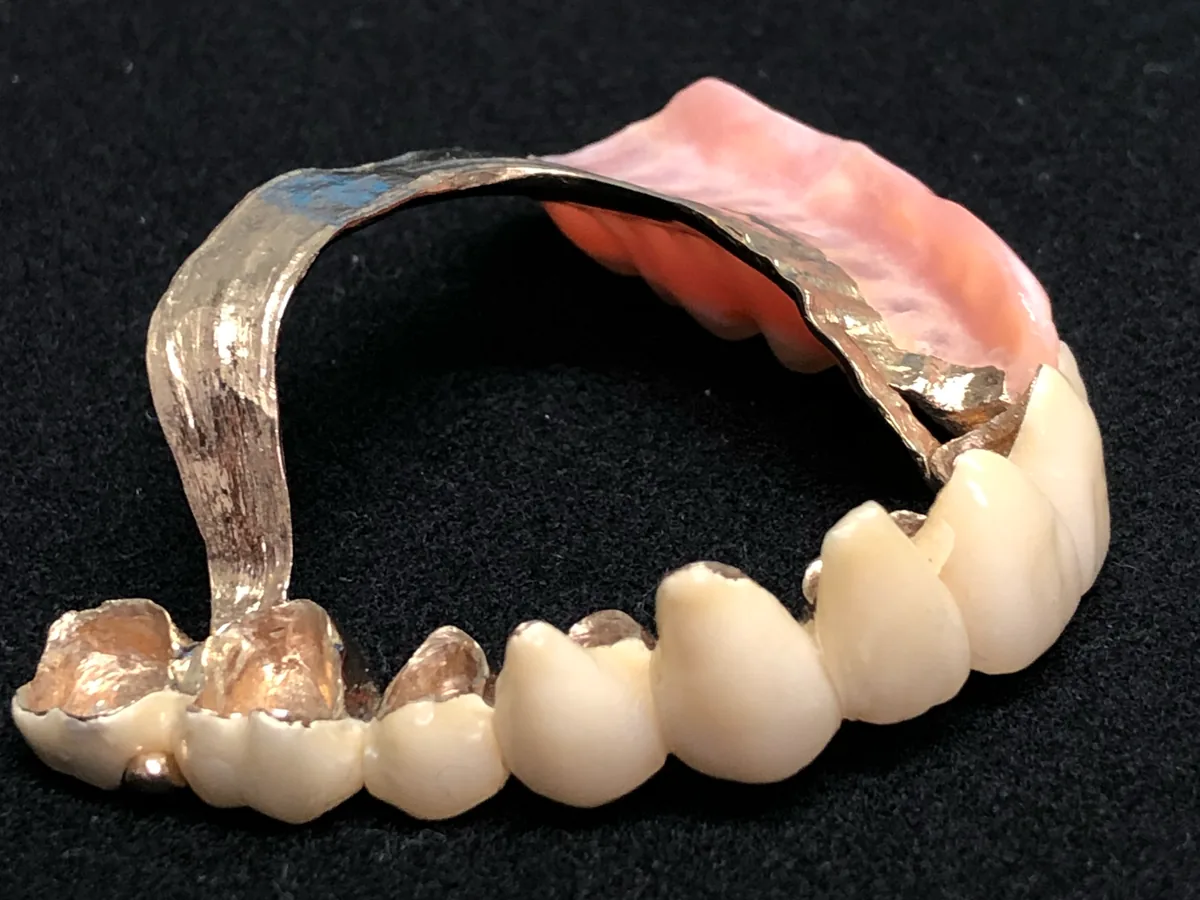
Fine work and repairs are also done in-house
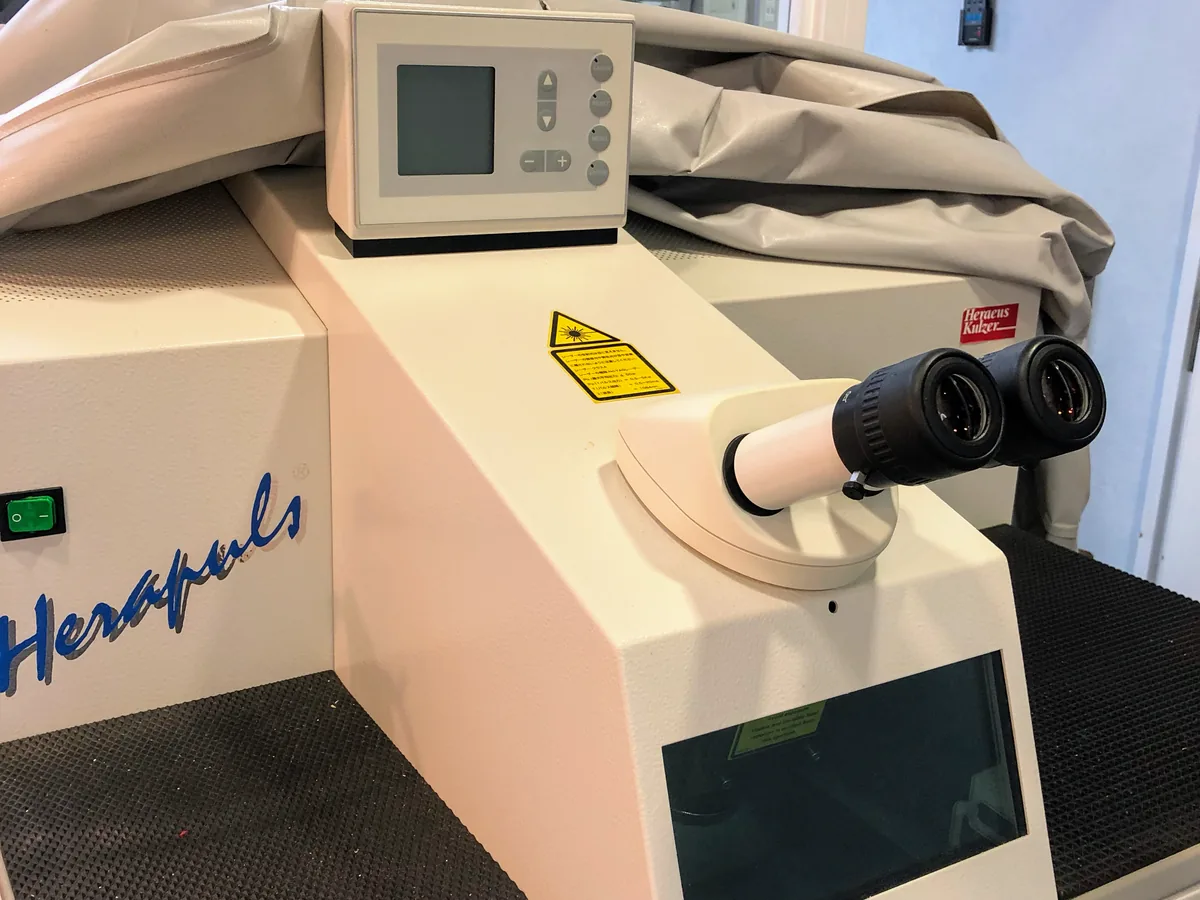
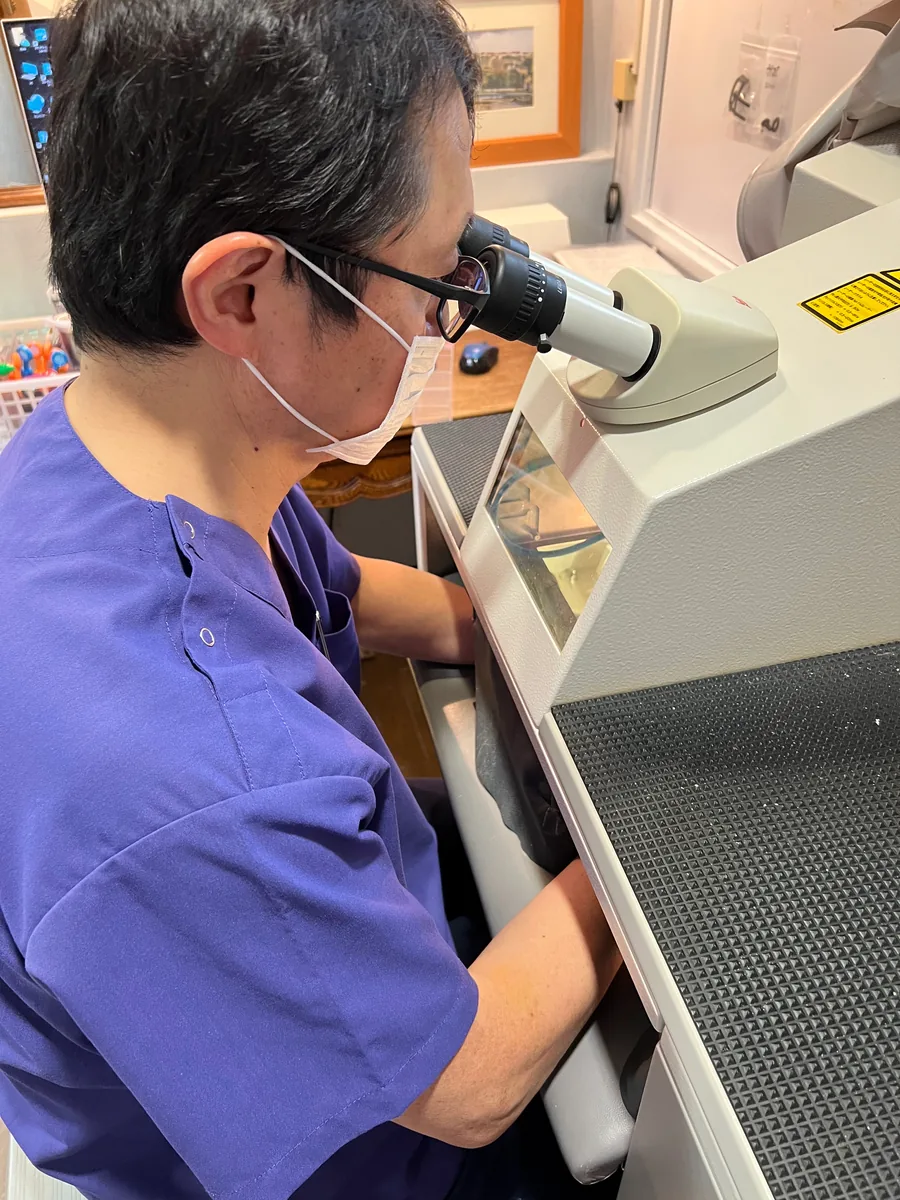
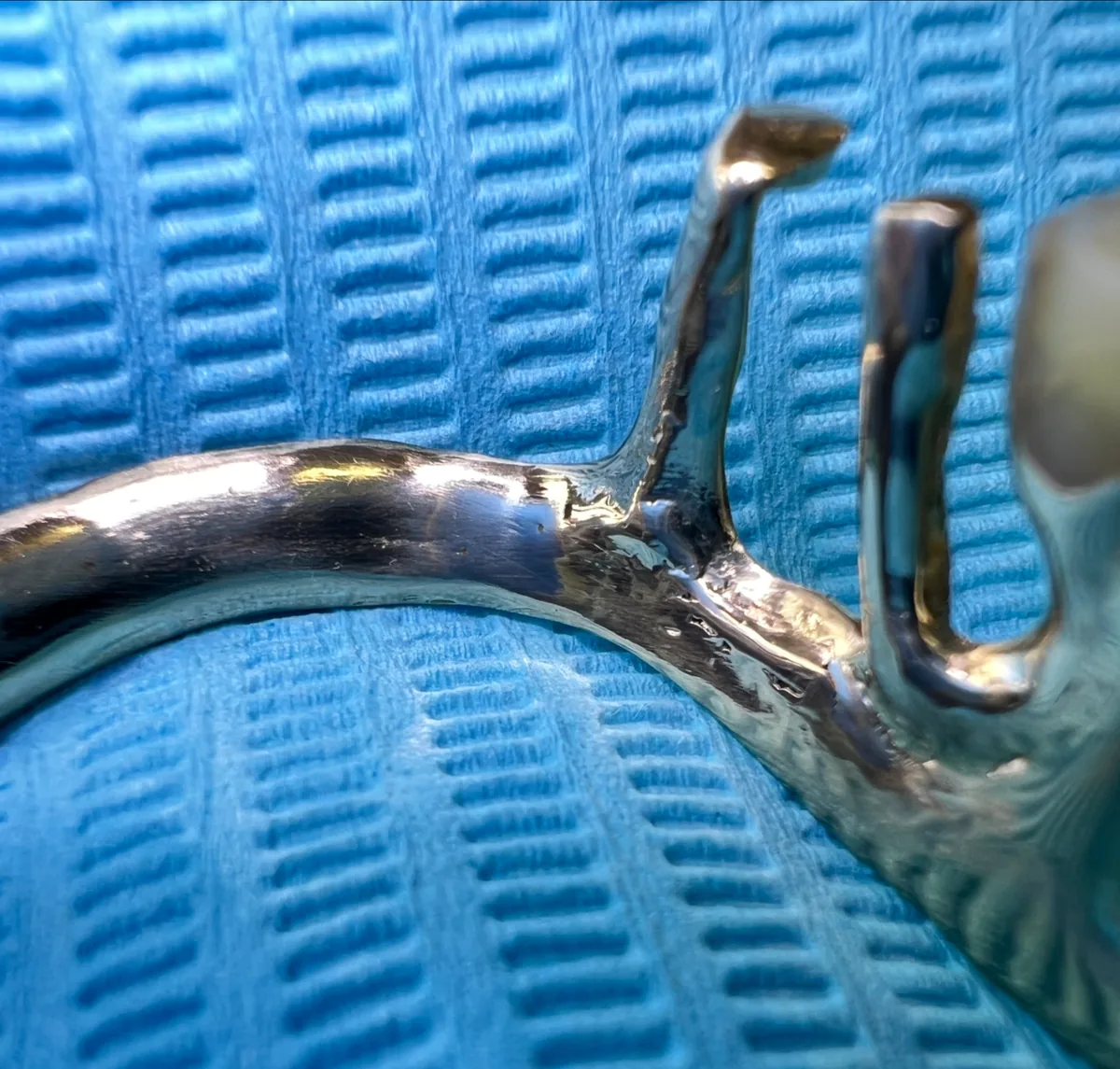
To join metal to metal, we use a high-power laser welder.
In laser welding, a high-purity platinum-gold alloy wire is fused with the metal being joined (the base metal) in an argon gas atmosphere.
We join in argon gas so that an oxide film is less likely to form on the joint and foreign matter is less likely to get in.
We check the work under magnification with a microscope.
We are equipped to handle not only the making of dentures but also repairs after they have been in use.
What kind of repair is possible is decided after checking the condition of the denture and the mouth.
Photos: laser welding
Our approach to complete and partial dentures
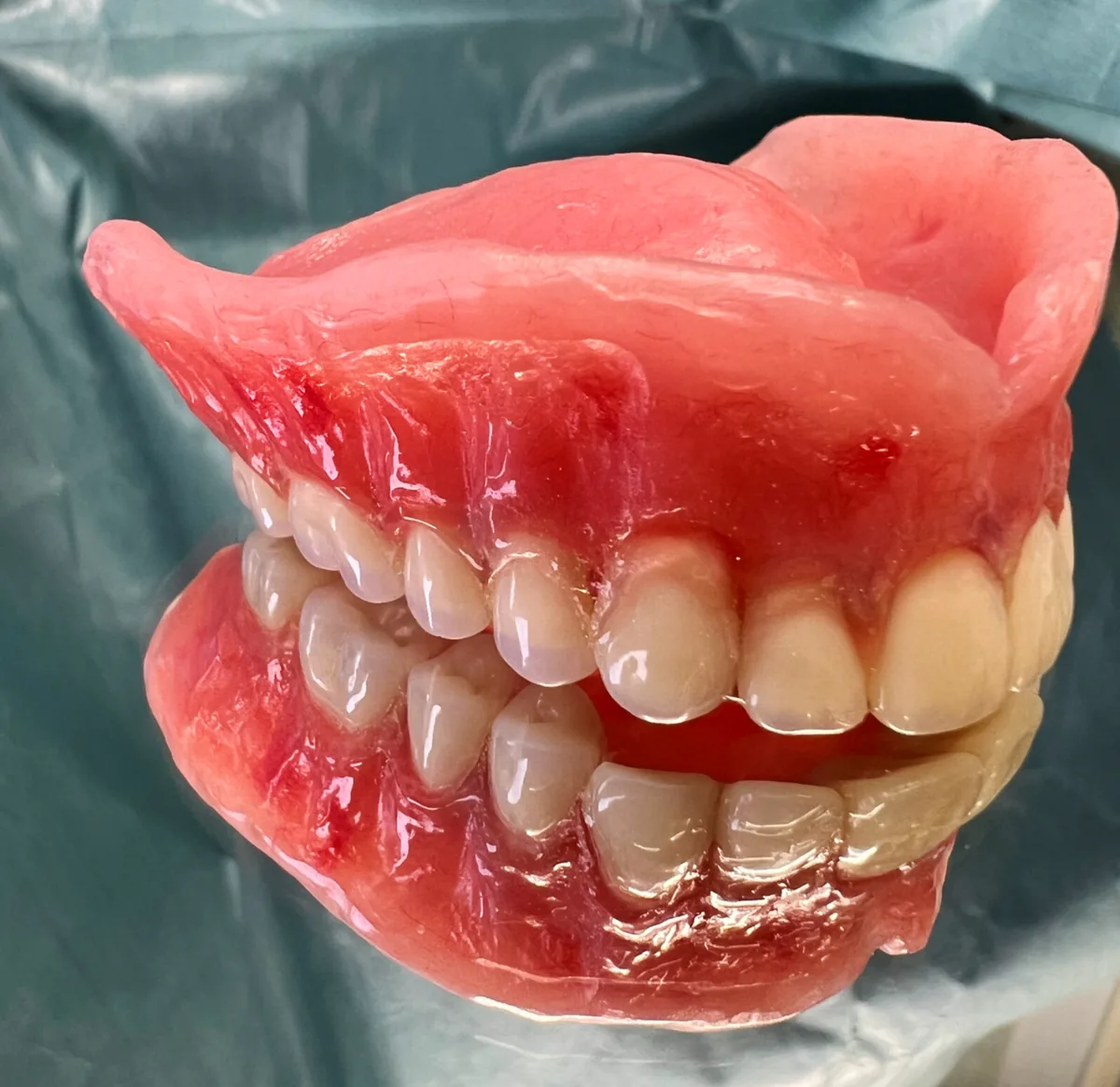
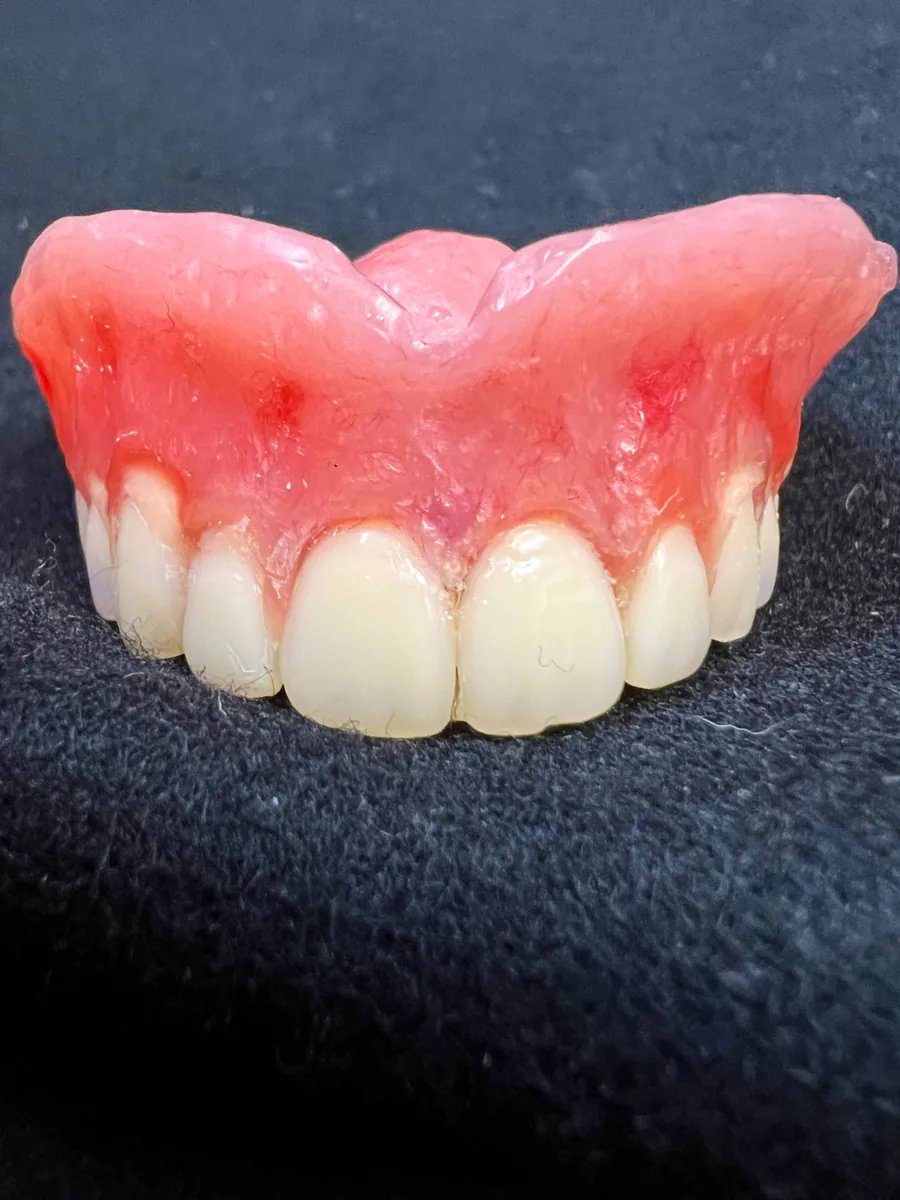
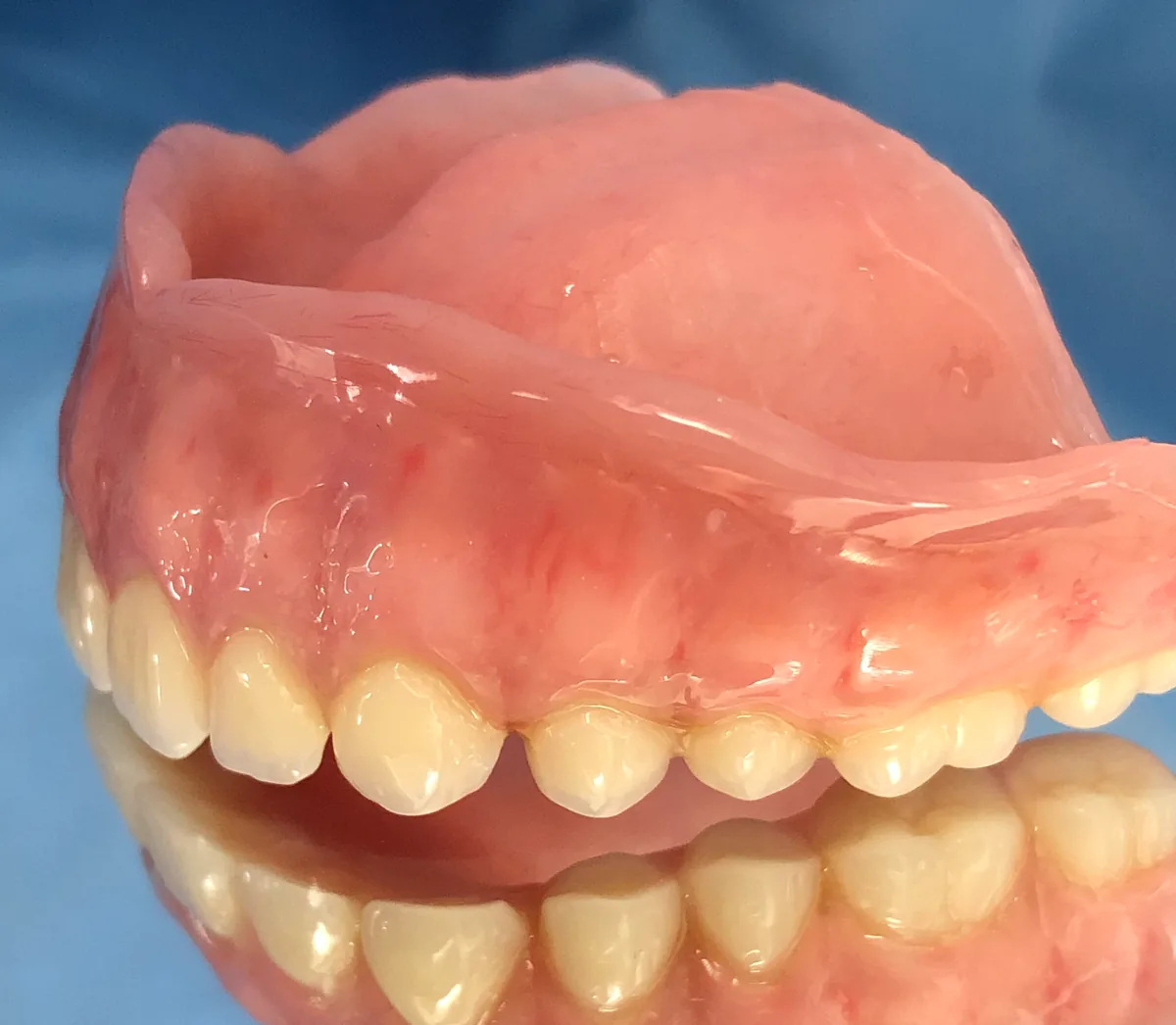
With complete dentures, we also check the condition of the mucosa
With complete dentures, we check the properties of the mucosa that supports the denture and the degree of bone resorption.
The foundation of bone and mucosa that once supported the teeth is called the "residual ridge".
We consider not only its shape but also how pressure is distributed when you bite.
The shape of the mucosa changes between when the muscles are relaxed and when force is applied.
We aim to express in the denture the shape of the mucosa in the relaxed state, its shape under force, and the states in between.
As well as working out the bite from information on jaw movement and skeletal structure, we reflect differences in the thickness and displacement of the mucosa in the design.
Even where bone resorption is advanced, we first examine the condition and then consider what treatment may be possible.
Photos: complete dentures
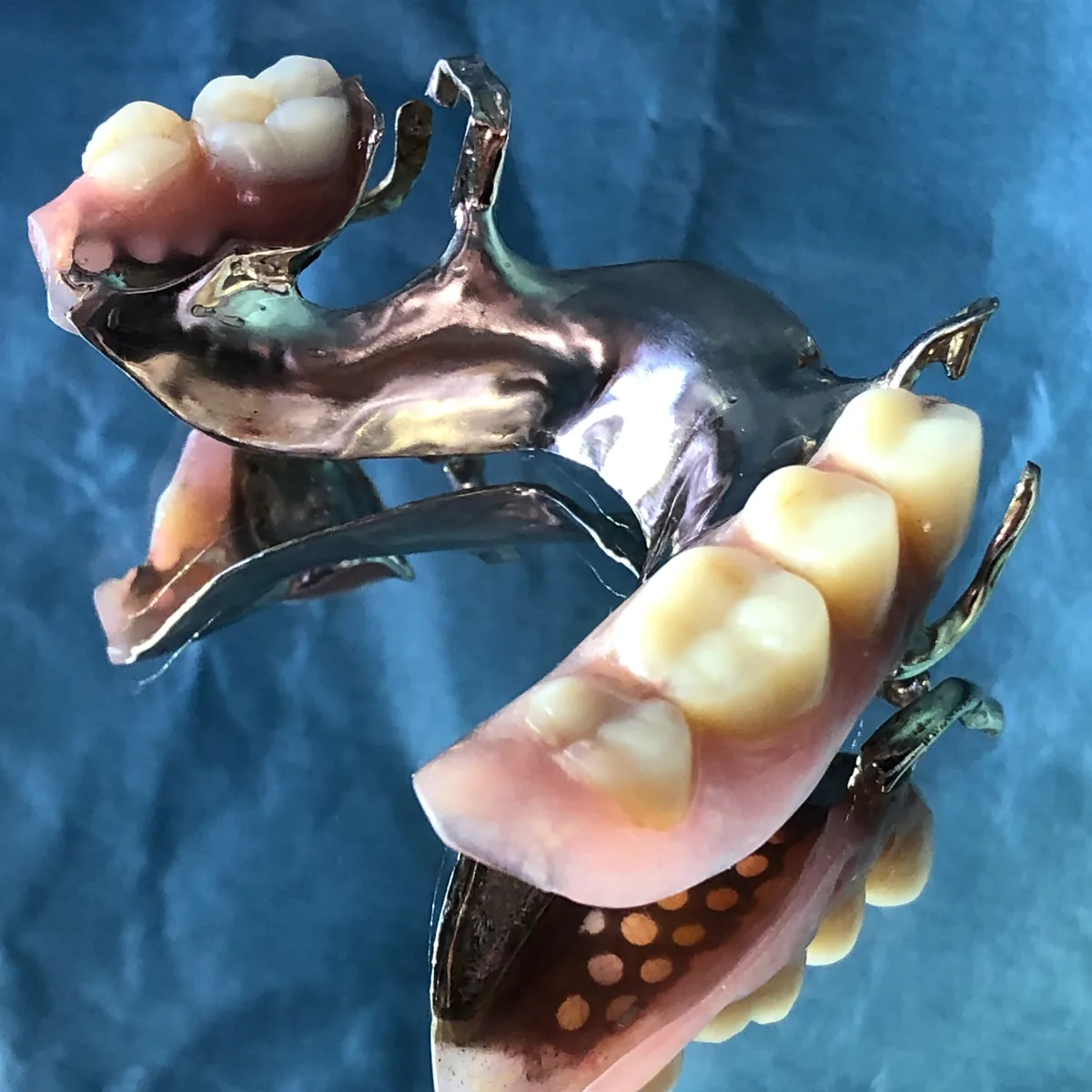
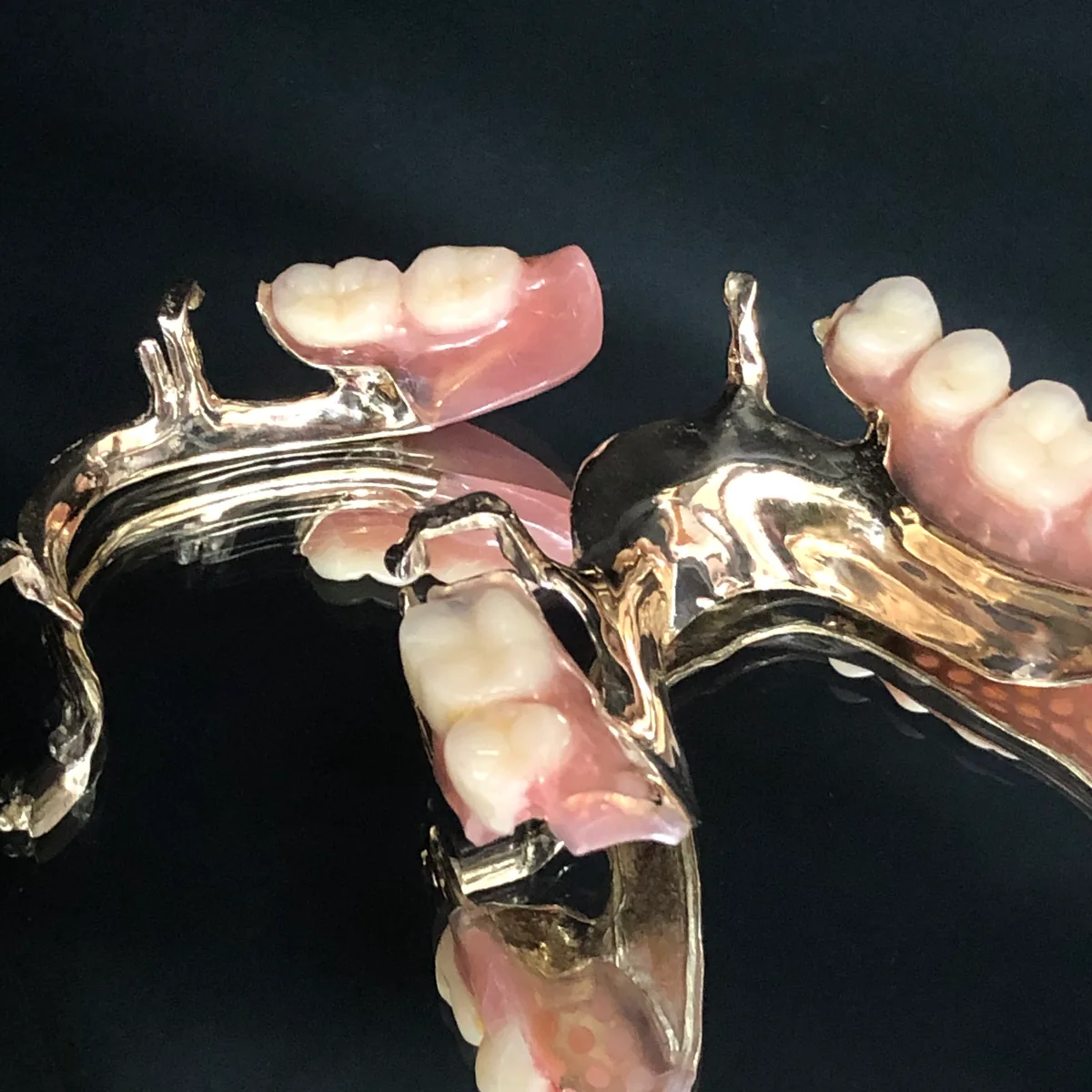
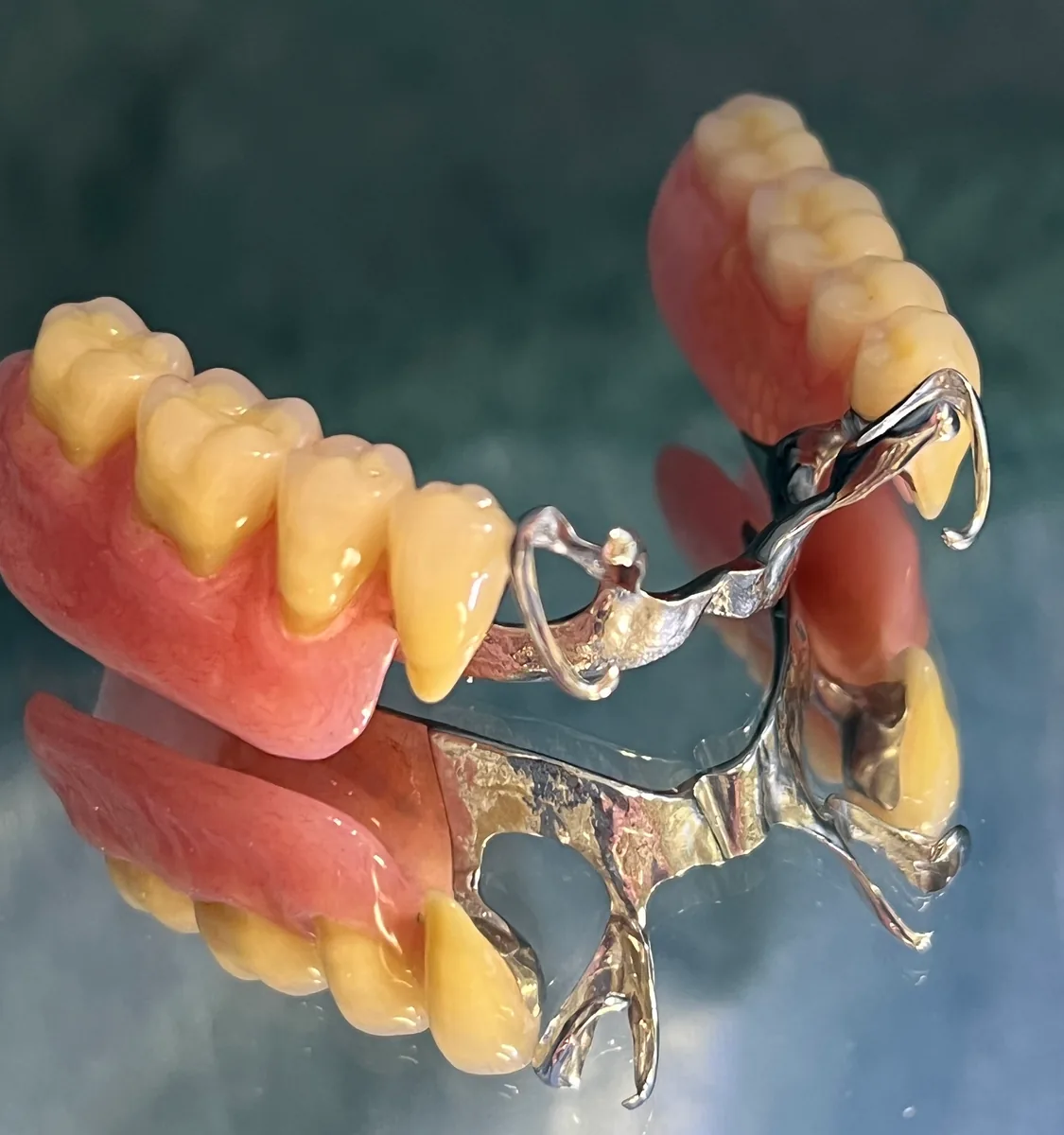
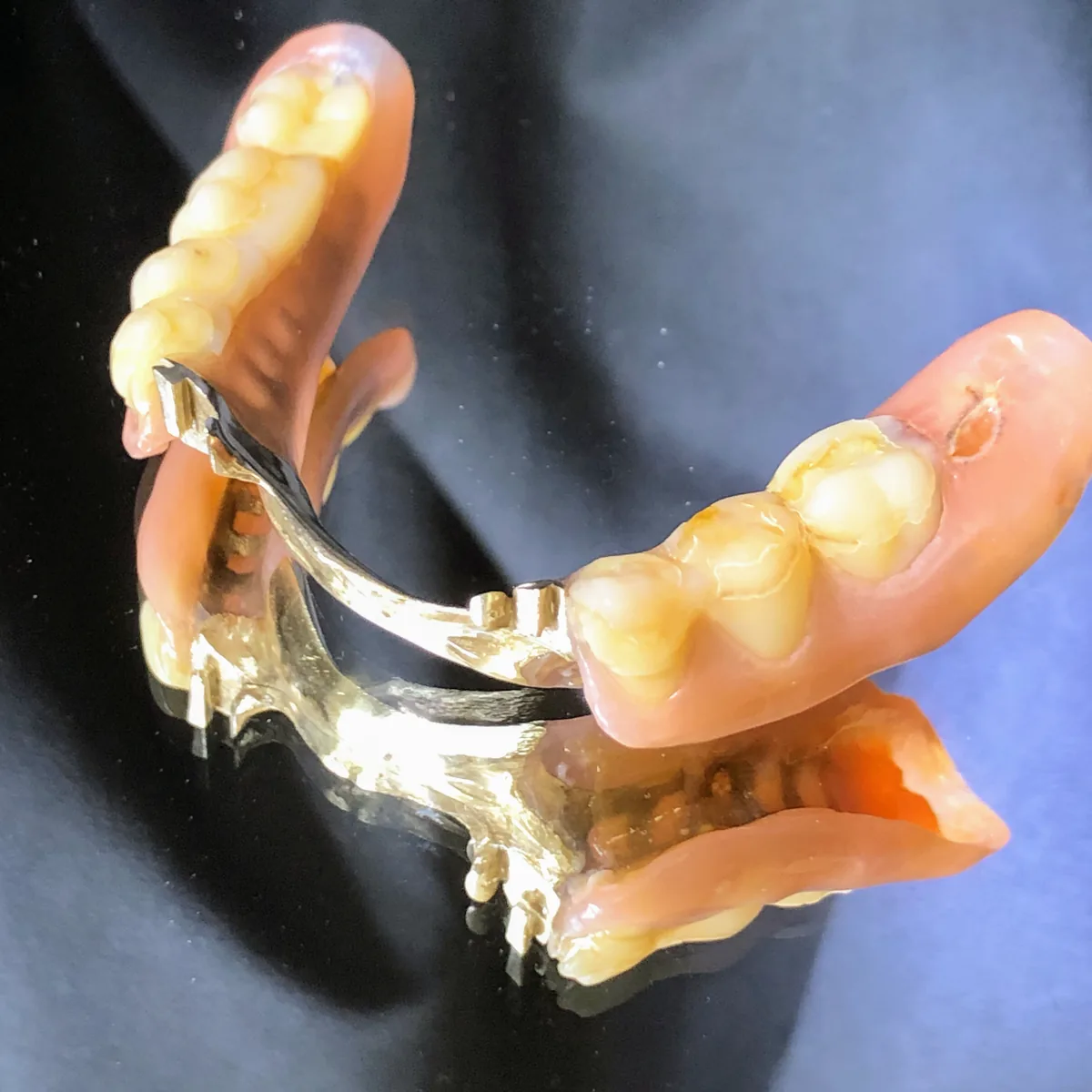
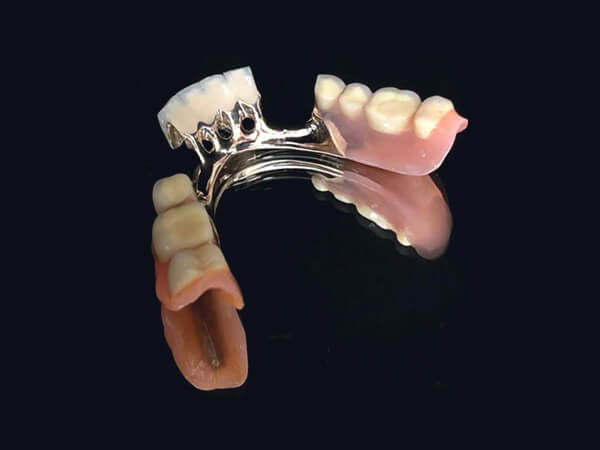
With partial dentures, we consider the forces on the remaining teeth
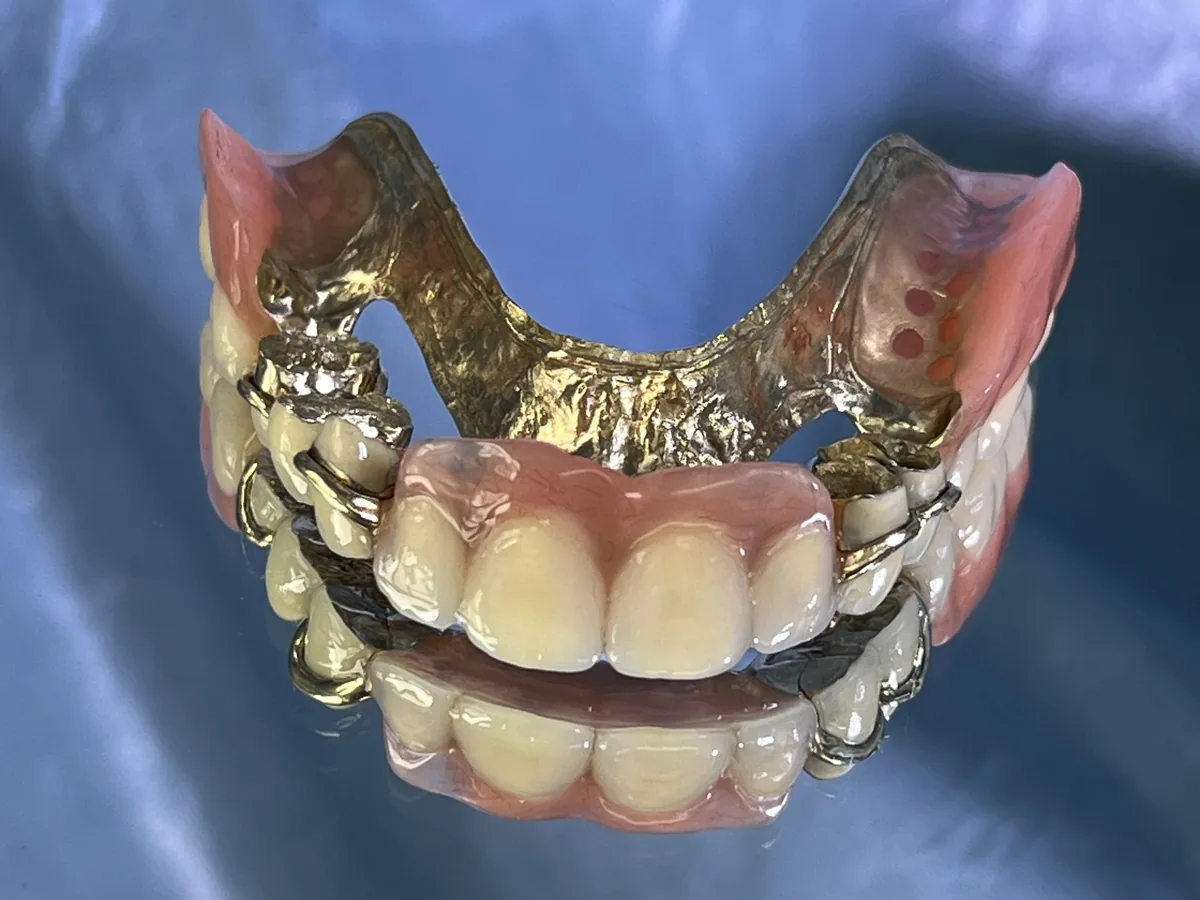
With partial dentures, we replace the missing teeth and, at the same time, consider the forces on the remaining teeth.
We work out the shape of the framework and attachments so that force does not concentrate on the supporting teeth.
If the condition of the teeth changes after the denture is made, we may consider repairs or adding artificial teeth.
For this reason, we choose materials and structures with future changes in mind.
Not every denture can be repaired in the same way; we check the condition each time.
Photos: partial dentures
We follow up so that dentures can be used for a long time
A denture is not finished once it has been made.
We check its condition after use and carry out adjustments and repairs as needed.
We watch how what we planned at the time of fabrication changes in actual use.
With the long term in view, we place importance on taking precise data in both the relaxed state and under force, and expressing it precisely in the denture.
The bone that supports a denture can resorb over time.
For this reason, relining (refitting the inner surface of the denture) may generally be needed every few years.
We take this change into account in the design and follow the progress.
We record the progress of the dentures we have made, and use it as information for reviewing our design and fabrication methods and considering any changes needed.
Photos: partial dentures made at our clinic
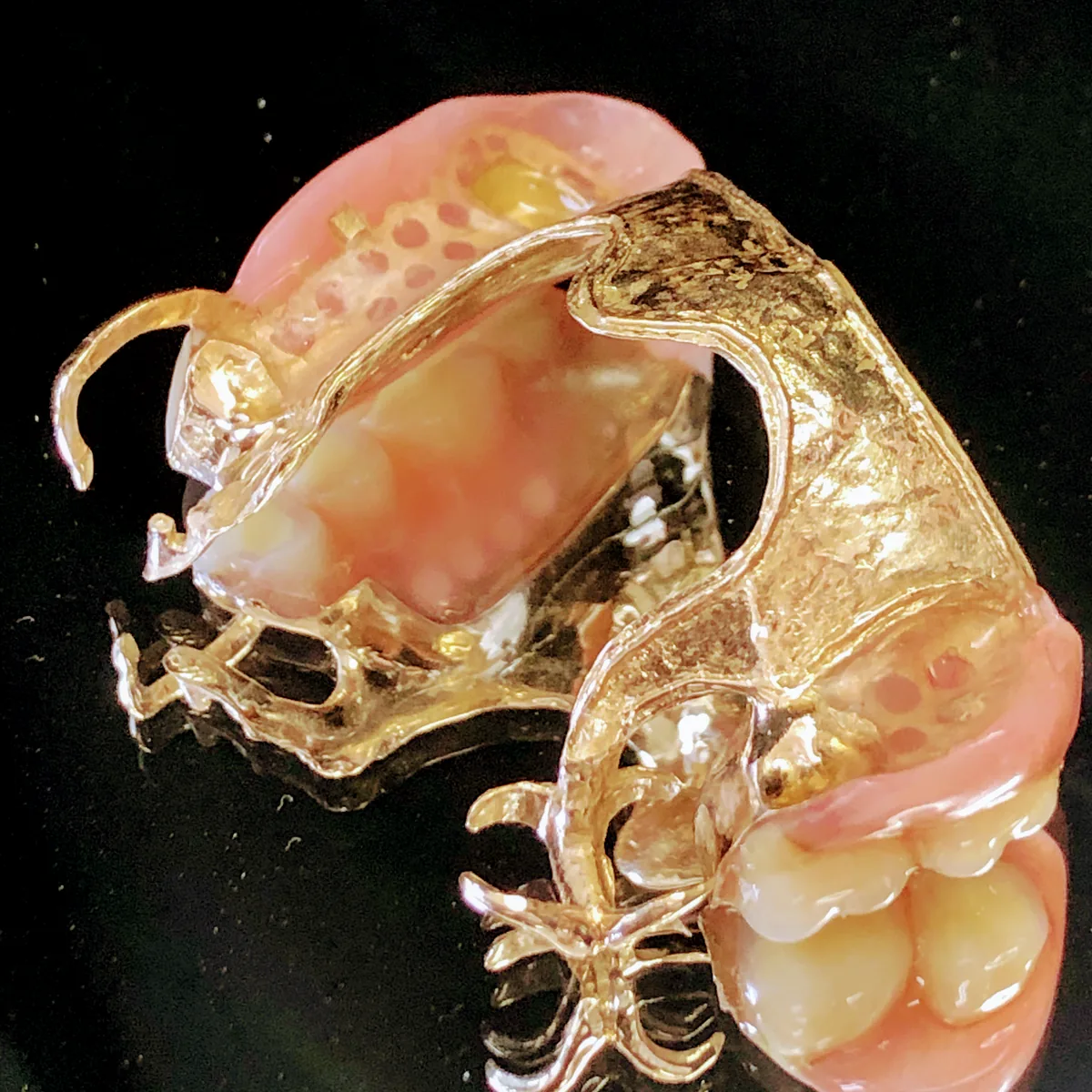
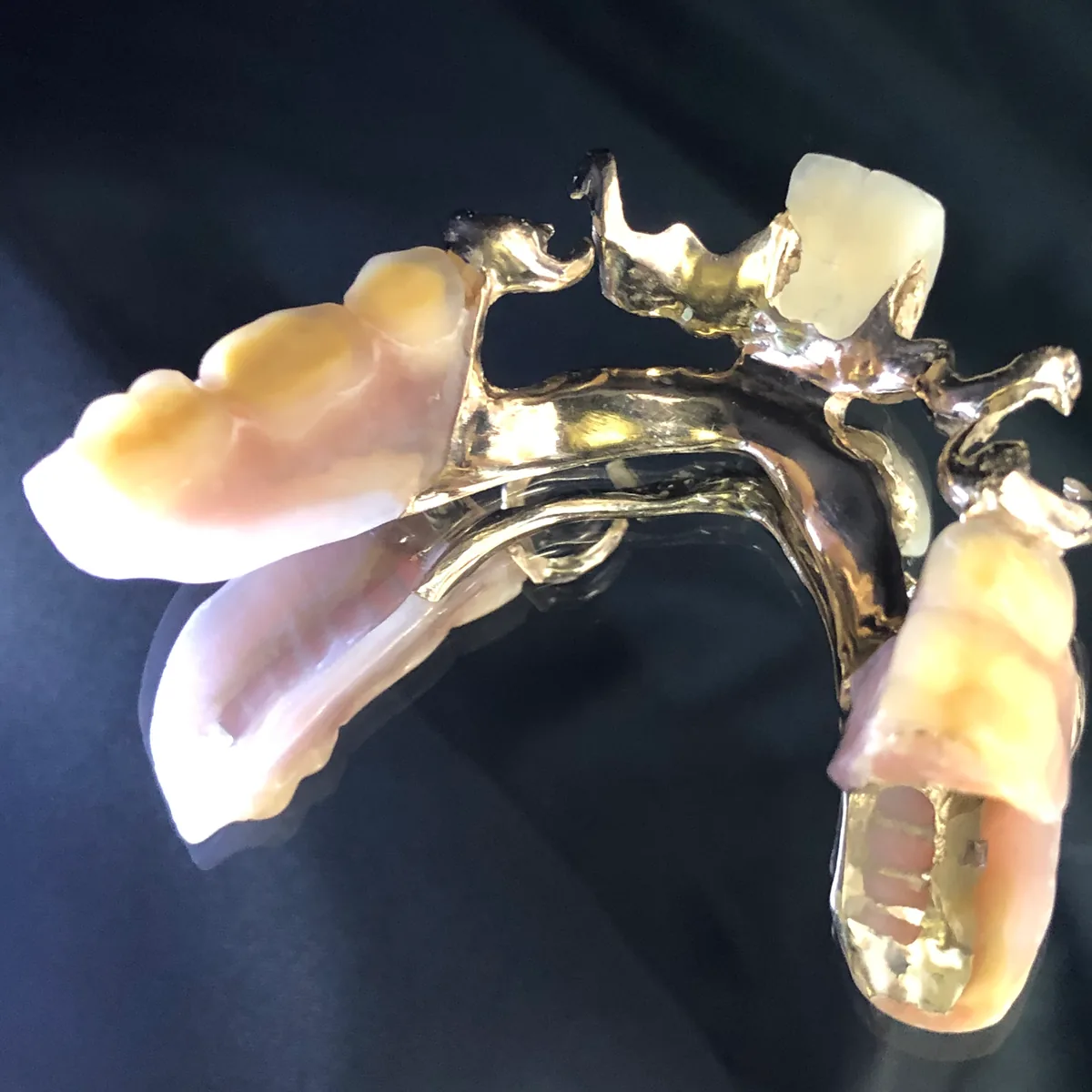
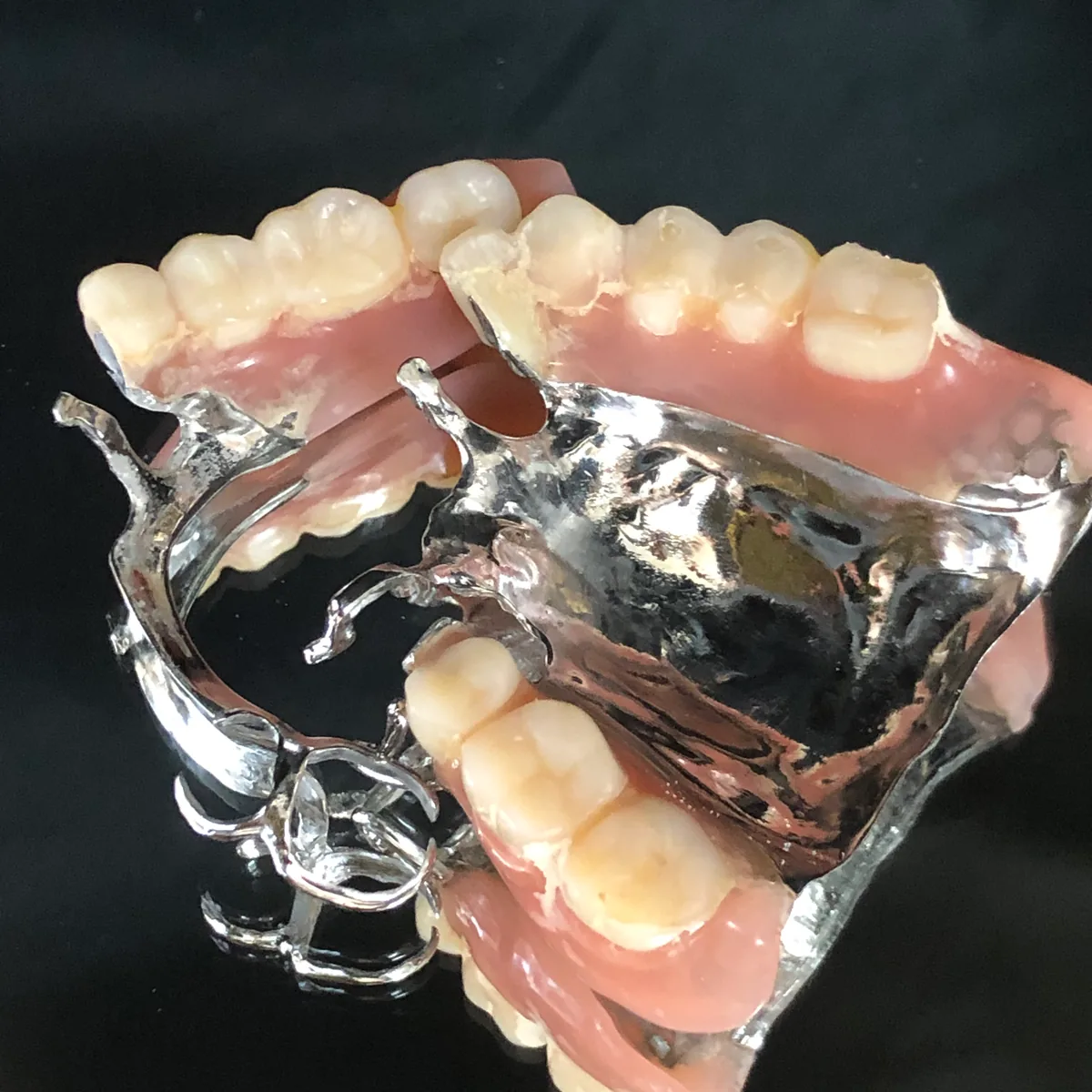
However, the course of a denture is not the same for everyone.
How long a denture can be used, and how it progresses, vary from person to person.
We also explain the discomfort until you get used to a denture, the need for adjustments, and remaking over time.
How does treatment proceed?
STEP 1First consultation
We ask about your current concerns and your treatment history.
We check jaw movement, the bite and the teeth, then explain our findings at this stage and any examinations needed.
The first consultation takes about 30 minutes to 1 hour.
STEP 2Detailed examinations
We examine the skeletal structure, jaw movement and the condition of the teeth and mucosa.
Combining the results, we assess the bite for the denture and the condition of the tissues that will support it.
STEP 3Explaining the treatment plan
Based on the examination and diagnosis, we explain the possible treatment options, with their costs, duration and number of visits.
We give you the treatment plan and estimate in writing.
If any remaining teeth need treatment, we go through that as well.
STEP 4Confirming with a provisional denture
We check function and appearance with a provisional denture.
We work out the final denture while checking how the provisional denture performs in actual use and any points that concern you.
STEP 5Making and fitting the final denture
We make the final denture based on the examination data and what we confirmed with the provisional denture.
After fitting, we continue to check the condition of your mouth and adjust as needed.
STEP 6Follow-up after use
We continue to check the denture and the condition of your mouth.
If anything changes, we consider whether adjustment, repair or remaking is needed.
Treatment duration
Treatment for precision dentures
About 3–6 months
as a general guide
Number of visits
About 6–10
as a general guide
The duration and number of visits vary with the condition of the mouth and the procedures needed.
After examination and diagnosis, we explain them in line with your treatment plan.
Because the remaining teeth may also need treatment, we check this together with making the denture.
When our treatment may not be suitable
We examine the skeletal structure, jaw movement and other factors, and design dentures based on that information.
For this reason, if you would like a denture made without undergoing examinations, or if completing treatment quickly or in few visits is your priority, we may not be able to meet your wishes.
The treatment options available also depend on the degree of bone resorption and the condition of the remaining teeth.
After using the examinations to sort out what can be done and what is difficult, we explain the treatment plan.
Risks and points to note
Even with precision dentures, you may feel discomfort until you get used to them.
Adjustments may be needed after fitting, and the denture may need to be remade over time.
The condition after treatment and the function that can be restored vary from person to person.
The condition of a denture can be affected by changes in your mouth or general health and by deterioration over time.
If you notice a change that concerns you, we check the condition and consider how to respond.
We draw up treatment plans based on examination results.
However, the function and comfort actually achieved will not match the planned goals for every patient.
We explain the treatment and the points to note, and proceed while confirming them with you.
Precision dentures are a private (non-insured) treatment. Treatment period, number of visits, fees, main risks and side effects → Fee table
Technologies used in this treatment
These are the technologies we use in examining, designing and making dentures.
Measure
Analyse and design
Appliances used in treatment
Materials
Frequently asked questions
- Is the bite the reason my dentures don't fit?
We cannot conclude from symptoms alone that the bite is the cause.
We check the teeth and mucosa, the degree of bone resorption, jaw movement and your treatment history.
We then decide what to examine and what the goals of treatment should be.
- Will I be able to chew with complete dentures?
Even with complete dentures, we can measure the skeletal structure and jaw movement and design the bite from that information.
We also check the condition of the mucosa and bone that support the denture.
Because the function that can be restored varies from person to person, we explain the treatment options based on the examination results.
- Why examine the jaw when I have no teeth?
The jaw joints move even without teeth.
People with complete dentures can also have jaw joint symptoms.
We check jaw movement and skeletal structure to work out where to place the artificial teeth and what kind of bite to plan.
- I am worried about the load on the teeth that support a partial denture.
We design the denture with attention to the direction of the forces acting on the supporting teeth.
Taking into account the different movement of teeth and mucosa, we work out the shape of the framework and attachments.
Design alone cannot prevent every problem, so we continue to check the teeth and the denture after it is made.
- Will dentures change my appearance?
We adjust the shape and colour of the teeth and gums in discussion with the patient.
We also check the skeletal structure and the bite, and consider both function and appearance.
We go through any concerns with the provisional denture before working out the final denture.
- I'm not sure I'll be able to manage dentures. Can I try them out with a provisional denture?
We check function and appearance with a provisional denture.
Please tell us about anything that bothers you in use when you come in for adjustments.
We use the provisional denture as a stage for checking, and plan the final denture based on what we learn from it.
Start by understanding your condition, not with treatment
Even if you have had difficulty chewing for a long time or have worries about dentures, you do not need to decide on a treatment from the outset.
A first visit at our clinic begins with checking the current condition of your mouth and jaw, and explaining what we can tell at this stage and what further examinations are needed.
How many of your teeth remain?
What condition are the bone and mucosa in?
How does your jaw move?
Putting this information together, we explain the treatment options with their costs, duration and number of visits.
You can review the examination results and the treatment plan, and then decide whether to go ahead with treatment.
Before deciding the shape of a denture, we place importance on first understanding your current condition.
Related topics
- Thorough diagnosis before treatment (14 examination items)
- Mechanical force (the forces acting on the teeth)
- Temporomandibular disorders & orthodontic treatment that avoids extractions where possible
- About the director
- Research & publications
Consultations and enquiries
Gibakai Medical Corporation
Yoshimi Dental Clinic
Square 2, Room 302 (third floor)
1-29-1 Tsukushino, Machida,
Tokyo 194-0001, Japan
TEL 042-795-1359 FAX 042-795-1398
Clinic days: Mon · Tue · Thu · Fri
10:00–13:00 / 14:30–18:00
A first visit begins with a first consultation (a private, non-insured service; 30 minutes to 1 hour) for examination and diagnosis. Questions about a diagnosis you received elsewhere are also covered within it.
In an emergency, such as being unable to chew or having severe symptoms, please call us on 042-795-1359 to discuss it.