What are provisional restorations and provisional dentures?
Provisional restorations and provisional dentures are interim teeth and dentures used, before the final crowns or dentures are placed, to check their form and function.
In dentistry, both are also referred to as "provisional restorations".
What "provisional" means
The word "provisional" may bring to mind something makeshift.
"Provisional" carries the sense of making provision, or preparing, for the future.
The director regards provisional restorations and provisional dentures as tools for checking whether the teeth or dentures that will finally be placed will function as planned.
In general, too, a distinction is made between interim teeth that temporarily maintain the space and protect teeth that have been trimmed (temporary restorations) and interim teeth for checking the final form and function (provisional restorations).
A provisional restoration is defined as a restoration for observing whether the function and form intended for the final prosthesis (a device, such as a crown or denture, that makes up for lost teeth or lost form) fit in the mouth, reviewing them, and reflecting the results in the final prosthesis.
How provisional restorations and provisional dentures work
Giving them the same function as the final version
We give our provisional restorations and provisional dentures almost the same precision and function as what will finally be placed.
The difference from the final version is that they are made of a material whose shape can be changed.
We change their shape as they are used and apply the results to the final version.
Transferring the position decided on the casts to the mouth
The shape of the provisional restorations is decided on an articulator (a device on which casts of the upper and lower teeth are mounted to reproduce the position and movement of the jaw).
So that the position decided on the casts does not shift in the mouth, we decide on reference points in advance and use them as a guide when transferring the provisional restorations to the mouth.
For more on the articulator, please see the Girrbach Reference SL articulator page.
Choosing the material to suit how long it will be used
Because large forces act on the bite, soft plastic quickly loses its shape.
The director explains that, as the bite becomes more settled, biting force gradually becomes stronger.
For this reason, we choose a material that can withstand that force, to suit how long it will be used.
| Material | How it is used |
|---|---|
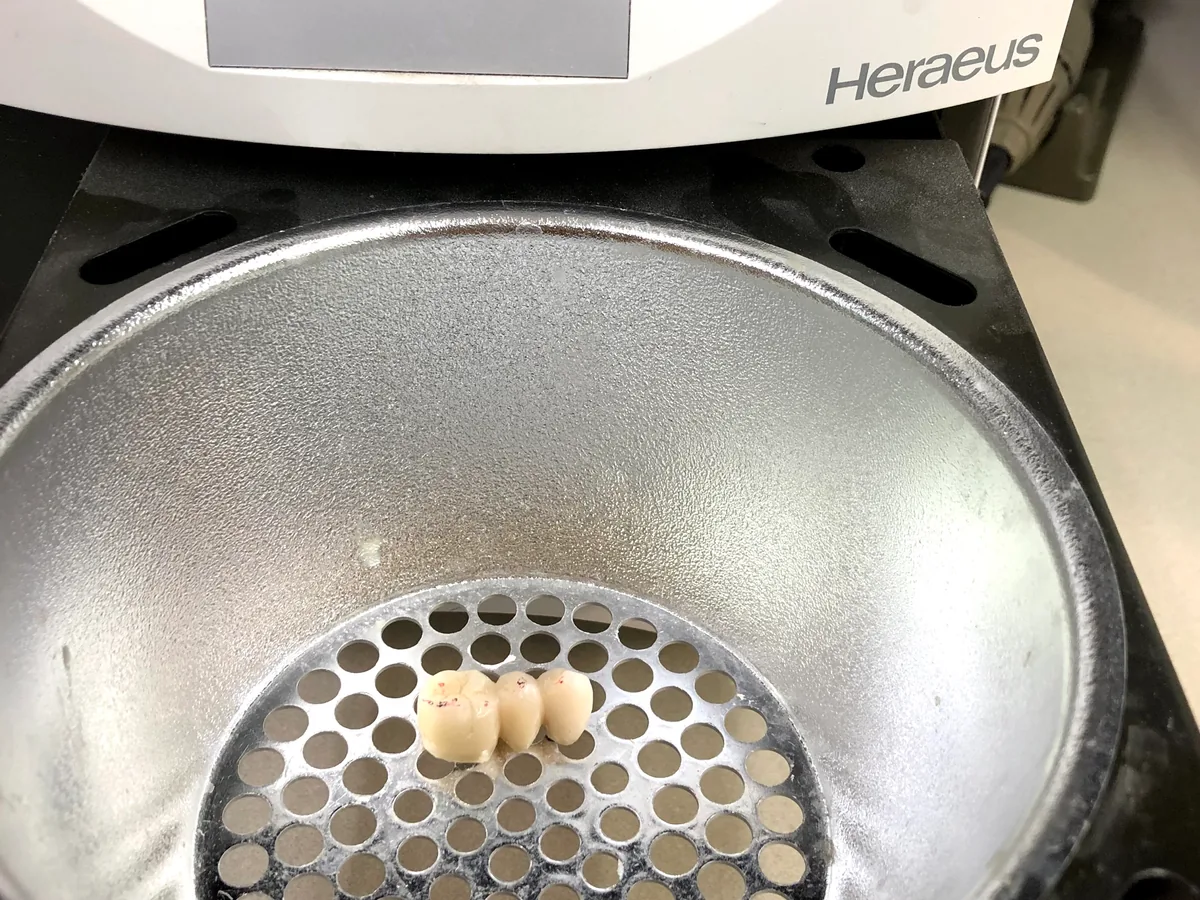
| Hybrid ceramic (a material combining resin and ceramic) | Provisional restorations used for a short period. Cured for 180 seconds in a polymerization unit (a device that hardens resin) |
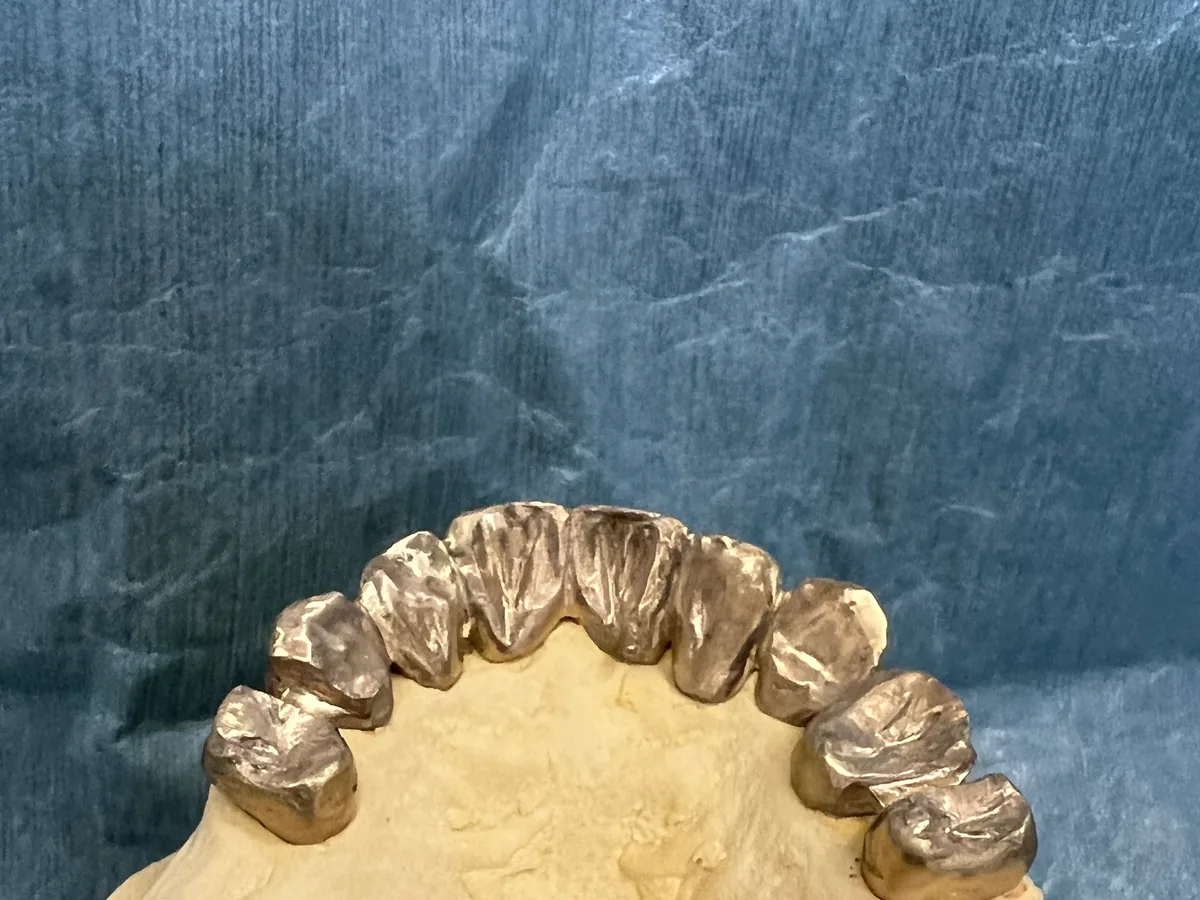
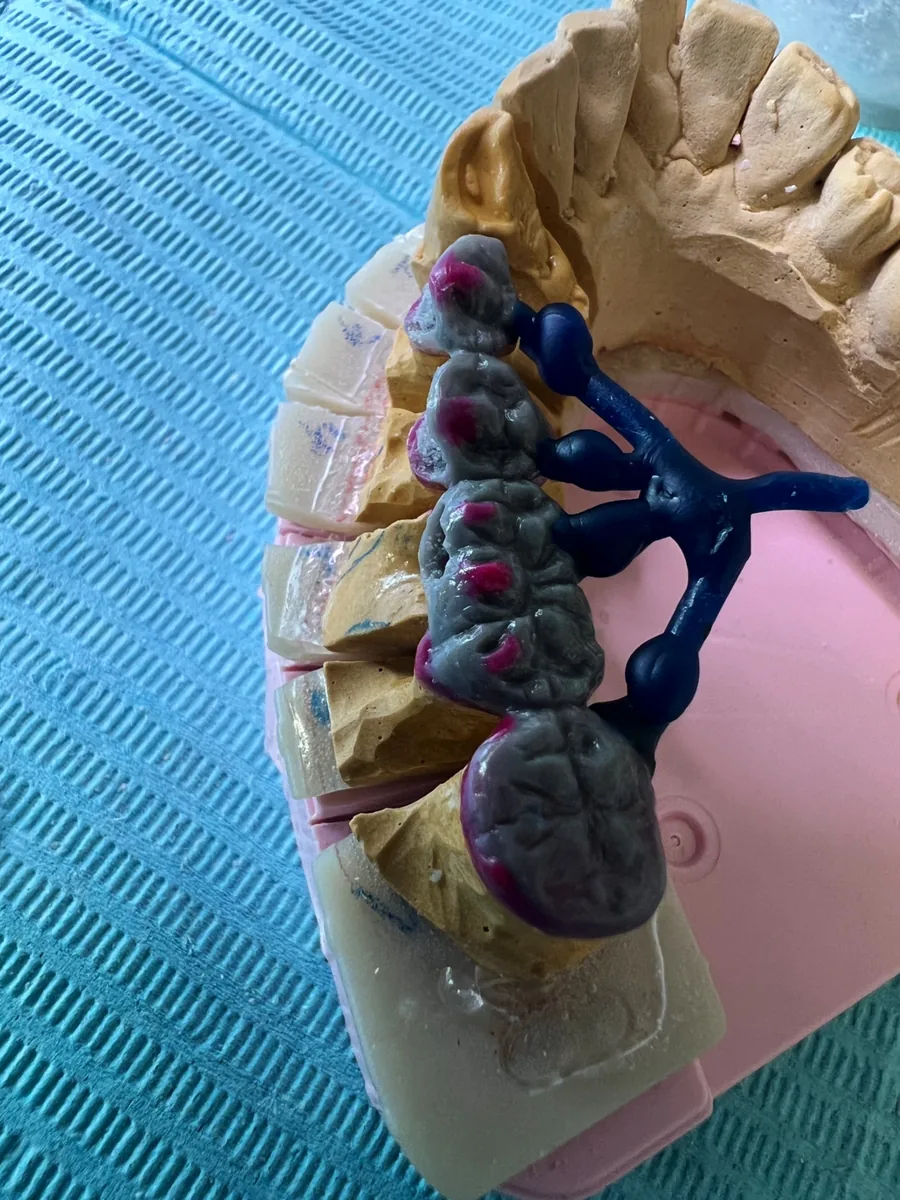
| Metal (such as platinum-gold alloy) | Provisional restorations and provisional dentures used for a long period. The shape is made in wax and converted into metal by casting |
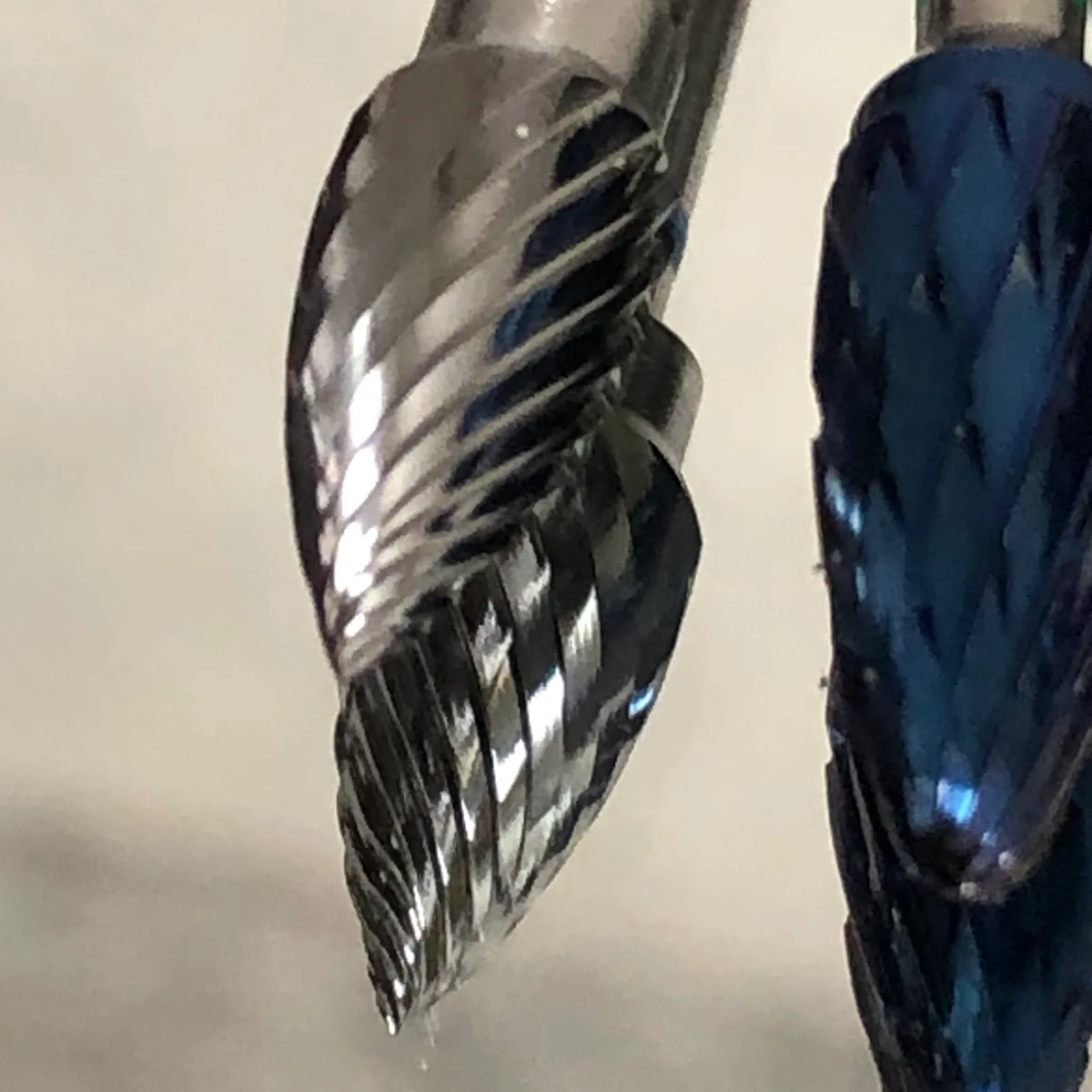
Photos: how provisional restorations are made
Why we use provisional restorations and provisional dentures
Because some things cannot be known until they are used
There are aspects of whether the final crowns or dentures really suit the patient that cannot be known until they are used.
For this reason, we check with provisional restorations and provisional dentures before making the final version.
To check appearance and comfort together with patients
The period before the final teeth are placed is also a time for checking, together with patients, not only the bite but also appearance and comfort.
Because we want to check even small restorations
We make provisional restorations even for small fillings (inlays) that restore part of a tooth.
This is so that we can move on to the final restoration while keeping the tooth functioning.
To give the examination data a form and check it
In the treatment of temporomandibular disorders (TMD), we make provisional restorations based on data such as the analysis of an X-ray of the head taken from the side (lateral cephalometric analysis) and Cadiax records.
Provisional restorations are one of the appliances used to check whether the lower jaw position derived from the examinations (the therapeutic jaw position) fits in the patient's mouth.
In practice at our clinic
From provisional restorations to the final teeth
- Based on the examination results, we decide the form and bite of the crowns or dentures on the articulator.
- We make the provisional restorations or provisional dentures in our in-house dental laboratory.
- Using the reference points as a guide, we transfer them to the mouth in the position decided on the articulator.
- While you use them, we check the bite, appearance and comfort, and change the shape as needed.
- Provisional restorations that will be used for a long period are made of a material that can withstand biting force.
- Based on what we have confirmed with the provisional restorations or provisional dentures, we make the final crowns or dentures.
In TMD treatment
At the stage of checking the therapeutic jaw position in the mouth, we sometimes use provisional restorations together with metal overlays and metal splints.
An example in which the tips of the parts that hold a provisional denture on the teeth were modified to make it easier to put in and take out is shown on the laser welding page.
In crown work
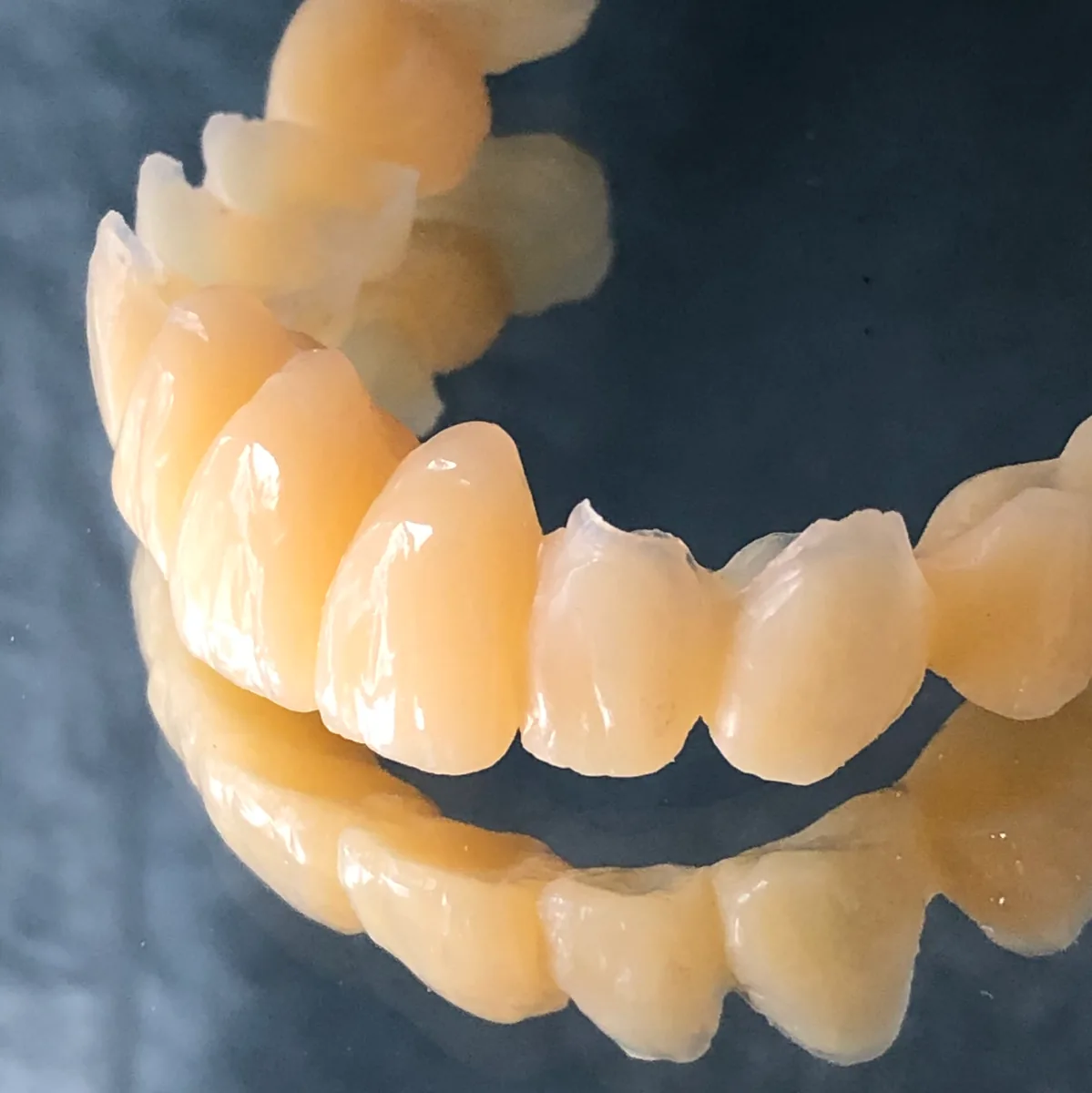
The photo at the top of this page shows full-arch provisional restorations for the upper and lower jaws, made based on examination data.
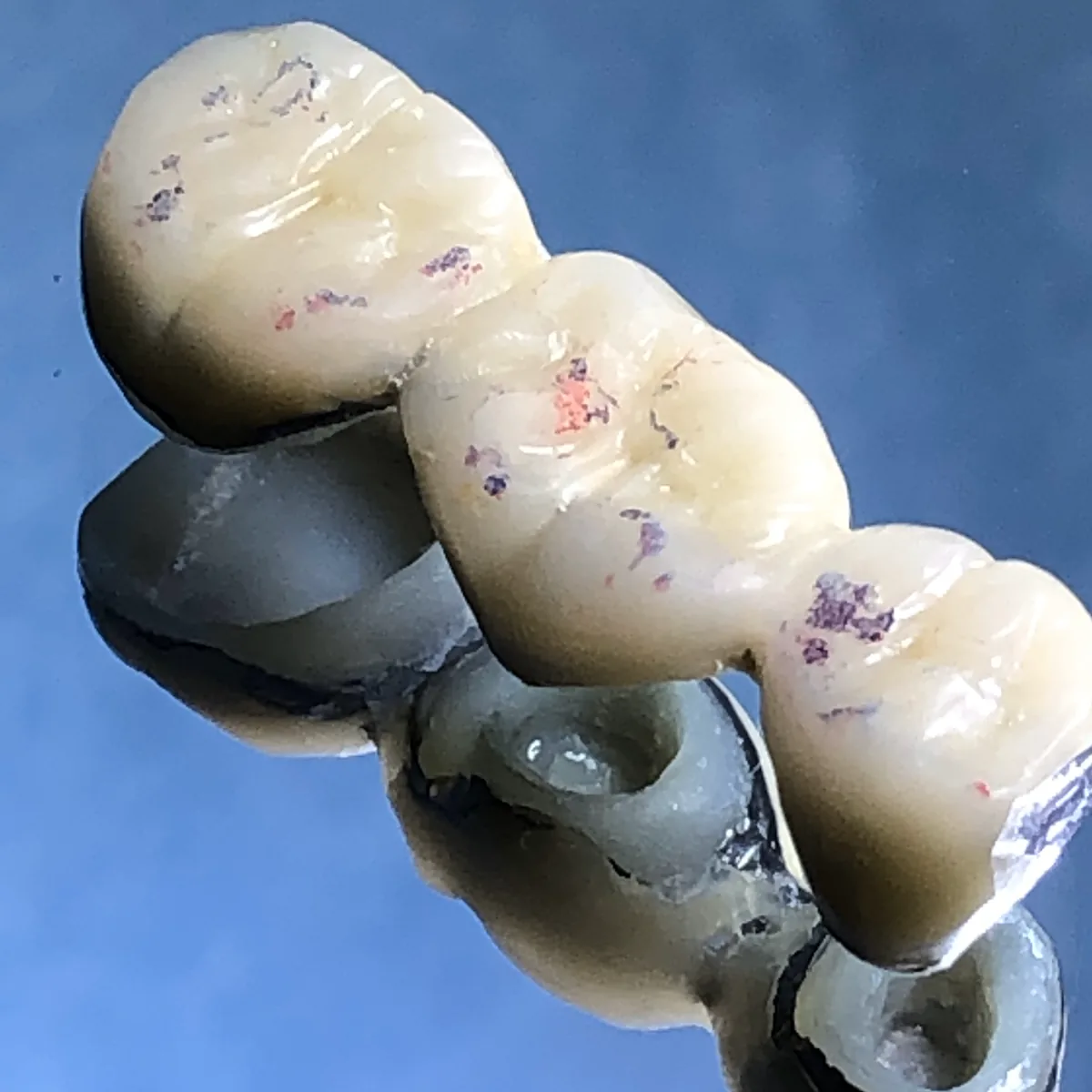
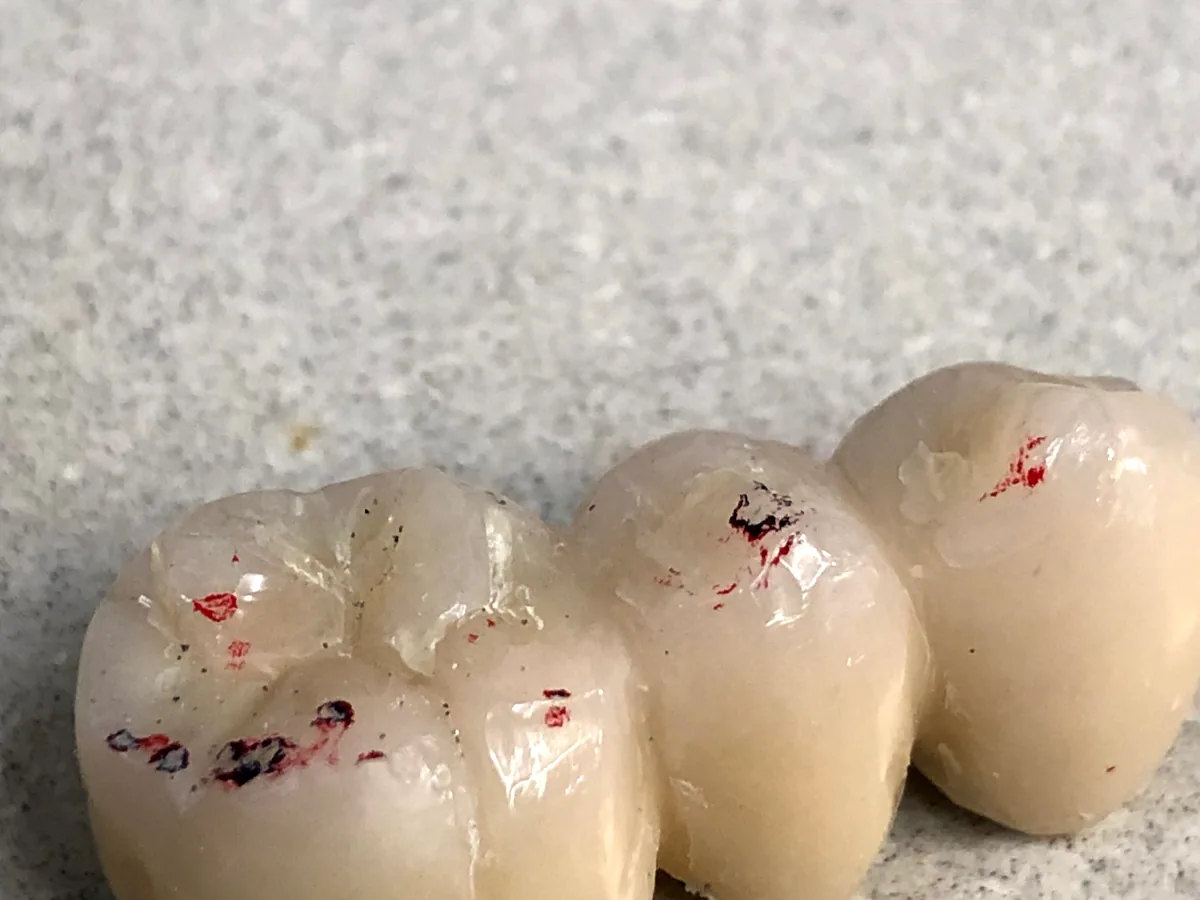
The red and blue marks on the biting surfaces of the provisional restorations in the photos below are marks from thin paper used to check the bite (articulating paper).
Photos: provisional restorations with marks left from checking the bite
How the final crowns are made is described on the zirconia crowns page.
In denture work (provisional dentures)
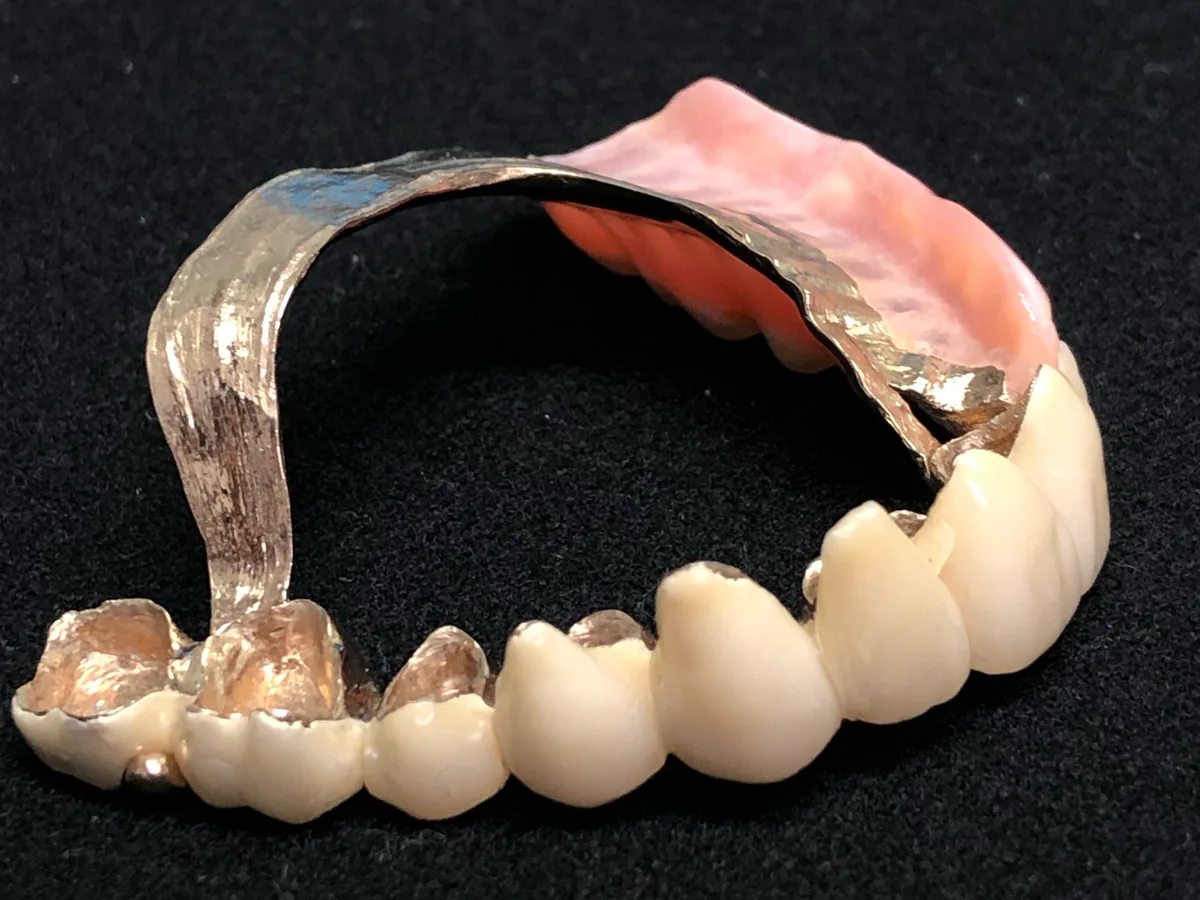
For dentures, we sometimes make provisional dentures with a metal framework of platinum-gold alloy.
To check the same mechanism as in the final denture, the components of the provisional denture are also machined to align their orientation (→ parallel milling).
Along the edges of the metal framework that touch the mucosa, we add a small raised ridge (beading), shaped to reduce air passing in and out between the framework and the mucosa.
The shape of the tongue is also reflected in the shape of the framework.
Photos: provisional dentures
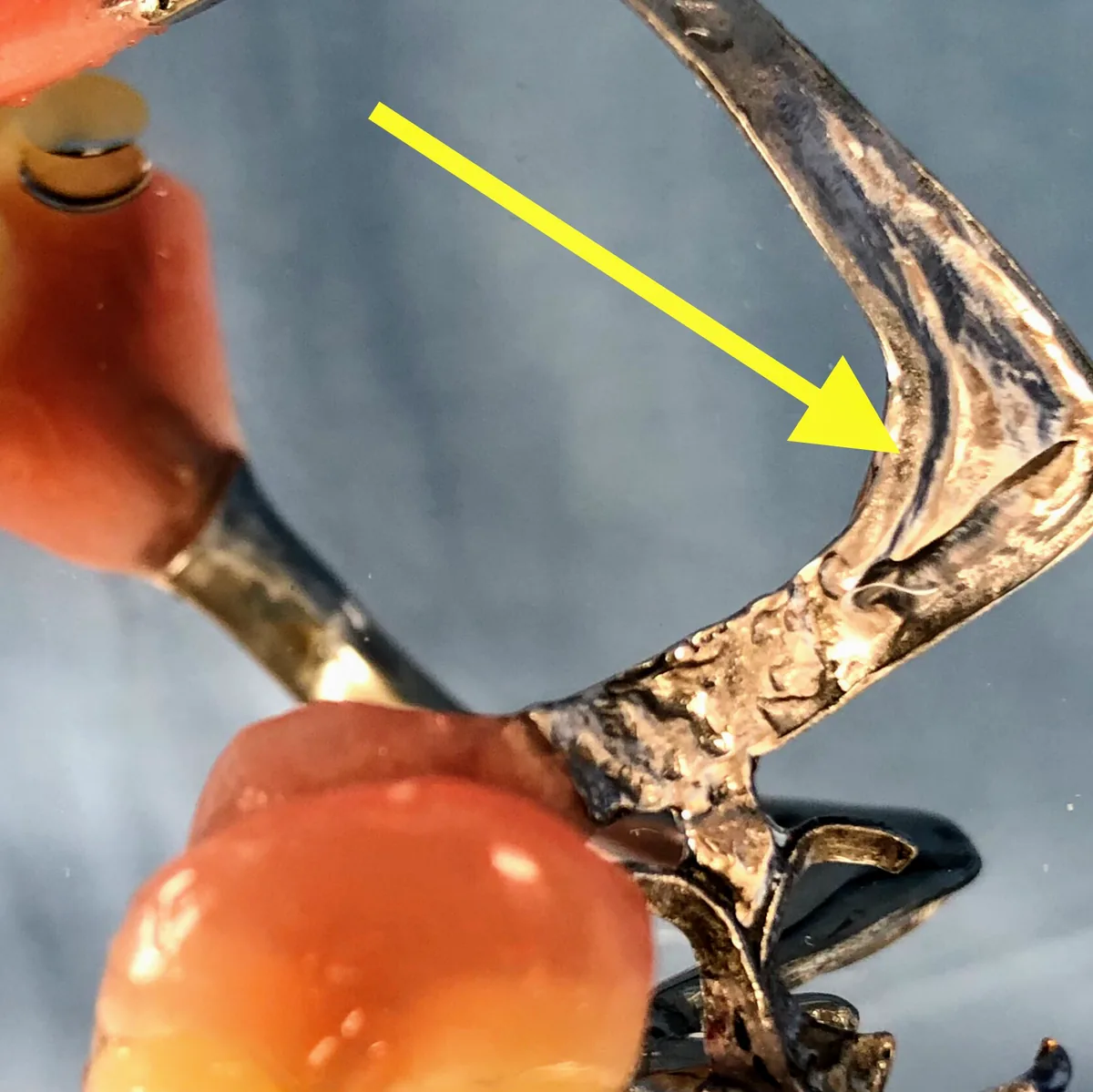
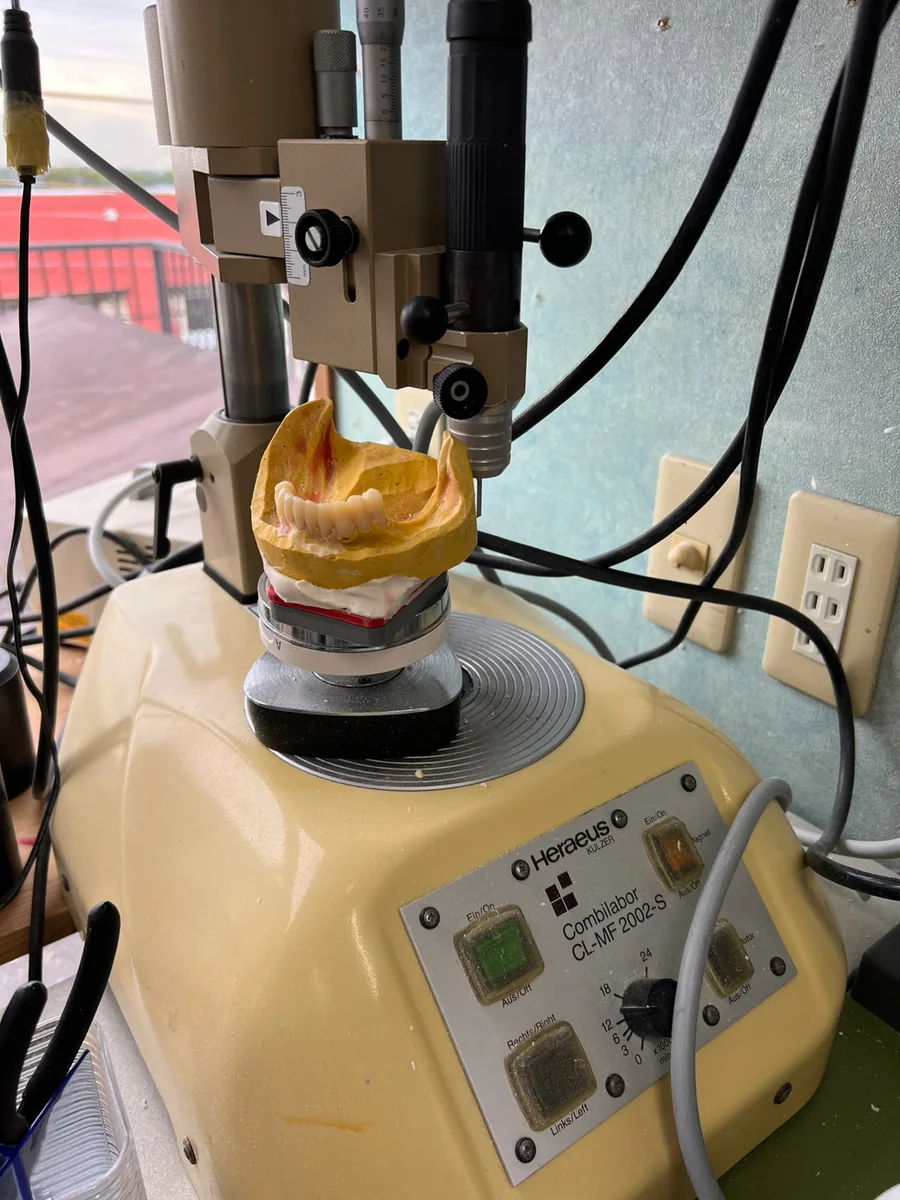
For the course of denture treatment, please see the dentures (precision dentures) page.
Discussing shape and colour
For dentures, we adjust the shape and colour of the teeth and gums in discussion with patients.
With provisional restorations for crowns too, please tell us about anything that concerns you about their appearance while you are using them.
The tools we use to make them, and how we check them
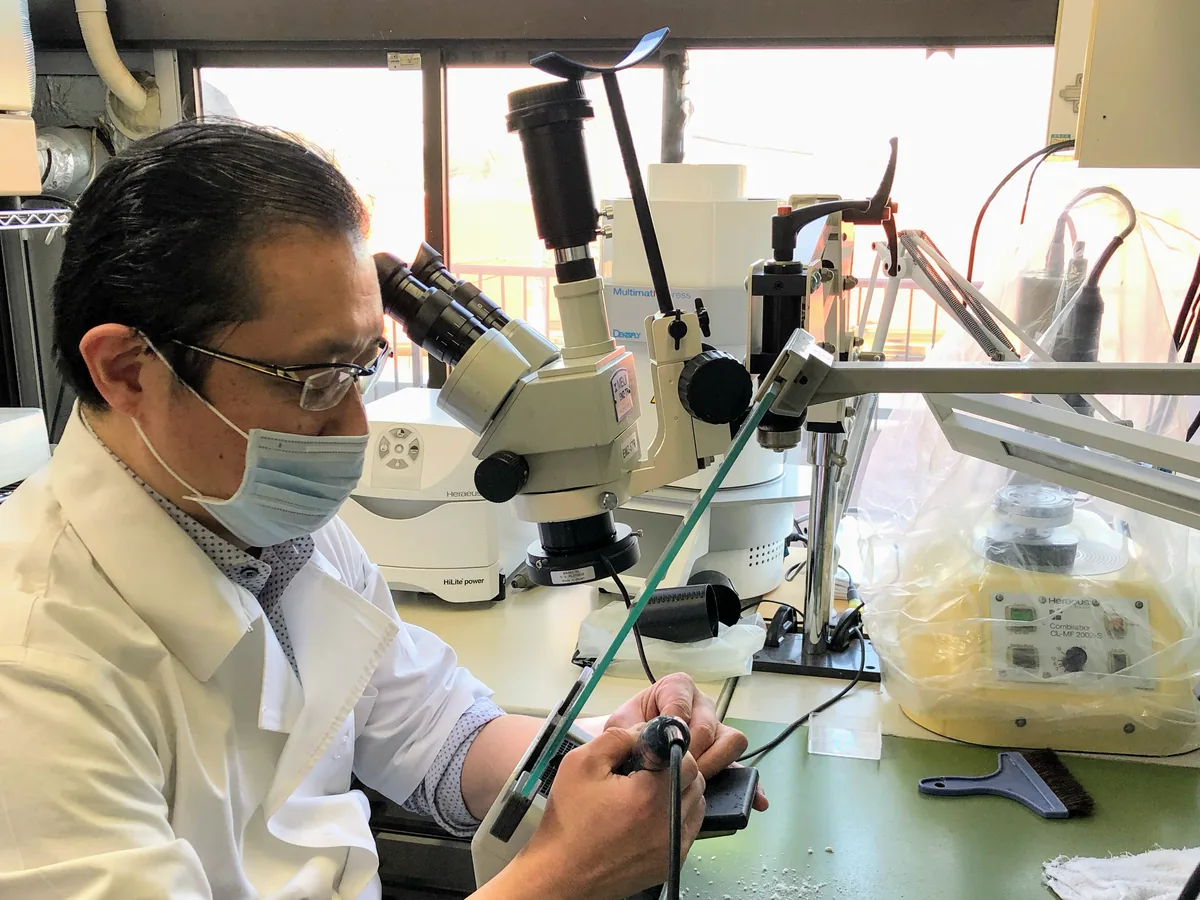
To trim provisional restorations, we use fine-cut carbide drills (burs) and a micromotor whose axis of rotation is not prone to wobble.
Finished provisional restorations are checked under magnification with a microscope (→ stereo microscope for laboratory work, dental operating microscope).
Treatment duration, number of visits, fees and risks → Fees
What provisional restorations and provisional dentures can and cannot do
What provisional restorations and provisional dentures can do
- Checking the form and bite of the final crowns or dentures while in use
- Refining appearance (shape and colour) and comfort together with patients
- Checking whether the position decided on the articulator fits in the mouth
- Gathering information for the final version while changing the shape
- Choosing the material to suit how long it will be used
What they cannot do, and how we compensate
| What they cannot do | How we compensate |
|---|---|
| Withstanding biting force for a long time with soft resin provisional restorations | We choose a material that can withstand biting force to suit how long it will be used (hybrid ceramic for a short period, metal for a long period) |
| Deciding the target bite with provisional restorations alone | We decide it from examination records (Cadiax, lateral cephalometric analysis and the Girrbach Reference SL articulator) |
| Detecting, with articulating paper, even strong contacts that occur during sleep | Contacts during sleep are recorded with BruxChecker |
| Knowing before fabrication whether the shape on the casts will also fit in the mouth | We check while you use the provisional restorations, and change the shape as needed |
After the final version is placed, we also check the bite and adjust it as needed.
The function and comfort achieved vary from person to person.
Frequently asked questions
- Why are provisional restorations needed?
Because there are aspects of whether the final crowns or dentures suit the patient that cannot be known until they are used.
We check the bite, appearance and comfort with provisional restorations and provisional dentures, and apply what we learn to the final version.
- Do you make provisional restorations even for small fillings (inlays)?
Yes. We make them even for something as small as an inlay.
This is so that we can move on to the final restoration while keeping the tooth functioning.
- Can I discuss the colour and shape of the provisional restorations?
Yes. We check appearance and comfort together with patients while they are using the provisional restorations.
Please tell us about anything that concerns you at that time.
- Are provisional dentures also made of metal?
We sometimes make provisional dentures with a platinum-gold alloy framework.
For provisional restorations and provisional dentures that will be used for a long period, we use metal.
- Where are provisional restorations and provisional dentures made?
They are made in our in-house dental laboratory, next to the treatment room.
Finished pieces are checked under magnification with a microscope.
Related technologies and treatments
- Girrbach Reference SL articulator
- Metal overlay
- Parallel milling
- Zirconia crowns
- All the technologies we use
- Dentures (precision dentures)
- Temporomandibular disorders
- Comprehensive treatment
Sources we referred to
For the general explanations (the definition of a provisional restoration and how it differs from a temporary restoration), we referred to the following published source. What we describe about our own methods is based on the director's posts and explanations.
Consultations and enquiries
Gibakai Medical Corporation
Yoshimi Dental Clinic
Square 2, Room 302 (third floor)
1-29-1 Tsukushino, Machida,
Tokyo 194-0001, Japan
TEL 042-795-1359 FAX 042-795-1398
Clinic days: Mon · Tue · Thu · Fri
10:00–13:00 / 14:30–18:00
A first visit begins with a first consultation (a private, non-insured service; 30 minutes to 1 hour) for examination and diagnosis. Questions about a diagnosis you received elsewhere are also covered within it.
In an emergency, such as being unable to chew or having severe symptoms, please call us on 042-795-1359 to discuss it.