What is titanium?
Titanium is a light metal that does not rust easily.
Its weight (specific gravity) is about a quarter of that of precious metals such as gold, and because the thin film that forms on its surface (a titanium oxide film) is stable, it is said to resist corrosion even in environments such as the inside of the body.
As a metal that is well tolerated by the body (highly biocompatible), it is used in both medicine and dentistry.
The titanium used in dentistry includes pure titanium and titanium alloys.
At our clinic, there are cases in which we used prostheses milled from titanium (which replace lost teeth or parts of teeth) and titanium orthodontic components.
There are also cases of tooth foundations (cores) milled from titanium with CAD/CAM.
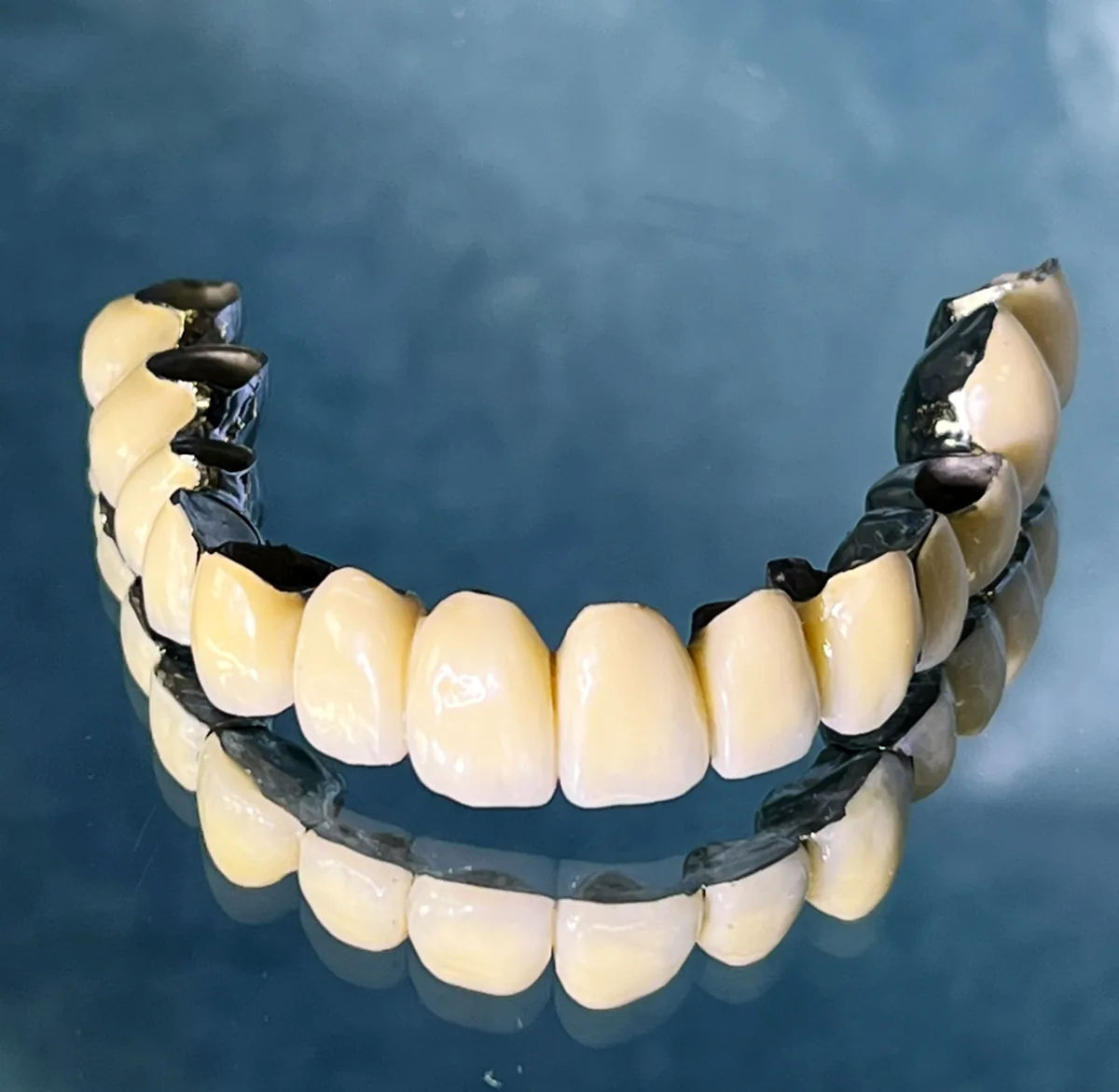
How titanium works
Milling from a large block
In general, titanium has a high melting point and, when molten, reacts readily with oxygen in the air and with the mould, which makes it a difficult metal to use for precise dental casting.
On the other hand, because metals are well suited to being shaped by cutting, a method of milling titanium with CAD/CAM (a system in which shape data are handled by computer and the material is cut by machine) is also used.
Our example of a titanium prosthesis was also milled with CAD/CAM from a large block of titanium (an ingot).
Taking account of the joint in the middle of the upper jaw
The bone of the upper jaw has a joint in the middle (the midpalatal suture).
In the upper titanium prosthesis we made, a device connecting the parts (an attachment) was placed partway along, with the intention of not hindering the movement of this joint.
Why we use titanium
Because it is a metal that can be shaped by milling
Titanium, which is generally difficult to use for casting, can be made into prostheses and tooth foundations if it is milled from a large block.
To choose materials to suit the treatment approach
The director introduces the view of Professor Sadao Sato and Professor Rudolf Slavicek that "as long as the treatment approach does not waver, any material may be used".
At our clinic, we also choose the materials that go in the mouth according to the approach and the patient's condition.
Because we have used it in orthodontic treatment for a patient with a metal allergy
There is a case in which we used titanium brackets and wire for a patient who could not use the usual cobalt-chromium orthodontic wires and components because of a metal allergy.
In practice at our clinic
| What we use it for | How we use it |
|---|---|
| Milled prostheses | In the example we made, it was milled from a large block of titanium. In the upper-jaw example, an attachment was placed partway along to connect the parts |
| Tooth foundations (cores) | There are cases of tooth foundations milled from titanium with CAD/CAM |
| Orthodontic brackets and wires | There is a case in which titanium ones were used in the orthodontic treatment of a patient who could not use the usual materials because of a metal allergy (MEAW) |
| Provisional dentures | There is a case in which a provisional denture combining titanium and platinum-gold alloy was used (provisional restorations and provisional dentures) |
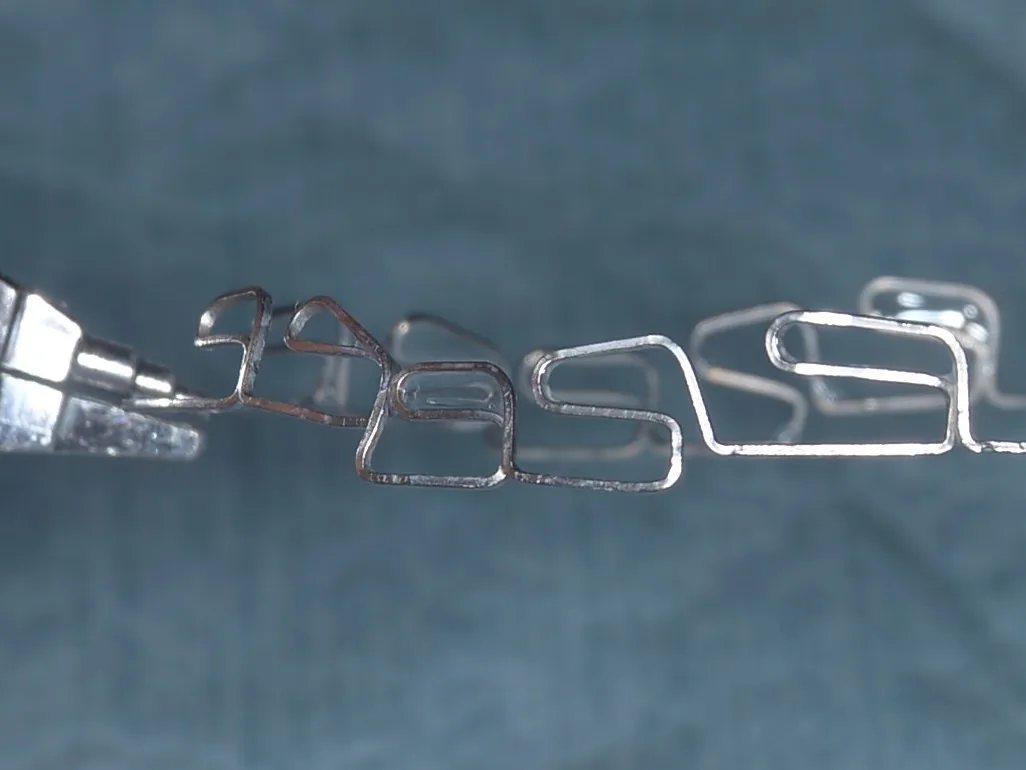
What titanium can and cannot do
What titanium can do
- Make prostheses and tooth foundations by milling from a large block
- Use it for orthodontic brackets and wires
- Use it in combination with other metals
What it cannot do, and how we compensate
| What it cannot do | How we compensate |
|---|---|
| Using it for precise casting (in general, titanium is difficult to use for casting) | We make it by milling from a large block (as in the example of the prosthesis we made) |
Frequently asked questions
- What kind of metal is titanium?
It is a light metal that resists corrosion because of the thin film that forms on its surface.
As a metal that is well tolerated by the body, it is used in both medicine and dentistry.
- How are titanium prostheses made?
In general, titanium is difficult to use for precise casting, and a method of milling it with CAD/CAM is also used.
Our example (an upper prosthesis) was also made by milling from a large block of titanium.
- Even if I have a metal allergy, can titanium be used?
At our clinic, there is a case in which we used titanium brackets and wire in the orthodontic treatment of a patient who could not use the usual materials because of a metal allergy.
Titanium cannot necessarily be used for everyone, so if you have a metal allergy, please let us know in advance.
- What is a titanium tooth foundation (core)?
It is a foundation built up in a tooth that has had root canal treatment, to support a crown.
At our clinic, there are cases in which we made tooth foundations milled from titanium with CAD/CAM.
Related technologies and treatments
- Platinum-gold alloy
- Casting
- Attachments
- MEAW
- All the technologies we use
- Root canal treatment
- Temporomandibular disorders & orthodontic treatment that avoids extractions where possible: orthodontics
- Dentures (precision dentures)
Treatment duration, number of visits, fees and risks → Fees
Sources we referred to
For the general explanations (the properties of titanium, and the difference between casting and milling), we referred to the following published sources. What we describe about our own methods is based on the director's posts and explanations.
- Miyazaki T, et al. [Evolution of dental materials for CAD/CAM]. Journal of The Showa University Society. 2015;75(1):12-20 (in Japanese; J-STAGE)
- Ohkubo C. Application of titanium casting to removable dentures and future development. The Journal of the Japanese Society for Dental Materials and Devices. 2021;40(1) (in Japanese; J-STAGE)
Consultations and enquiries
Gibakai Medical Corporation
Yoshimi Dental Clinic
Square 2, Room 302 (third floor)
1-29-1 Tsukushino, Machida,
Tokyo 194-0001, Japan
TEL 042-795-1359 FAX 042-795-1398
Clinic days: Mon · Tue · Thu · Fri
10:00–13:00 / 14:30–18:00
A first visit begins with a first consultation (a private, non-insured service; 30 minutes to 1 hour) for examination and diagnosis. Questions about a diagnosis you received elsewhere are also covered within it.
In an emergency, such as being unable to chew or having severe symptoms, please call us on 042-795-1359 to discuss it.