What is a wax-up?
A wax-up is the step in which wax is built up on casts of the teeth to create the shape of crowns, dentures or appliances used in treatment.
It corresponds to the design stage, in which what the examinations revealed is first given a visible form.
The shape made in wax is not used in the mouth as it is.
It becomes something actually used only once it has been converted into metal by casting, or optically scanned and milled from zirconia.
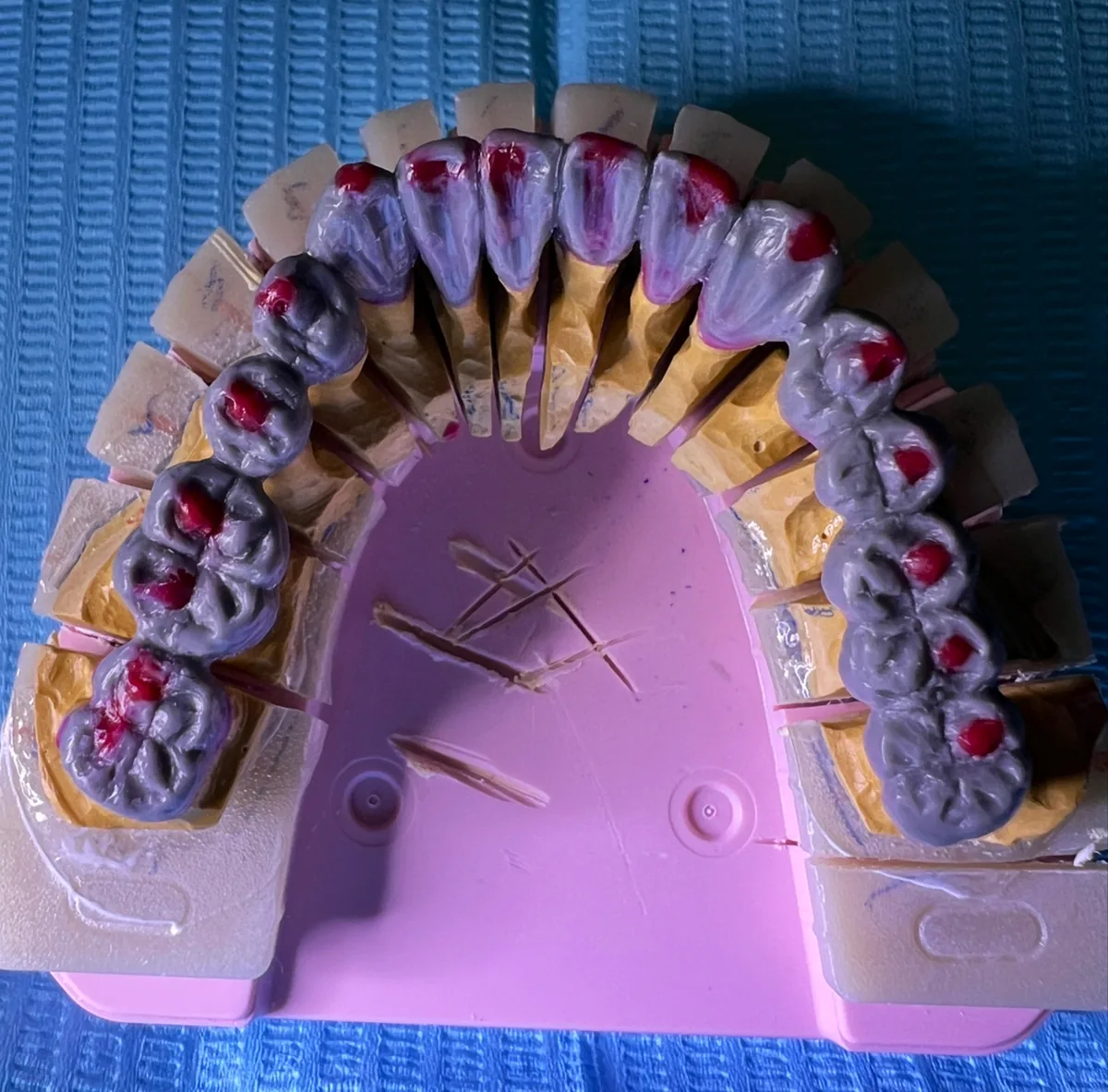
How a wax-up works
At our clinic, a wax-up proceeds in the following order.
- Preparing the casts: casts are made from impressions of the teeth. When the bite is to be examined in detail, we use a "sectioned cast", which is cut apart so that each tooth can be removed individually.
- Mounting on the articulator: the upper and lower casts are mounted on an articulator (a device that reproduces how the jaws are positioned and move in relation to each other), and the values measured in examinations, and values calculated from them, are set.
- Shaping each tooth individually: wax is built up to form the shape, taking into account the height and angle required for each tooth.
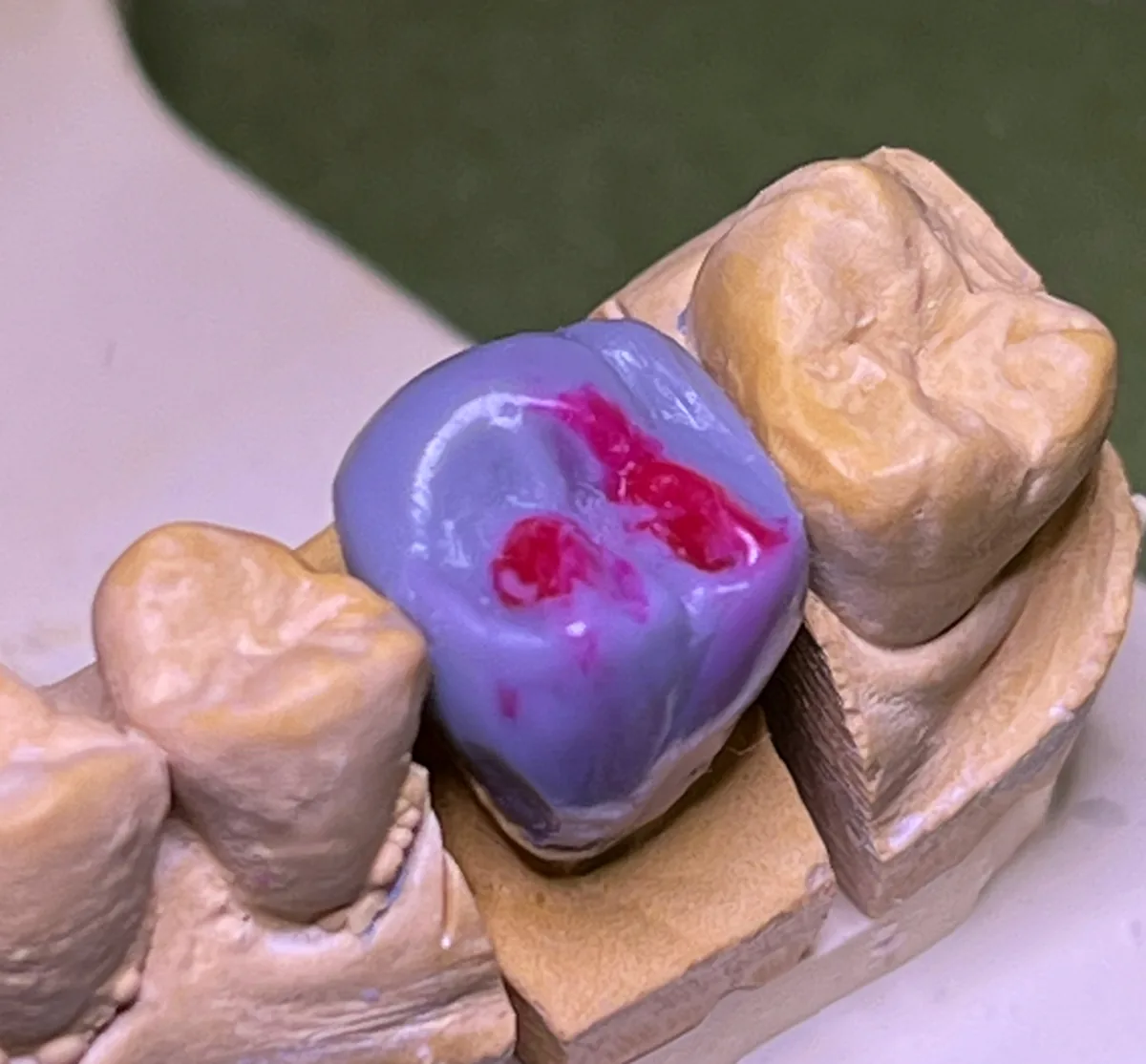
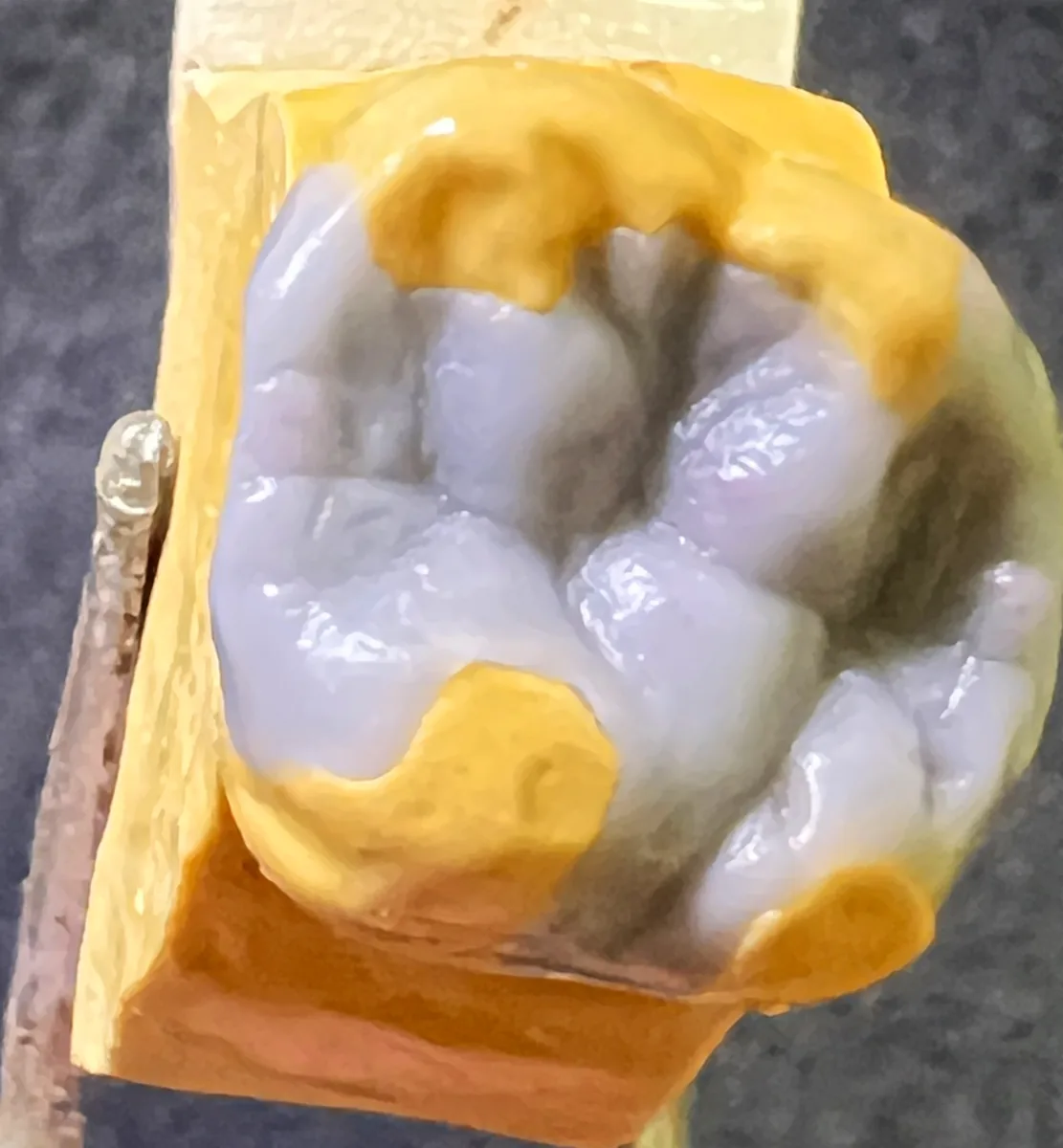
- Colour-coding by function: the biting surfaces may be made with wax in different colours so that the function of each part can be distinguished.
- Converting to another material: the finished shape is converted into metal by casting, or optically scanned and converted into zirconia.
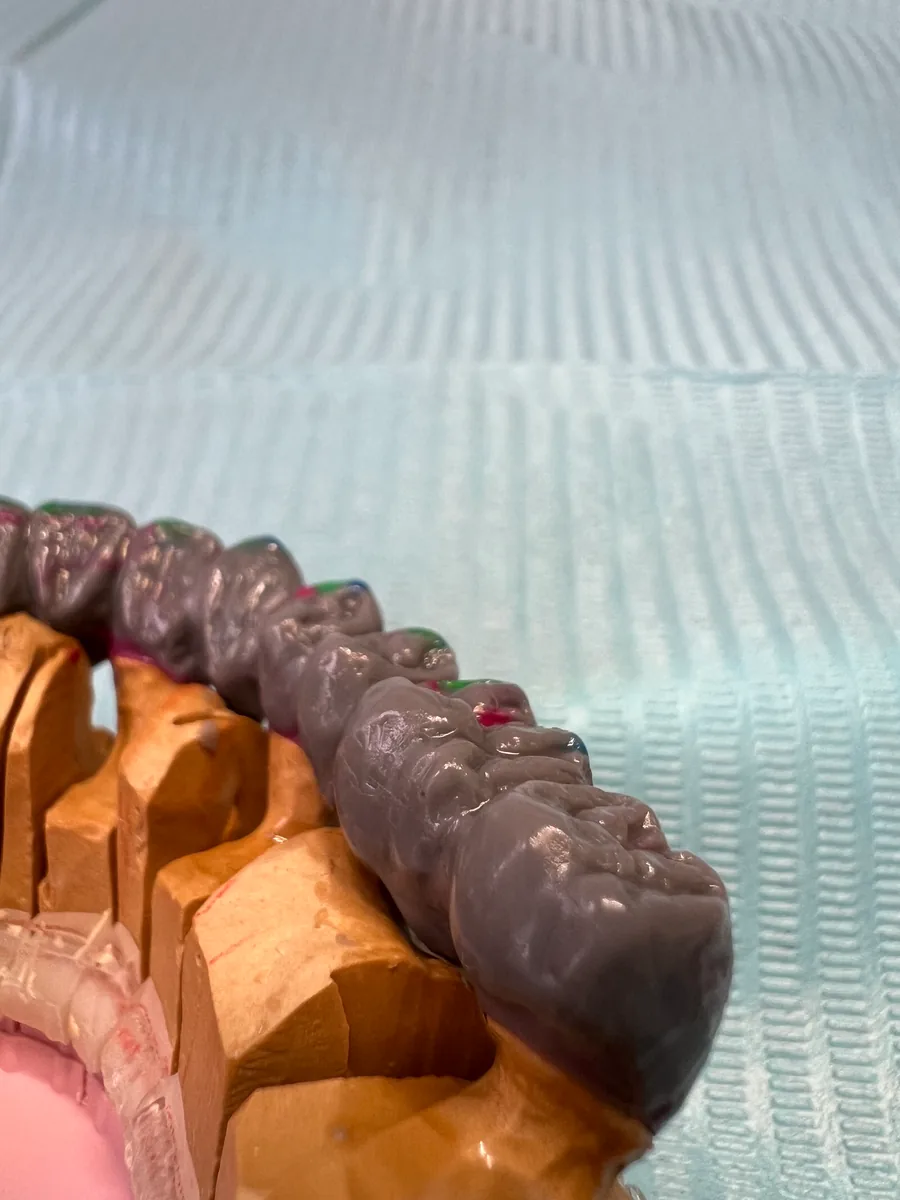
What the colour coding means
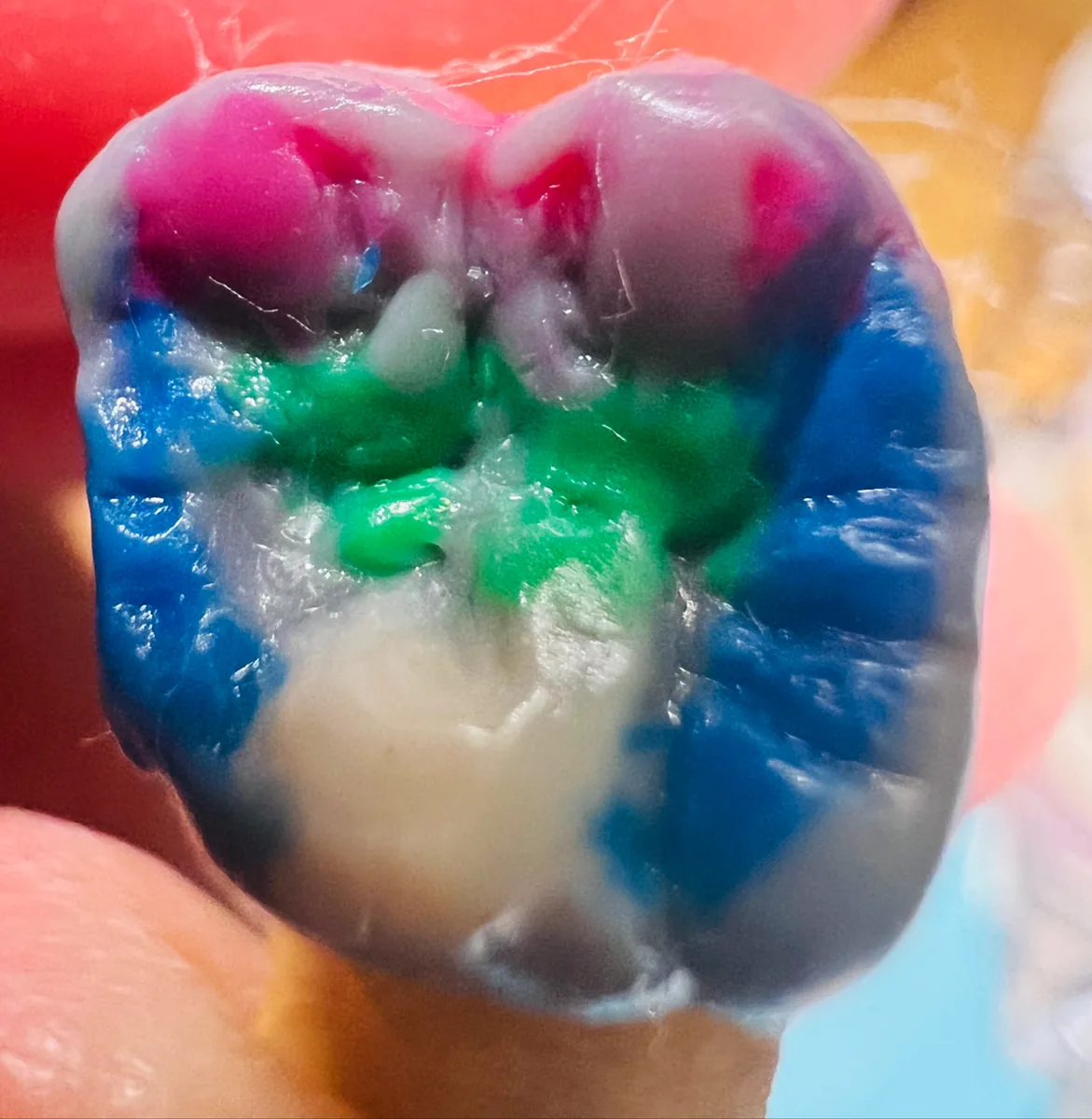
The biting surfaces are coloured so that the function of each part can be distinguished and checked.
The director calls this colour distinction "the decomposition of function".
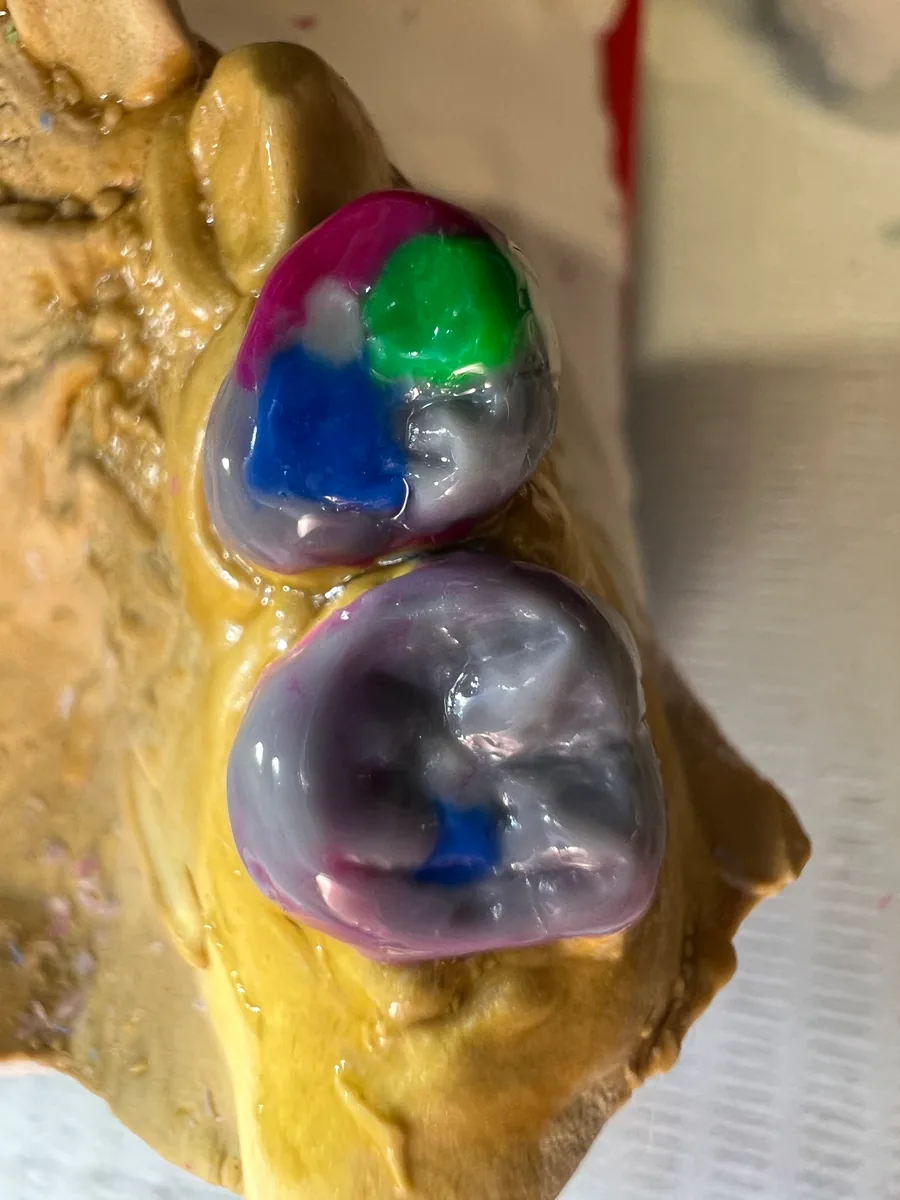
For example, for the wax of the two back teeth in the photo below, the director has noted the meaning of the colours as follows.
| Colour | What it represents (the director's notes in brackets) |
|---|---|
| White | Points of contact in the intercuspal position, where the upper and lower teeth fit together most deeply (ICP point) |
| Blue | Areas shaped so that they do not make contact when the lower jaw moves backwards (Retrusive free area) |
| Green | Guidance when the lower jaw moves sideways (Latrorusive guidance) |
| Red | Guidance of forward movement (Anterior guidance) |
Arrows drawn on the photo are also sometimes used to show the direction and distance of the lower jaw's backward movement.
Photos: colour-coded wax
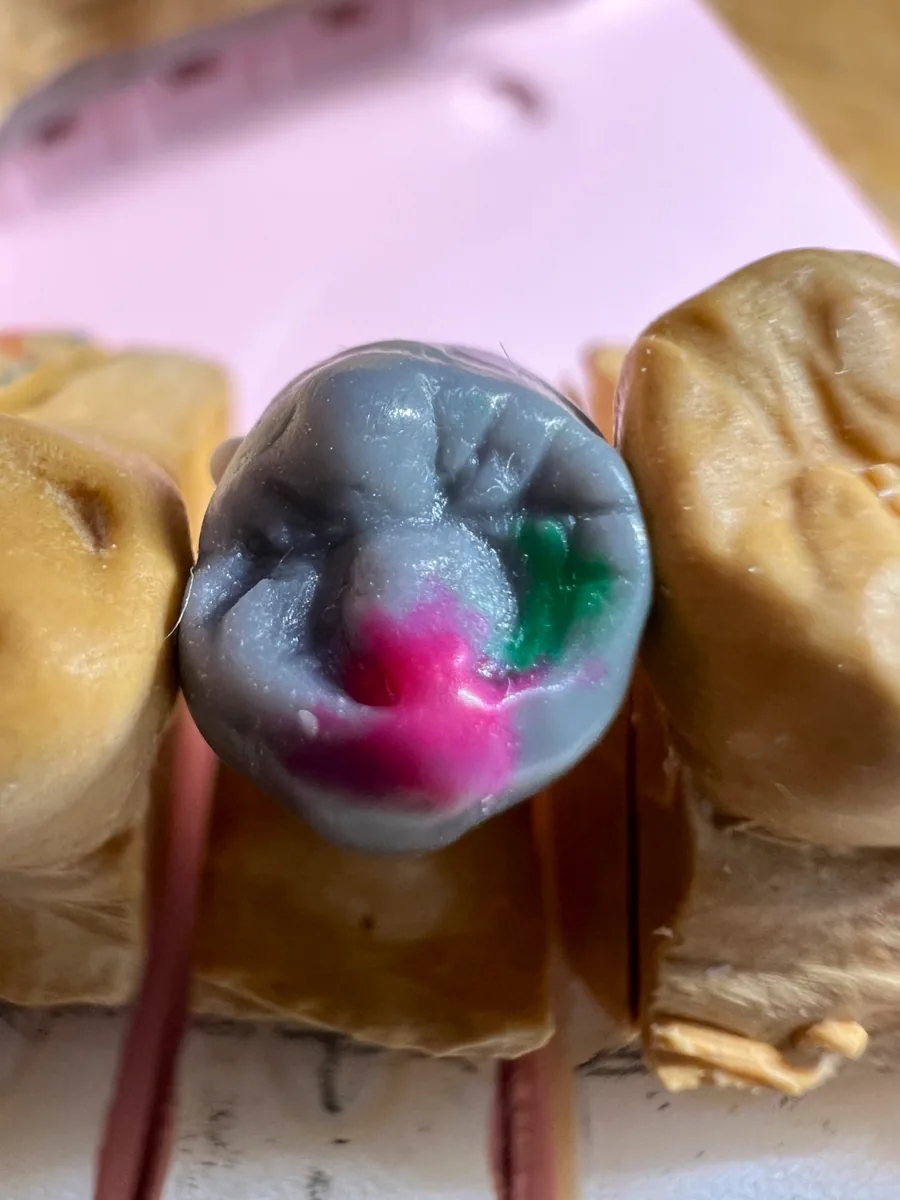
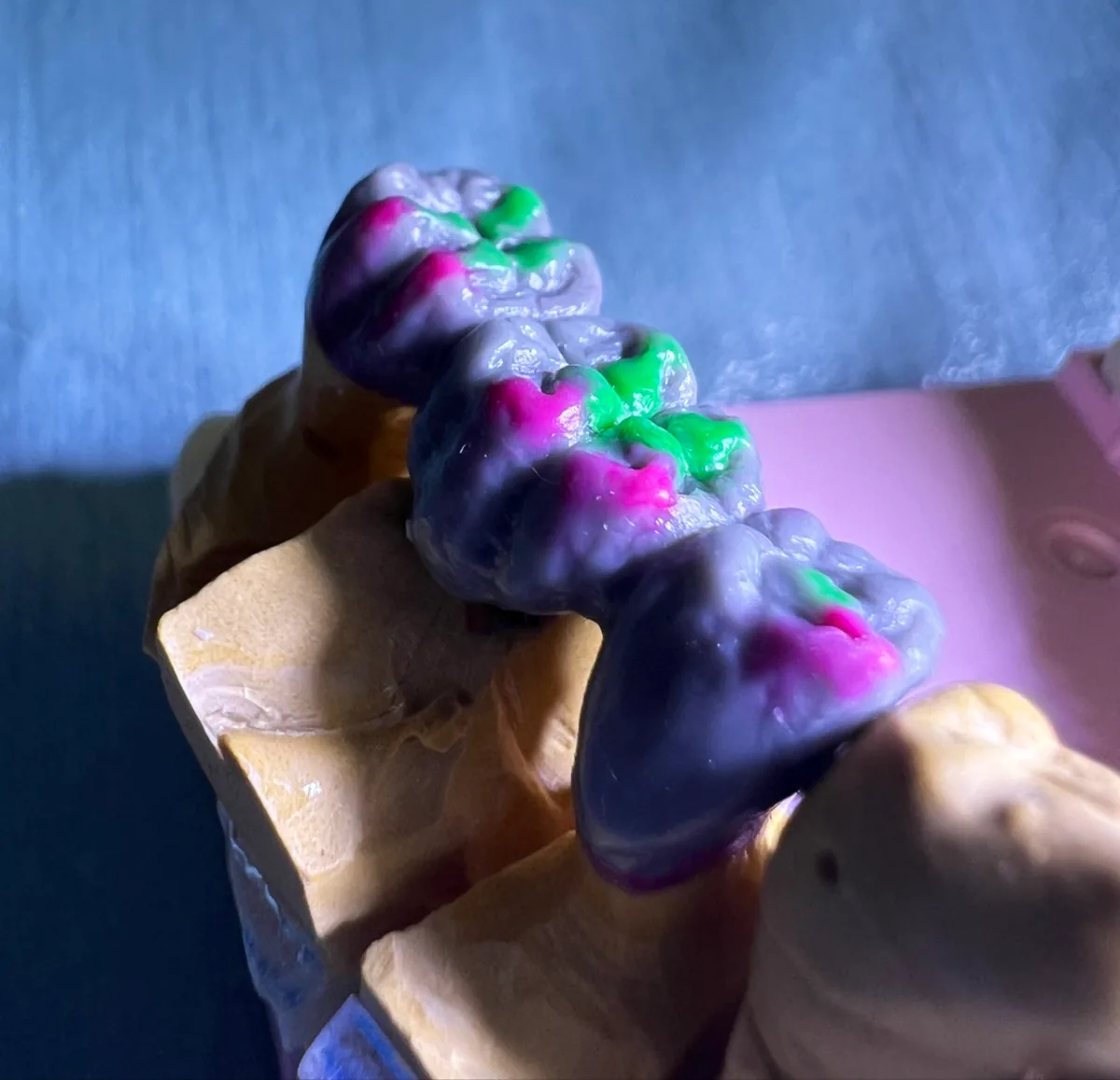
Shapes that take account of angles and the flow of food
Angles taken from the three-dimensional records of the jaw joints are sometimes drawn as lines on the wax-up to check them.
The red parts on the front teeth are shaped with the flow of chewed food in mind.
Photos: shapes shown with lines and colours
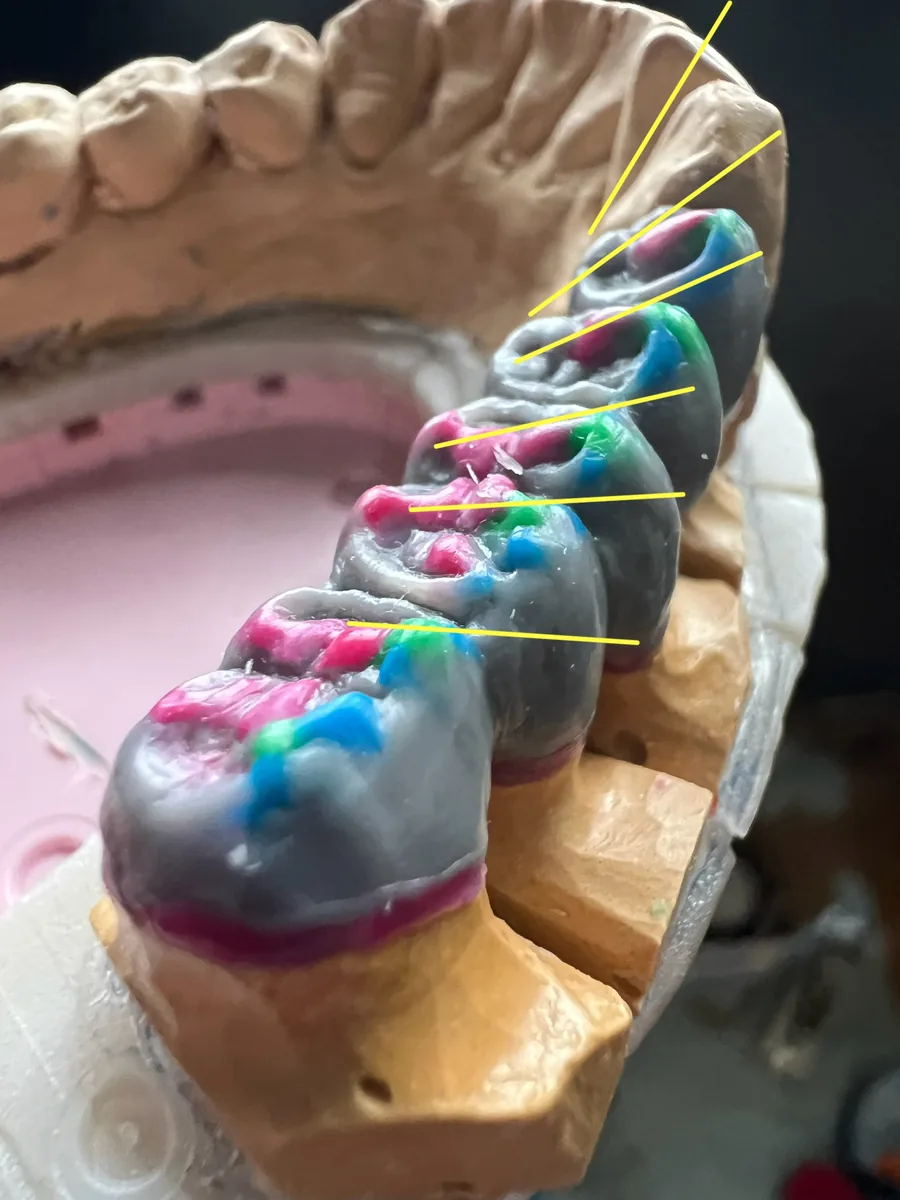
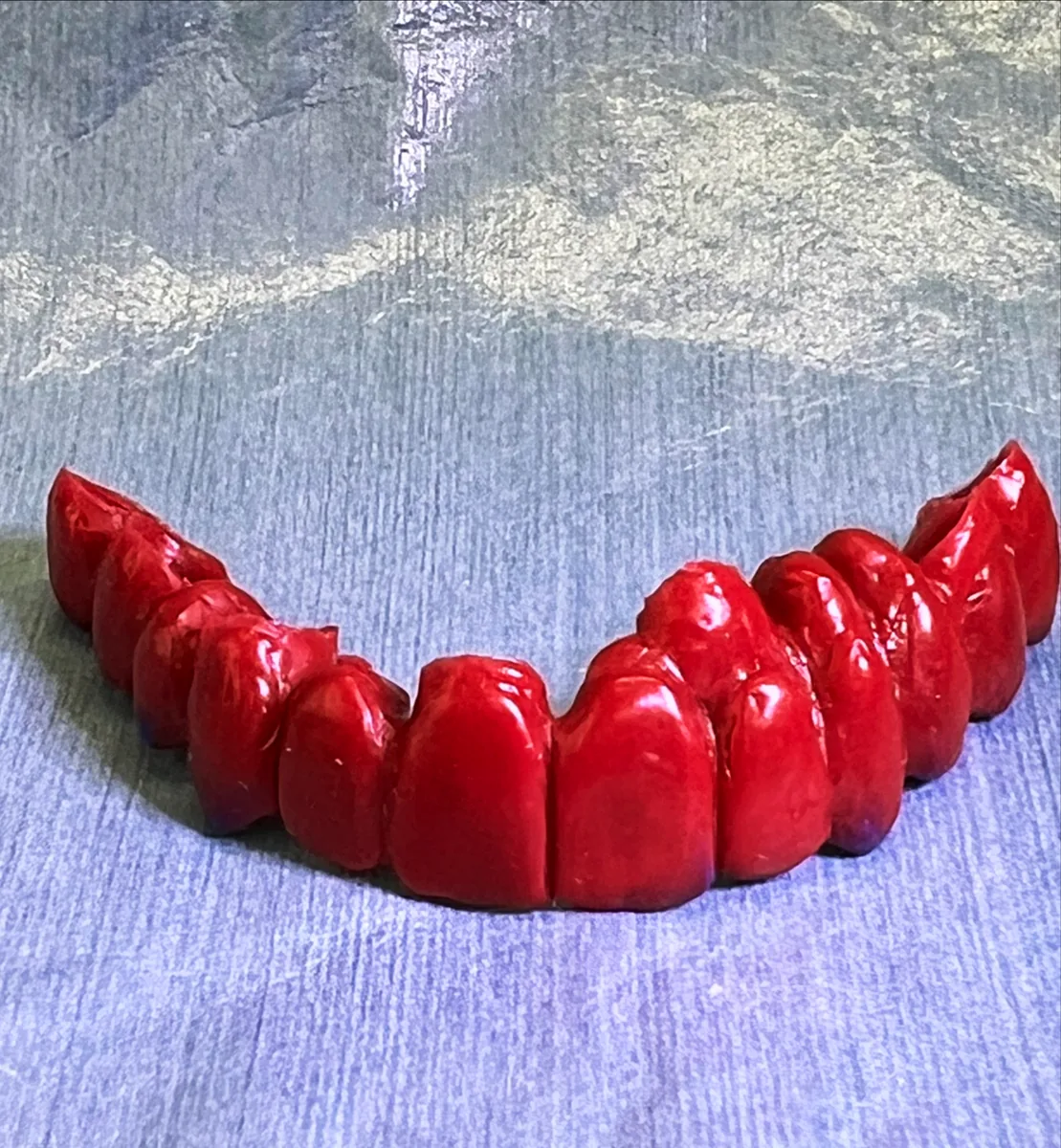
Why we use wax-ups
Because examination information becomes usable only once it is given form
Examinations provide a great deal of information about the skeleton, jaw movement, the position of the teeth and the bite.
The director believes that if the information gathered cannot be expressed in a form, there is no point in having gathered it.
The wax-up is the first stage in expressing that information in a form.
Because words and paper alone cannot convey every detail
The director's view is that it is difficult to convey this much information in full detail by word of mouth or on a single sheet of paper alone.
At our clinic, we express the examination information directly in the shape of the wax, in our in-house dental laboratory.
Because each tooth has a different shape
Even for the same type of tooth, the appropriate shape differs completely depending on that person's condition.
Because each tooth requires its own height and angle, we decide the angle of each tooth separately and shape the teeth one by one.
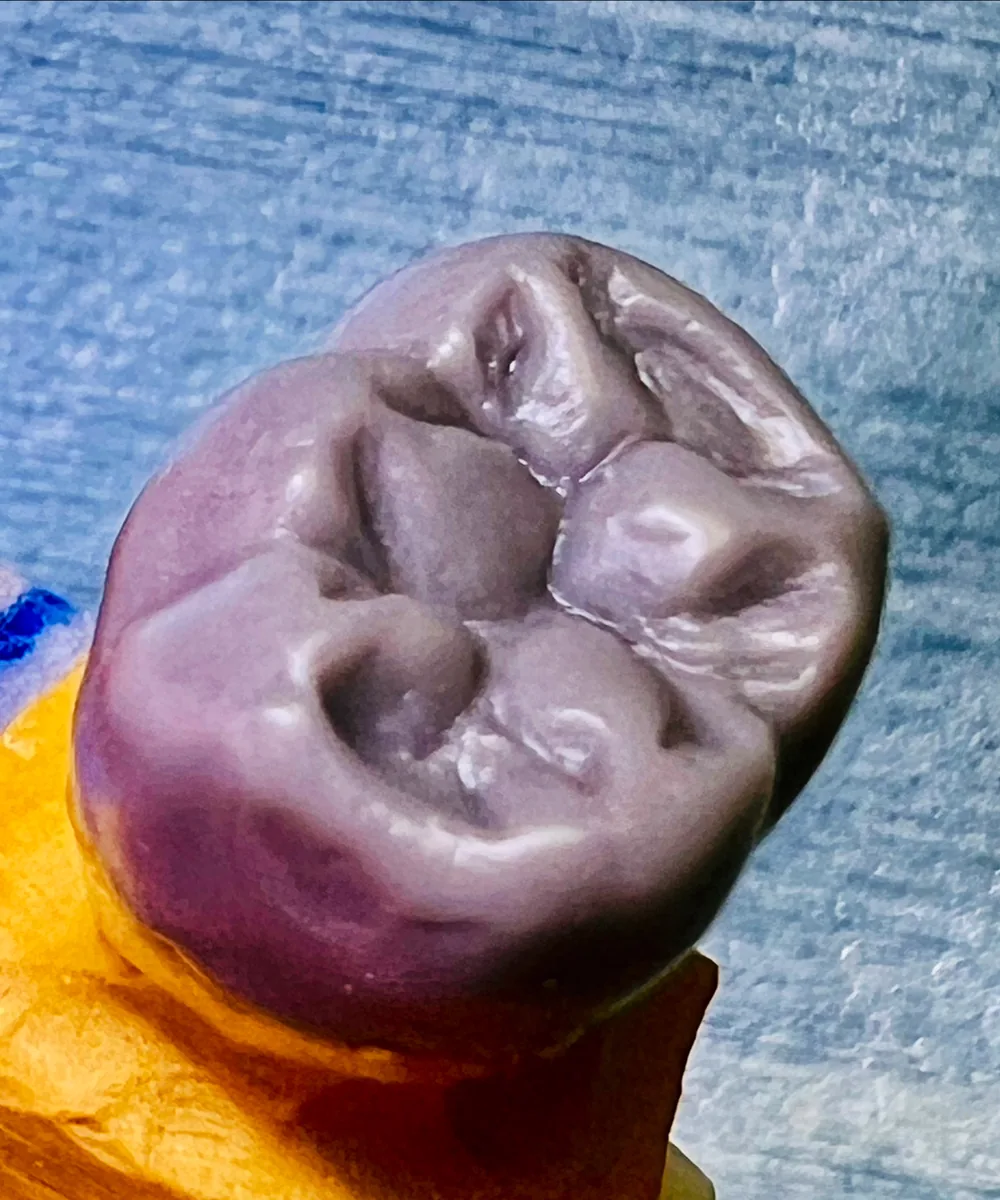
Because we want the shape to have a function
At our clinic, giving the shape a function is what we value most.
The results of analysing the condition of the body are first expressed in the shape of the wax.
Whether we are treating a single tooth or all the teeth, we put the same effort into creating the shape.
In practice at our clinic
Treatments that involve a wax-up
- Crowns (zirconia): the shape made in wax is optically scanned and milled (zirconia crowns).
- After orthodontic treatment or treatment for temporomandibular disorders (TMD): crowns to maintain the bite that has been put in order are designed in wax.
- Metal appliances used in TMD treatment, and metal provisional restorations: the wax shape is converted into metal by casting (metal overlay, provisional restorations and provisional dentures).
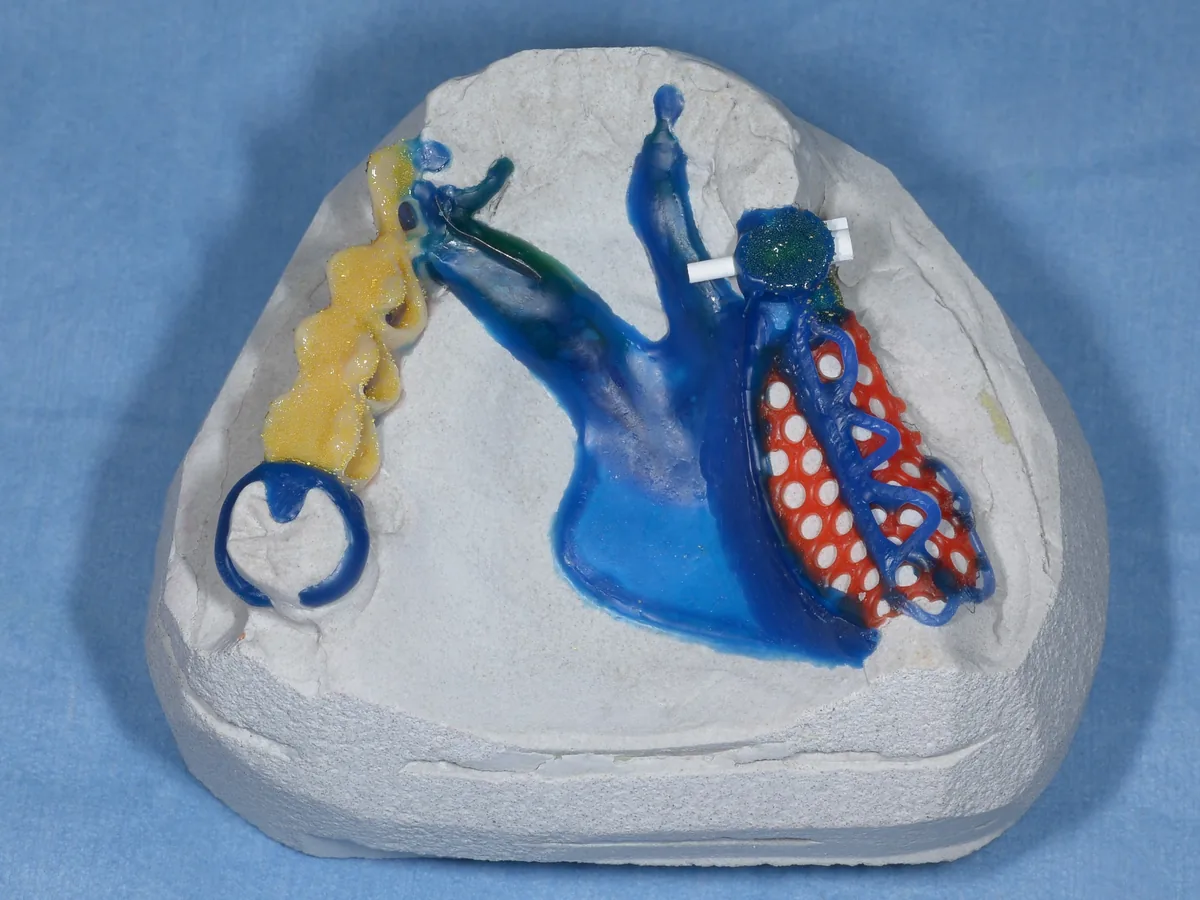
- Metal denture frameworks: the wax-up is done on a cast that withstands the heat of casting (a refractory cast) (casting).
From examination to the finished form
- We examine jaw movement (Cadiax), the skeleton (lateral cephalometric analysis), the condition of the teeth and so on.
- The examination values are set on the articulator, and the casts are mounted.
- Each tooth is shaped in wax on the casts, one by one.
- The wax shape is converted into metal by casting, or optically scanned and converted into zirconia.
- The finished piece is placed in the mouth and checked, for example by recording jaw movement again.
Before the final crowns or dentures, the shape and bite may be checked with provisional restorations or provisional dentures.
When the data for provisional restorations are transferred to the mouth, too, the shape decided on the articulator is brought back accurately on the basis of reference points.
A wax-up is work carried out on casts.
Photos: single teeth made on casts
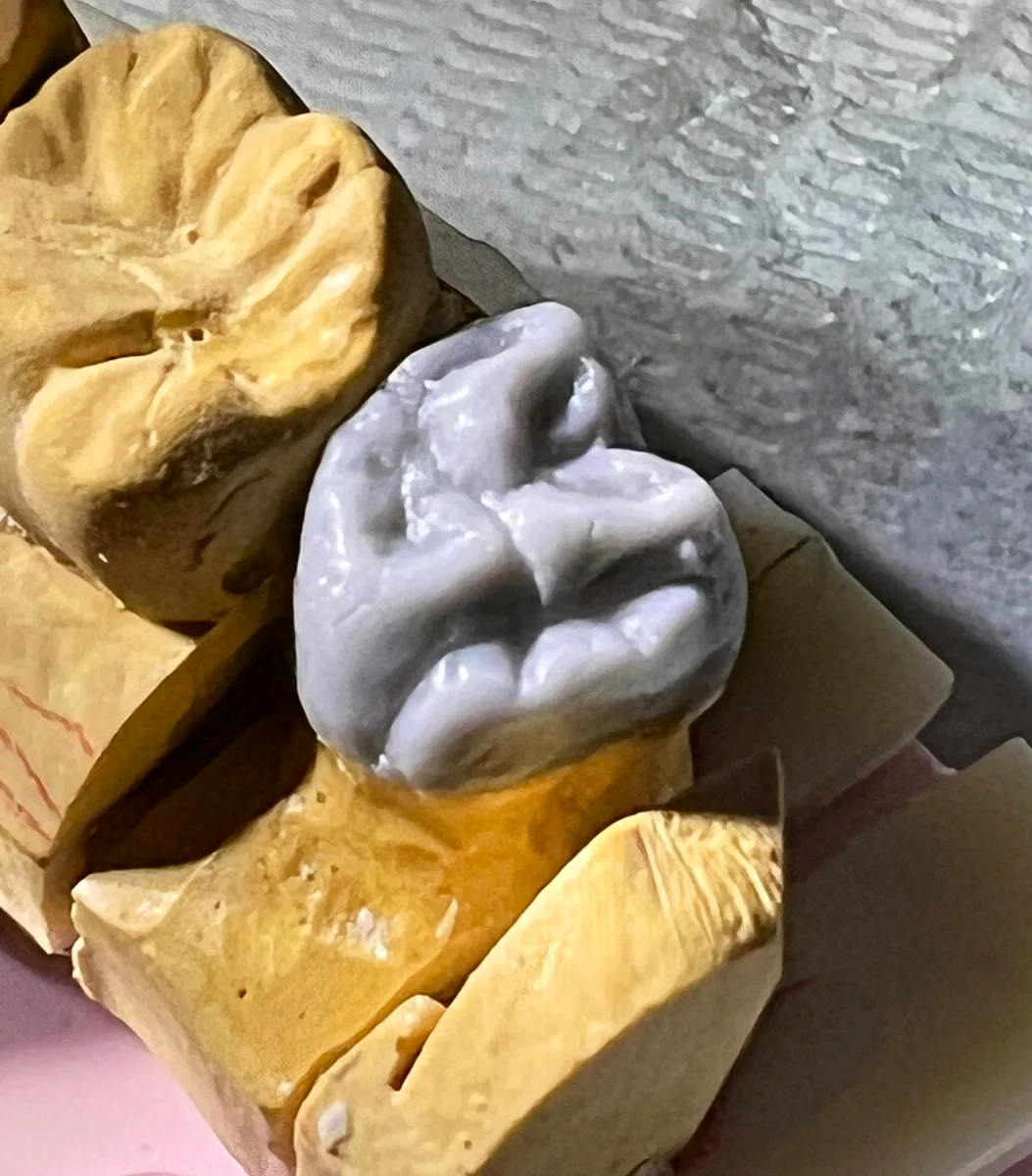
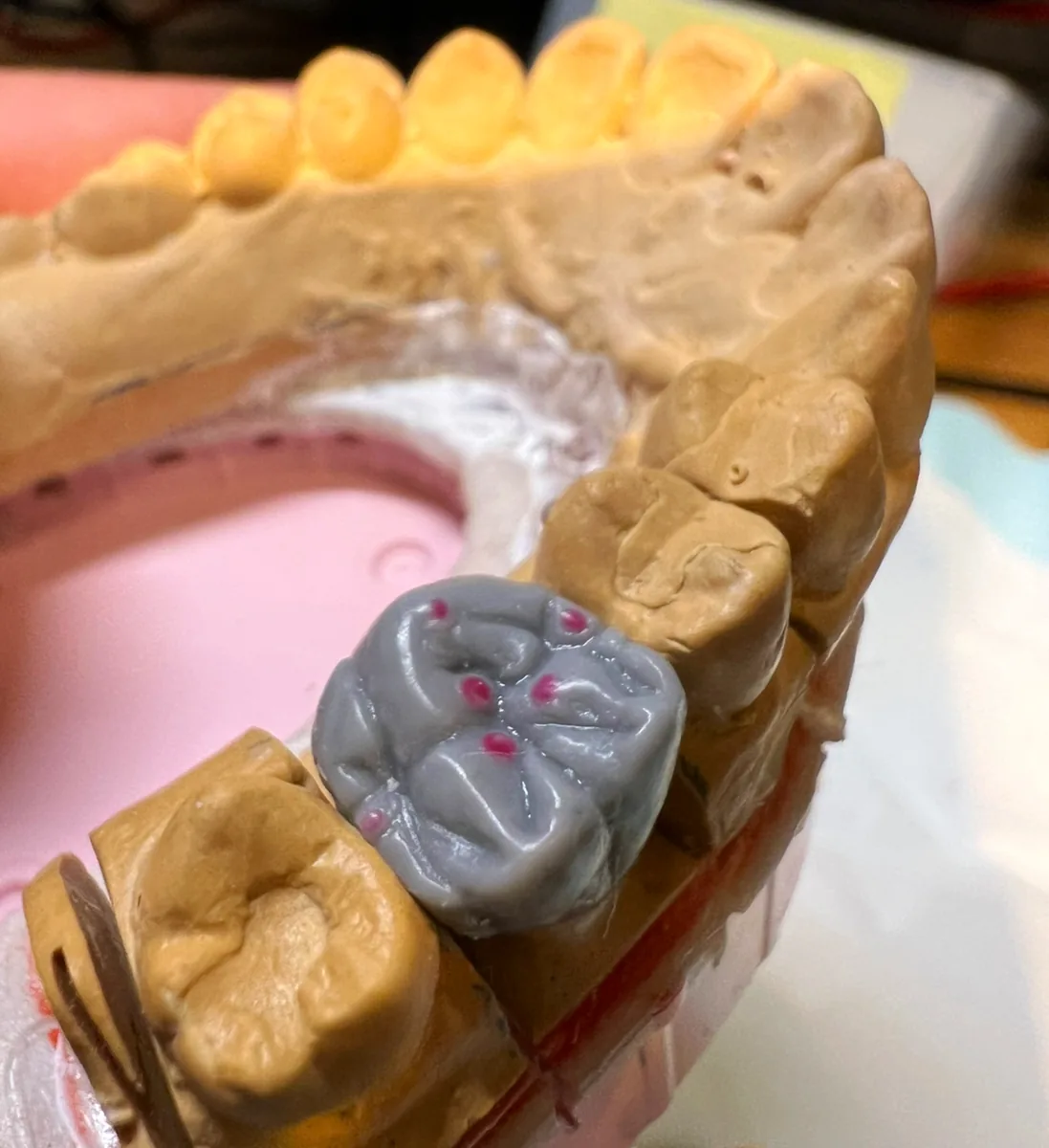
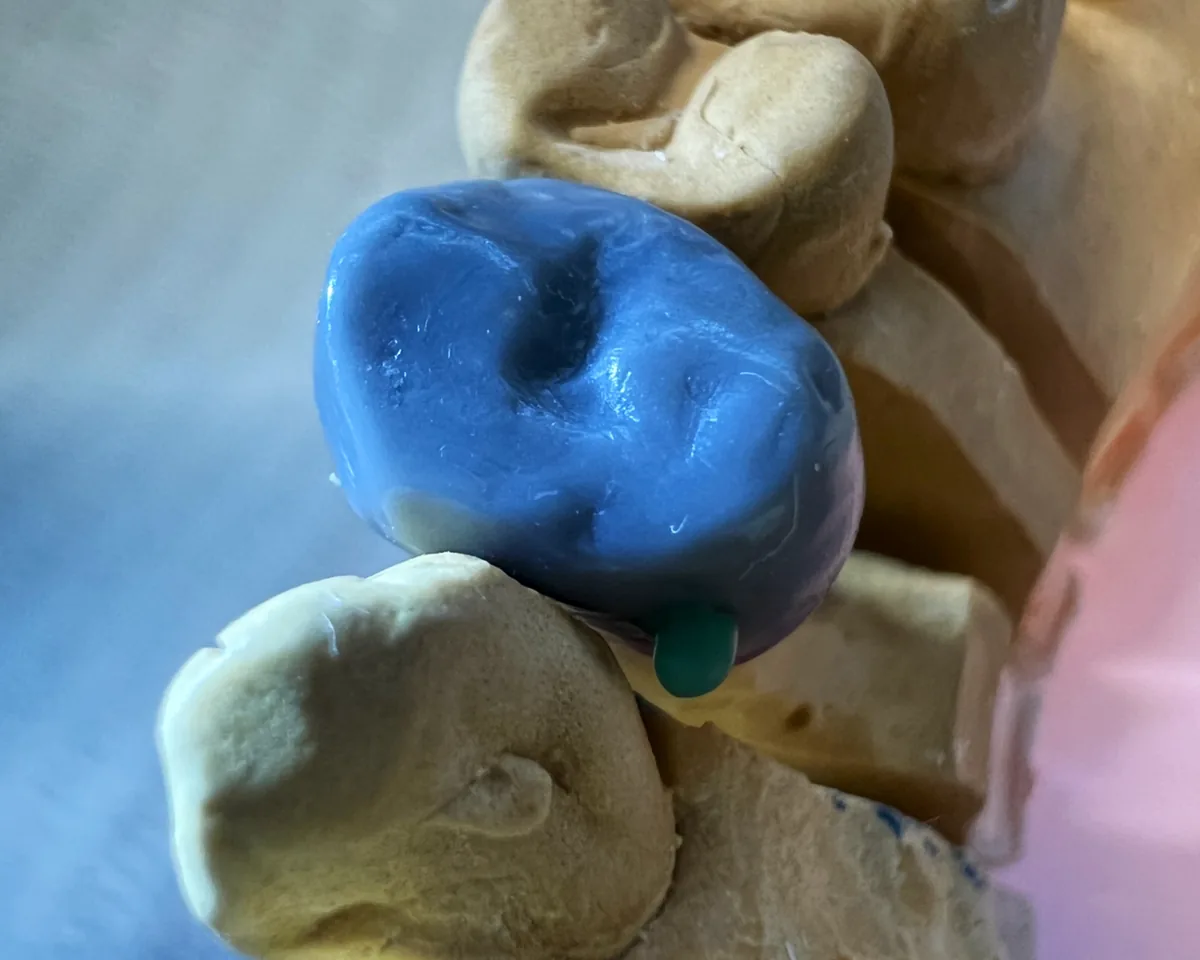
Photos: wax before conversion into another material
What a wax-up can and cannot do
What a wax-up can do
- Give what the examinations revealed a visible form, and check it
- Shape each tooth individually, taking account of its height and angle
- Check the function of each part of the biting surface by colour-coding it
- Design everything from a single crown to all the teeth and denture frameworks with the same approach
What it cannot do, and how we compensate
Wax is a material for deciding the shape.
It cannot be used in the mouth as it is, and slight deviations in shape also arise when it is converted into another material.
| What it cannot do | How we compensate |
|---|---|
| Using it in the mouth as wax | We convert it into metal by casting, or optically scan it and convert it into zirconia |
| Eliminating deviations in shape when it is converted into another material | We build in correction values that allow for shrinkage in casting and of resin (casting). We correct the shape after sintering (zirconia crowns) |
| Knowing the jaw movement and skeletal structure, which do not show on casts | We set the values from Cadiax and lateral cephalometric analysis on the articulator and use them |
| Checking whether the shape on the casts fits in that person's mouth | We check it by trying it out as provisional restorations and provisional dentures, and record again after fitting |
| Checking fine details of the shape with the naked eye alone | We check under magnification with the stereo microscope in our dental laboratory |
Frequently asked questions
- What is a wax-up done for?
To express what the examinations revealed in the shape of crowns, dentures or appliances.
After the shape is decided in wax, it is converted into metal or zirconia.
- Why is the wax coloured?
To distinguish and check the function of each part of the biting surface.
For example, the points where the upper and lower teeth meet and the surfaces that guide the lower jaw as it moves sideways or forwards are distinguished by colour.
- Is a wax-up done even for a single crown?
Yes. For zirconia crowns, even for a single tooth, we first make the shape in wax, then optically scan that shape and mill the crown.
This page also includes photos of wax-ups of single teeth.
- How does the wax shape become metal or zirconia?
For metal, the wax shape is converted by casting.
For zirconia, the wax shape is optically scanned into data and milled with CAD/CAM.
- Where are wax-ups done?
This is done in our in-house dental laboratory.
Related technologies and treatments
- Casting
- Zirconia crowns
- Sectioned cast
- Girrbach Reference SL articulator
- All the technologies we use
- Temporomandibular disorders & orthodontic treatment that avoids extractions where possible: making appliances
- Dentures (precision dentures): making the denture
- Aesthetic dentistry
Treatment duration, number of visits, fees and risks → Fees
Consultations and enquiries
Gibakai Medical Corporation
Yoshimi Dental Clinic
Square 2, Room 302 (third floor)
1-29-1 Tsukushino, Machida,
Tokyo 194-0001, Japan
TEL 042-795-1359 FAX 042-795-1398
Clinic days: Mon · Tue · Thu · Fri
10:00–13:00 / 14:30–18:00
A first visit begins with a first consultation (a private, non-insured service; 30 minutes to 1 hour) for examination and diagnosis. Questions about a diagnosis you received elsewhere are also covered within it.
In an emergency, such as being unable to chew or having severe symptoms, please call us on 042-795-1359 to discuss it.