What is Cadiax?
Cadiax is an electronic device that records, in three dimensions, the movement of the left and right jaw joints as the lower jaw moves, on both sides at the same time and over time.
Among our examination items, it corresponds to the "dynamic jaw movement examination".
Methods that record the movement of the lower jaw at the jaw joints are generally called condylography or axiography.
Cadiax is a device that makes this recording electronically. It is manufactured by the Austrian company GAMMA Dental.
Its generic name as a medical device is "dental mandibular movement measuring device".
Background to its development
Professor Rudolf Slavicek (1928–2022) was involved in the research that led to Cadiax.
Professor Slavicek set up the department of prosthodontics at the University of Vienna's dental hospital and headed it from 1978 to 1997.
From the end of the 1970s, he began research on "axiography", which records the movement of the lower jaw, and took part, with other researchers, in developing the devices.
The first devices were mechanical: they could record the shape of the movement, but not its course over time.
Later the devices became electronic, able to record the course over time as well, and then progressed to systems that record, store and analyse the data by computer.
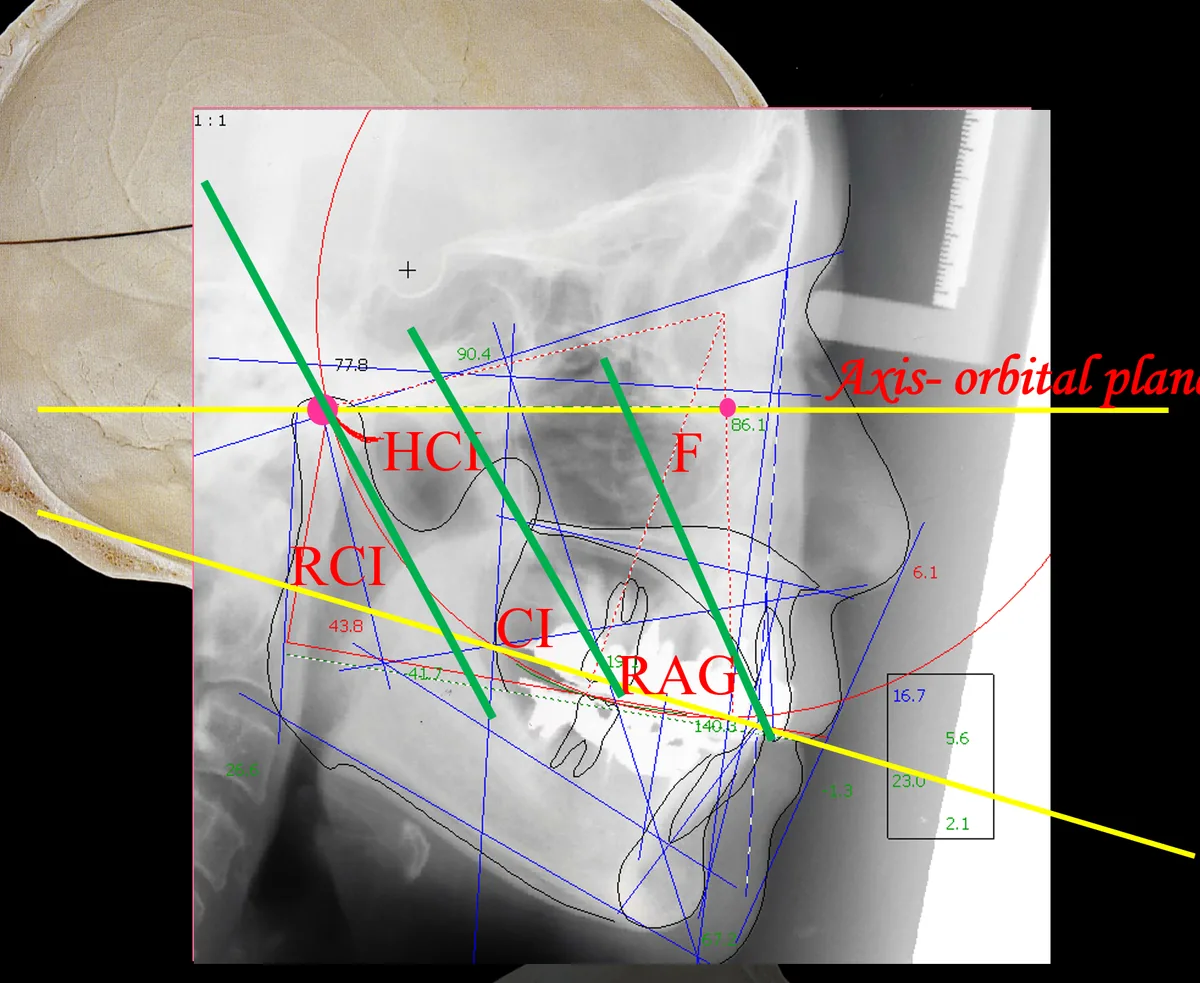
Professor Slavicek also introduced a method of viewing these records superimposed on the analysis of X-rays of the head taken from the side (lateral cephalograms).
In a 1988 interview, he said that these records had at first been used only for setting articulators, but had proved useful as a way of showing the movement of the lower jaw in diagrams.
In 2000, the director learned the concepts of denture design directly from Professor Slavicek.
From 2003 to 2016, the director took part in research by Professor Slavicek and Professor Sadao Sato of Kanagawa Dental University.
How Cadiax works
Based on the manufacturer's description, we explain how it works in four stages.
- Locating the hinge axis: the centre of rotation when the lower jaw opens and closes is called the hinge axis. We ask you to open your mouth slowly, calculate the position of the hinge axis from that movement, and align the instrument on the lower jaw with that position.
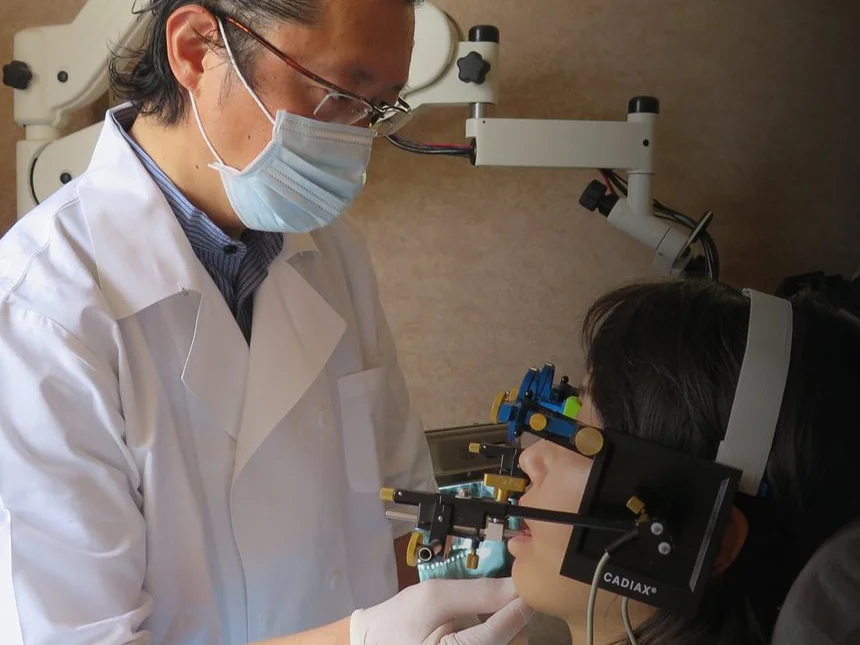
- Attaching the instruments: an instrument attached to the head (the bow) and an instrument attached to the lower jaw are used. The instrument on the lower jaw is supported by a component attached to the teeth inside the mouth (the clutch). A recording plate (the flag) is placed near the jaw joint, and a rod that reads the movement (the stylus) rests against it.
- Moving the jaw and recording: the movement of the left and right jaw joints is recorded in three dimensions, simultaneously and over time.
- Viewing on screen and calculating values: the record is displayed as a diagram of the trajectory (the path followed) for each of the left and right sides, and the values to be set on the articulator are also calculated.
The hinge axis is located first because the movement of the lower jaw is a combination of rotation and sliding (translation).
This combined movement is recorded with the hinge axis as the reference.
In the photo, too, you can see the instrument on the head, the instrument on the lower jaw, the black plate near the jaw joint (marked "CADIAX") and the rod that reads the movement.
In our recordings, the precision is 0.01 mm and data are collected 500 times per second (500 Hz).
Movements recorded
In general, Cadiax records movements such as the following.
| Movement | What is recorded (general description) |
|---|---|
| Opening the mouth wide and closing it | A path combining rotation with sliding (translation) within the joint |
| Moving the lower jaw forward | The path along which the jaw joint moves forward. From this, its inclination seen from the side (sagittal condylar inclination) is derived |
| Moving the lower jaw to the left and right | The path along which the jaw joint on the side opposite to the direction of movement moves inwards. From this, its direction seen from above (transverse condylar inclination; Bennett angle) is derived |
The condylar path is the path followed by the lower-jaw part of the jaw joint (the condyle) as it moves.
The manufacturer's analysis software calculates these inclination values at points 3 mm, 5 mm and 10 mm from the start of the movement.
What we record at our clinic is movement with the jaw relaxed (with the muscles at rest).
How to read the recording screen
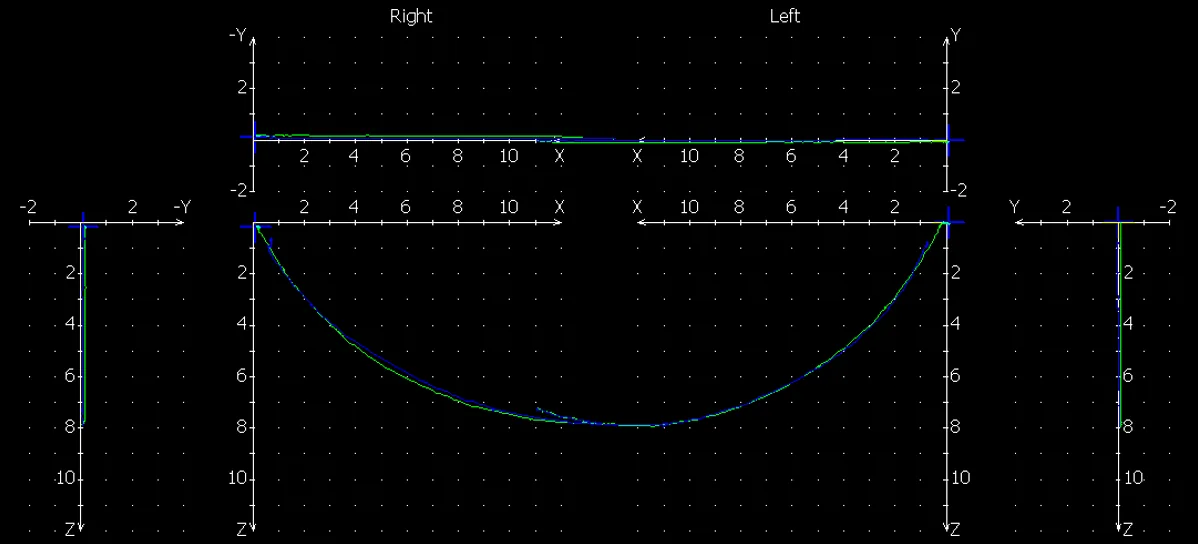
At the top of the screen are the labels "Right" and "Left", and the records of the right and left jaw joints are shown side by side.
The screen has scales in three directions, X, Y and Z: the large grids are drawn in X and Z, the long, narrow grids above them in X and Y, and the tall grids at both ends in Y and Z.
The trajectories traced by the left and right jaw joints are shown as lines on the respective grids.
The photo shows the recording screen for a single recording at one point in time.
The manufacturer states that such diagrams can also be used for explanations and for providing information to patients.
Why we use Cadiax
Because skeletal structure and jaw movement differ from person to person
The skeletal structure of the jaws and the way they move differ from person to person.
At our clinic, we work out the bite based on the values recorded from that person.
Because appearance does not show how the jaw joints move
Even when the teeth look well aligned, the movement of the jaw joints and the bite do not necessarily match.
Because looking inside the mouth does not tell us how the jaw joints move, we record the movement and check it in numbers.
Because we want the bite to match jaw joint movement
Our treatment of temporomandibular disorders (TMD) aims to bring the three-dimensional movement of the jaw joints and the function of the bite into agreement.
To do this, we first need to know how the jaw joints are moving.
The target position of the lower jaw for treatment (which we call the "therapeutic jaw position") is also calculated from three-dimensional information on the jaw joints.
Because the examination method is the same for dentures and for orthodontic treatment
What is finally made differs between denture treatment, orthodontic treatment and TMD treatment.
Even so, the examination method is the same: we measure jaw joint movement and the skeleton first, and then work out the bite.
Because we can record again by the same method
After an appliance is fitted, jaw movement can be recorded again by the same method during treatment and at its end.
By comparing the records, we can check how the movement has changed.
To use the records by giving them form
The recorded values are set on the articulator and given form as appliances, provisional restorations, dentures or crowns.
The director's view is that a record becomes usable in treatment only once it can be given form.
In practice at our clinic
From examination to the finished form
We use Cadiax in the following order.
- At the first consultation, we ask about your concerns and the treatment you have had so far, check the condition of your mouth and explain the examinations needed.
- As part of the detailed examinations (listed in the fee table as the "orthodontic work-up (bite examination)"; about 2–3 visits), we record jaw joint movement with Cadiax.
- During recording, recording instruments are attached to your head and lower jaw, and we ask you to relax your jaw and move it.
- Around the same time, we carry out lateral cephalometric analysis (skeleton), impressions and sectioned casts (each individual tooth), BruxChecker (tooth contact during sleep) and other examinations as needed.
- From the records and examination results, we calculate the therapeutic jaw position and the articulator settings, and set them on the Girrbach Reference SL articulator.
- Based on the position decided on the articulator, we make appliances, provisional restorations, dentures or crowns.
- After an appliance has been fitted, we record again by the same method, during and at the end of treatment, to check.
The combination of examinations is decided according to each person's symptoms and the condition of their mouth.
Photos: setting values taken from the records on the articulator
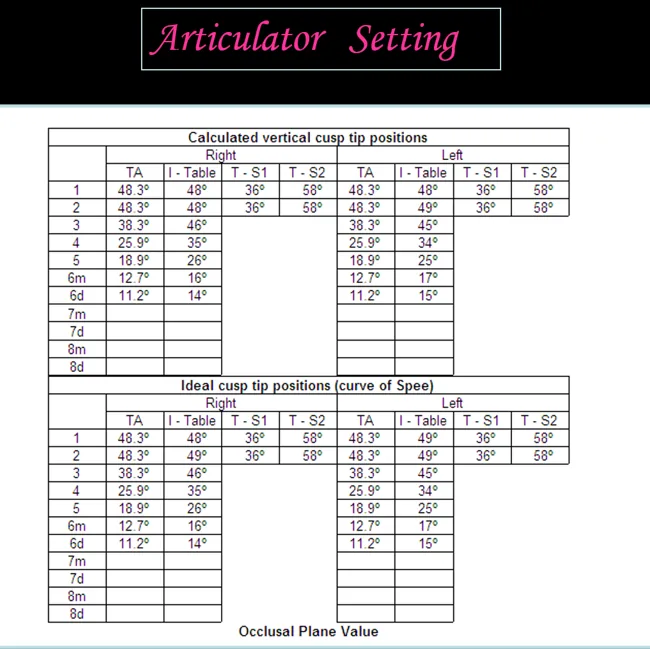
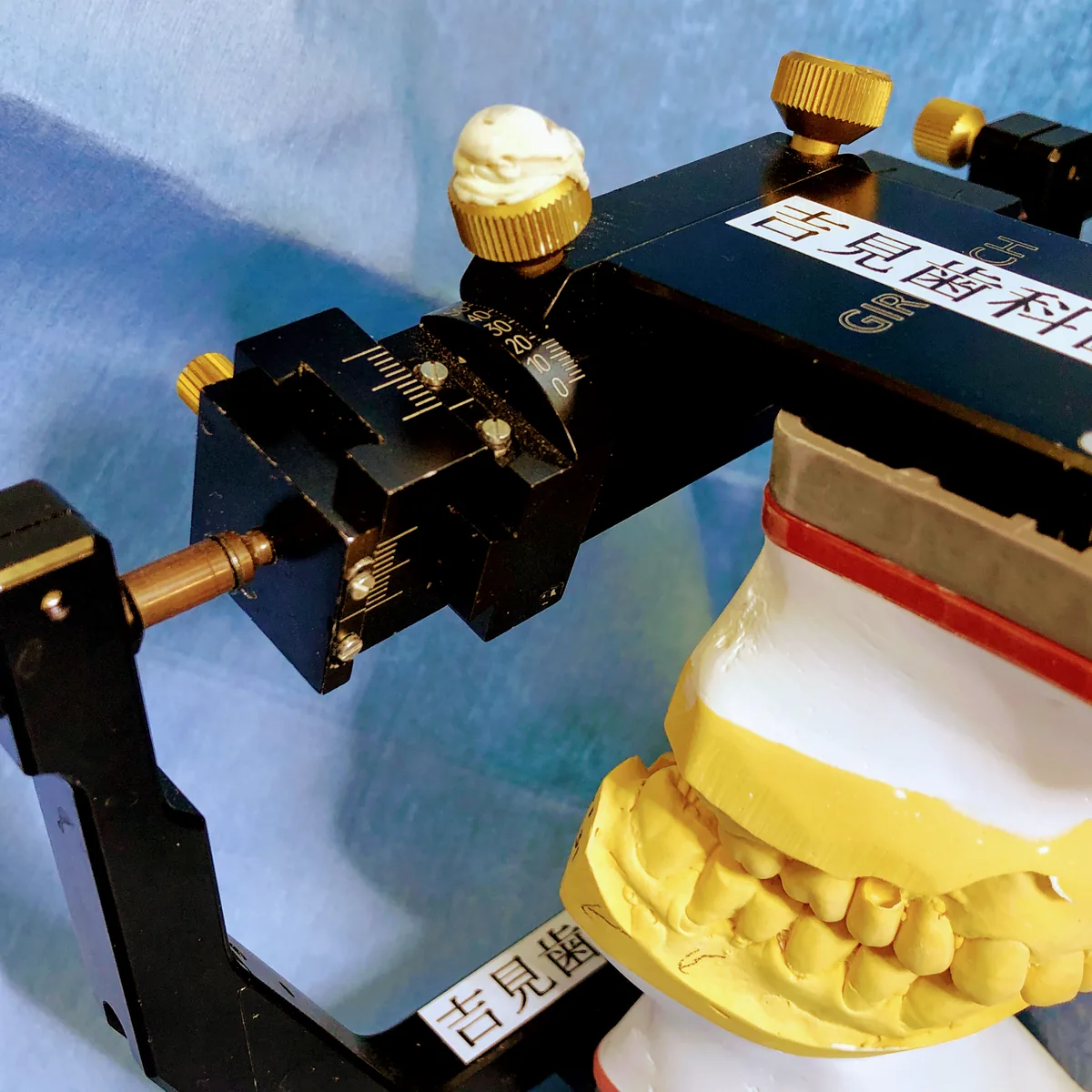
For details of the values set on the articulator, please see the Girrbach Reference SL articulator page.
Temporomandibular disorders
In examinations for TMD, we check the paths of the left and right jaw joints and any discrepancy in the bite position.
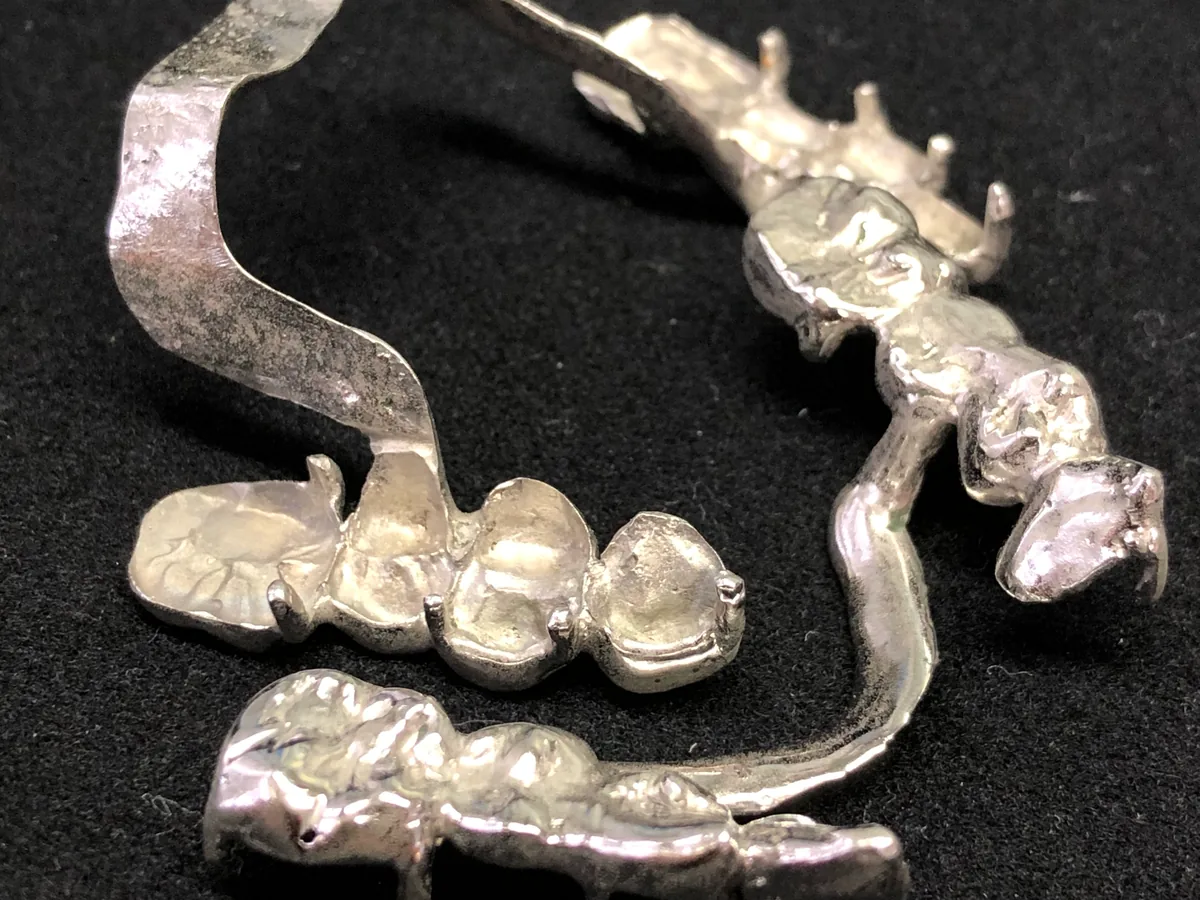
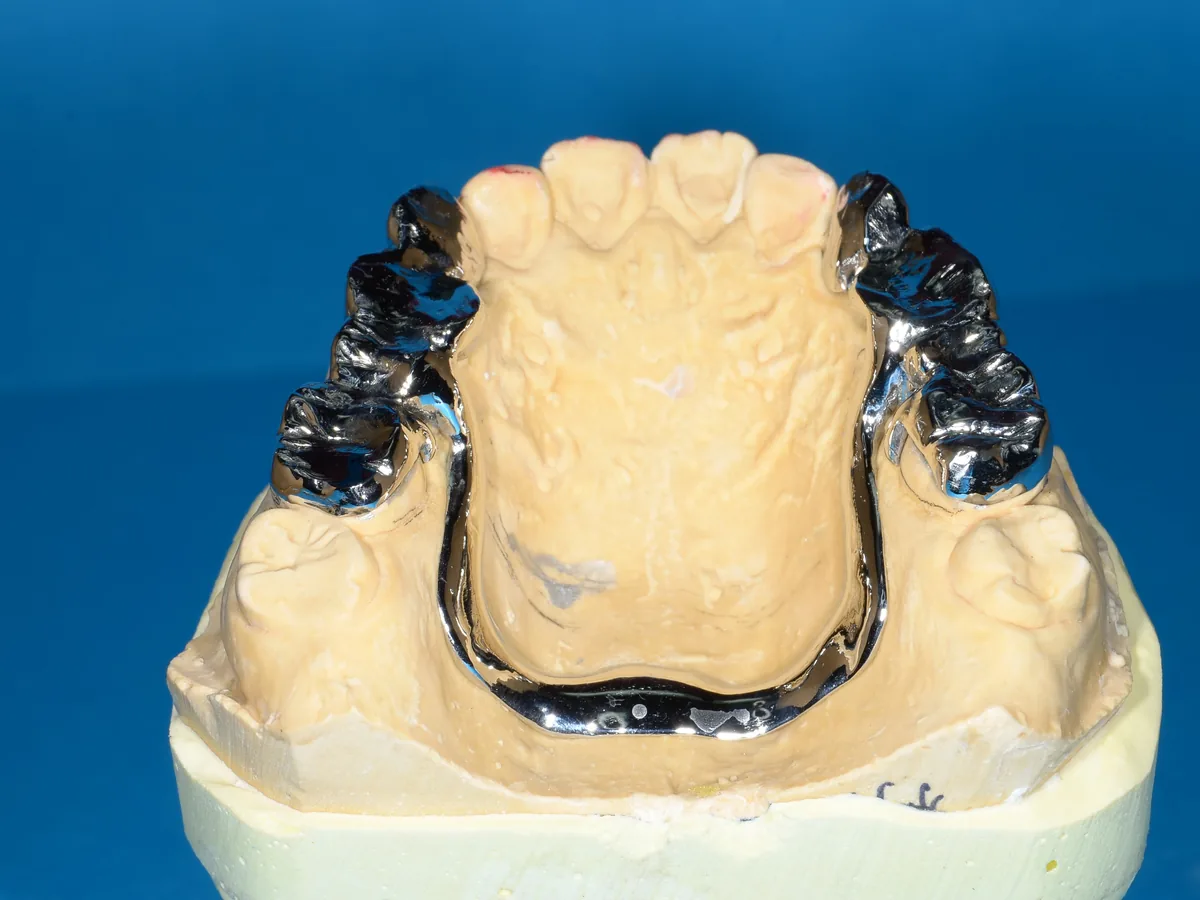
The therapeutic jaw position calculated from the records is given form as a metal splint or metal overlay and checked in the mouth.
In the initial phase of treatment, we may also use an appliance that changes the position of the jaw to match this position (a jaw repositioning appliance).
In a metal splint, we express that person's jaw position by combining the three-dimensional jaw joint records with information on the skeleton and the bite.
Photos: a metal splint made from the records
Orthodontics
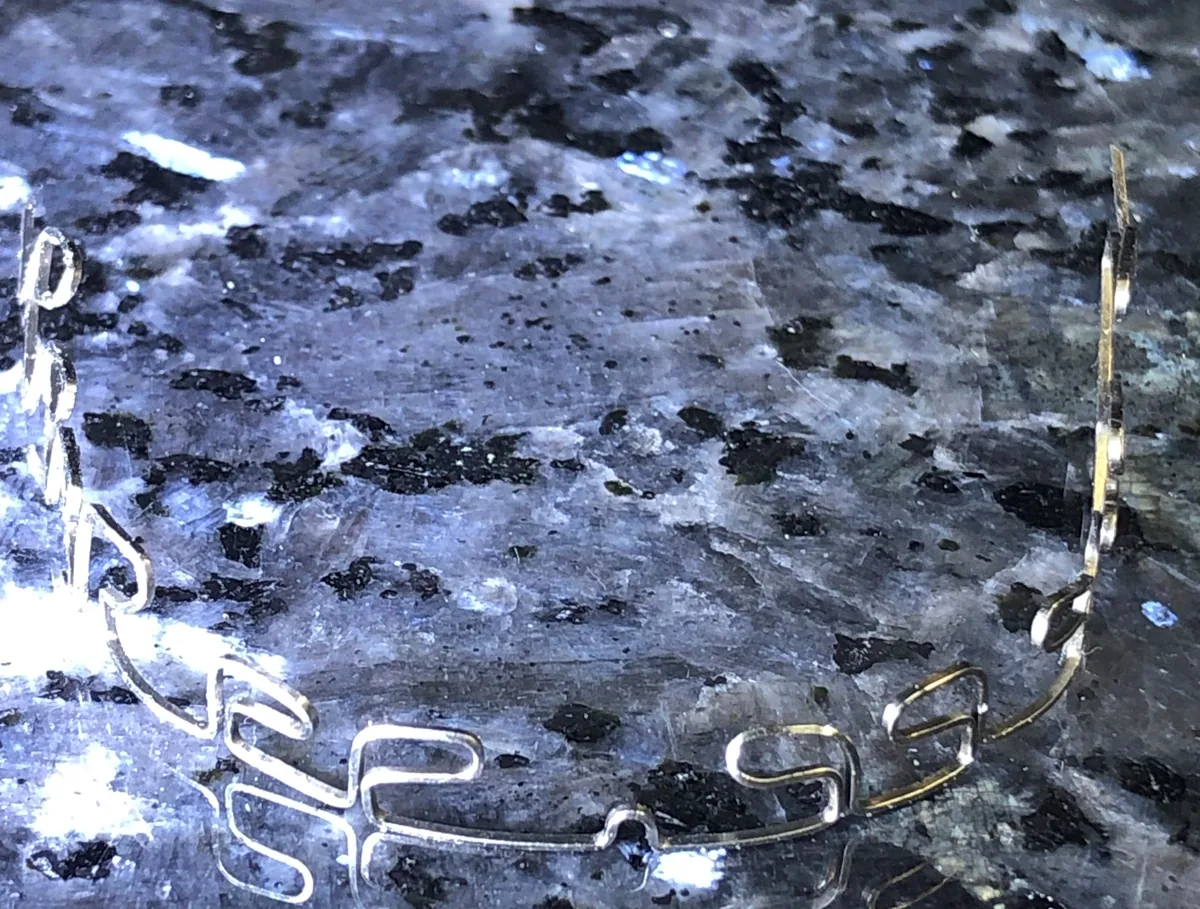
In orthodontic treatment, we analyse jaw joint movement in three dimensions and use the data in planning how to move the teeth three-dimensionally.
We proceed with treatment by combining three things: the Cadiax records, lateral cephalometric analysis and analysis on the articulator.
Dentures
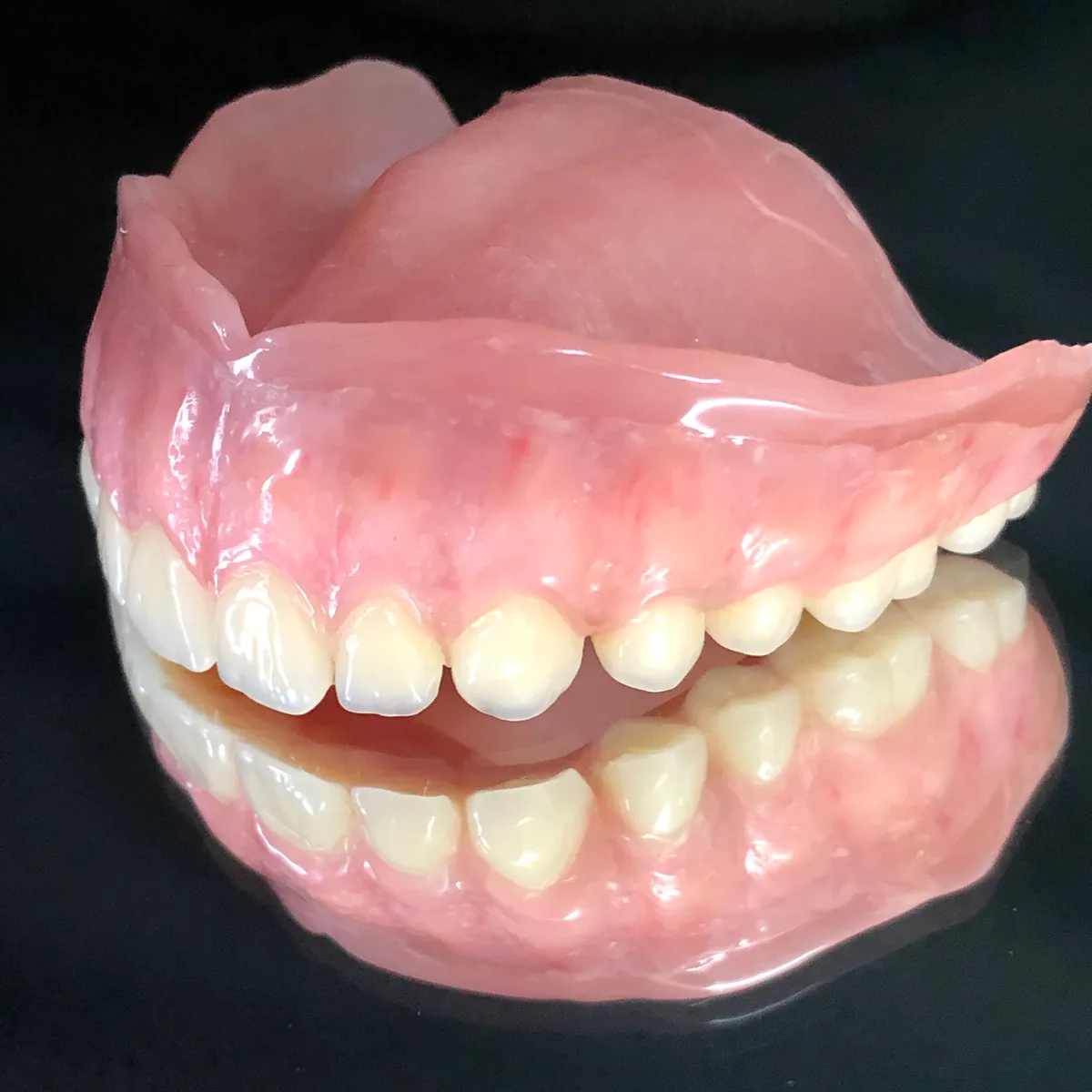
Jaw joint movement can be recorded in people who have no teeth, in the same way as in people who have teeth.
For complete dentures, the angle of the cusp slopes of the artificial teeth (cusp inclination) is decided from the Cadiax records.
For dentures, we also combine records made while clenching and records of the mucosa (see "Intraoral gothic arch tracing" below).
Provisional restorations and crowns
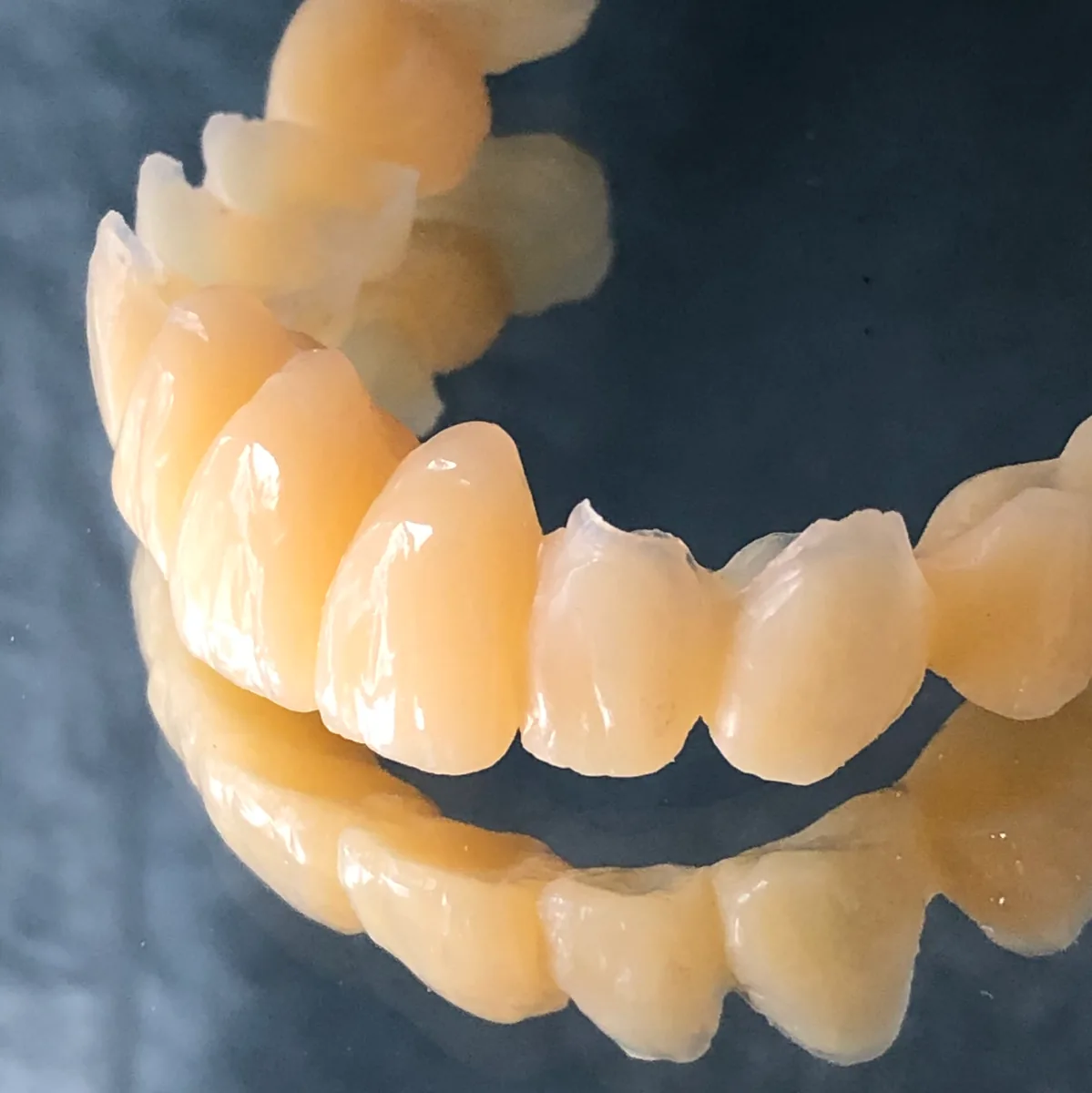
Provisional restorations are made based on lateral cephalometric analysis, the Cadiax records and other information.
This is the stage for checking, while you use them, whether their position and shape are right.
When many teeth are restored with crowns at the same time, too, the shape is decided on the articulator based on three-dimensional information on the jaw joints.
Mouthguards worn during sleep
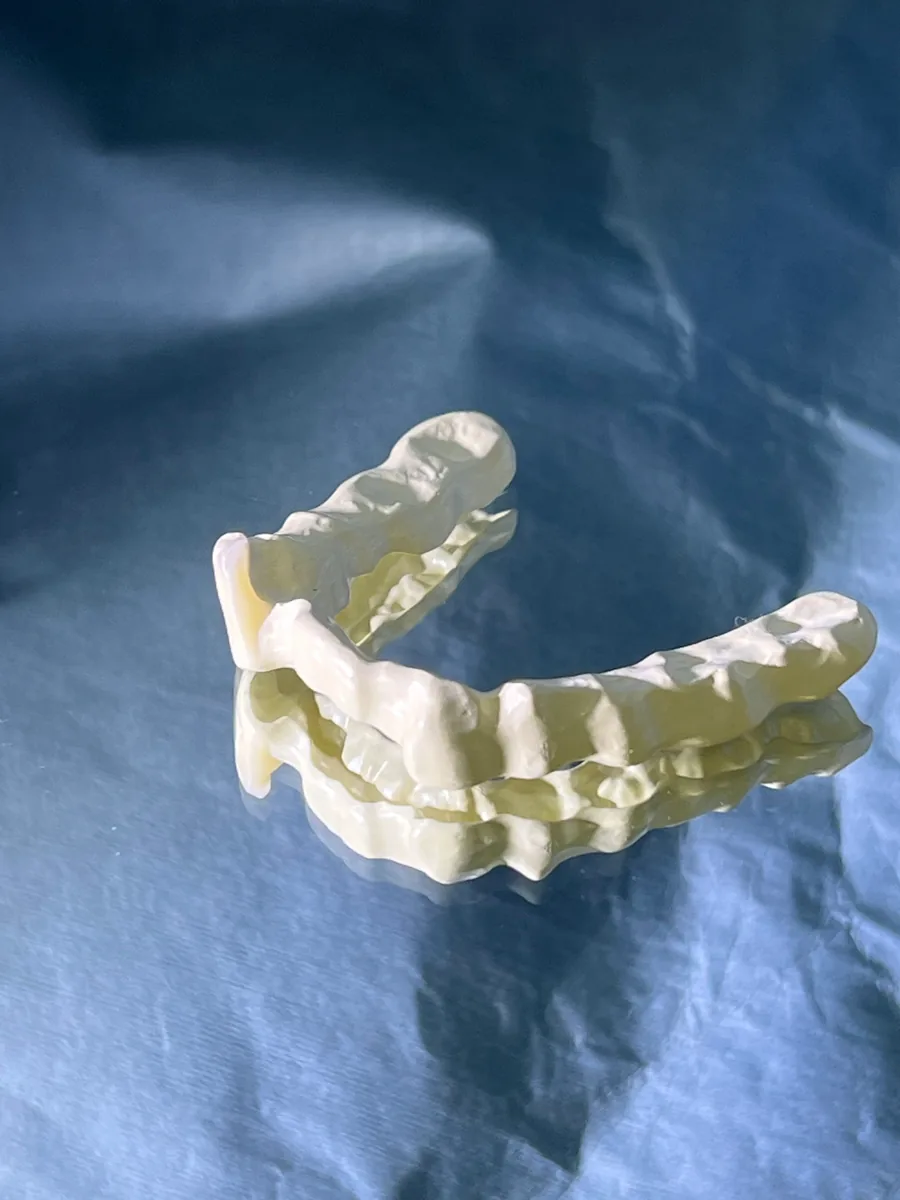
Mouthguards for the bite at night are also designed on a computer, after examination with Cadiax and the articulator.
The material is PEEK.
Periodontal disease
In periodontal examinations, too, we examine the bite with Cadiax as needed and work out the treatment plan.
Combining it with other examinations
We do not decide the course of treatment from the Cadiax records alone.
We consider them together with the skeleton (lateral cephalometric analysis), analysis on the articulator, tooth contact at night and other findings.
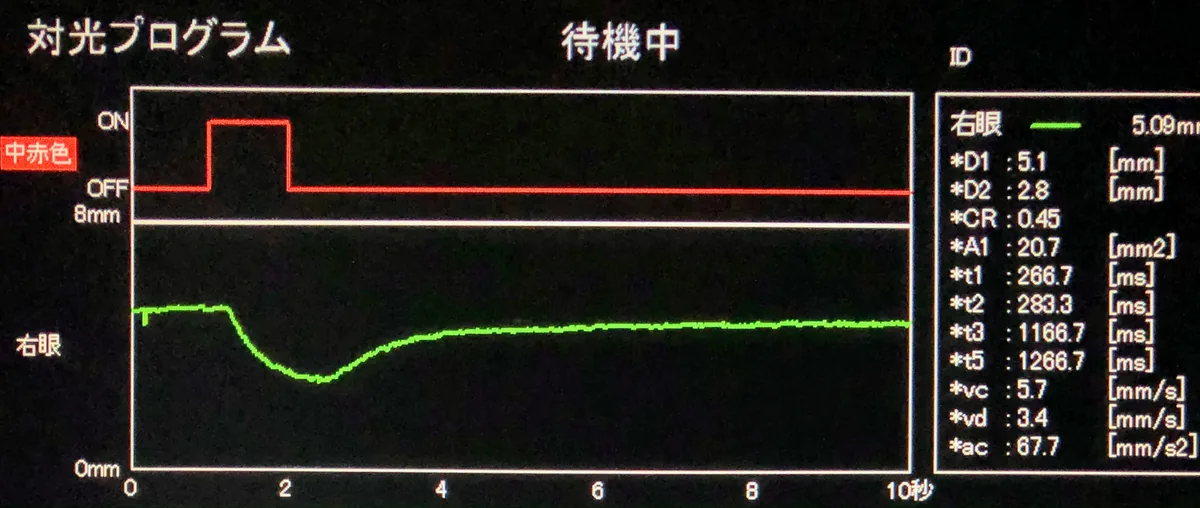
Depending on the symptoms, we also carry out tests of autonomic reflexes, such as the pupillary light reflex.
What Cadiax can and cannot tell us
What Cadiax can tell us
- The movement of the left and right jaw joints when the jaw is moved while relaxed (three-dimensional trajectories)
- How the left and right jaw joints moved over the same period of time
- The inclination of the paths along which the jaw joints move forward and to the sides (values to be set on the articulator)
- Discrepancy in the bite position
- Whether there are joint sounds (clicking)
- Information for calculating the therapeutic jaw position
- How the movement has changed before, during and after treatment
What it cannot tell us, and how we compensate
| What it cannot tell us | How we compensate |
|---|---|
| Traces of lower jaw movement while clenching | Intraoral gothic arch tracing (when making dentures) |
| Skeletal structure (relationship between the upper and lower jaws, facial height) | Lateral cephalometric analysis |
| The orientation and inclination of each tooth | Sectioned cast |
| Inclination of the biting surfaces | Occlusal plane measurement |
| Tooth contact during sleep | BruxChecker |
| The shape of the mucosa that supports the denture | Mucosal records in the relaxed state, under force, and in between |
| Whether the position decided on the articulator fits in that person's mouth | Checking while provisional restorations and appliances are in use |
| The causes of symptoms such as headaches and stiff shoulders | We do not determine this from the jaw records alone. An assessment outside dentistry, such as in medicine, may also be helpful |
Cadiax is also a device that requires skill to handle, for example in aligning the instruments with the hinge axis.
The academic literature, too, cites the difficulty of handling as something that may hinder its routine use.
Intraoral gothic arch tracing: Covering movement while clenching
Cadiax records are limited to movement with the jaw relaxed.
When making dentures, we record the traces of lower jaw movement while clenching (at close to maximum muscle force) using intraoral gothic arch tracing.
We combine the two records with the mucosal records to work out the shape of the denture.
Details → Intraoral gothic arch tracing
Frequently asked questions
- What movements does Cadiax record?
In general, it records opening and closing of the mouth, moving the lower jaw forward, and moving it to the left and right.
At our clinic, we record the movement of the left and right jaw joints in three dimensions with the jaw relaxed.
- Can movement while clenching also be recorded?
It cannot be recorded with Cadiax.
When making dentures, we record movement while clenching using intraoral gothic arch tracing.
- Is the course of treatment decided from the Cadiax records alone?
No. Cadiax provides one of the records we use to understand jaw joint movement.
We consider it together with information on the skeleton from lateral cephalometric analysis and the analysis of the bite on the articulator.
- Can recordings be made without teeth?
Yes. Jaw joint movement can be recorded in people who have no teeth as well.
When making complete dentures, we combine this record with the skeletal and mucosal records to work out the position and angle of the artificial teeth.
- Which examination is it part of? How many visits does it take?
It is one of the examination items (the dynamic jaw movement examination) in the "orthodontic work-up (bite examination)" in the fee table.
The orthodontic work-up as a whole takes about 2–3 visits. This is not the number of visits for Cadiax alone.
- Can I see the recording screen?
Yes. At our clinic, we share the information obtained in examinations with patients.
We also explain what the diagrams in the record show.
Related technologies and treatments
- Girrbach Reference SL articulator
- Lateral cephalometric analysis
- Pupillary light reflex (Iriscorder Dual)
- All the technologies we use
- Temporomandibular disorders & orthodontic treatment that avoids extractions where possible: examinations
- Dentures (precision dentures): examinations
- Periodontal disease
- Thorough diagnosis before treatment (14 examination items)
Sources we referred to
For the general explanations (how Cadiax works and the background to its development), we referred to the following published sources. What we describe about our own methods is based on the director's posts and explanations.
- Cadiax 4 electronic package insert (public document of the Pharmaceuticals and Medical Devices Agency, Japan; in Japanese; PDF)
- GAMMA Dental, "cadiax 4" (manufacturer)
- GAMMA Dental, "Digital Diagnostic" (manufacturer)
- GAMMA Dental, "Face-bow transfer" (manufacturer)
- University Clinic of Dentistry Vienna, "Nachruf Univ.-Prof. Dr. Rudolf Slavicek" (in German)
- Sukalo M. "Rudolf Slavicek und die Gnathologie in Österreich". Thesis, Medical University of Vienna, 2016 (in German; PDF)
- JCO Interviews Dr. Rudolf Slavicek, Part 1. J Clin Orthod. 1988
- Ahangari AH, et al. Evaluation of the Cadiax Compact II accuracy… J Contemp Dent Pract. 2012;13(4):504-508
- Lewandowska A, et al. Sagittal Condylar Inclination and Transversal Condylar Inclination in Different Skeletal Classes. J Clin Med. 2022;11(9):2664
Consultations and enquiries
Gibakai Medical Corporation
Yoshimi Dental Clinic
Square 2, Room 302 (third floor)
1-29-1 Tsukushino, Machida,
Tokyo 194-0001, Japan
TEL 042-795-1359 FAX 042-795-1398
Clinic days: Mon · Tue · Thu · Fri
10:00–13:00 / 14:30–18:00
A first visit begins with a first consultation (a private, non-insured service; 30 minutes to 1 hour) for examination and diagnosis. Questions about a diagnosis you received elsewhere are also covered within it.
In an emergency, such as being unable to chew or having severe symptoms, please call us on 042-795-1359 to discuss it.