What is artificial tooth arrangement?
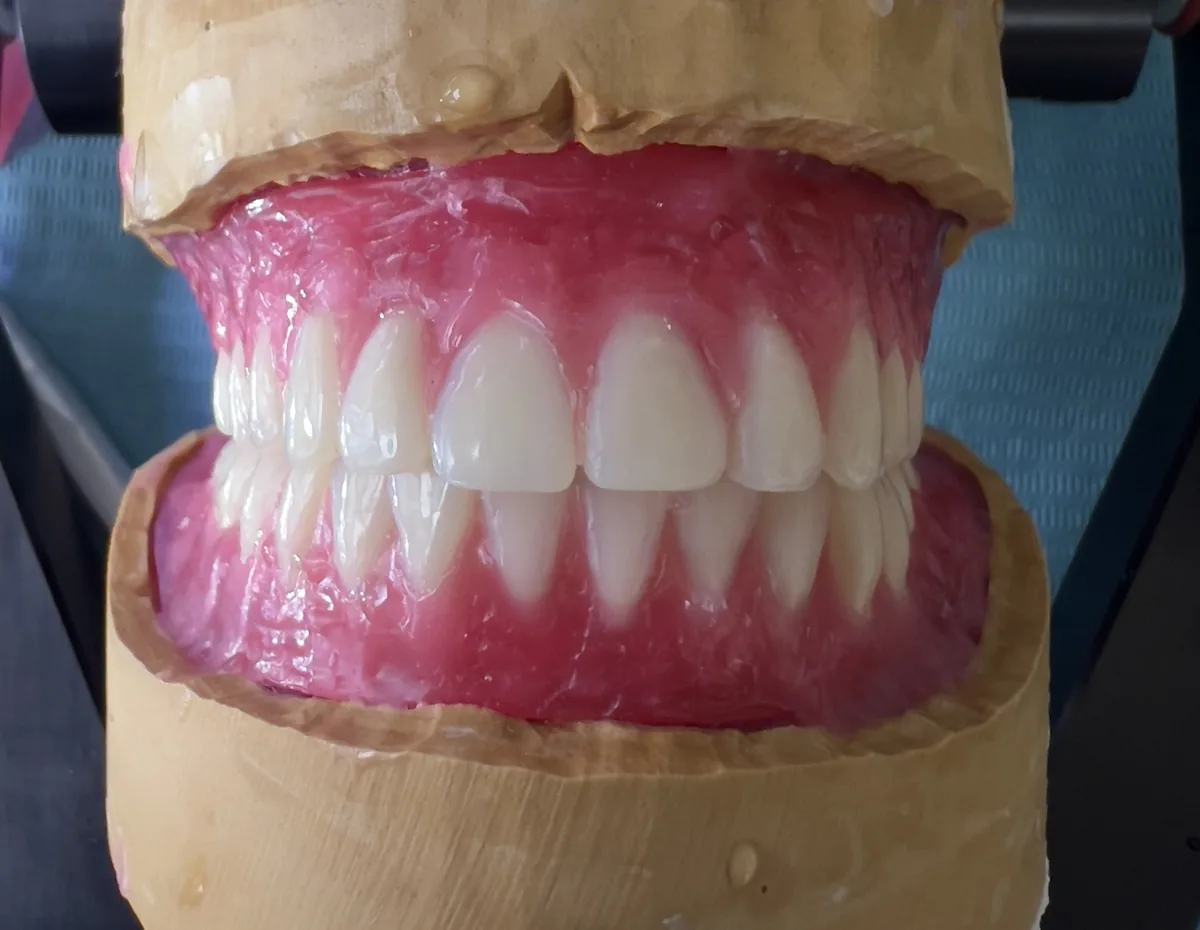
Artificial tooth arrangement is the step of deciding where, in what orientation and at what angle to place the artificial teeth of a denture, and then arranging them.
At our clinic, we work out the patient's own values from skeletal analysis and records of jaw joint movement, and arrange the teeth accordingly.
In complete dentures, all the teeth are replaced with artificial teeth.
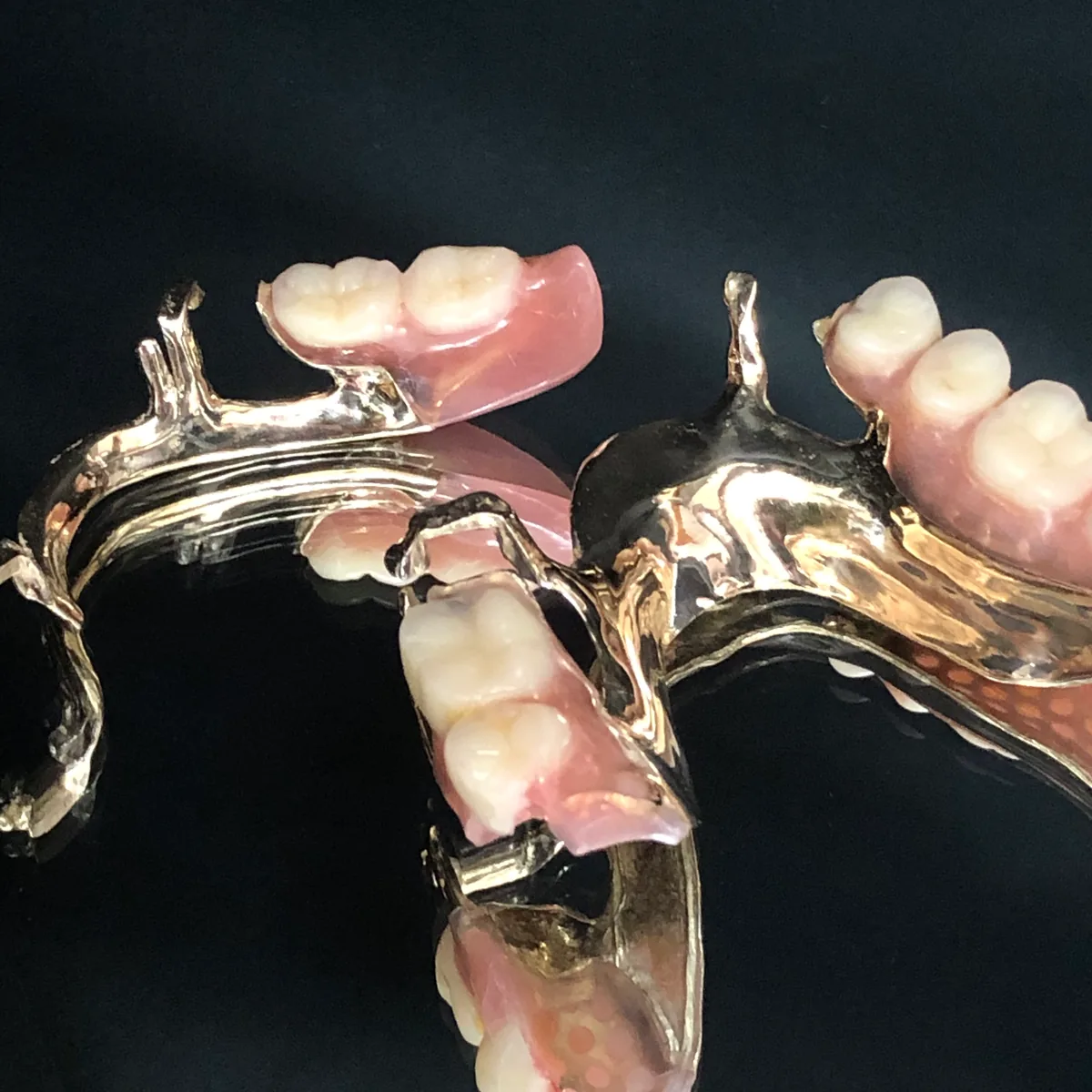
In partial dentures, the teeth that have been lost are replaced with artificial teeth.
In both cases, the position and angle of the artificial teeth become the bite of the denture.
How artificial tooth arrangement works
Records used for the arrangement
The director considers that, even when making dentures, objective records such as the following are needed at a minimum.
- Lower facial height (LFH): the height of the lower part of the face (lateral cephalometric analysis)
- Anteroposterior dysplasia indicator (APDI): the front-to-back position of the lower jaw (lateral cephalometric analysis)
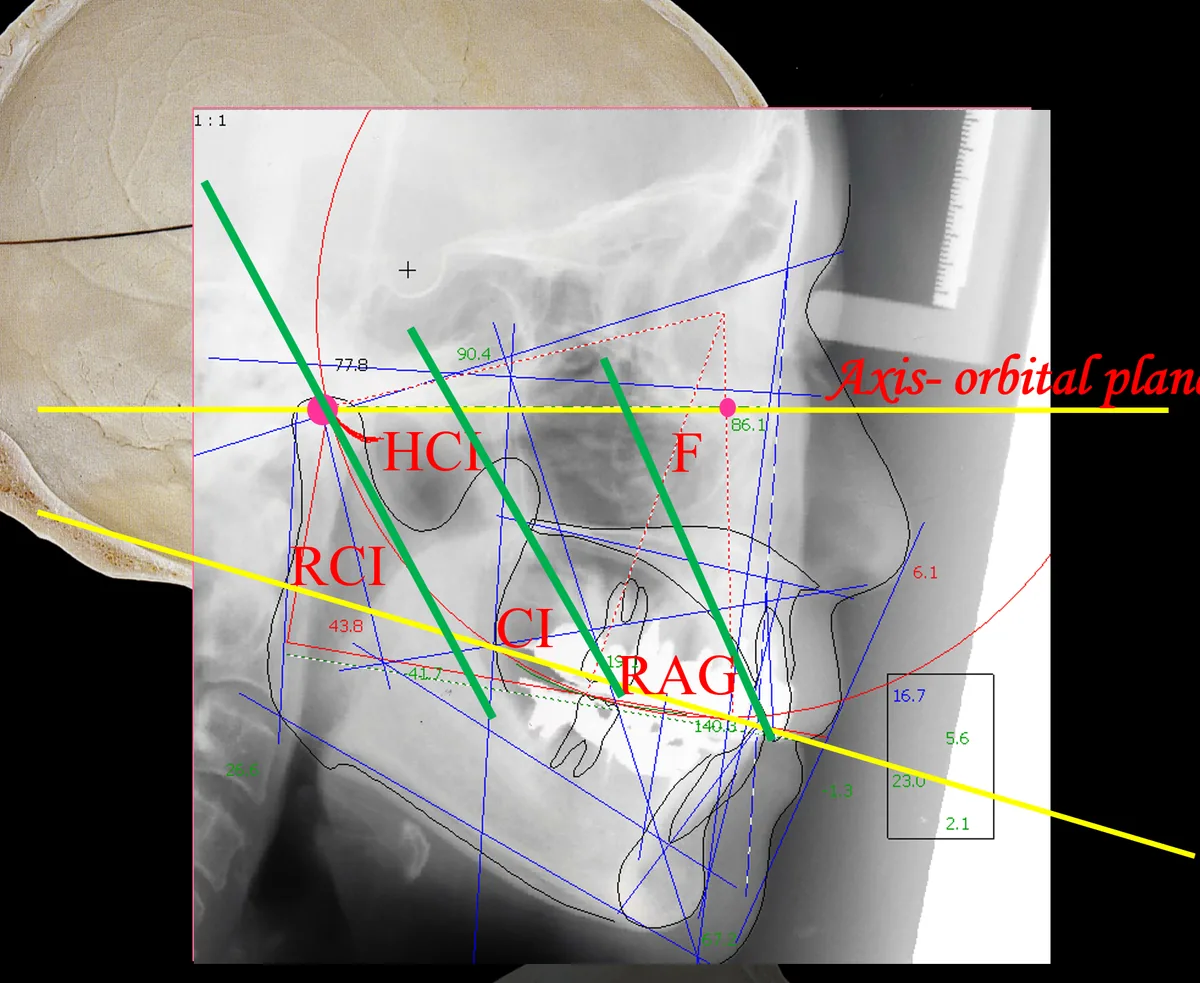
- Horizontal condylar inclination (HCI): the inclination of the path of the jaw joint when the lower jaw is moved forward
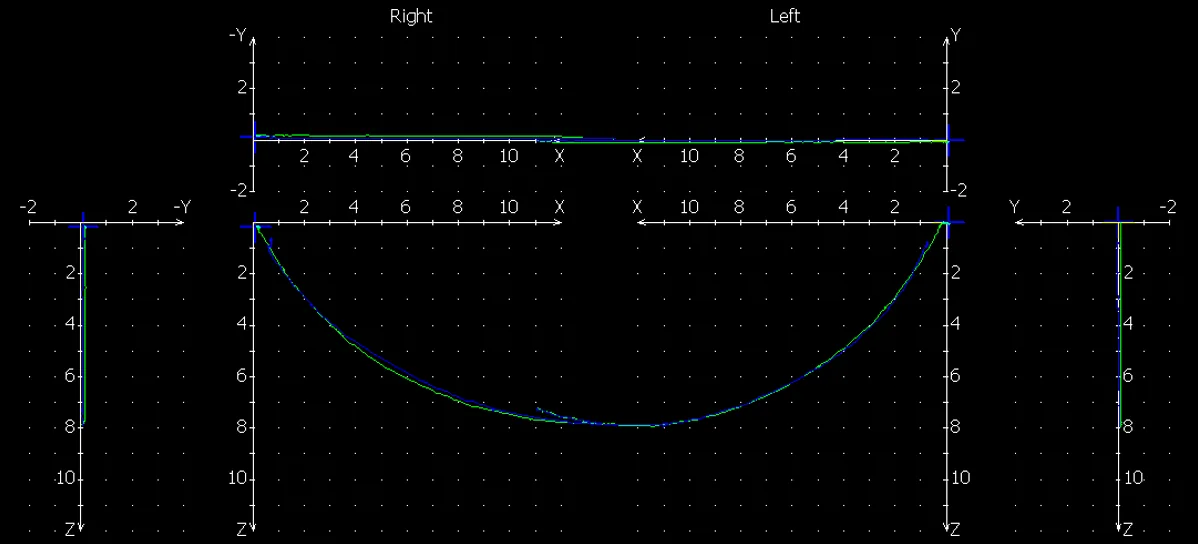
- Three-dimensional movement of the jaw joints in a relaxed state (Cadiax)
- Movement of the jaw joints while clenching (intraoral gothic arch tracing)
What we decide from the records
Before arranging the artificial teeth, we decide the following three values.
| What we decide | Record it is based on |
|---|---|
| Height between the upper and lower jaws (vertical dimension of occlusion) | Skeletal analysis (lateral cephalometric analysis) |
| Inclination of the biting surfaces (occlusal plane) | Skeletal analysis (lateral cephalometric analysis) |
| Angle of the slopes of the cusps (cusp inclination) | Records of jaw joint movement (Cadiax) |
The vertical dimension of occlusion generally refers to the distance between two specified points on the upper and lower jaws when the upper and lower teeth are biting together.
The occlusal plane is the plane formed by the row of biting surfaces of the teeth. It is generally determined as the plane containing the point between the two lower central front teeth and the tips of the rear cusps on the cheek side of the lower left and right second molars (the seventh teeth from the front).
Cusp inclination is the angle of the slopes of the peaks (cusps) on the biting surfaces of the teeth.
Steps up to the arrangement
- From the skeletal analysis and jaw joint records, we work out values such as the vertical dimension of occlusion, the occlusal plane and cusp inclination.
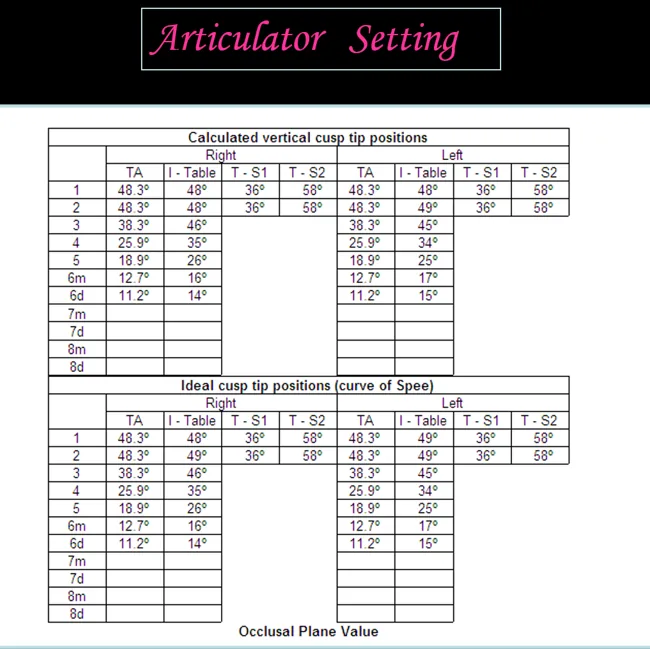
- We use these values to set up the Girrbach Reference SL articulator. An articulator is a device on which the upper and lower casts are mounted to reproduce the position and movement of the jaw on the casts.
- We calculate the target angle for each individual tooth (the photo shows an example of a settings table listing these values).
- We arrange the artificial teeth on the casts to match the calculated values.
The target bite
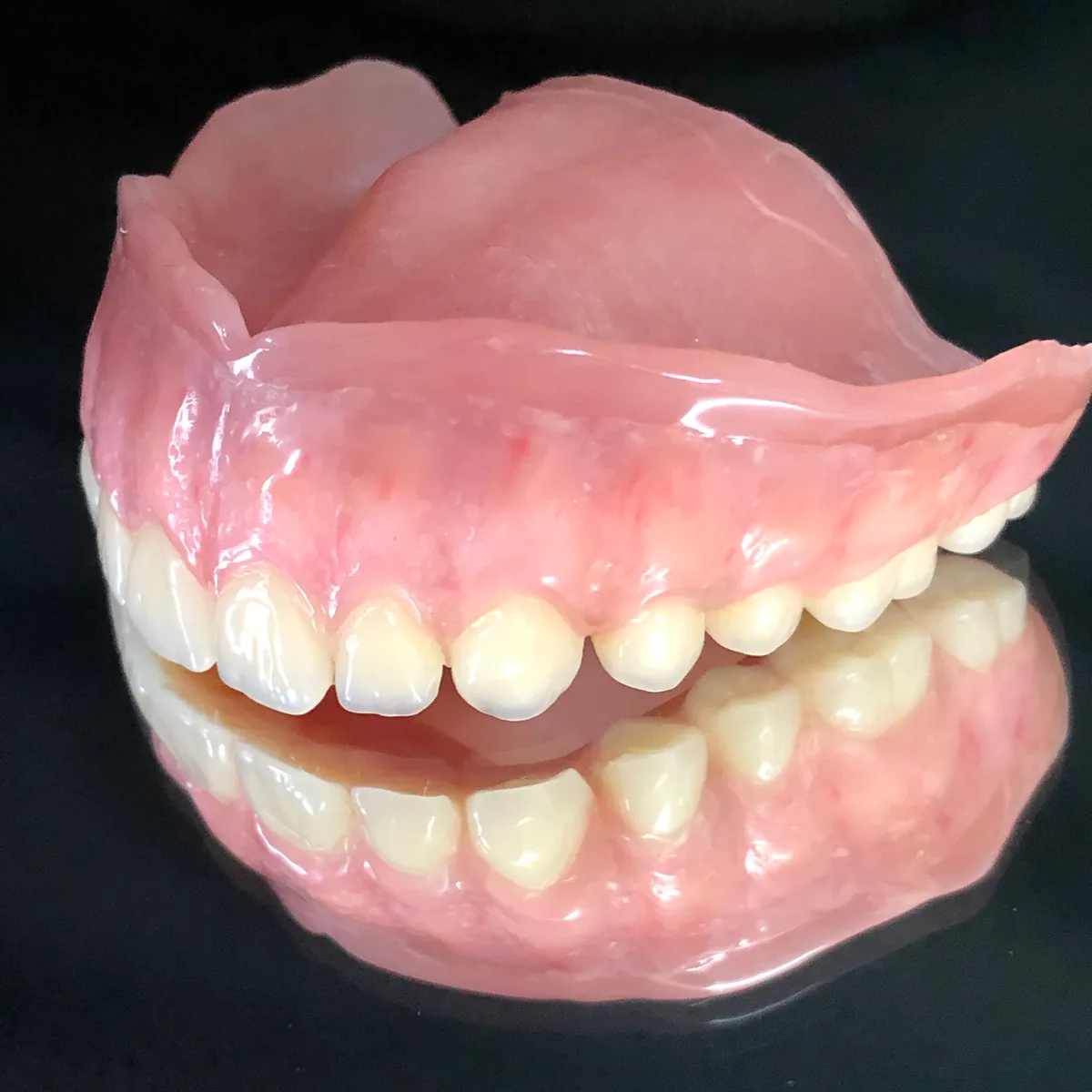
The bite we give to dentures is based on the same concepts as for natural teeth.
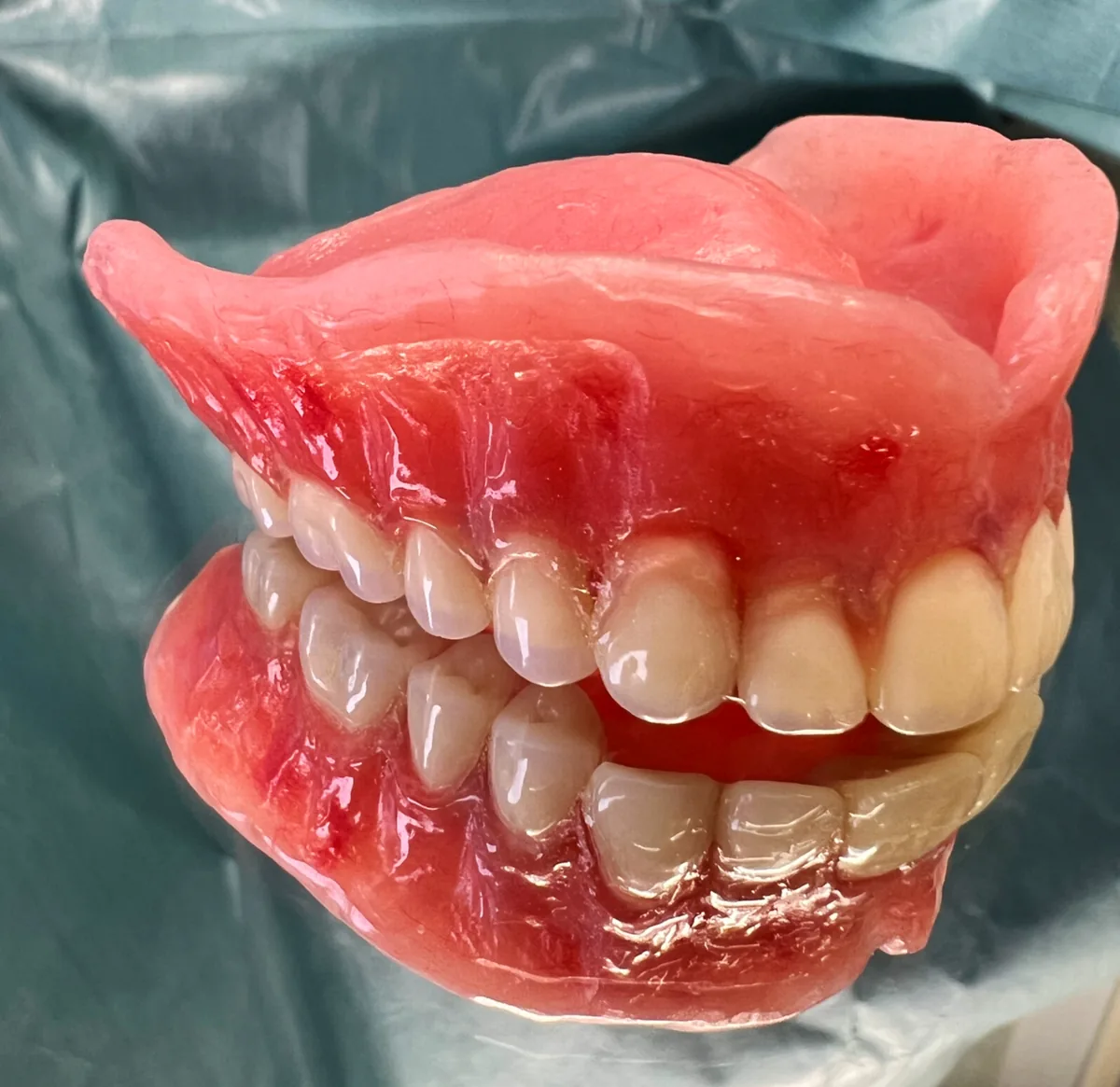
The complete dentures in the photo have been given a bite called "sequential occlusion", following the Sato–Slavicek concept.
The concept behind this bite is explained on the sequential occlusion page.
Why we arrange artificial teeth from examination values
Because the concept of the bite is the same for dentures as for natural teeth
The director does not believe that there is a special kind of bite exclusive to complete dentures.
Whether for dentures, orthodontic treatment or the treatment of temporomandibular disorders (TMD), the methods of examination and diagnosis are the same.
At our clinic, from orthodontic treatment to complete dentures, we approach the bite of patients of all ages with a common theory.
For this reason, the way the artificial teeth of complete dentures are arranged and the way orthodontic wires are bent have much in common.
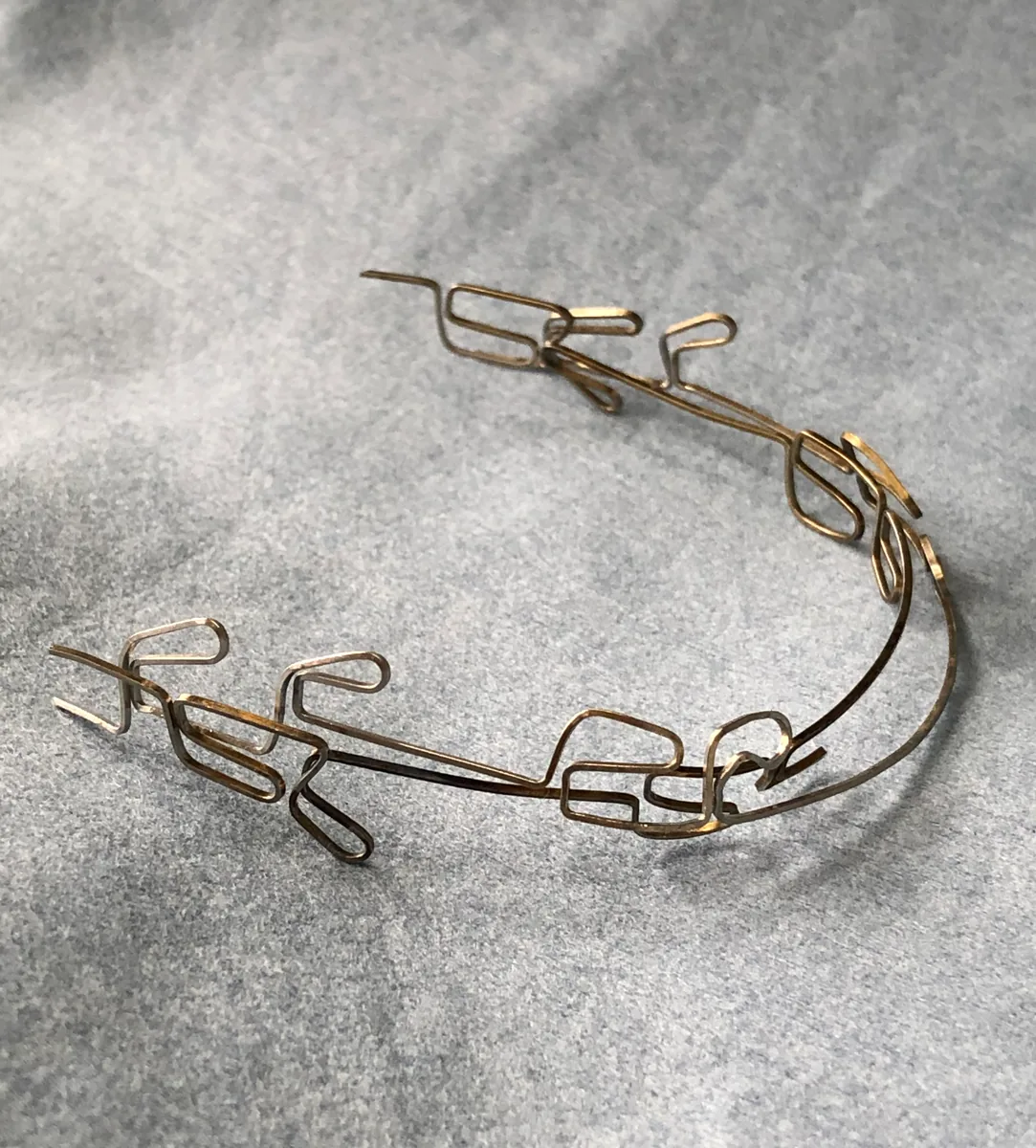
Because skeletal structure and jaw movement differ from person to person
TMD also occurs in people who have no teeth at all.
Both skeletal structure and jaw movement differ from person to person.
At our clinic, we decide the angle of each individual tooth based on the values recorded from the patient.
Because the alignment of the teeth also has its own character
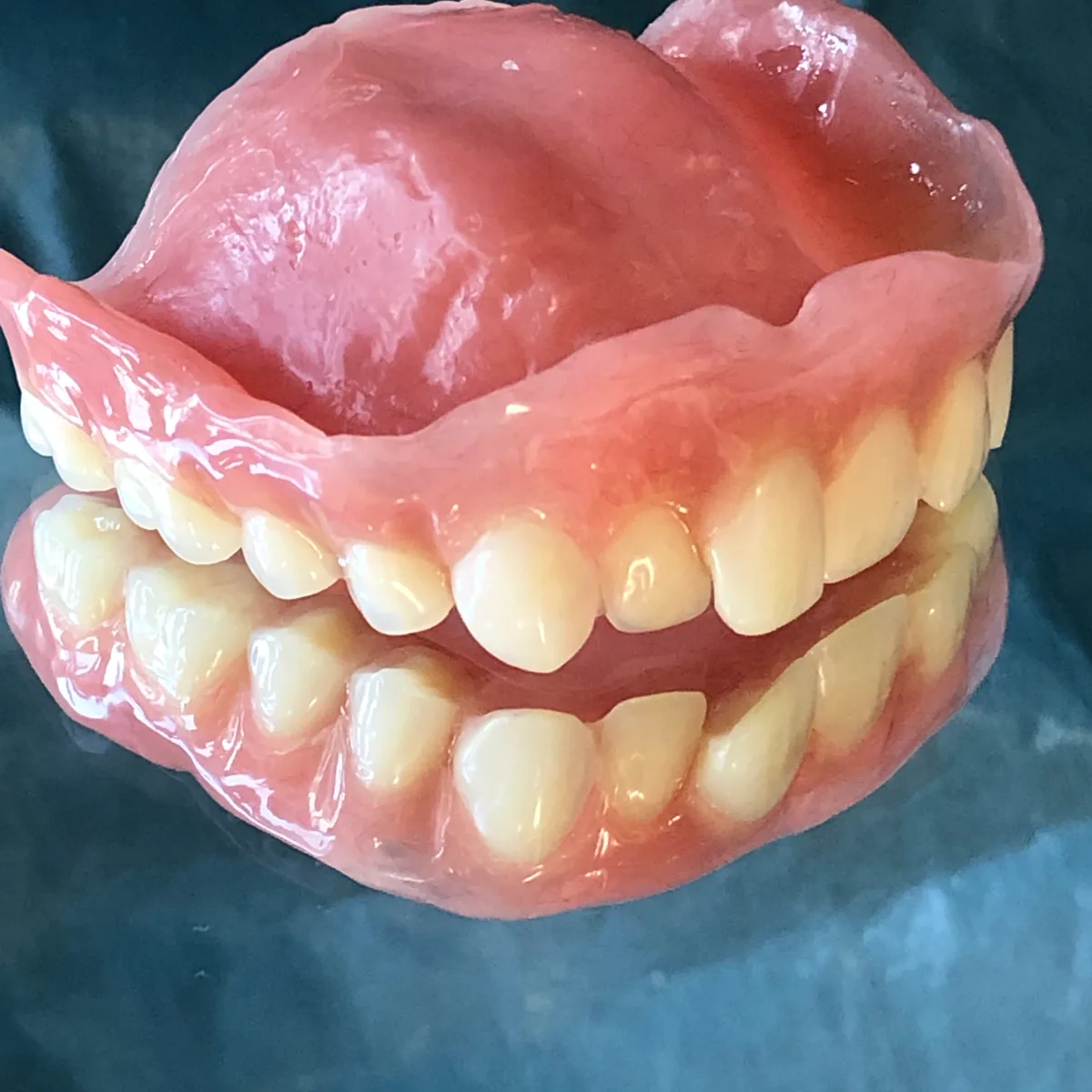
Just as the shape of each person's face is different, the alignment of the teeth also has its own character.
The director places importance on analysing the skeleton in detail and arranging the artificial teeth to suit that person's skeleton.
Because the target can be expressed in numbers in advance
Once the records have been taken, the target bite is expressed approximately in numbers.
In fabrication, therefore, we focus our efforts on correcting discrepancies between the target values and the shape actually produced.
In practice at our clinic
At which stage of denture making it is done
Artificial tooth arrangement is carried out after the examinations, at the stage when the denture is being given its form.
For partial dentures, too, we work out the bite with the same approach.
- In detailed examinations, we record the skeleton and jaw joint movement (lateral cephalometric analysis, Cadiax and intraoral gothic arch tracing).
- We also record the shape of the gums that support the denture (mucosal records).
- We work out values from the records, set them on the articulator and arrange the artificial teeth.
- Based on the arrangement, we make a provisional denture and check the bite and appearance while you use it (provisional restorations and provisional dentures).
- Based on what we have confirmed, we make the final denture.
Checking with a provisional denture
The provisional denture is a stage for checking whether the final denture will be able to do its job.
Because it is made of a material whose shape can be changed, its shape can be refined while you use it.
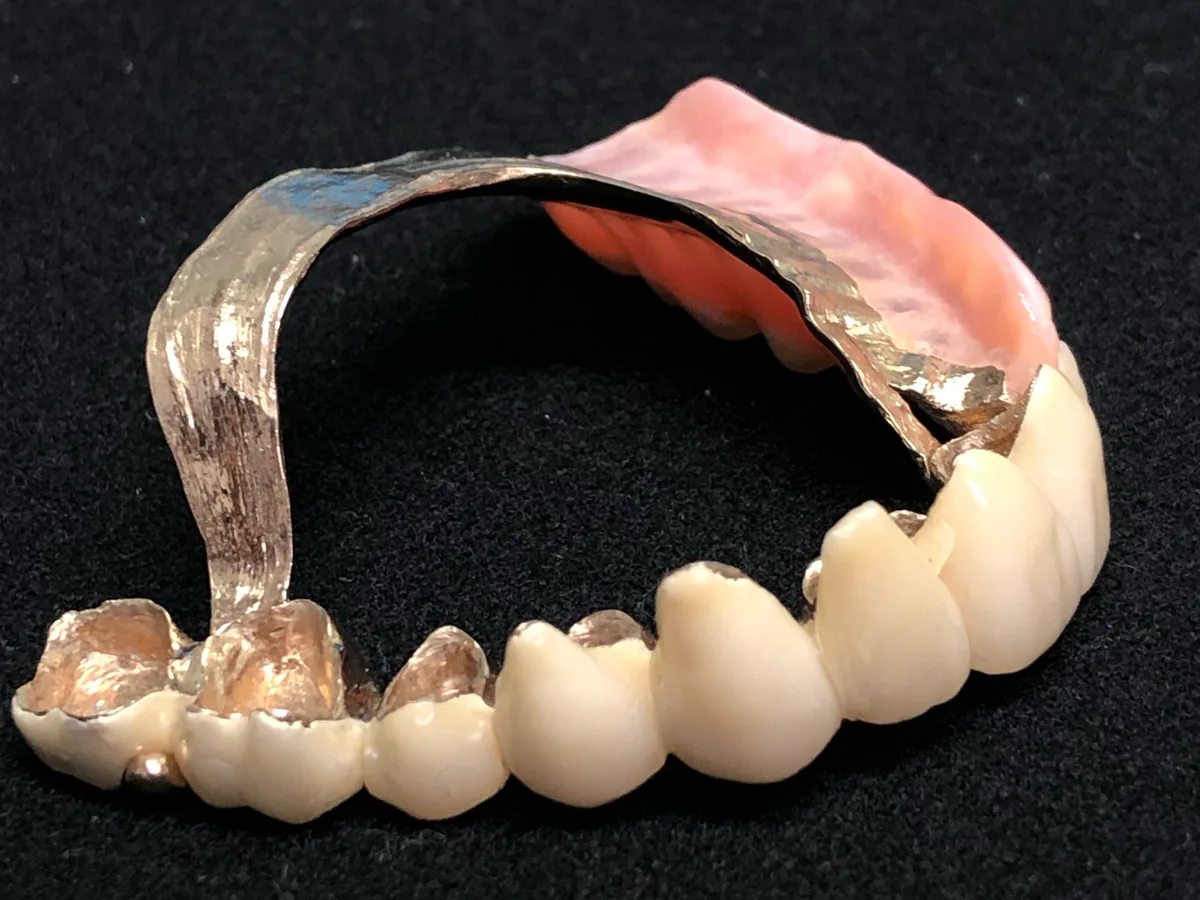
Appearance
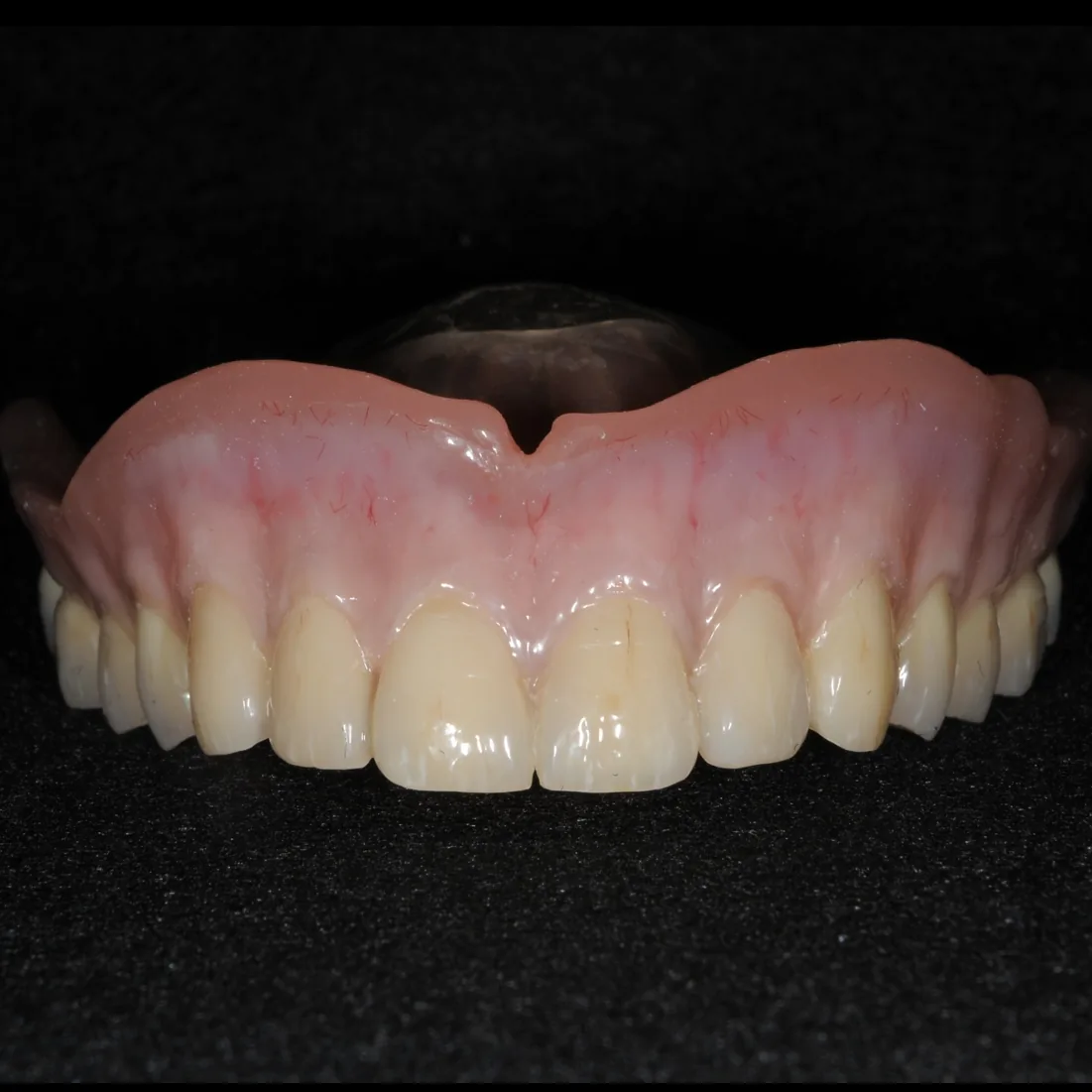
The shape and alignment of the front teeth and the colour of the teeth and gums affect appearance.
At our clinic, we decide these in discussion with patients.
In the part that represents the gums, we also reproduce the course of the blood vessels and the fine detail of the gum surface.
Photos: shape of the front teeth and gums
Dentures for people with an underbite
The approach is the same for dentures for people with a skeletal underbite (anterior crossbite).
Based on skeletal analysis, we consider the height between the upper and lower jaws and the position of the lower jaw in three dimensions, and arrange the artificial teeth accordingly.
Treatment duration, number of visits, fees and risks → Fees
What artificial tooth arrangement can and cannot do
What artificial tooth arrangement can do
- Decide the height between the upper and lower jaws (vertical dimension of occlusion) and the inclination of the biting surfaces (occlusal plane) from skeletal analysis, and arrange the teeth accordingly
- Decide the angle of the cusps of each tooth (cusp inclination) from jaw joint records, and arrange the teeth accordingly
- Give the denture a bite based on the same concept as natural teeth (sequential occlusion)
- Create an individual arrangement that suits the patient's skeleton
- Consider the shape, alignment and colour of the front teeth together with the patient's wishes regarding appearance
What it cannot do, and how we compensate
| What it cannot do | How we compensate |
|---|---|
| Completely eliminating the gap between the numerical targets and the finished result (caused by individual differences in how the body adapts and by factors other than the bite) | We check and adjust with a provisional denture (provisional restorations and provisional dentures). We also check the condition after the denture is fitted |
| Determining from the tooth arrangement alone whether the denture will be stable on the gums | Mucosal records |
| Regulating the forces on the supporting teeth in partial dentures | Denture design based on the finite element method |
| Finding out, from Cadiax records, how the jaw moves while clenching | Intraoral gothic arch tracing |
Frequently asked questions
- Isn't the arrangement of artificial teeth the same for everyone?
It is not the same.
At our clinic, we work out the patient's own values from skeletal analysis and jaw joint records, and decide the position and angle of each individual tooth.
An arrangement of teeth that suits the skeleton is different for each person.
- Can I tell you my wishes about appearance?
Yes. We decide the shape and alignment of the front teeth and the colour of the teeth and gums in discussion with patients.
You can also check the appearance at the provisional denture stage.
- Can the position of the arranged teeth be changed later?
The provisional denture is made of a material whose shape can be changed.
We check it while you use it, and apply what we learn to the final denture.
After the final denture is fitted, we also check its condition and adjust it as needed.
- Are the teeth also arranged with the same approach for partial dentures?
Yes. For partial dentures too, we work out the bite from records of the skeleton and jaw joints.
With partial dentures, we also design with the forces on the remaining teeth in mind (denture design based on the finite element method).
Related technologies and treatments
- Lateral cephalometric analysis
- Cadiax
- Girrbach Reference SL articulator
- Sequential occlusion
- All the technologies we use
- Dentures (precision dentures): we carry the examination data into the shape of the denture
Sources we referred to
For the general explanations (the meaning of terms), we referred to the following published sources. What we describe about our own methods is based on the director's posts and explanations.
- "[Vertical dimension of occlusion]", [New Encyclopedia of Occlusion] (Quintessence Publishing; in Japanese)
- "[Occlusal plane]", [Keyword Explanations of Dental Terms] (Quintessence Publishing; in Japanese)
Consultations and enquiries
Gibakai Medical Corporation
Yoshimi Dental Clinic
Square 2, Room 302 (third floor)
1-29-1 Tsukushino, Machida,
Tokyo 194-0001, Japan
TEL 042-795-1359 FAX 042-795-1398
Clinic days: Mon · Tue · Thu · Fri
10:00–13:00 / 14:30–18:00
A first visit begins with a first consultation (a private, non-insured service; 30 minutes to 1 hour) for examination and diagnosis. Questions about a diagnosis you received elsewhere are also covered within it.
In an emergency, such as being unable to chew or having severe symptoms, please call us on 042-795-1359 to discuss it.