What are attachments?
Attachments are devices that connect a denture to the teeth that support it.
At our clinic, we use them not only in partial dentures but also to connect crowns to each other.
We decide the shape of the attachments individually for each patient, considering which teeth will provide support and in which direction force will be transmitted.
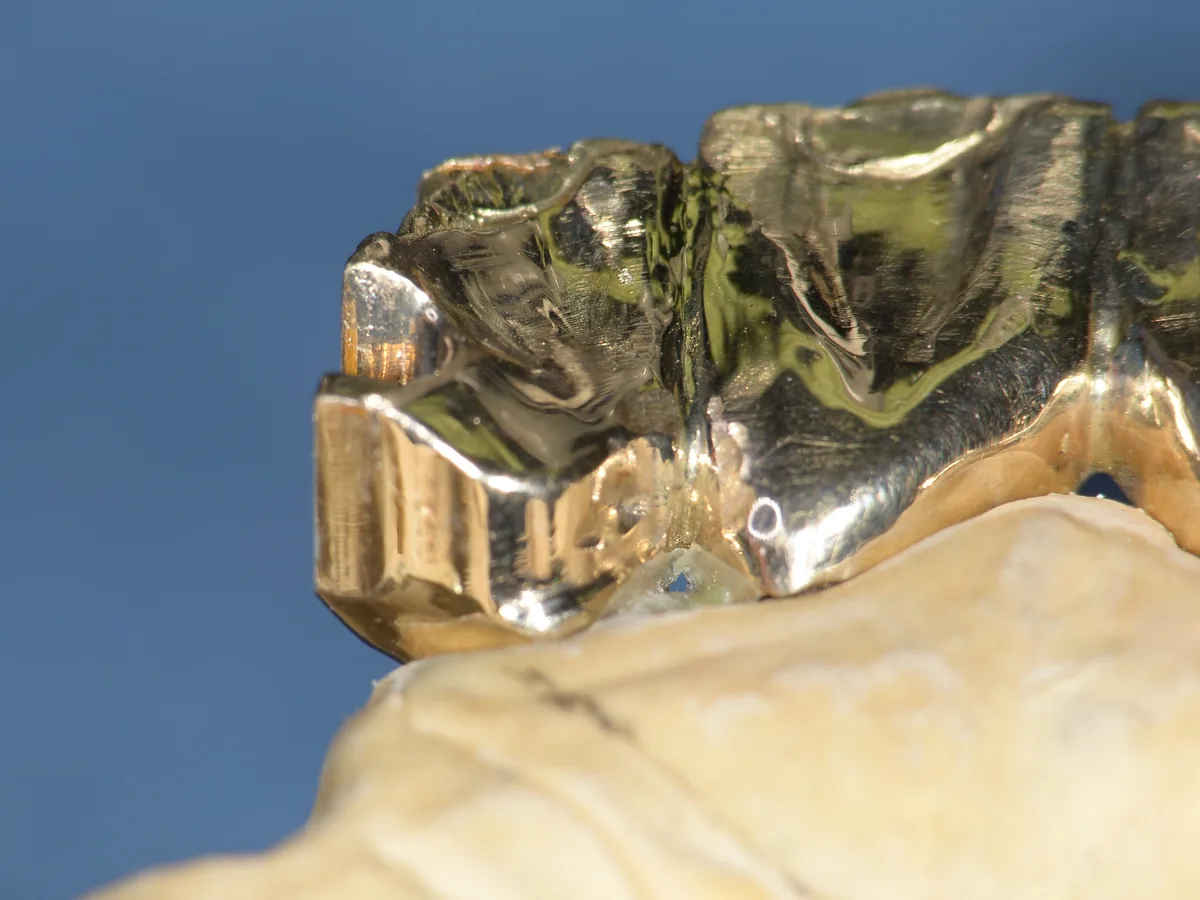
How attachments work
Teeth and mucosa sink by different amounts
A partial denture is supported both by the remaining teeth and by the mucosa (gums) where there are no teeth.
When biting force is applied, the amount by which teeth and mucosa sink differs greatly; in general, the mucosa is said to sink 5–10 times as much as the teeth.
The director takes this difference to be "about 10 times", and designs dentures so that force is not concentrated in one place.
The attachment is the part that connects the denture to the supporting teeth while accommodating this difference in how far they sink.
Transmitting force to the supporting teeth in the direction of their roots
A denture that replaces missing teeth in a gap between teeth sinks toward the roots when you bite, just as the teeth do.
We shape the attachment so that, when this happens, force is also transmitted to the supporting teeth in the direction of their roots.
When shaping it, we align the orientation of the surfaces by parallel milling.
The director considers that, while teeth respond naturally to forces that push them toward the bone (toward the root), forces that pull a tooth upward, even small ones, are an unnatural stimulus for the body.
In general, too, it is considered important in partial dentures to make connections that transmit biting force along the axis of the tooth (toward the root).
Crowns on the supporting teeth, and the denture framework
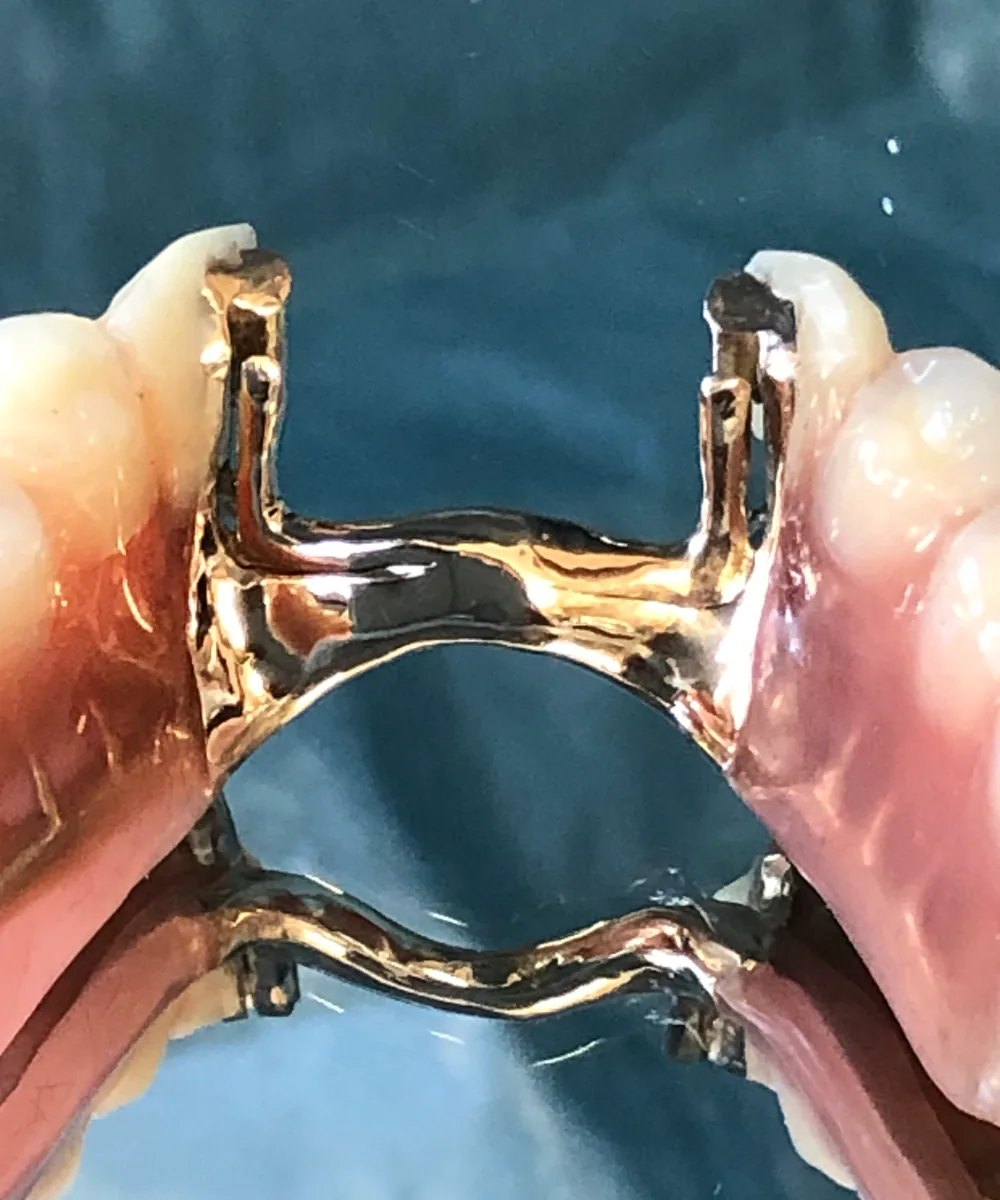
The supporting teeth are fitted with crowns that carry attachments.
On the denture side, attachments are built into the metal framework.
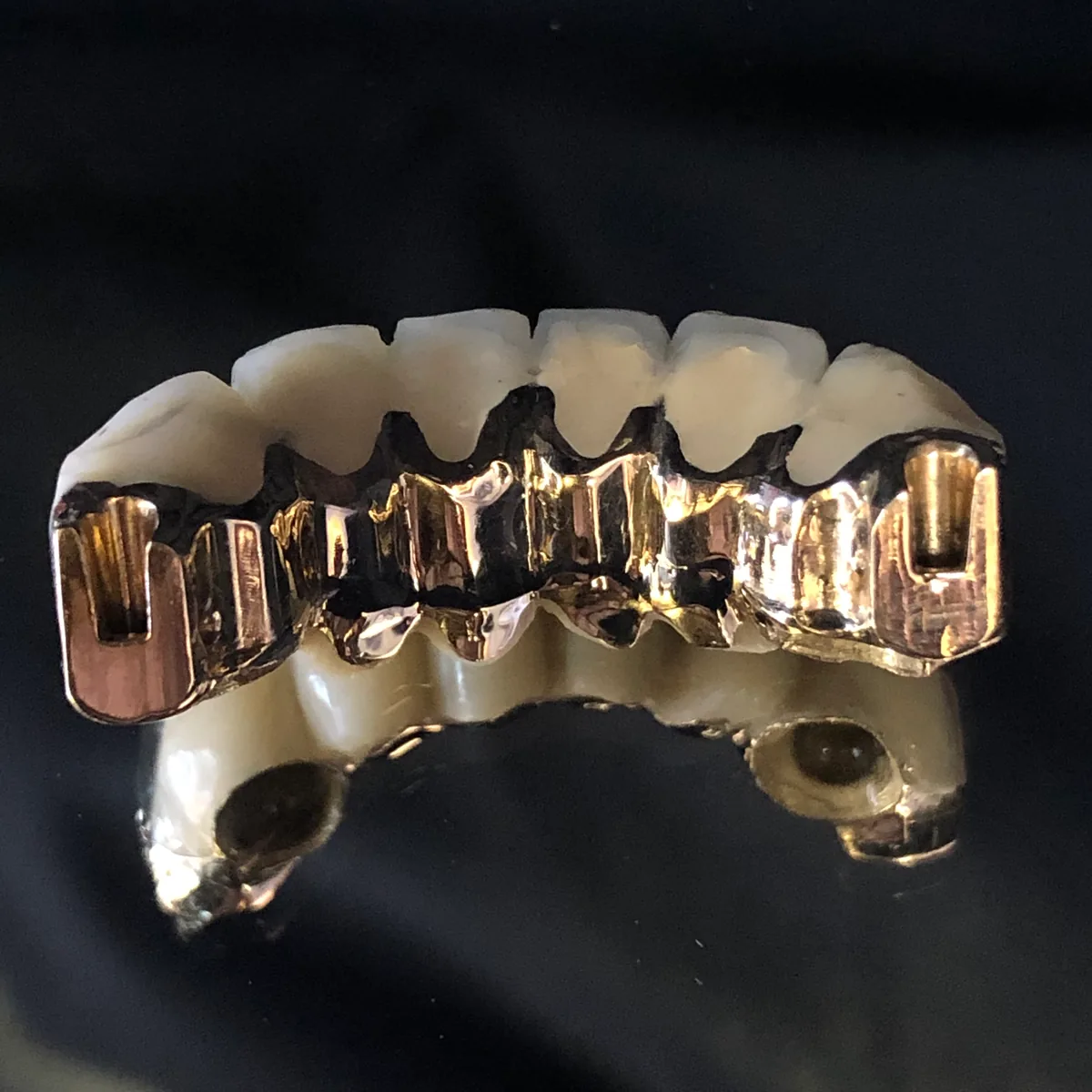
Why we use attachments
Because they are components that directly affect the remaining teeth and gums
Through attachments, force acts directly on the remaining teeth and on tissues such as the gums that support them.
For this reason, we regard how the shape of the attachments is designed as a particularly important part of making a denture.
Because we want to even out the difference in movement between teeth and mucosa
In the director's view, what is needed is a design that takes up the difference in how far teeth and mucosa sink by dividing it evenly through mechanical means.
This design concept is based on the denture design of Professor Rudolf Slavicek of the University of Vienna.
Our approach to the bite and to denture design is explained on the Austrian gnathology page.
So as not to hinder the movement of the bone
In the director's view, the left and right halves of the upper jaw bone work separately on either side of the seam down the middle (the midpalatal suture).
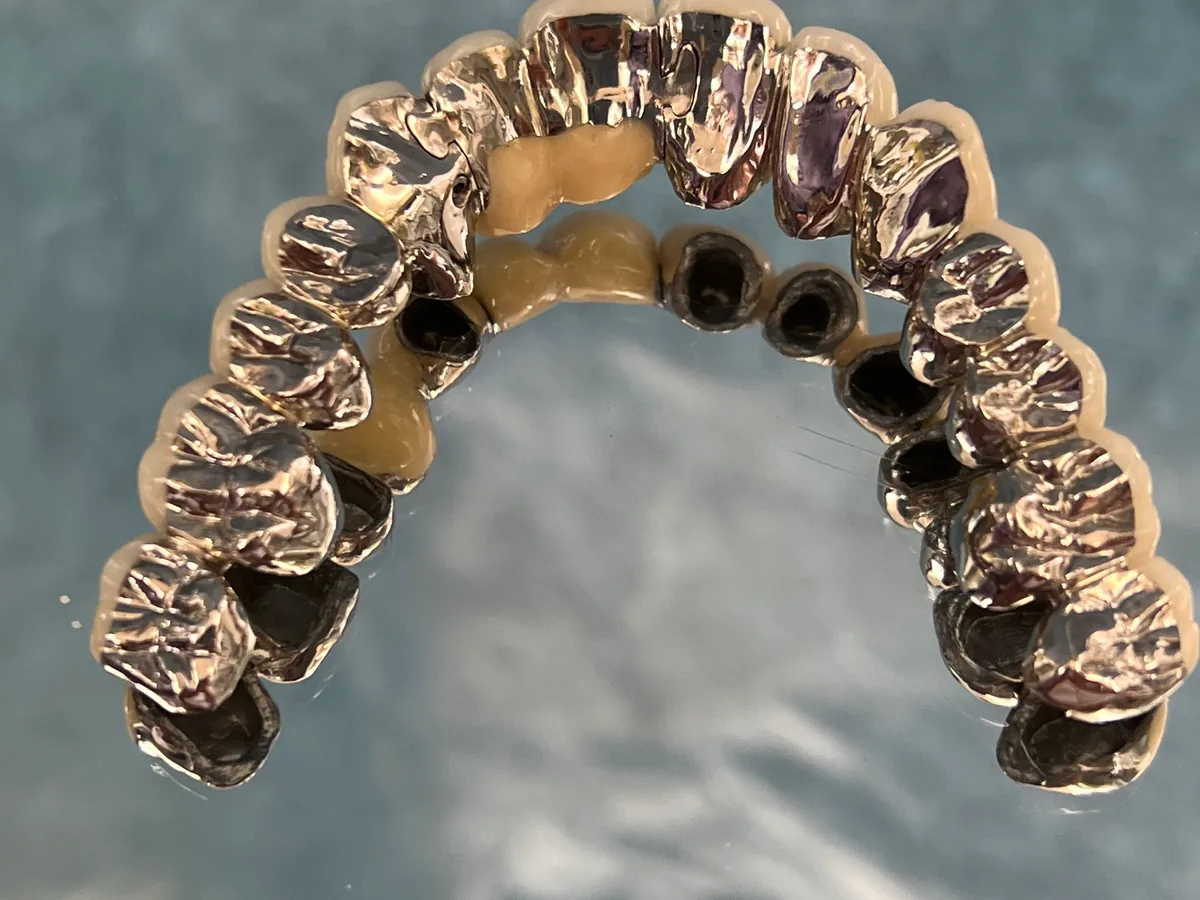
For this reason, rather than joining all the teeth of the upper jaw into one piece, we sometimes include an attachment that separates the left and right sides at the middle.
In the lower jaw too, there are dentures with an attachment in the middle so as not to hinder the movement of the bone that accompanies opening and closing the mouth.
Photos: examples divided into left and right at the middle
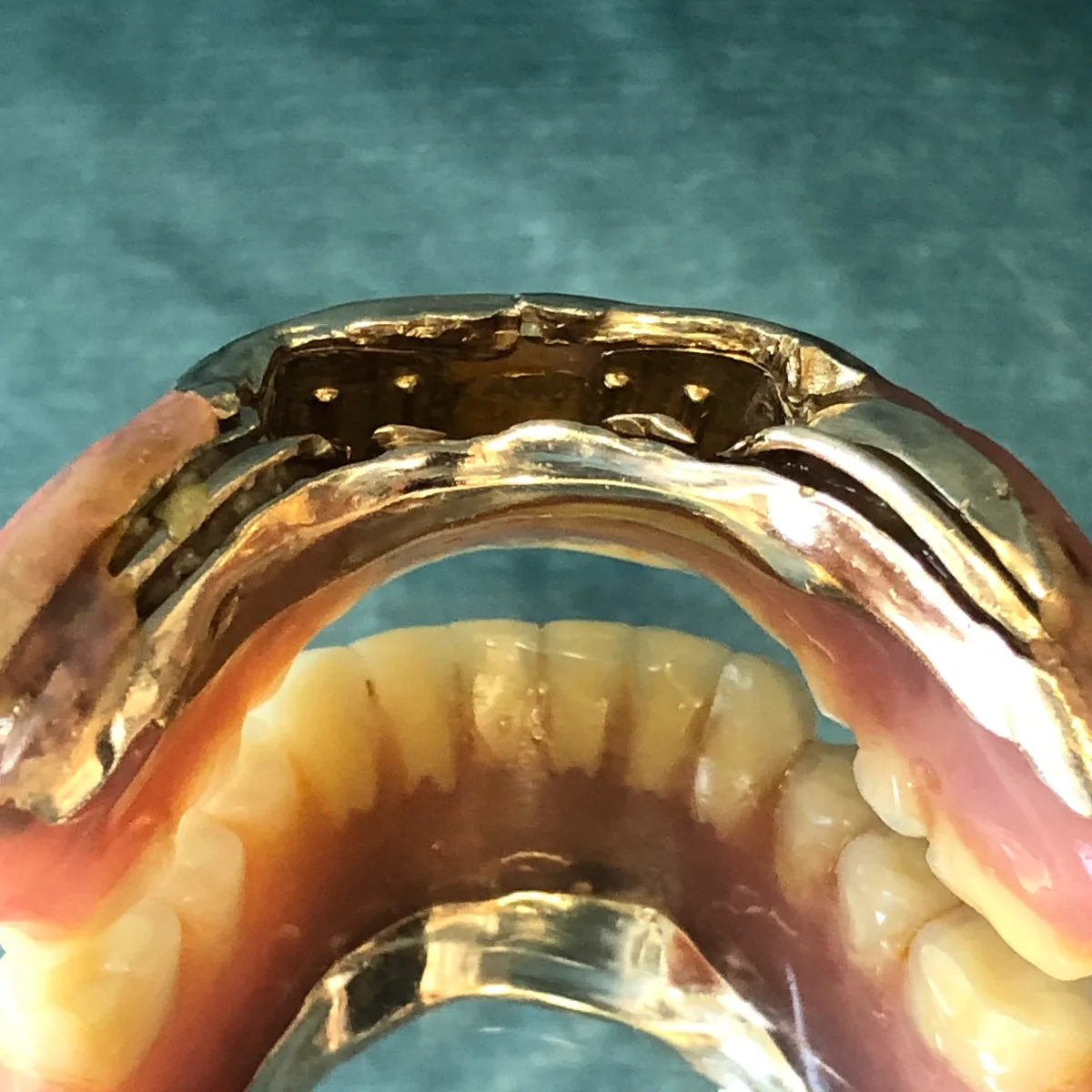
In practice at our clinic
How a denture with attachments is made
The general process is as follows.
- Examination: we examine jaw movement, the skeleton, the mucosa that supports the denture and the condition of the remaining teeth (Cadiax, gothic arch tracing, mucosal records and others).
- Design: based on the examination results, we work out which teeth will provide support and where to place the attachments.
- Checking with a provisional denture: we give the provisional denture the same mechanism as the final denture, and check it while you use it.
- Making the final denture: we form the shape in wax and convert it into metal (wax-up and casting), and align the surfaces of the attachments with the direction of insertion and removal by parallel milling.
- After you start using it: we continue with checks and care, and carry out adjustments and repairs as needed.
The combination and order of examinations are decided to suit the condition of each patient's mouth.
Photos: work with the milling machine
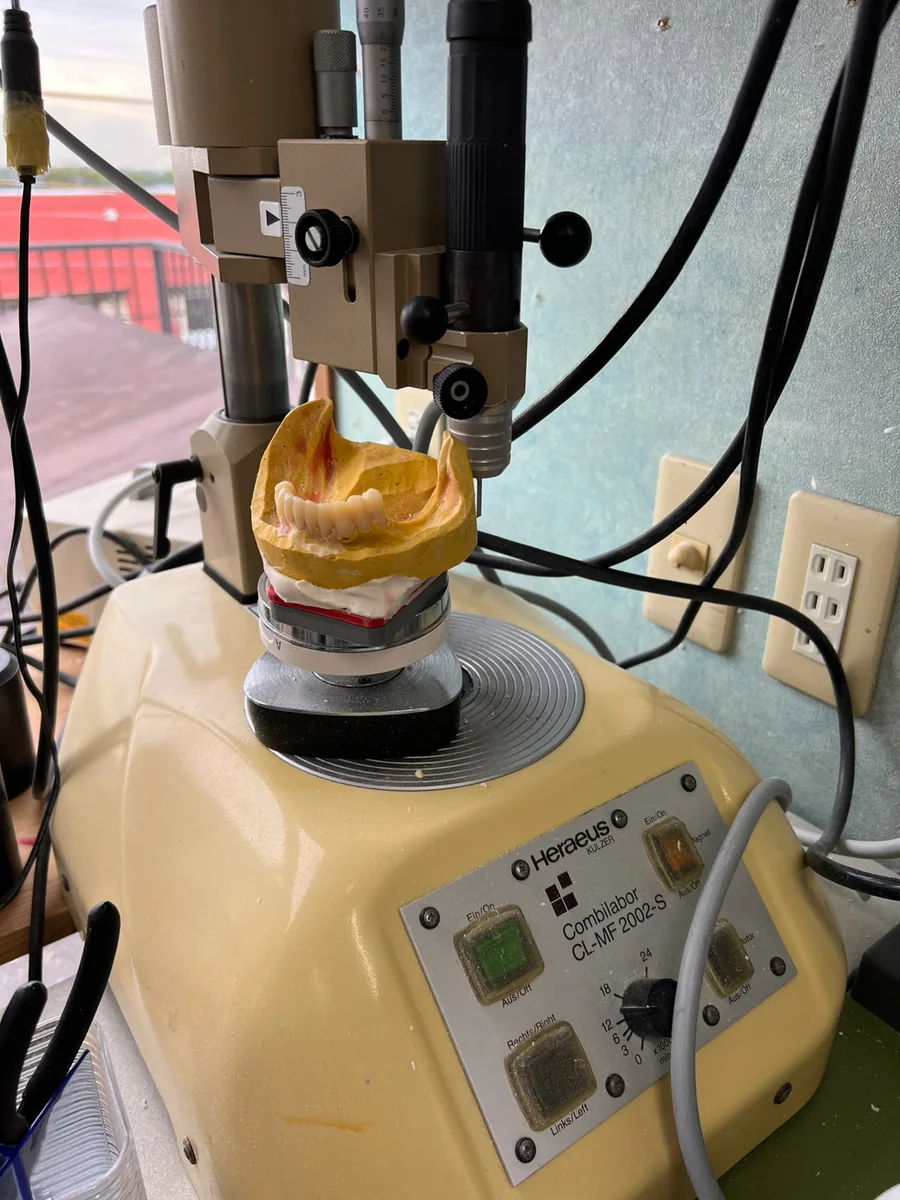
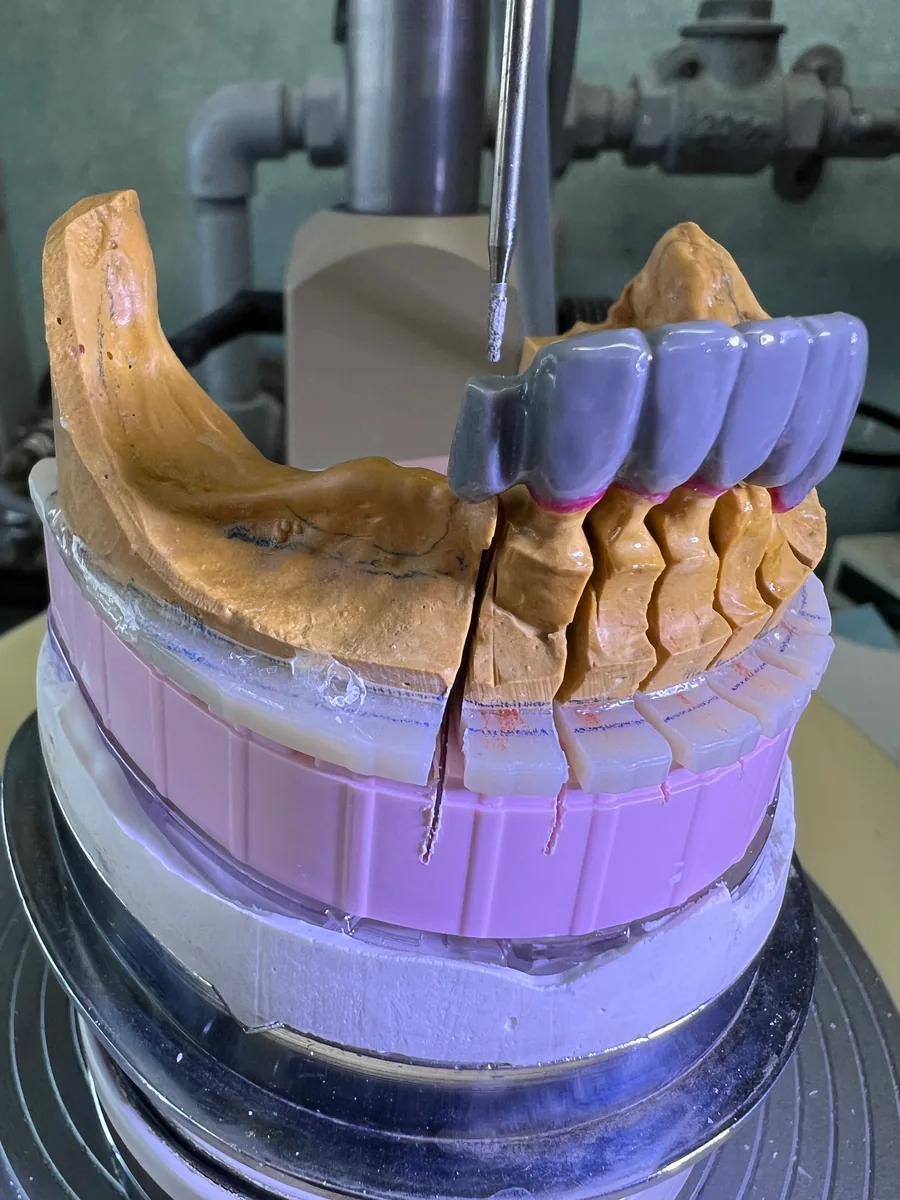
In partial dentures
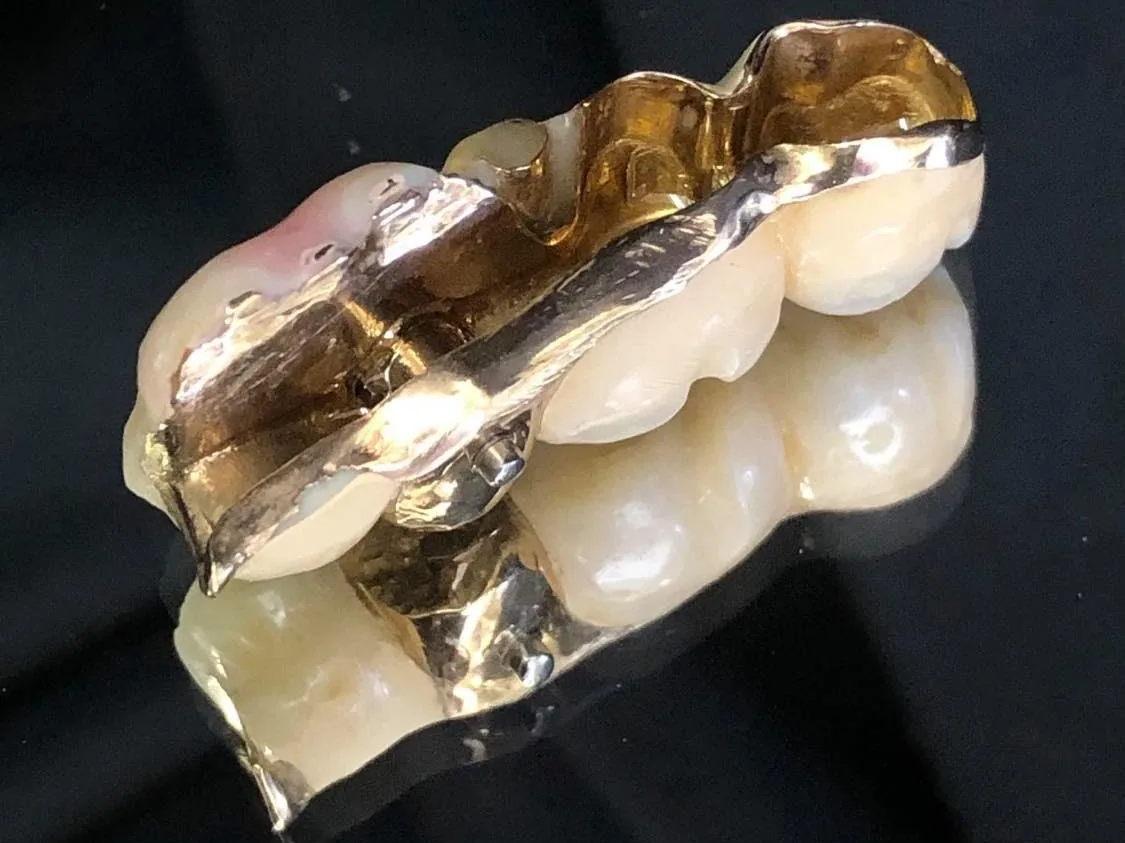
In partial dentures, the crowns placed on the remaining teeth and the metal framework of the denture are connected by attachments.
Which teeth the attachments are placed on, and which shape is used, are worked out according to the condition of the mouth.
In crown work
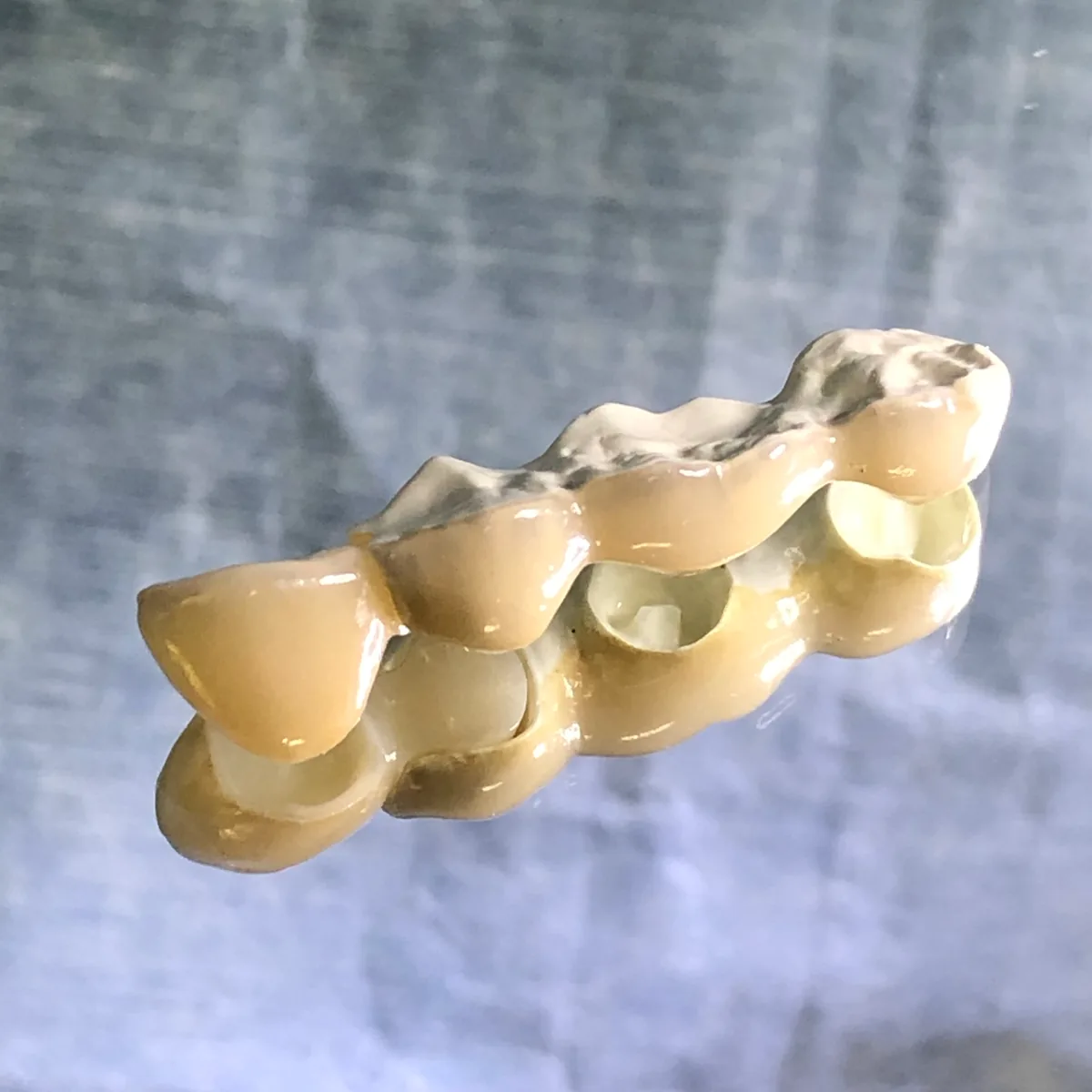
In crown work too, we use attachments when dividing the left and right sides at the middle and when connecting crowns to each other.
There are also cases in which crowns made of different types of zirconia have been connected with attachments.
Zirconia is explained on the zirconia crowns page.
Once in use
With dentures that use attachments, we place importance not only on making them with high precision but also on repeating checks and care (maintenance) once they are in use.
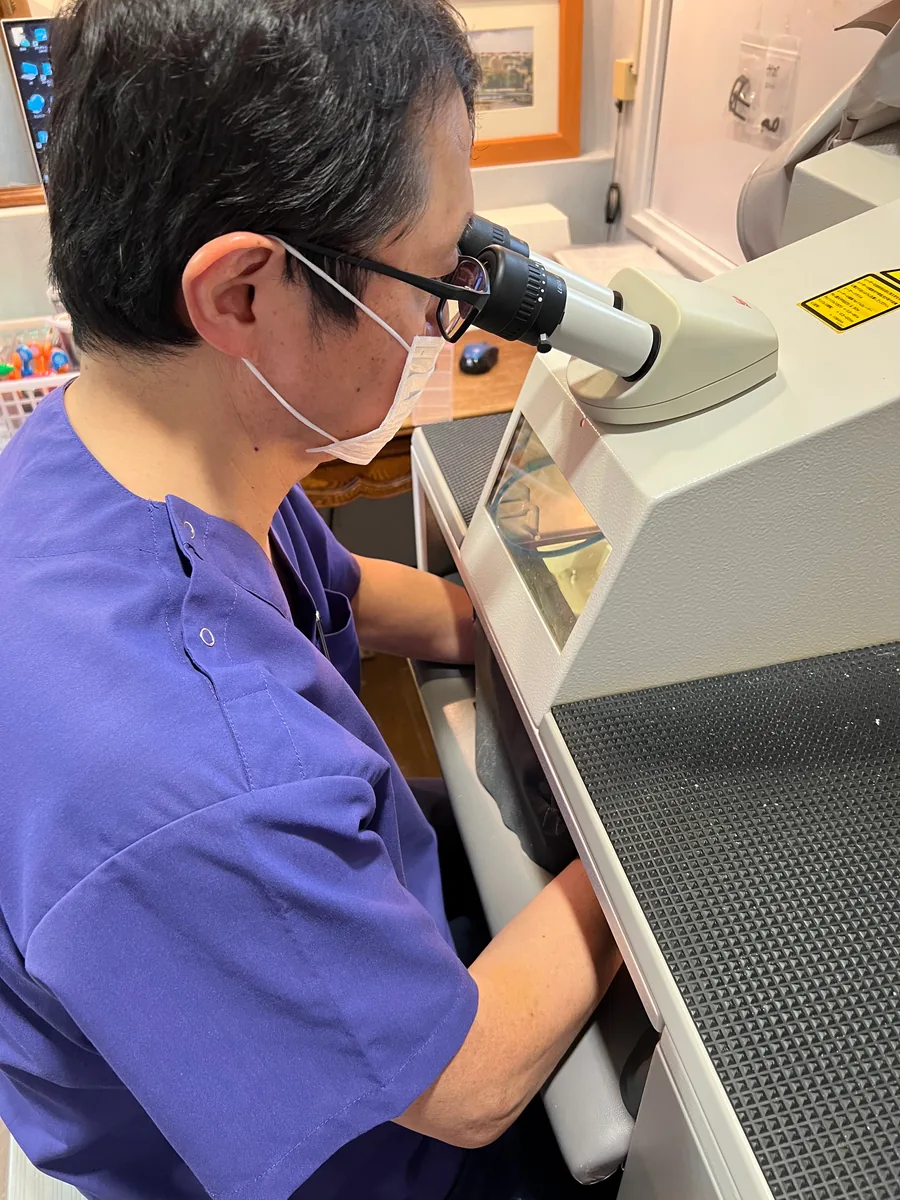
Repairs that involve joining an attachment to a denture are carried out by laser welding in our in-house dental laboratory.
What kind of repair is possible is decided after checking the condition of the denture and the mouth.
What attachments can and cannot do
What attachments can do
- Connecting the denture to the supporting teeth
- Accommodating the difference in how far teeth and mucosa sink, and regulating the direction of the force transmitted to the supporting teeth
- Making designs that divide the left and right sides at the middle, intended not to hinder the movement of the bone
- Connecting crowns to each other
What they cannot do, and how we compensate
| What they cannot do | How we compensate |
|---|---|
| Eliminating the load on the supporting teeth | We design them so that force is transmitted in the direction of the roots, and continue checks and care after the denture comes into use |
| Stopping the changes in the teeth and mucosa that occur over the years | We check progress and consider adjustment, repair (laser welding) or remaking |
| Using attachments of the same shape for everyone | We examine the teeth, mucosa and jaw movement, and choose the shape to suit the patient's mouth |
| Checking how it works in the mouth on the casts alone | We check this while you use a provisional denture |
The main risks and side effects of dentures include discomfort until you get used to them, the need for adjustments, and remaking over time.
The main risks and side effects of zirconia crowns include sensitivity, fracture and debonding.
The condition after treatment can be affected by changes in your general health and oral environment, and by deterioration over time.
Frequently asked questions
- Are attachments different from the metal clasps (fasteners) on a denture?
Both are parts that hold the denture on the teeth.
With our attachments, we decide the shape individually for each patient, taking into account the difference in how far teeth and mucosa sink and the direction of the force transmitted to the supporting teeth, and build them into the denture.
- When are they used?
They are used, for example, in partial dentures where supporting teeth remain. They are also used to connect crowns to each other.
Whether to use them, and which shape to use, is decided after examination.
- Can they be repaired if they break?
We carry out repairs that involve joining attachments to dentures in our in-house dental laboratory.
What kind of repair is possible is decided after checking the condition of the denture and the mouth.
- Is care needed once they are in use?
Yes. Along with making them with high precision, we place importance on repeating checks and care (maintenance).
- Why are upper dentures and crowns sometimes divided at the middle?
In the director's view, the left and right halves of the upper jaw bone work separately on either side of the seam down the middle.
So as not to hinder that movement, we sometimes include an attachment that separates the left and right sides at the middle.
Related technologies and treatments
- Parallel milling: aligning the surfaces of the attachments with the direction of insertion and removal
- Laser welding: joining and repairing attachments
- Denture design based on the finite element method: the forces on the supporting teeth, and the design of the framework
- Zirconia crowns
- All the technologies we use
- Dentures (precision dentures)
Treatment duration, number of visits, fees and risks → Fees
Sources we referred to
For the general explanations (how partial dentures are supported, and the difference in how far teeth and mucosa sink), we referred to the following published source. What we describe about our own methods is based on the director's explanations.
Consultations and enquiries
Gibakai Medical Corporation
Yoshimi Dental Clinic
Square 2, Room 302 (third floor)
1-29-1 Tsukushino, Machida,
Tokyo 194-0001, Japan
TEL 042-795-1359 FAX 042-795-1398
Clinic days: Mon · Tue · Thu · Fri
10:00–13:00 / 14:30–18:00
A first visit begins with a first consultation (a private, non-insured service; 30 minutes to 1 hour) for examination and diagnosis. Questions about a diagnosis you received elsewhere are also covered within it.
In an emergency, such as being unable to chew or having severe symptoms, please call us on 042-795-1359 to discuss it.