What is Austrian gnathology?
Austrian gnathology is a theory of occlusion that takes as its starting point how the jaws and teeth have been shaped over the course of human evolution and through growth and development after birth.
Rather than dealing separately with the skeleton, jaw joint movement, each individual tooth, and tooth contact by day and by night, it examines them as a single system: the organ used for chewing (the masticatory organ).
Gnathology is the term for a field of dentistry that studies occlusion and the function of the jaws.
In the director's posts, this approach is also referred to by names such as the Sato–Slavicek theory, the Sato–Slavicek concept and the Austrian gnathology school, as in "Sato–Slavicek theory (Austrian gnathology school)".
At our clinic, examination and design follow this approach.
This applies not only to the treatment of temporomandibular disorders (TMD) but also to orthodontic treatment, dentures and crowns.
Background to its development
It is based on the ideas of Professor Rudolf Slavicek (1928–2022), who was a professor of prosthodontics at the University of Vienna.
Professor Slavicek was involved in developing instruments and methods that link examination and design, such as methods for recording jaw joint movement and articulators, and his theory of occlusion was brought together as the "Vienna concept of occlusion".
In 1989, Professor Slavicek was invited to give a lecture at Kanagawa Dental University, where he met Sadao Sato (later a professor at the same university).
Their collaboration deepened in the years that followed, and from the mid-1990s Professor Sato also began to give courses in Vienna.
As the director explains, it was Professor Slavicek who built this system, and Professor Sato and students in various countries have built up evaluations of it in research and in clinical practice.
The director and this approach
The director came across this approach at a course given by Professor Sato that he attended in 1999.
From Professor Sato, the director has learned the concepts of growth and development and of the forces acting on the teeth.
Then, in 2000, he learned the concepts of denture design directly from Professor Slavicek, and he also took part in research on "occlusion, brain function and stress" under both professors.
His career is described on the About the director page, and his research on the Research, publications and conferences page.
How Austrian gnathology works
In this approach, the bite is not decided by looking only at the places where the teeth touch.
It links the following five perspectives and carries the measured information over into the design of treatment.
| Perspective | What we check | How it feeds into the design |
|---|---|---|
| Evolution, growth and development | The formation of the skull, the upper and lower jaws and the dental arches | Considering the positional relationship between the skeleton and the teeth |
| A common reference plane | The skeleton, jaw joint movement and the inclination of the biting surfaces | Reading the values against the same reference and transferring them to the articulator |
| Each individual tooth | The height, inclination and axis direction of the teeth | Working out the angle each tooth needs |
| A bite in which the teeth separate in sequence | How the teeth separate when the lower jaw moves | Building up the guidance inclination for each tooth |
| The bite during sleep | Tooth contact during sleep | Checking contact at night as well, separately from the daytime |
① Viewing it through evolution, growth and development
This approach does not regard the masticatory organ as something used only for chewing.
It sees it as something that has changed shape over the course of human evolution, along with changes in posture and the development of the brain and language.
The masticatory organ is said to be a system involved not only in eating but also in breathing, swallowing, interacting with other people and coping with stress.
It takes the view that the skull, the jaws and the dental arches do not grow into a shape fixed by heredity, but are shaped after birth by adapting to function and environment and compensating for one another.
Professor Sato and colleagues have also focused on the lack of bony base relative to the size of the teeth in the back-tooth region (posterior discrepancy).
This view is also described on the lateral cephalometric analysis page.
② Measuring from the same reference plane and representing the values on the articulator
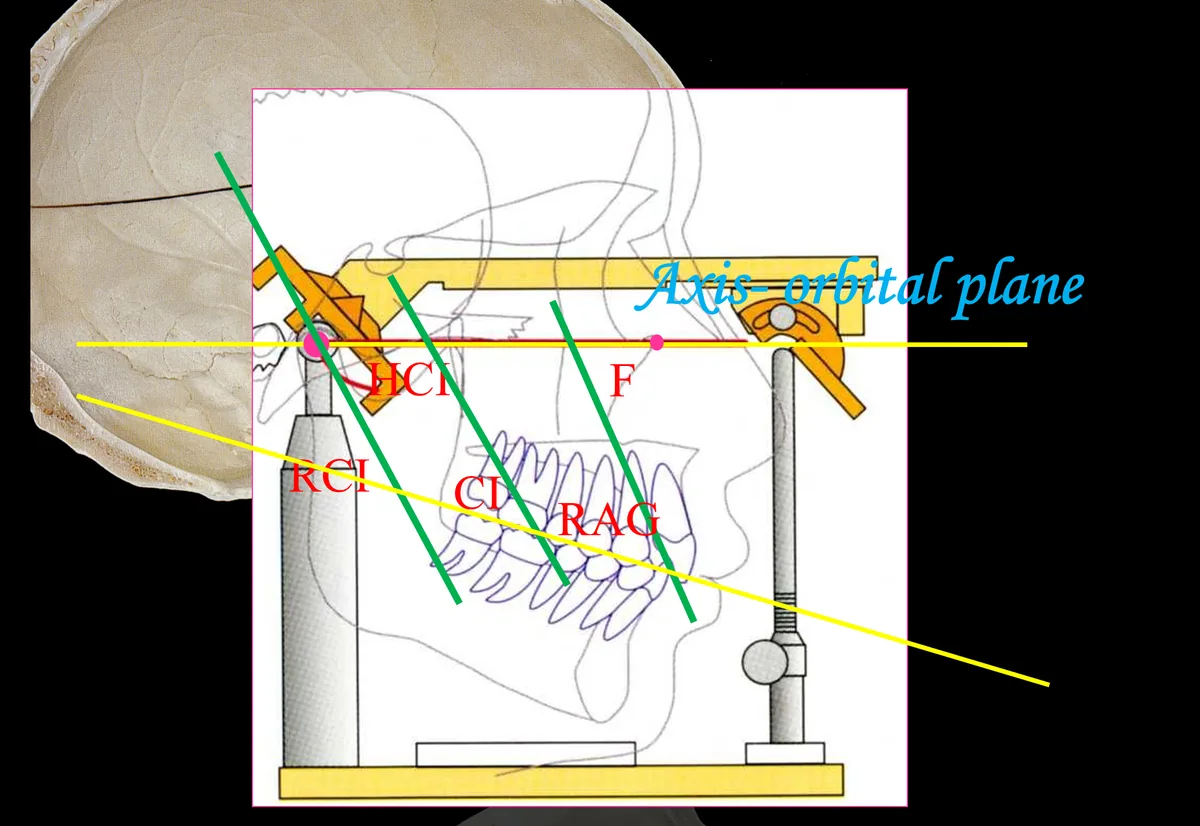
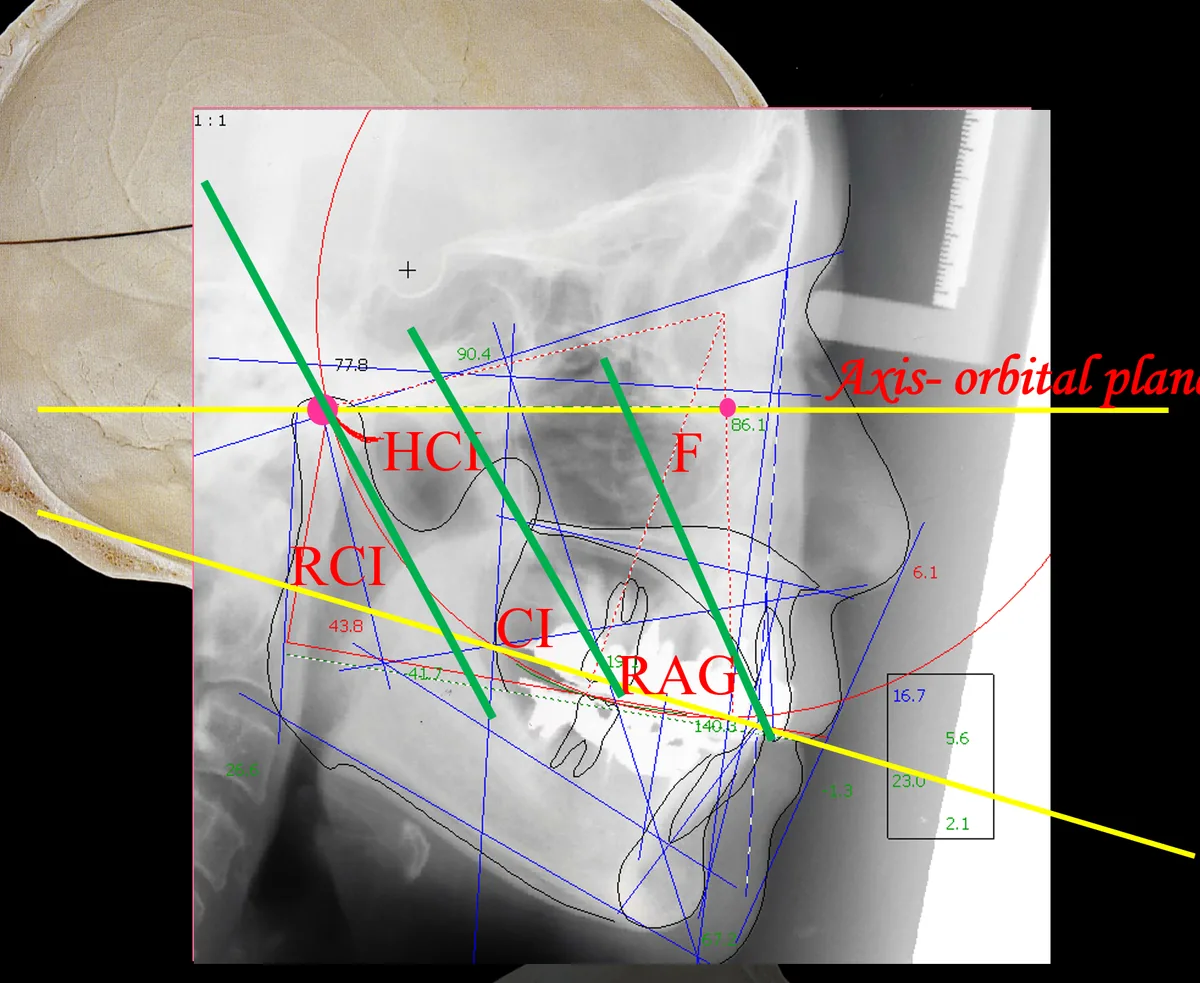
All measurements use the axis-orbital plane (the plane passing through the axis of rotation of the jaw joints and a point below the eye) as their reference.
Using the same reference means that the skeletal analysis, jaw joint movement and the inclination of the biting surfaces can all be read with a single yardstick.
Those values are represented on the Girrbach Reference SL articulator.
③ Giving each tooth its own angle
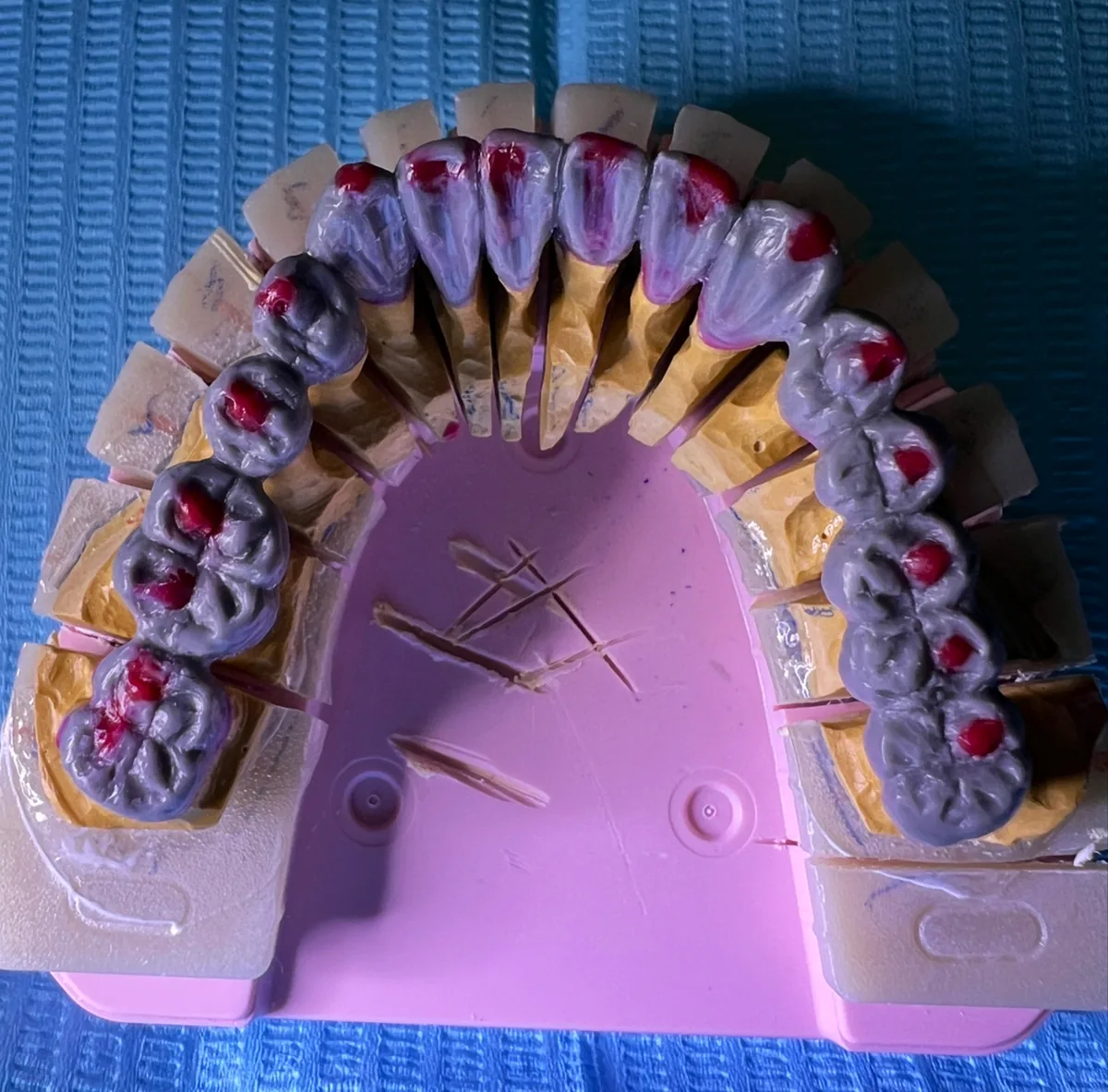
The height and angle of the teeth, and the direction of their axes, differ from tooth to tooth.
In this approach, the angle of the slopes of the teeth (cusp inclination) is also decided and given tooth by tooth.
For this we use a sectioned cast, from which each tooth can be removed individually; the director regards this as a basic procedure of this approach.
④ A bite in which the teeth separate in sequence from the back
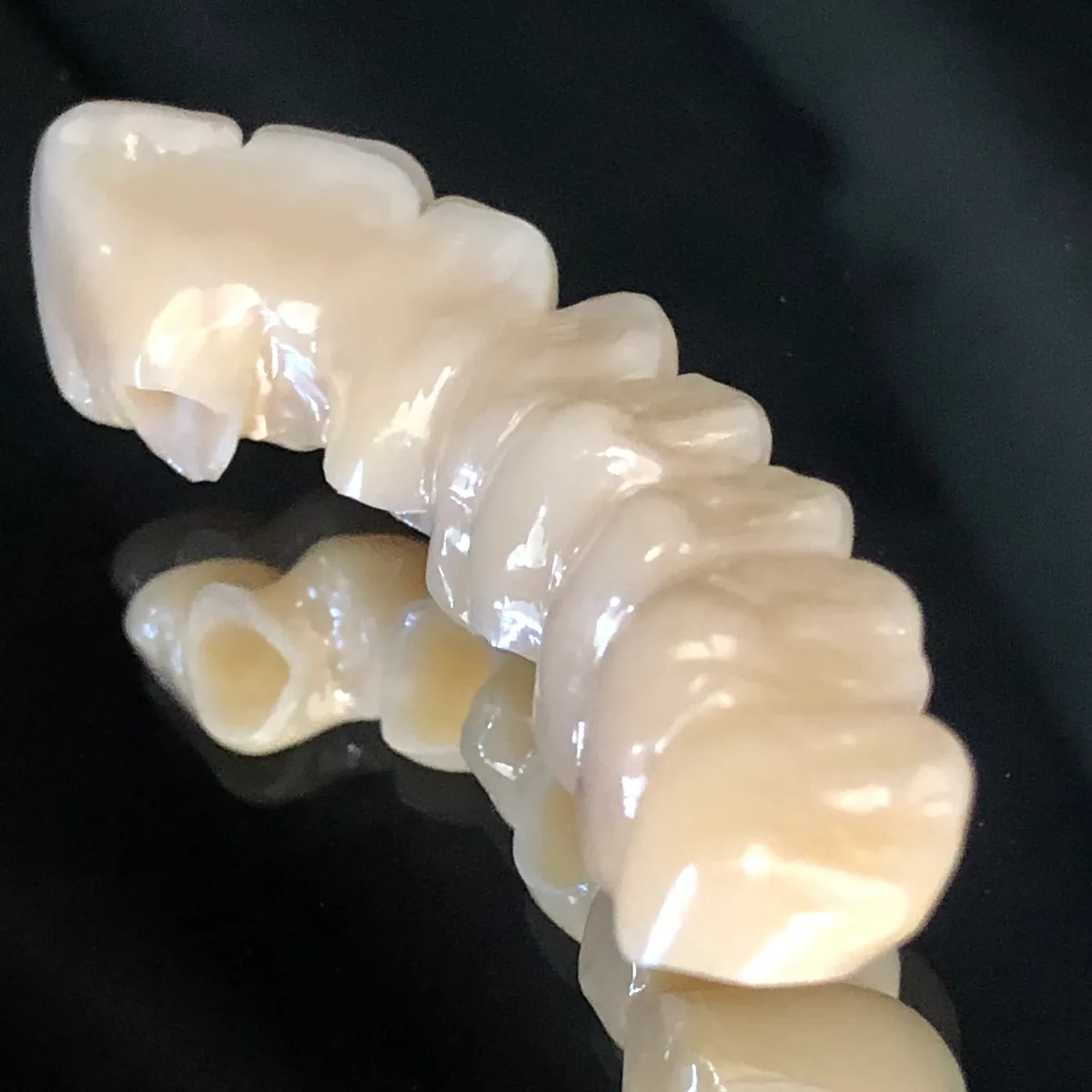
The guidance inclination of each tooth is built up so that, when the lower jaw moves sideways, the back teeth separate first and teeth such as the canines remain to guide the movement.
This bite is called sequential occlusion.
It is said that the bite can be built on the same theory in everything from orthodontic treatment to complete dentures.
⑤ Considering the bite during sleep
This school has developed a theoretical account of the relationship between the evolution of the brain, psychological stress and occlusion.
Professor Slavicek and Professor Sato discuss tooth grinding and clenching as one of the functions of the masticatory organ, one that comes into play when psychological strain is high.
This is an introduction to a way of thinking; it does not mean that treatment at our clinic reduces stress.
At our clinic, we also check tooth contact during sleep, separately from the daytime bite.
According to the manufacturer, the BruxChecker we use for this is a device based on Professor Sato's method.
Why we use Austrian gnathology
To use the same yardstick for examination and design, whatever the treatment
Orthodontic treatment, dentures, TMD treatment and crowns differ both in their methods and in what is finally made.
In every treatment, we first measure the skeleton and jaw movement, and decide the target bite on the basis of those records.
This does not mean giving everyone the same shape.
It means reading each person's measured values with the same yardstick.
To carry measured values through to the finished form
Obtaining numbers from examinations does not by itself determine the shape of the teeth or appliances.
In this approach, values measured from the same reference plane are represented on the articulator, and the results of the analysis are carried over into tangible forms.
So as not to copy the current bite as it is
If the current bite is copied as it is onto new teeth, the discrepancy that caused the problem may be copied as well.
So at our clinic, we decide the target bite from measured data.
To take tooth contact during sleep into account
The director considers the bite to include not only the contacts visible in daytime examinations but also contact during sleep.
Contact during sleep is checked not only before treatment begins but also during and after treatment.
Because it is an approach to be verified over many years
The director believes that whether an approach to occlusion is sound cannot be judged over a short period or from a single case, and must be confirmed over the course of many years.
The director himself has revised his approach to design while observing progress over long periods.
In practice at our clinic
Austrian gnathology is not the name of a single examination or device.
It is an approach that links how examinations are read, how the target bite is designed, and how it is given form and checked.
1. Examining
For the examinations, we combine X-rays of the skeleton, records of jaw joint movement, impressions and casts, photographs and other records to suit the symptoms and the condition of the mouth.
| What we check | Technology used |
|---|---|
| Skeleton | Lateral cephalometric analysis |
| Jaw joint movement in a relaxed state | Cadiax |
| Traces of lower jaw movement while clenching (when making dentures) | Intraoral gothic arch tracing |
| Each individual tooth | Sectioned cast |
| Inclination of the biting surfaces | Occlusal plane measurement |
| Tooth contact during sleep | BruxChecker |
When symptoms are severe, we may also add autonomic reflex testing using the pupillary light reflex.
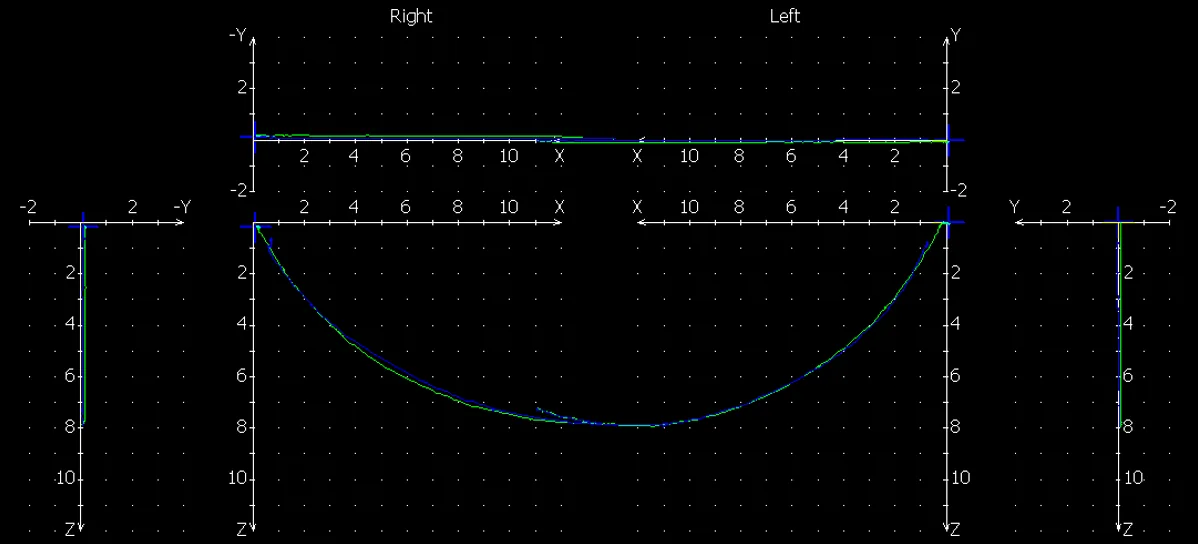
2. Designing
Combining the examination results, we work out the target position of the lower jaw for treatment (the therapeutic jaw position).
Based on that position, we decide the height and angle of each tooth, the inclination of the biting surfaces and how the teeth separate when the lower jaw moves.
What the examination values indicate is an approximate target for the intended bite.
We treat them not as values that promise a result, but as design values that have yet to be checked in the mouth.
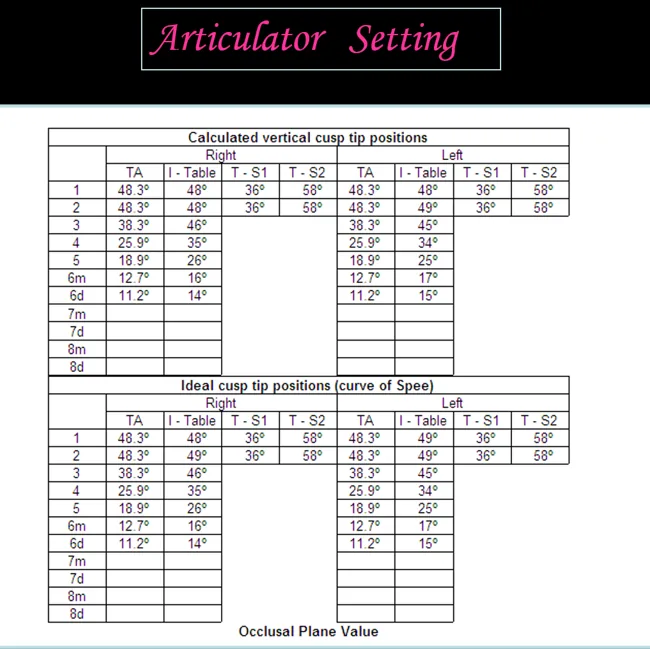
3. Giving it form
The designed jaw position and bite are expressed in a form suited to each treatment.
- TMD: appliances for checking, in the mouth, the target jaw position for treatment (metal overlays, provisional restorations, etc.)
- Orthodontic treatment: a wire technique that moves each tooth in three dimensions (MEAW), aiming to align even the direction of the roots within the bone
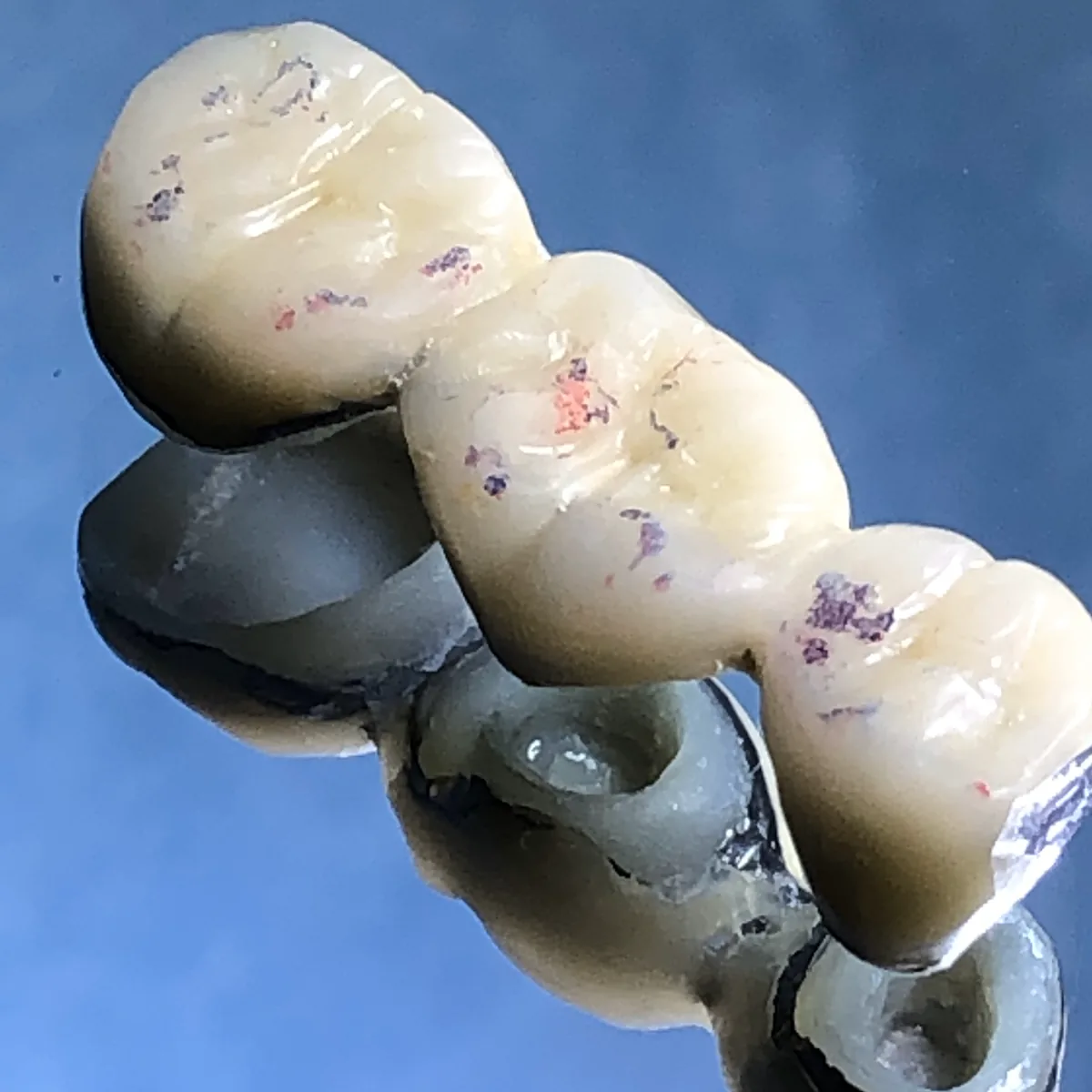
- Dentures: artificial tooth arrangement, and denture design based on the finite element method following Professor Slavicek's concepts of denture design
- Crowns: the shape of each individual tooth (wax-up)
The design of the shapes (wax-ups and so on) is carried out in our in-house dental laboratory while checking the measured values and the casts.
Photos: dentures designed with this approach
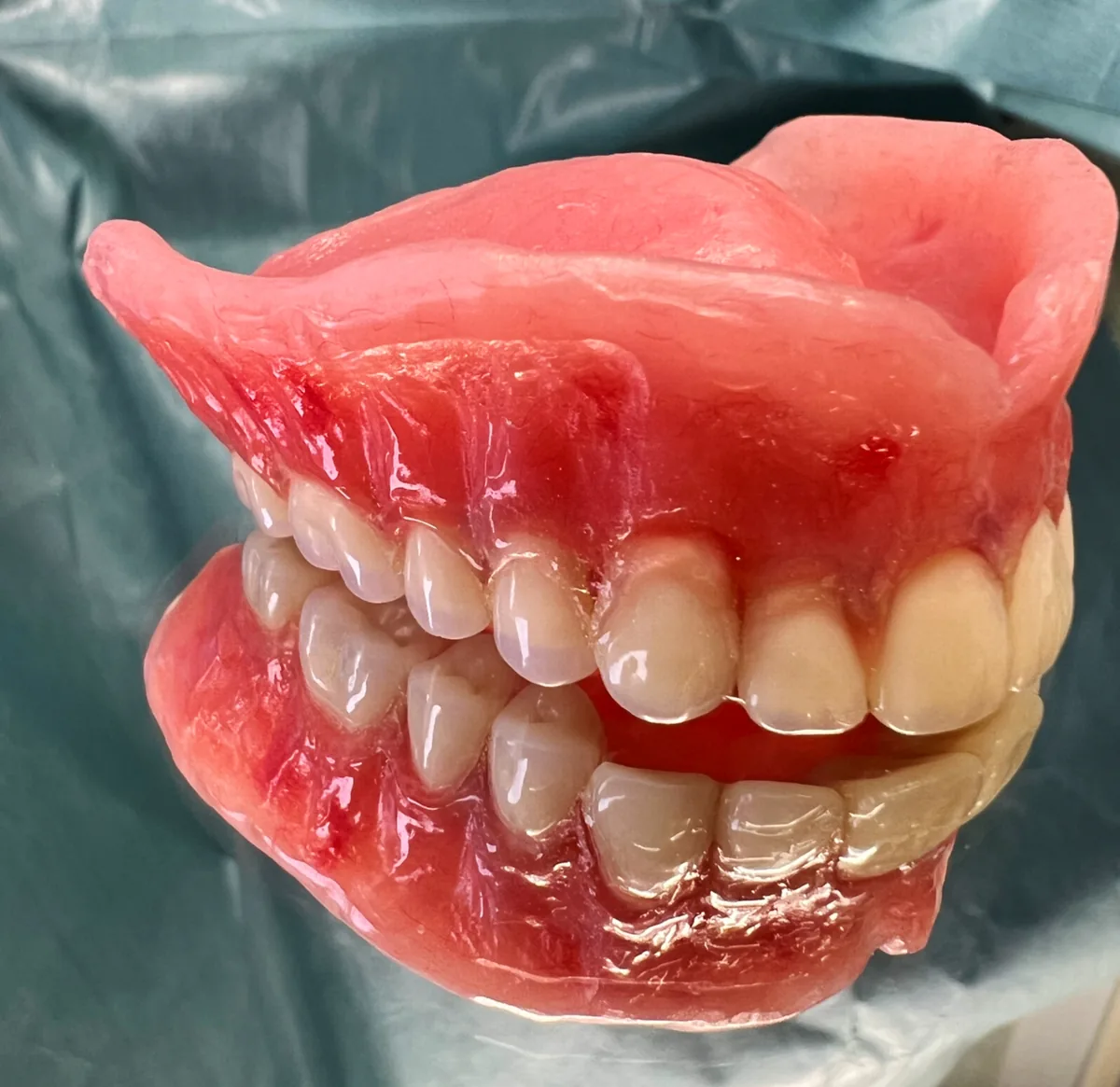
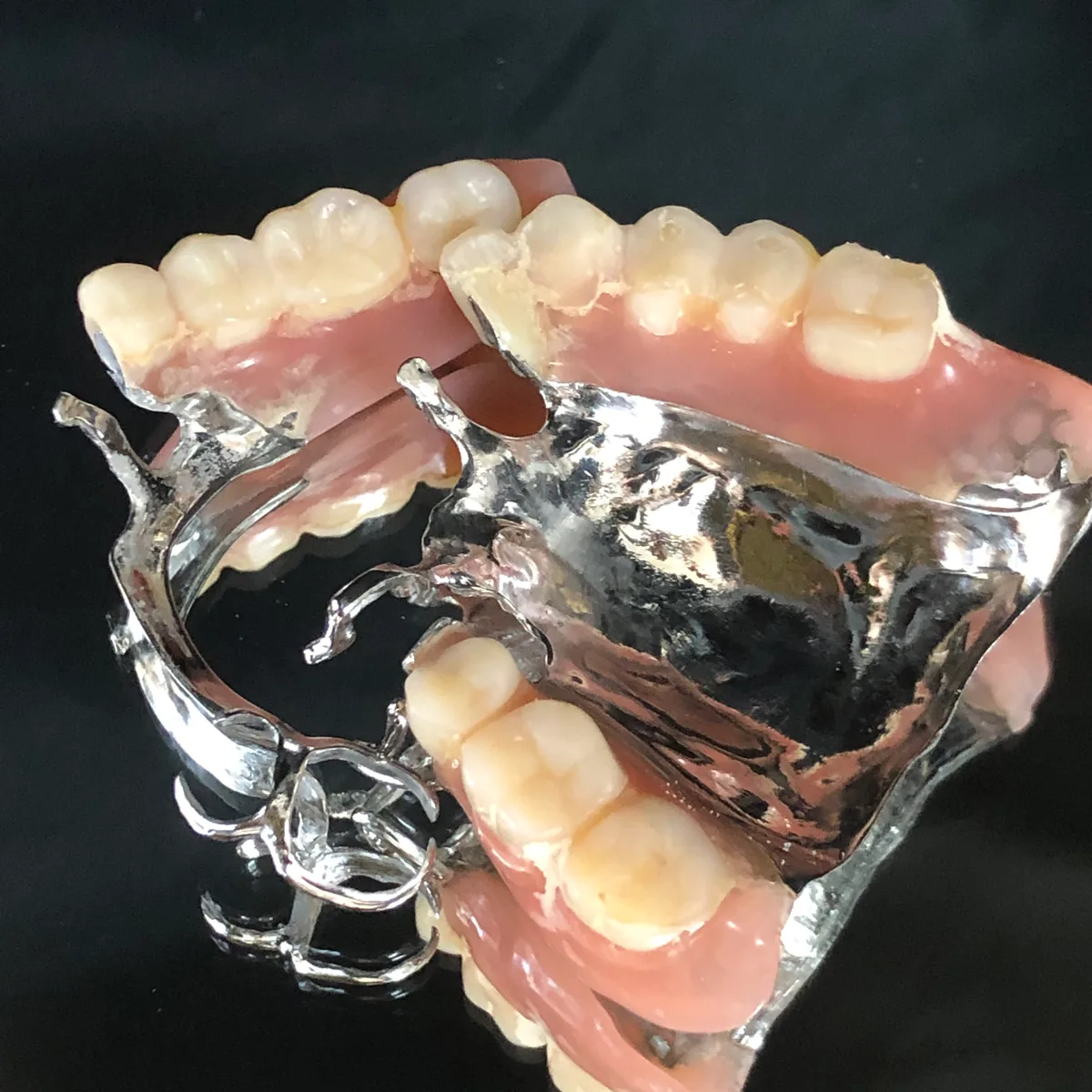
Both complete and partial dentures are designed in line with this approach.
Photos: an appliance for TMD and an orthodontic wire
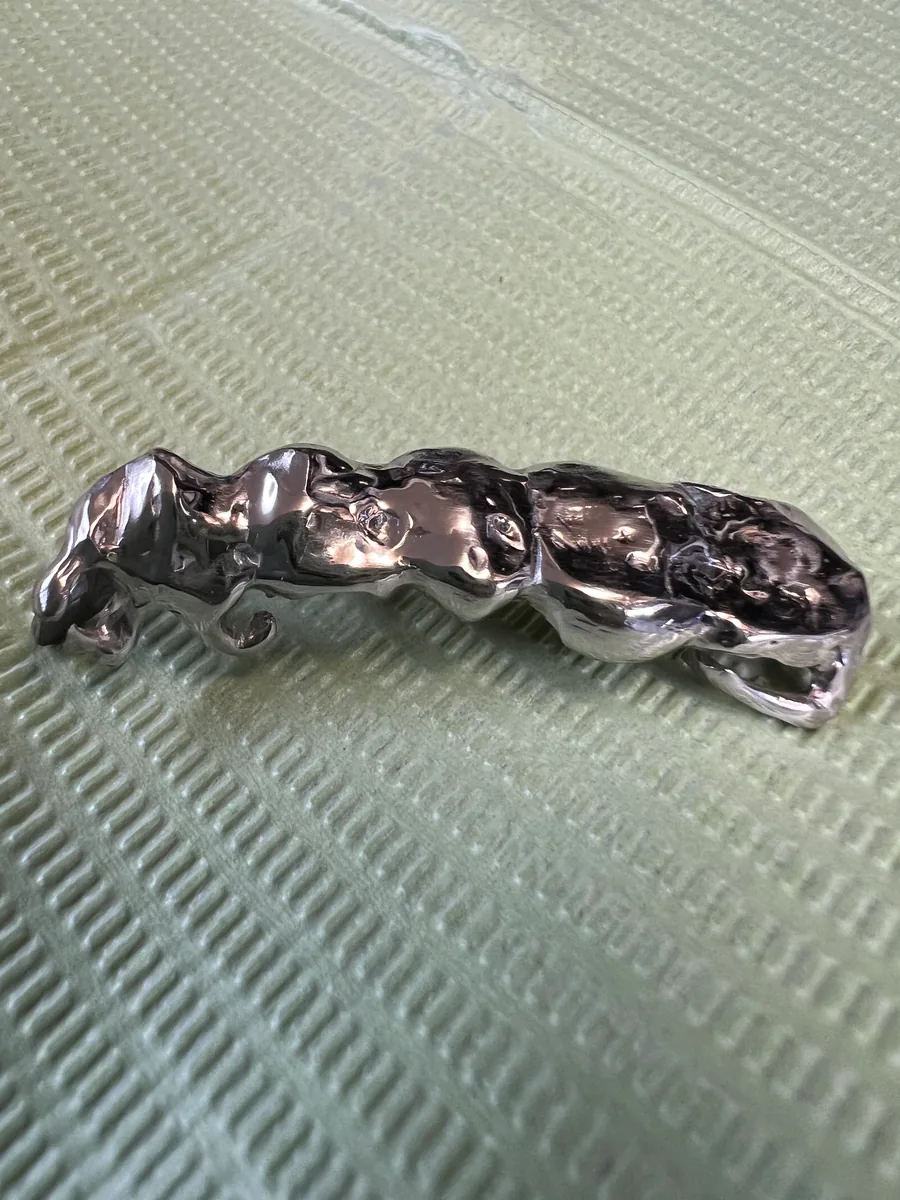
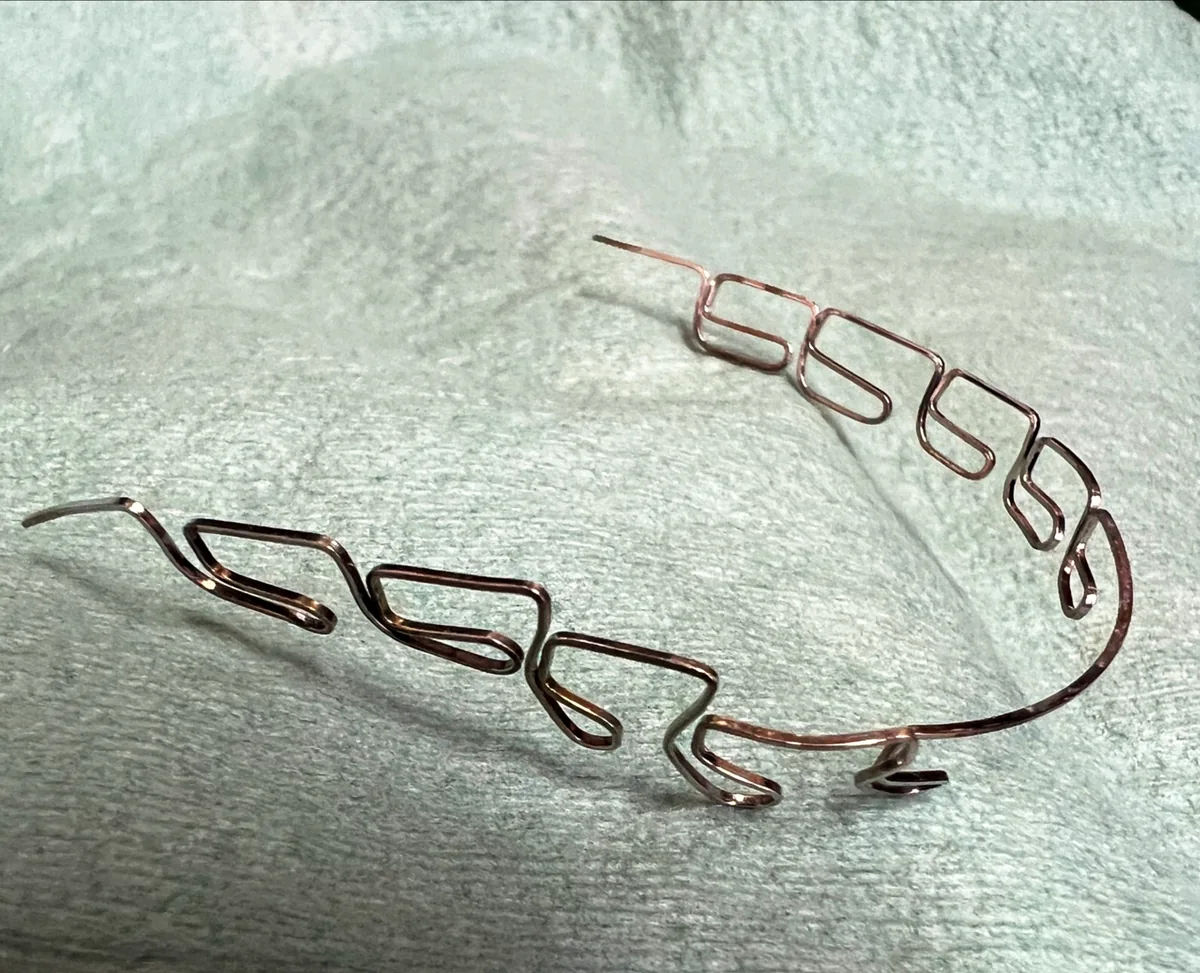
4. Checking
Before moving on to the final version, we include a stage in which the designed position and bite are checked in the mouth with appliances or provisional restorations and provisional dentures.
After an appliance or similar has been placed, we may record jaw movement and the way the teeth meet once again and compare them with the design.
We continue to watch how the teeth meet during sleep even after treatment has finished, to check whether the state achieved is being maintained.
Treatment duration, number of visits, fees and risks → Fees
What Austrian gnathology can and cannot do
What this approach can do
- Give examination and design in orthodontic treatment, dentures, TMD and crowns a common yardstick
- Bring the values for the skeleton, the jaw joints and the teeth together on the same reference plane and represent them on the articulator
- Give each tooth an angle suited to that tooth
- Express an approximate target for the intended bite in numbers
What it cannot do, and how we compensate
| What it cannot do | How we compensate |
|---|---|
| Determining a person's jaw position or tooth angles from theory alone | We measure that person's values with lateral cephalometric analysis, Cadiax, a sectioned cast and other methods |
| Promising the result of treatment in advance | We check with appliances or provisional restorations and provisional dentures, and re-record as needed |
| Finding out about tooth contact during sleep from daytime consultations alone | We check the traces of contact during sleep with BruxChecker |
| Determining the cause of symptoms such as headaches or stiff shoulders from jaw and tooth records alone | Considering that there may be causes other than the bite, we may recommend an assessment by a physician or other professional (TMD treatment page) |
Because differences in how the body adapts, and factors other than the bite, also play a part in the actual course, it varies from person to person.
Frequently asked questions
- Is Austrian gnathology the name of a treatment method or a device?
No. It is the name of an approach that sets out how to examine the bite and how to design it.
Cadiax, the articulator, the sectioned cast, BruxChecker and so on are tools for gathering information and giving it form in line with this approach.
- Is it the same as the "Sato–Slavicek theory"?
Yes. In the director's posts, the same approach is referred to by these names, as in "Sato–Slavicek theory (Austrian gnathology school)".
- Is this approach used only for people with TMD?
No. In orthodontic treatment, dentures and crowns as well, the same approach forms the basis of examination and design.
The appliances used and what is made differ from treatment to treatment.
- Once the numbers are available, is the bite after treatment determined as well?
What the numbers show is an approximate target for the intended bite.
Differences in how the body adapts, and factors other than the bite, also play a part in the actual course.
For this reason, we check with appliances or provisional restorations and provisional dentures, and re-record as needed.
- Should tooth grinding be eliminated?
Because tooth grinding involves strong forces, it is said that it can be involved in problems of the teeth, the tissues around the teeth and the jaw joints.
On the other hand, Professor Slavicek and Professor Sato discuss tooth grinding as one of the functions of the masticatory organ related to psychological strain.
This is an introduction to a way of thinking; it does not mean that treatment at our clinic reduces stress.
At our clinic, we check how the teeth meet during sleep with BruxChecker and use this in designing the bite.
- Do you continue to check after treatment has finished?
Yes. We continue to watch how the teeth meet during sleep, among other things, after treatment as well.
The director's view is that an approach to occlusion is something to be verified over the course of many years.
Related technologies and treatments
- Sequential occlusion
- Lateral cephalometric analysis
- Girrbach Reference SL articulator
- BruxChecker
- MEAW
- All the technologies we use
- Temporomandibular disorders
- Orthodontic treatment that avoids extractions where possible
- Dentures (precision dentures)
- About the director
- Research, publications and conferences
Sources we referred to
For the general explanations (the background to the approach, its pillars and its view of tooth grinding), we referred to the following published sources. What we describe about our own methods is based on the director's posts and explanations.
- University Clinic of Dentistry Vienna, "Nachruf Univ.-Prof. Dr. Rudolf Slavicek" (in German)
- Sukalo M. "Rudolf Slavicek und die Gnathologie in Österreich". Thesis, Medical University of Vienna, 2016 (in German; PDF)
- Slavicek R, Sato S. Bruxism -- a function of the masticatory organ to cope with stress. Wien Med Wochenschr. 2004;154(23-24):584-589 (in German, with English abstract)
- Fornai C, et al. Robert M. Ricketts and Rudolf Slavicek: dentistry by the rules of nature. Angle Orthod. 2023;93(5):497-500
- Sato S, Suzuki Y. Relationship between the development of skeletal mesio-occlusion and posterior tooth-to-denture base discrepancy. Nihon Kyosei Shika Gakkai Zasshi. 1988;47(4):796-810 (English abstract)
- Kulmer S, et al. Incline and length of guiding elements in untreated naturally grown dentition. J Oral Rehabil. 1999;26(8):650-660
- GAMMA Dental, "Instrumental diagnostics" (manufacturer)
Consultations and enquiries
Gibakai Medical Corporation
Yoshimi Dental Clinic
Square 2, Room 302 (third floor)
1-29-1 Tsukushino, Machida,
Tokyo 194-0001, Japan
TEL 042-795-1359 FAX 042-795-1398
Clinic days: Mon · Tue · Thu · Fri
10:00–13:00 / 14:30–18:00
A first visit begins with a first consultation (a private, non-insured service; 30 minutes to 1 hour) for examination and diagnosis. Questions about a diagnosis you received elsewhere are also covered within it.
In an emergency, such as being unable to chew or having severe symptoms, please call us on 042-795-1359 to discuss it.