Director Hidehiro Yoshimi (Ph.D. in dental science) opened the clinic in Tsukushino, Machida, in 1996, and his practice centres on the treatment of temporomandibular disorders and the bite. Alongside clinical practice, he researches the relationship between occlusion and the autonomic nervous system.
1. Career
| Year | Event |
|---|---|
| 1961 | Born in Tokyo |
| 1986 | Graduated from Nihon University School of Dentistry at Matsudo |
| 1996 | Opened Yoshimi Dental Clinic in Tsukushino, Machida |
| 2000 | Learned the concepts of denture design directly from Professor Rudolf Slavicek of the University of Vienna |
| 2003–2009 | Research on "occlusion, brain function and stress" under Professor Sadao Sato and Professor Slavicek at the Post-Graduate School of Kanagawa Dental University (Department of Craniofacial Growth and Development Dentistry) |
| 2008–2015 | Lecturer, Department of Craniofacial Growth and Development Dentistry, Kanagawa Dental University |
| 2009 | Conferment of Ph.D. degree (dental science). Dissertation: "Development of Sleep Bruxism Analyzing System using EMG and Accelerometer" (Head & Face Medicine 2009, 5:7) |
| 2009 | Kawamura Award (for a paper published in The Bulletin of Kanagawa Dental College, Vol. 36, No. 2) |
| 2012– | Lecturer at the University of Vienna summer school |
| 2015–2016 | Department of Prosthodontic Dentistry for TMJ and Occlusion, Kanagawa Dental University |
| 2016– | Collaborative research with the laboratory of Professor Yumie Ono, Department of Electronics and Bioinformatics, School of Science and Technology, Meiji University |
Organizer: Suikokai Clinical Practice Course
Society memberships: Japan Society of Autonomic Neuroscience, Society for Neuroscience (North America), Kanagawa Odontological Society, ICOM JAPAN
2. What we value in treatment
Measure, then design
We record the skeletal structure, the movement of the jaw joints and the bite at night, and design the bite from those figures. The director's principle is to build treatment on measured data rather than on experience or intuition.
Sharing all the information
We show all examination data and treatment details to patients and anyone accompanying them. You may also take photos or videos during your appointment.
Confirming over the long term
The director believes that whether a treatment approach is sound cannot be judged in four or five years, and must be confirmed over 10 or 20 years. We continue to check the bite at night even after treatment has finished.
3. The director makes the appliances himself
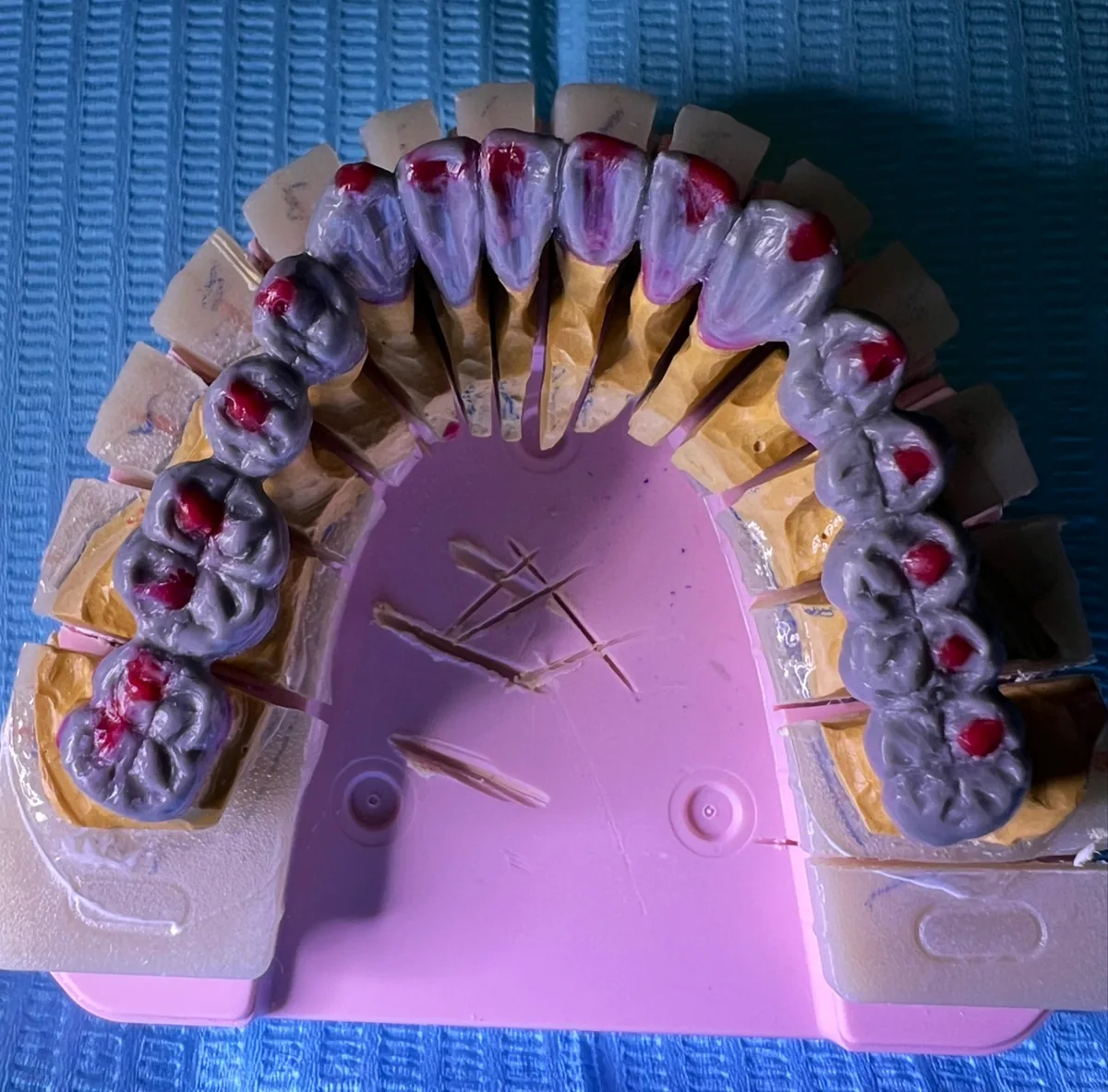
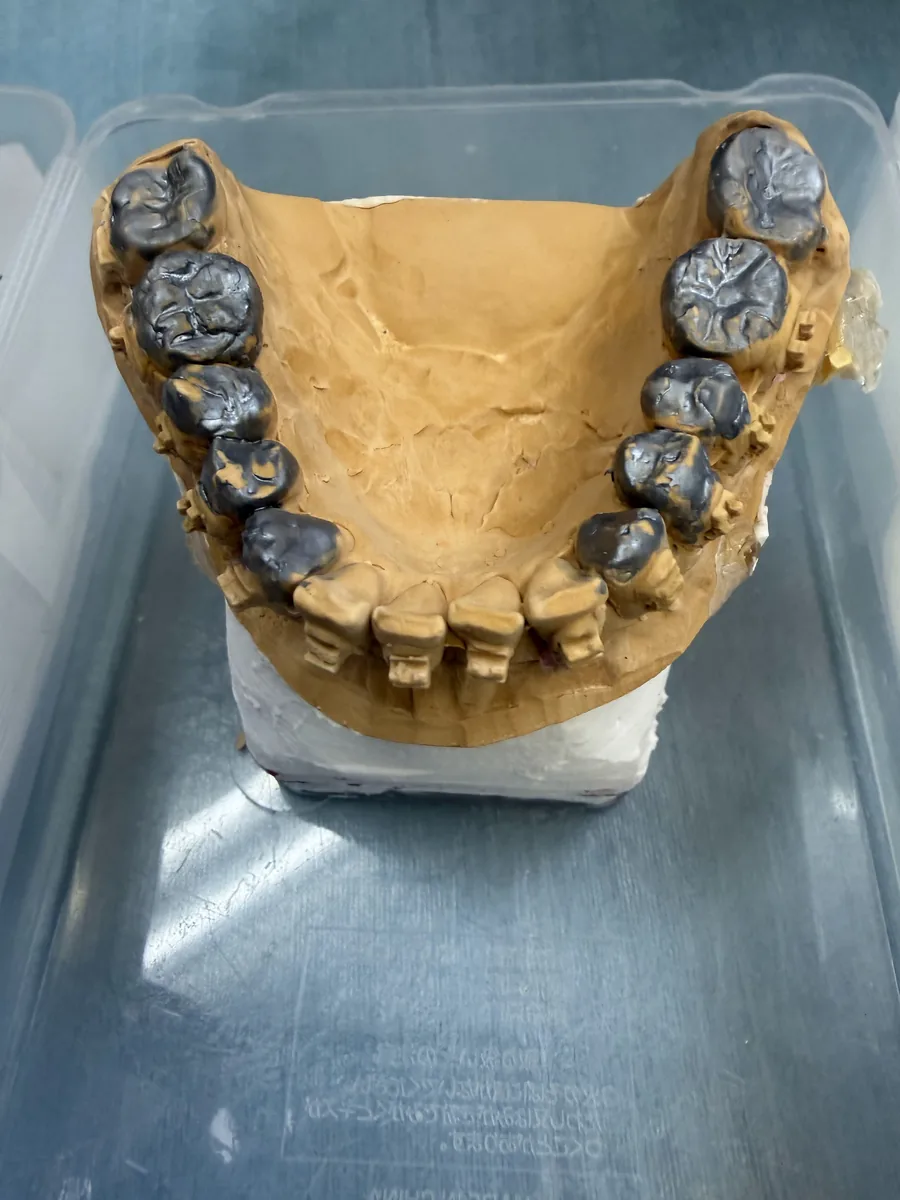
The appliances used in TMD treatment, provisional restorations, crowns and dentures are designed and shaped by the director, then finished in our in-house dental laboratory next to the treatment room. The reason, as the director explains, is that the information gained from the examinations is "impossible to convey to someone else verbally or on a single sheet of paper".
| Step | What is done |
|---|---|
| 1. Analysis | Analysing the skeletal structure with a cephalometric X-ray, the movement of the jaw joints with Cadiax, and the bite with the Girrbach Reference SL articulator |
| 2. Shaping | Giving shape in wax to the information that is still missing. Laboratory work is done under a microscope |
| 3. Casting | Replacing the wax form with metal |
| 4. Fitting | Fitting the appliance in the mouth, then re-recording jaw movement to confirm the result |
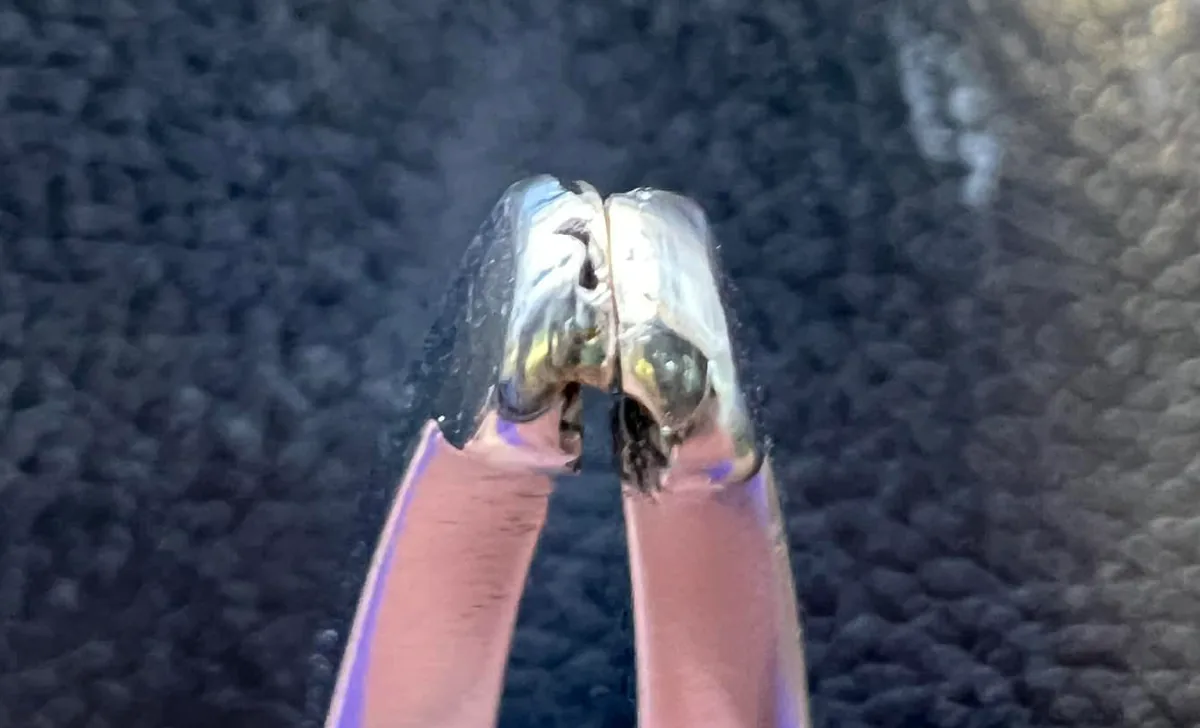
Repairs are also done in-house. Joining metal parts, which takes about two weeks when sent to an outside laboratory, is completed in a short time with our in-house laser welder.
Photos: laboratory work and instruments made by the director Tap a photo to enlarge.
4. Research
Since 2002, the director has been researching the relationship between occlusion and the autonomic nervous system. He currently analyses autonomic responses from the pupillary light reflex and heart rate variability in the laboratory of Professor Yumie Ono at Meiji University.
These research findings were obtained under defined conditions. They do not indicate the cause of an individual patient's symptoms or the effect of their treatment.
For records with photographs, please see Research & Publications.
5. Frequently asked questions
What is the director's background?
He graduated from Nihon University School of Dentistry at Matsudo in 1986 and opened Yoshimi Dental Clinic in 1996. He obtained a Ph.D. in dental science from the Post-Graduate School of Kanagawa Dental University in 2009, and continues to research occlusion and the autonomic nervous system.
Who makes the appliances and crowns?
The director designs and shapes them, and they are finished in our in-house dental laboratory. Repairs are also done in-house.
Can I see my examination results?
Yes. We show you all of the examination data. You may also take photos or videos.
If my bite is corrected, will my physical complaints get better too?
Our research concerns the relationship between occlusion and the autonomic nervous system; it cannot establish the cause of an individual's physical complaints or the effect of treatment on them. Where appropriate, we also recommend assessment by a physician.