What is casting?
Casting is a method of converting a shape made in wax into metal.
In dentistry, a method generally known as the "lost-wax technique" is used.
The pattern made in wax is embedded in a special heat-resistant plaster, which is then heated to burn the wax away.
When molten metal is poured into the cavity left in the plaster (the mould), metal with the same shape as the pattern is produced.
This method is said to have been devised in 1907 by the dentist Taggart.
Many of the metal items used in dentistry, such as restorations that fill or cover teeth and the metal parts of dentures, are made by this method.
At our clinic, we cast metal denture frameworks, metal provisional restorations, metal appliances used in the treatment of temporomandibular disorders (TMD) and other items in our in-house dental laboratory.
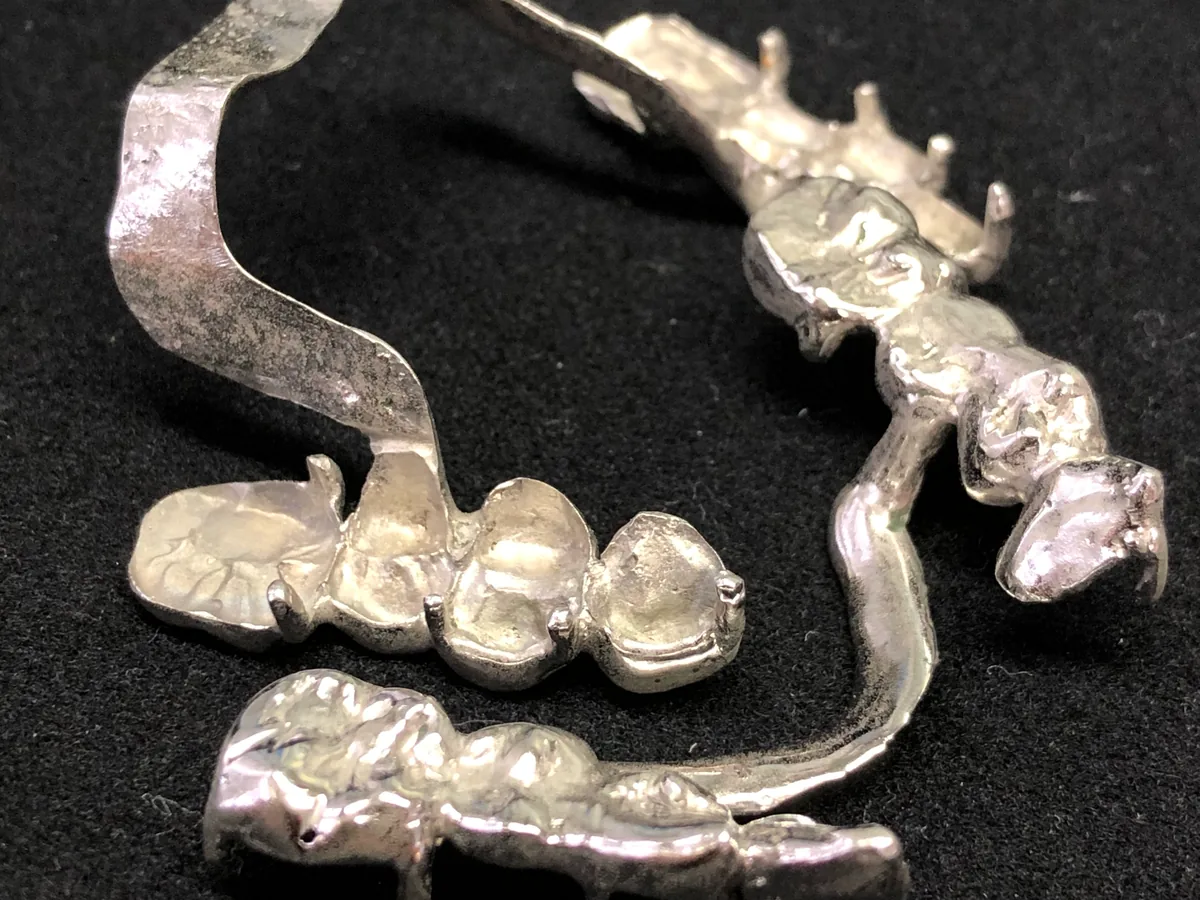
How casting works
Taking a metal denture framework as an example, we describe the casting process at our clinic.
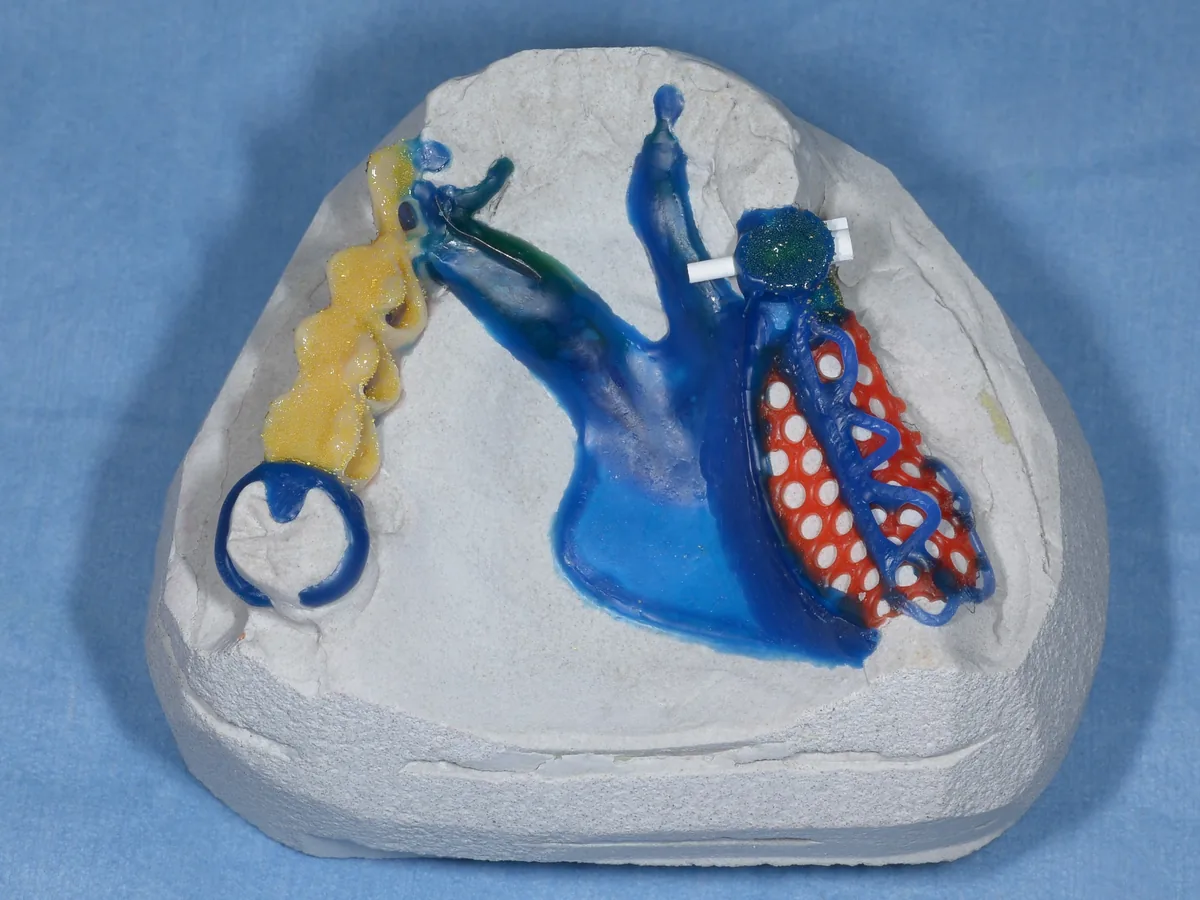
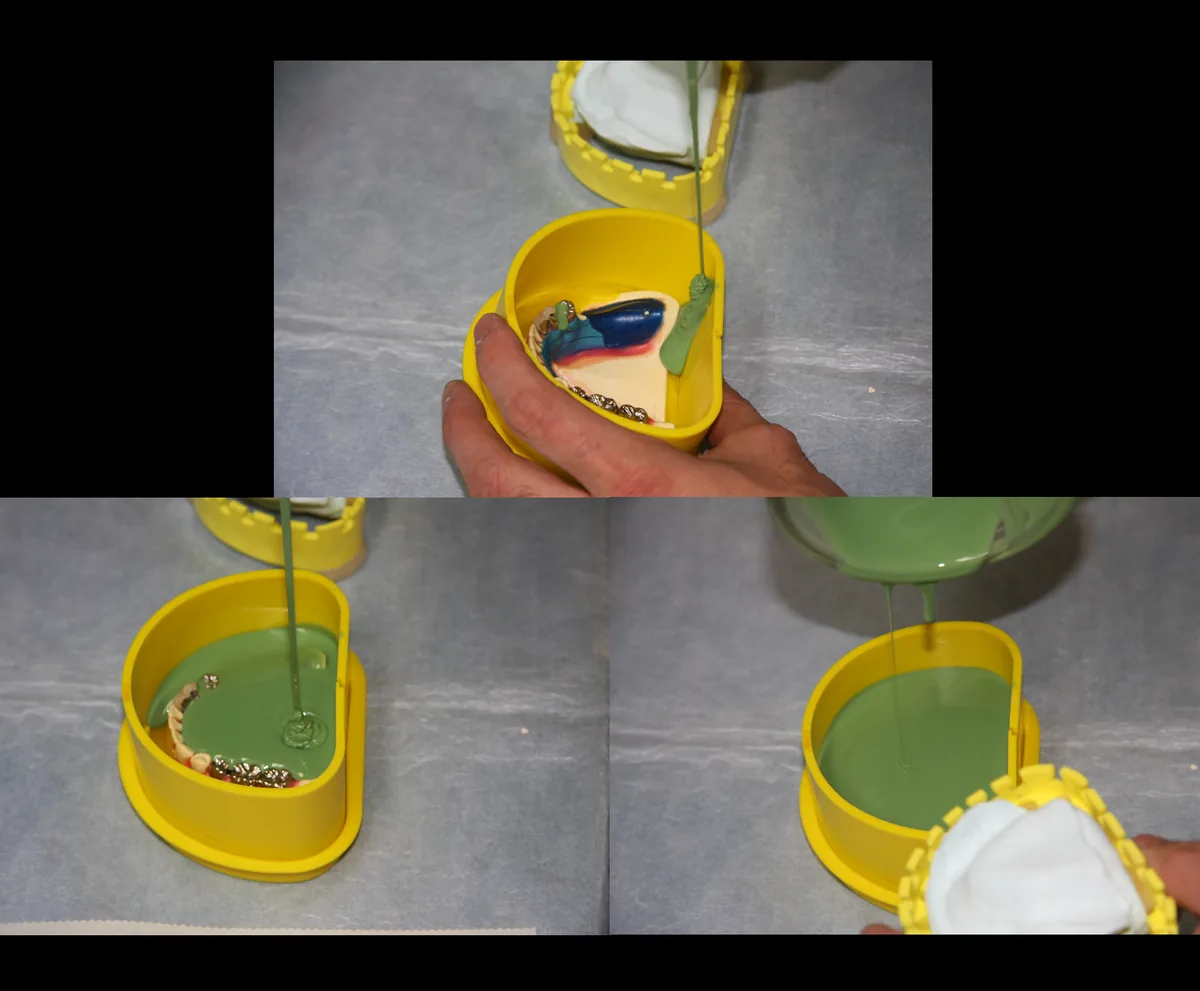
- Making the shape in wax: the shape of the framework is made in wax on a cast made of a material that withstands the heat of casting (a refractory cast) (wax-up).
- Making the mould: more refractory cast material is poured around the wax to make the mould. For a denture framework, the mould is 10 cm in diameter.
- Burning out the wax: the temperature of the mould is raised slowly over six hours, burning away the wax inside. A cavity of the same shape is left where the wax was.
- Pouring in the metal: in a high-frequency, vacuum environment, high-purity platinum-gold alloy is melted in a short time and forced into the cavity under pressure. For a denture framework, 50 grams of platinum-gold alloy is used.
- Removing and finishing: once the metal has cooled and hardened, it is removed from the mould, shaped and polished. Metal denture frameworks are sometimes polished to a mirror finish.
Photos: before casting
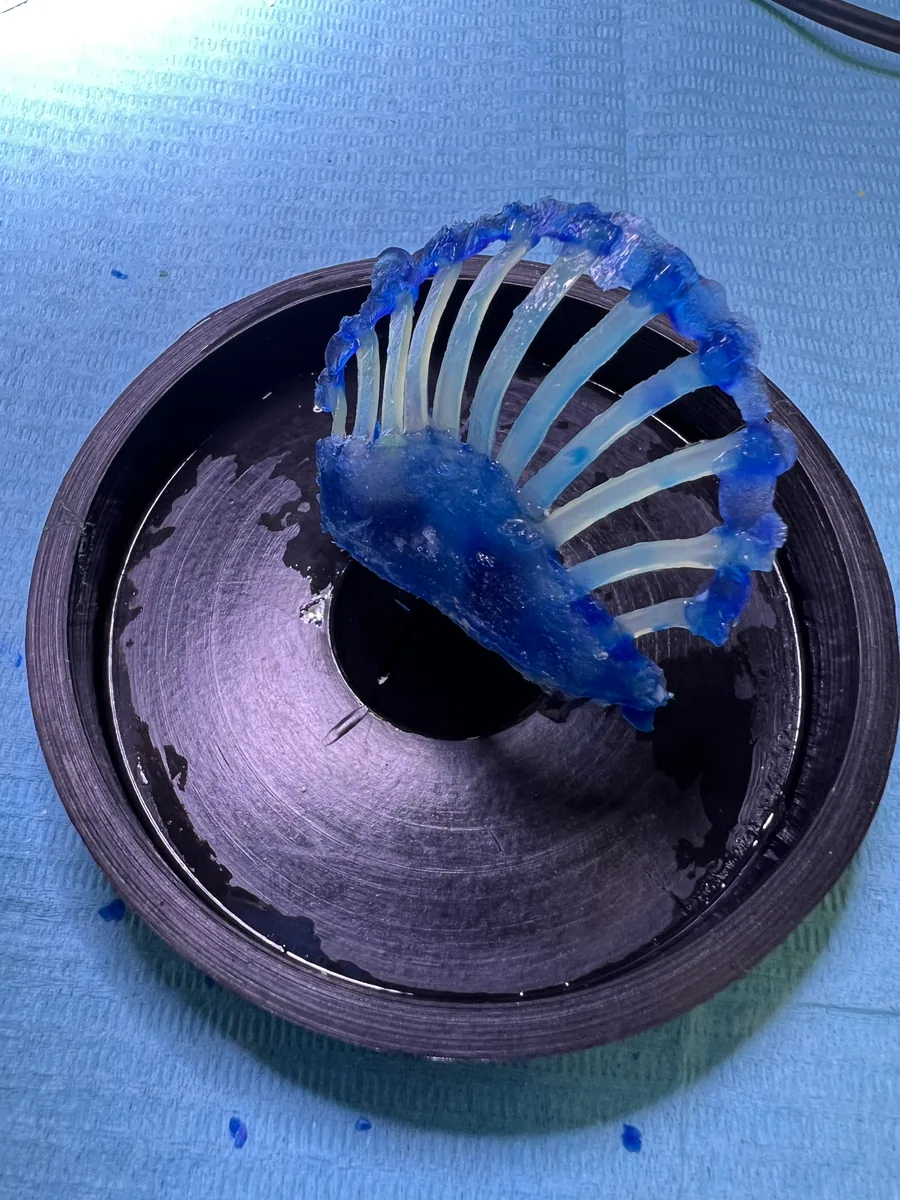
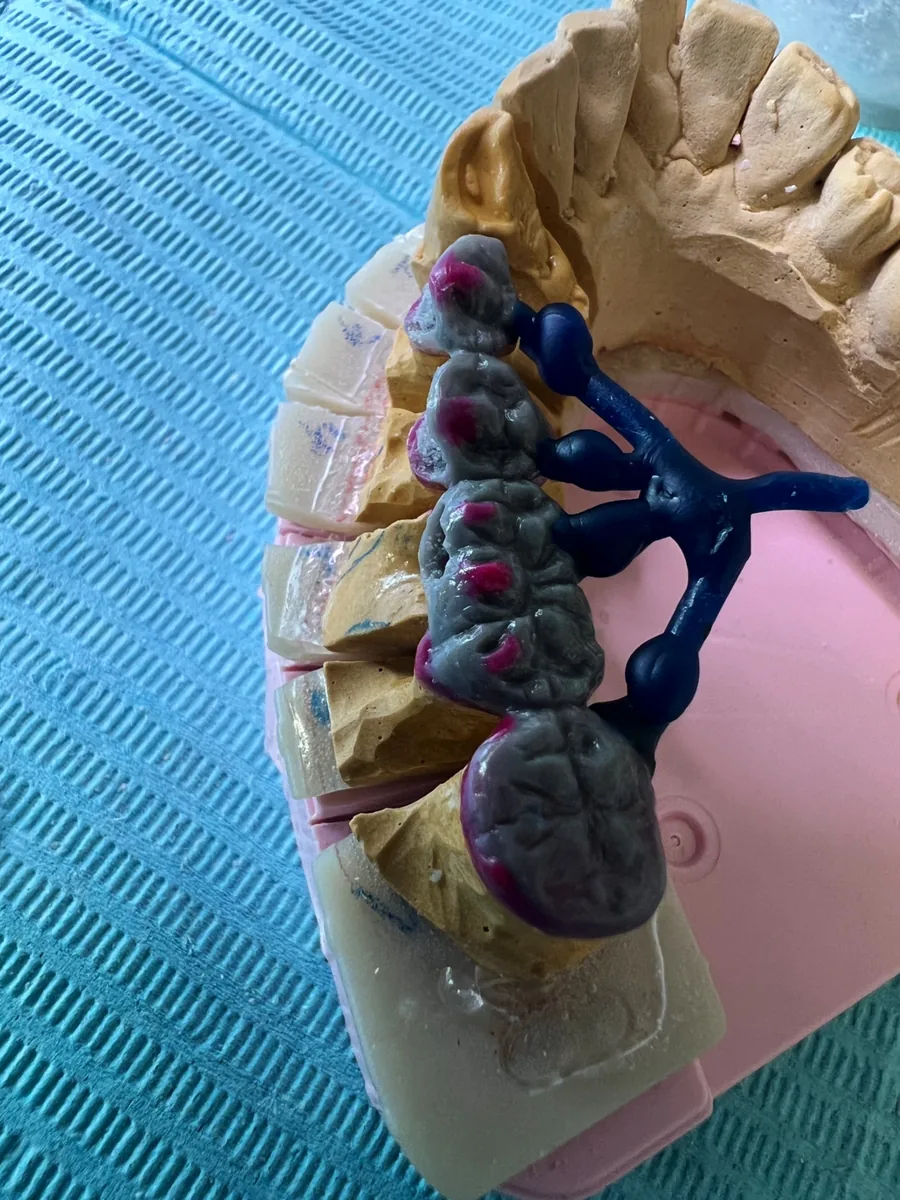
Shrinkage and how it is corrected
In general, the issues in casting include the dimensional change as the plaster of the mould sets and the shrinkage of the poured metal as it cools and solidifies.
Dental casting aims for accuracy to within ten microns (0.01 mm).
For our dentures, we allow for the shrinkage of platinum-gold alloy in casting (casting shrinkage) and the shrinkage of the denture resin as it hardens (polymerization shrinkage), and design with correction values built in.
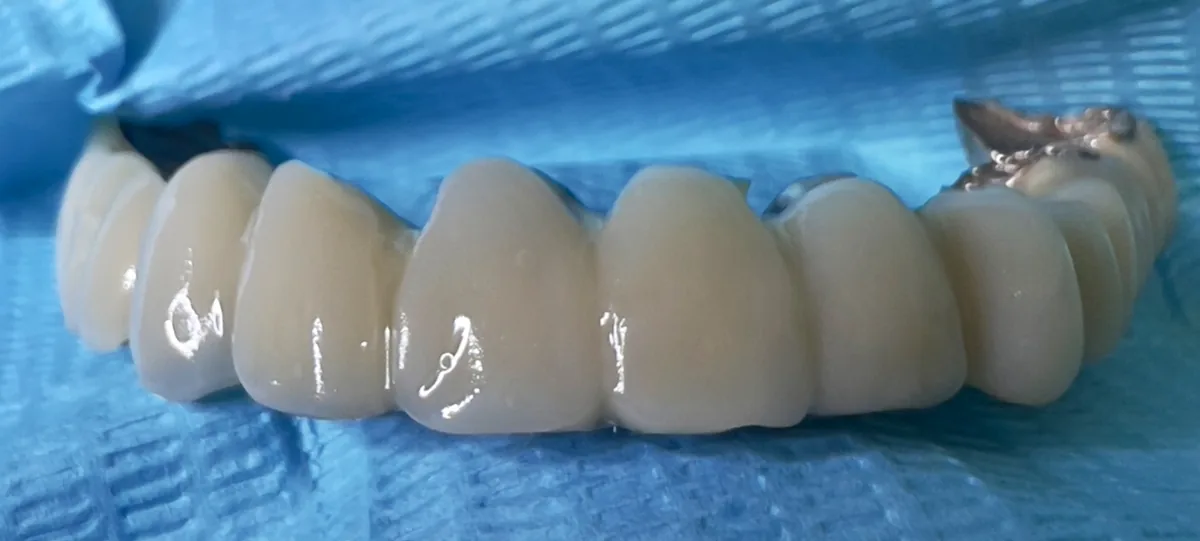
Large metal frameworks are sometimes cast in several blocks to correct for casting errors.
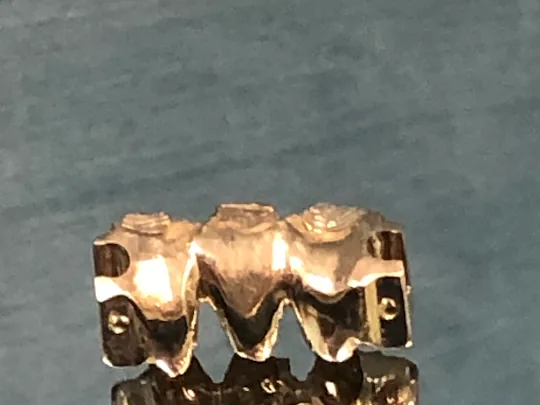
In one case involving an upper prosthesis (which replaces lost teeth), the framework was cast in three blocks, which were then joined into one by laser welding using the same metal as the framework.
Why we use casting
To transfer the shape designed in wax directly into metal
What the examinations reveal is first expressed in the shape of the wax.
Casting transfers that shape into metal, and the director calls this "the transfer of information".
The director believes that making precise crowns and dentures requires close attention to the very method by which wax is converted into metal.
To keep foreign matter out of the metal
To make the cast metal dense inside and to limit the entry of dust from the air and oxides, we cast in a high-frequency, vacuum and pressurized environment.
Through the way the temperature is raised during heating, and by casting with the air removed, we aim to make the metal's crystals uniform and to prevent foreign matter from getting in.
To give platinum-gold alloy its shape
The platinum-gold alloy we use for denture frameworks is shaped by casting.
In practice at our clinic
What we make by casting
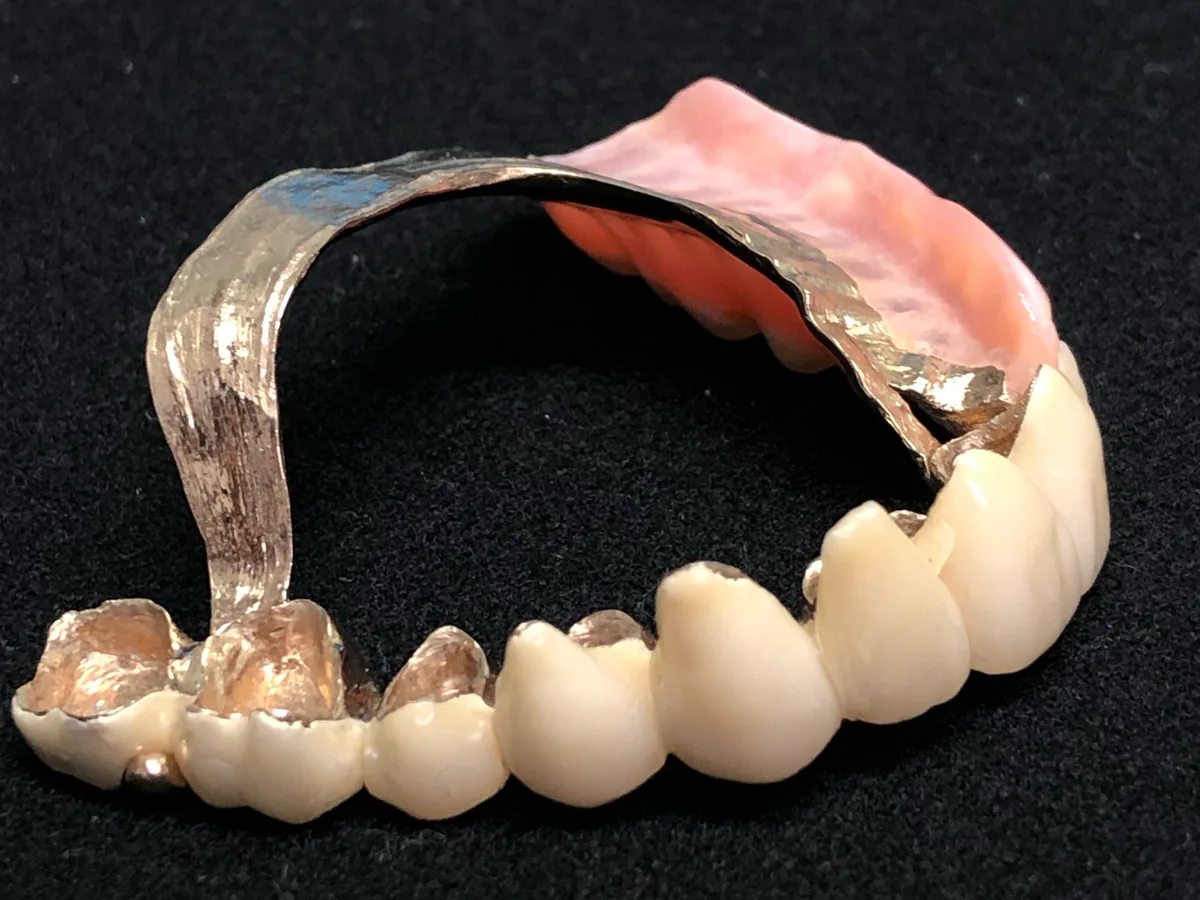
- Metal denture frameworks (complete and partial dentures)
- Metal provisional restorations (provisional restorations and provisional dentures)
- Metal appliances used in TMD treatment (such as metal overlays)
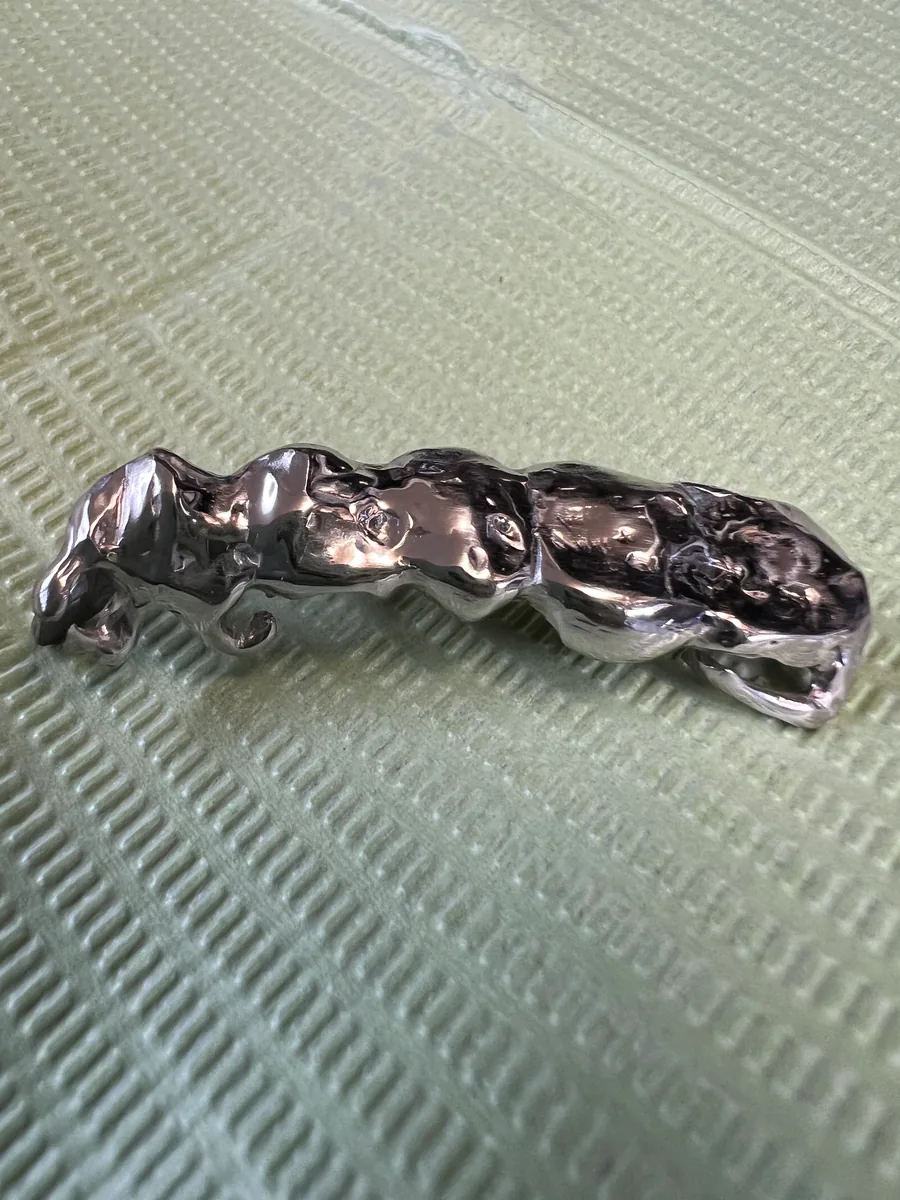
Before and after casting
- The examination values are set on the articulator, and the shape is made in wax on the casts (wax-up).
- A mould is made, the wax is burned out and the metal is poured in (casting).
- The metal removed from the mould is shaped. Where needed, the orientation of denture components is aligned (parallel milling), and parts made separately are joined (laser welding).
- After the finish has been checked, the piece is placed in the mouth and checked, for example by recording jaw movement again.
Casting is work done in our in-house dental laboratory.
Photos: items made by casting
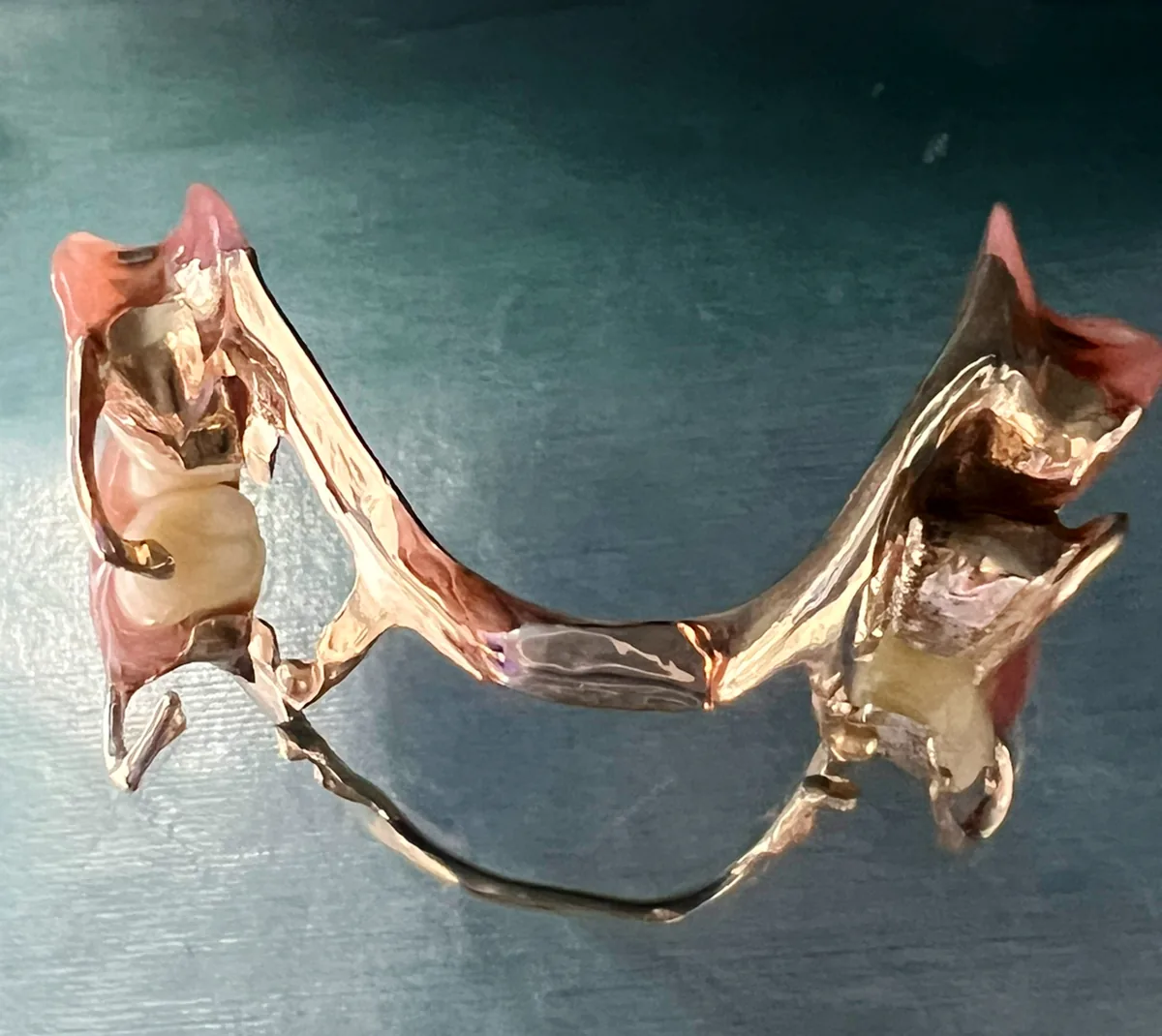
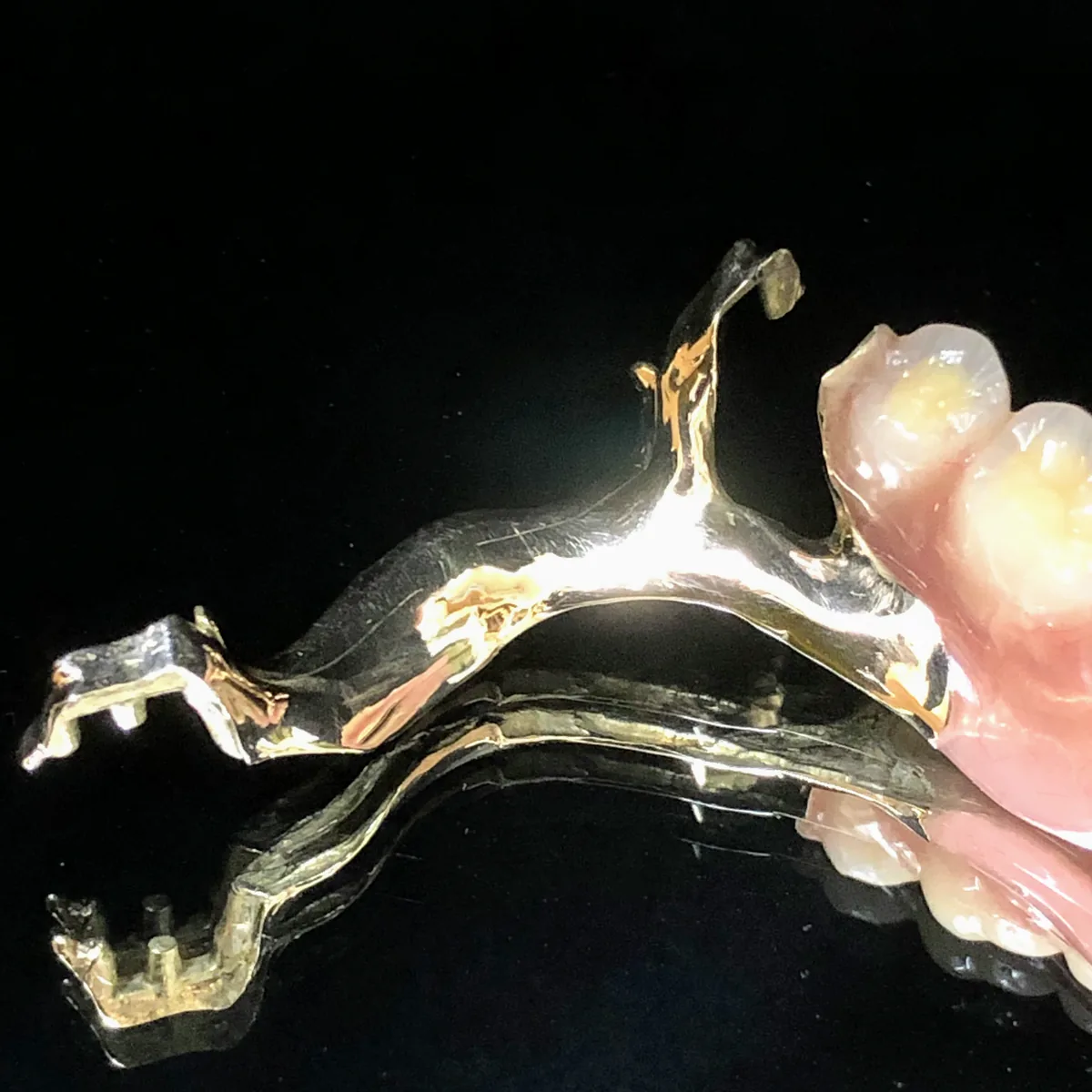
What casting can and cannot do
What casting can do
- Convert fine shapes made in wax into metal
- Make everything from large items such as denture frameworks to metal provisional restorations and appliances
- Design with correction values that allow for shrinkage
What it cannot do, and how we compensate
Casting cannot completely eliminate shrinkage and similar changes as the metal cools and solidifies.
In addition, some materials are not suited to casting.
| What it cannot do | How we compensate |
|---|---|
| Completely eliminating shrinkage and errors in shape | We build in correction values that allow for shrinkage. Large frameworks are cast in separate parts and joined by laser welding |
| Aligning the orientation of denture components with one another (the direction in which the denture is put in and taken out) | After casting, we adjust the orientation with parallel milling |
| Shaping zirconia | We scan it optically, mill it with CAD/CAM and sinter it (zirconia crowns) |
| Shaping metals that are difficult to cast precisely, such as titanium | We mill it from a large block (titanium) |
| Checking whether a cast piece fits in that person's mouth | We check it in the mouth, and check it by trying it out as provisional restorations and provisional dentures |
Frequently asked questions
- What kind of method is casting?
A shape made in wax is embedded in heat-resistant plaster, which is heated to burn the wax away.
It is a method in which molten metal is poured into the resulting cavity to make metal of the same shape (the lost-wax technique).
- What metals do you cast?
For metal denture frameworks, we use platinum-gold alloy.
For a denture framework, for example, we cast using 50 grams of high-purity platinum-gold alloy.
- Does casting change the shape?
Metal shrinks as it cools and solidifies.
At our clinic, we design with correction values that allow for shrinkage, and large frameworks are sometimes cast in separate parts and joined by laser welding.
- Why do you cast in a vacuum?
To prevent dust from the air and oxides from getting into the metal.
- Where is casting done?
This is done in our in-house dental laboratory.
Related technologies and treatments
- Wax-up
- Platinum-gold alloy
- Laser welding
- Parallel milling
- All the technologies we use
- Dentures (precision dentures): making the denture
- Temporomandibular disorders & orthodontic treatment that avoids extractions where possible: making appliances
Treatment duration, number of visits, fees and risks → Fees
Sources we referred to
For the general explanations (how the lost-wax technique works, shrinkage in casting and the difficulty of casting titanium), we referred to the following published sources. What we describe about our own methods is based on the director's posts and explanations.
- Japan Dental Association, "Theme Park 8020": "[Dental castings (casting)]" (in Japanese)
- Miyazaki T, et al. [Evolution of dental materials for CAD/CAM]. Journal of The Showa University Society. 2015;75(1):12-20 (in Japanese; J-STAGE)
Consultations and enquiries
Gibakai Medical Corporation
Yoshimi Dental Clinic
Square 2, Room 302 (third floor)
1-29-1 Tsukushino, Machida,
Tokyo 194-0001, Japan
TEL 042-795-1359 FAX 042-795-1398
Clinic days: Mon · Tue · Thu · Fri
10:00–13:00 / 14:30–18:00
A first visit begins with a first consultation (a private, non-insured service; 30 minutes to 1 hour) for examination and diagnosis. Questions about a diagnosis you received elsewhere are also covered within it.
In an emergency, such as being unable to chew or having severe symptoms, please call us on 042-795-1359 to discuss it.