What is sequential occlusion?
Sequential occlusion is a bite built so that, when the lower jaw moves sideways, the teeth separate one after another starting from the back, and teeth such as the canines guide the movement.
At our clinic, we also call it "sequential disocclusion" or "sequentially guided occlusion".
It is a theory of occlusion put forward by Professor Rudolf Slavicek of the University of Vienna, Professor Sadao Sato of Kanagawa Dental University and their colleagues.
Within Austrian gnathology, which is the foundation of our examinations and design, it corresponds to the way the bite is built.
Background to the concept
Professor Slavicek used a computer to evaluate data obtained by examining side-view X-rays of many people, and from the results he formulated his concept of occlusion.
This concept later came to be called "canine-led sequential lateral guidance".
It is said to be characterized by taking into account not only the paths of the jaw joints but also skeletal conditions and proportions.
A study of natural dentitions that had not been treated also reported that the inclination of the tooth slopes that guide lower jaw movement became progressively smaller from the front teeth towards the back teeth, and that the molars were very flat.
The study states that its results support the concept of guidance that follows a sequence from front to back.
How sequential occlusion works
How the teeth separate during sideways movement
At our clinic, we design the bite so that all of the following points are met.
- When biting down, the back teeth on the left and right make contact at a similar number of points and with similar strength.
- When the lower jaw moves sideways, the contacts separate in order, starting from the teeth furthest back.
- The premolars (the fourth and fifth teeth from the front) are also included in the guidance that directs the movement.
- The canines mainly guide the movement.
"Sequential" refers to this separation in order.
In the Vienna concept of occlusion, the guidance is generally said to be built so that its inclination is flattest at the first molar and becomes progressively steeper towards the canine.
When the canines are worn down, the first premolars take over part of the guidance.
A different angle for each tooth
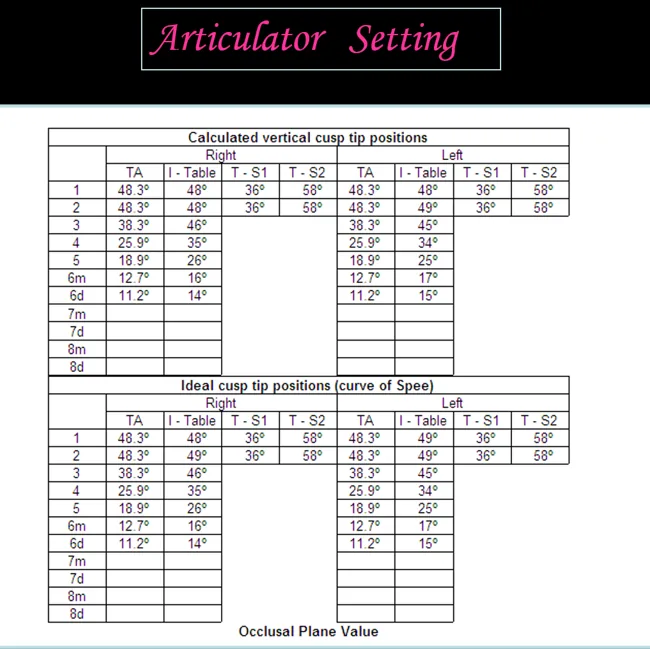
For this reason, the angle of the tooth slopes (cusp inclination) has a different value for each tooth.
The table in the photo, too, shows larger angle values for teeth further forward and smaller values for teeth further back.
As one example of how the angles are decided, the upper canine is set about 3° lower than the angle at which the jaw joint slides forward, aiming for smooth movement of the lower jaw.
The front teeth are given an even lower angle, so that they pass by without catching when the lower jaw moves sideways.
These angles are calculated from values such as the angle of the jaw joint paths recorded with Cadiax, and turned into tooth shapes on the Girrbach Reference SL articulator.
Retrusive guidance
The director explains that in deep sleep the muscles around the jaw relax along with the muscles of the body, and the lower jaw drops back under gravity.
If tooth grinding occurs as sleep becomes lighter, the lower jaw, having dropped back, may press on the tissue at the back of the jaw joint (the bilaminar zone).
So at our clinic, together with the sequential guidance, we also build guidance for controlling backward movement of the lower jaw (retrusive guidance) into the design of the tooth shapes.
For example, we give lateral guidance not only to the first premolar (tooth 4) but also to the second premolar (tooth 5), aiming to make it possible to control muscle force even when the lower jaw has dropped back.
Photos: wax showing retrusive guidance
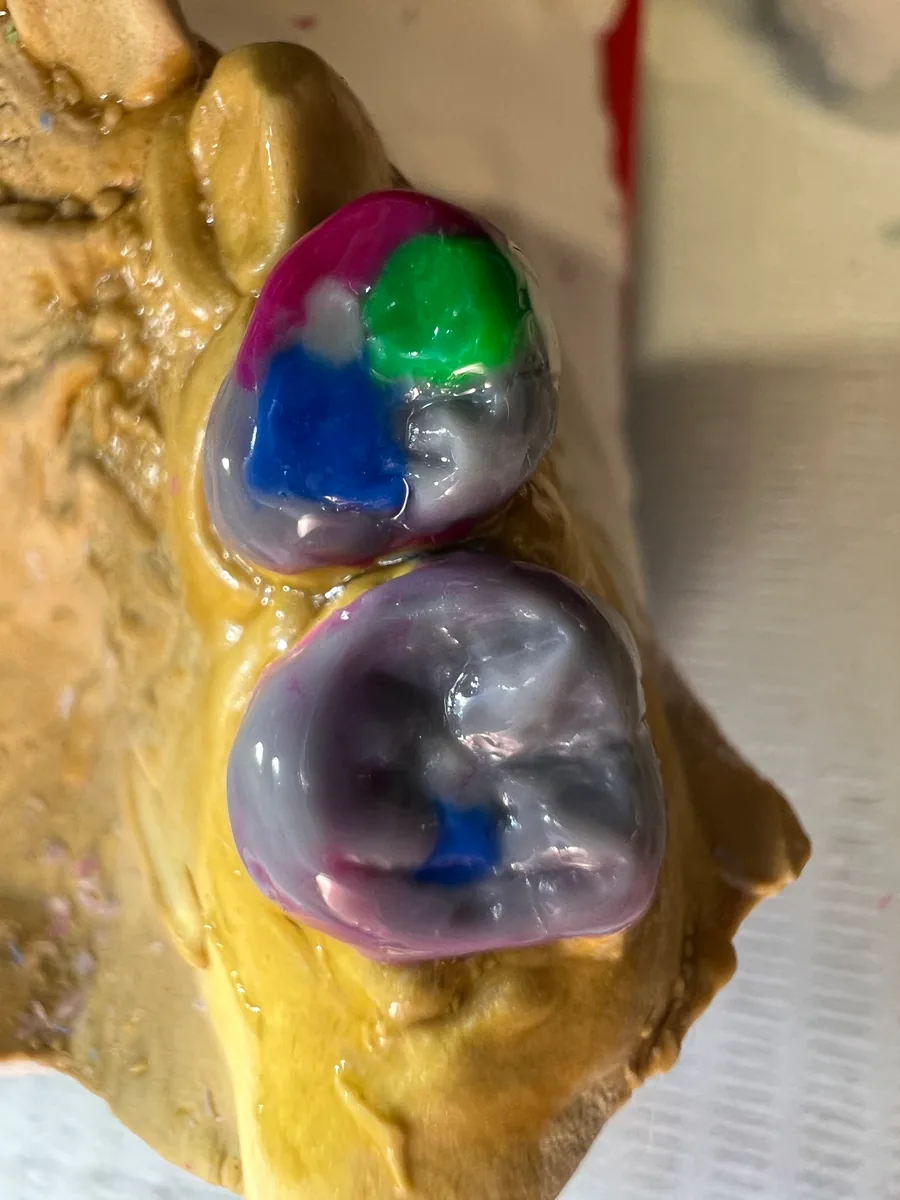
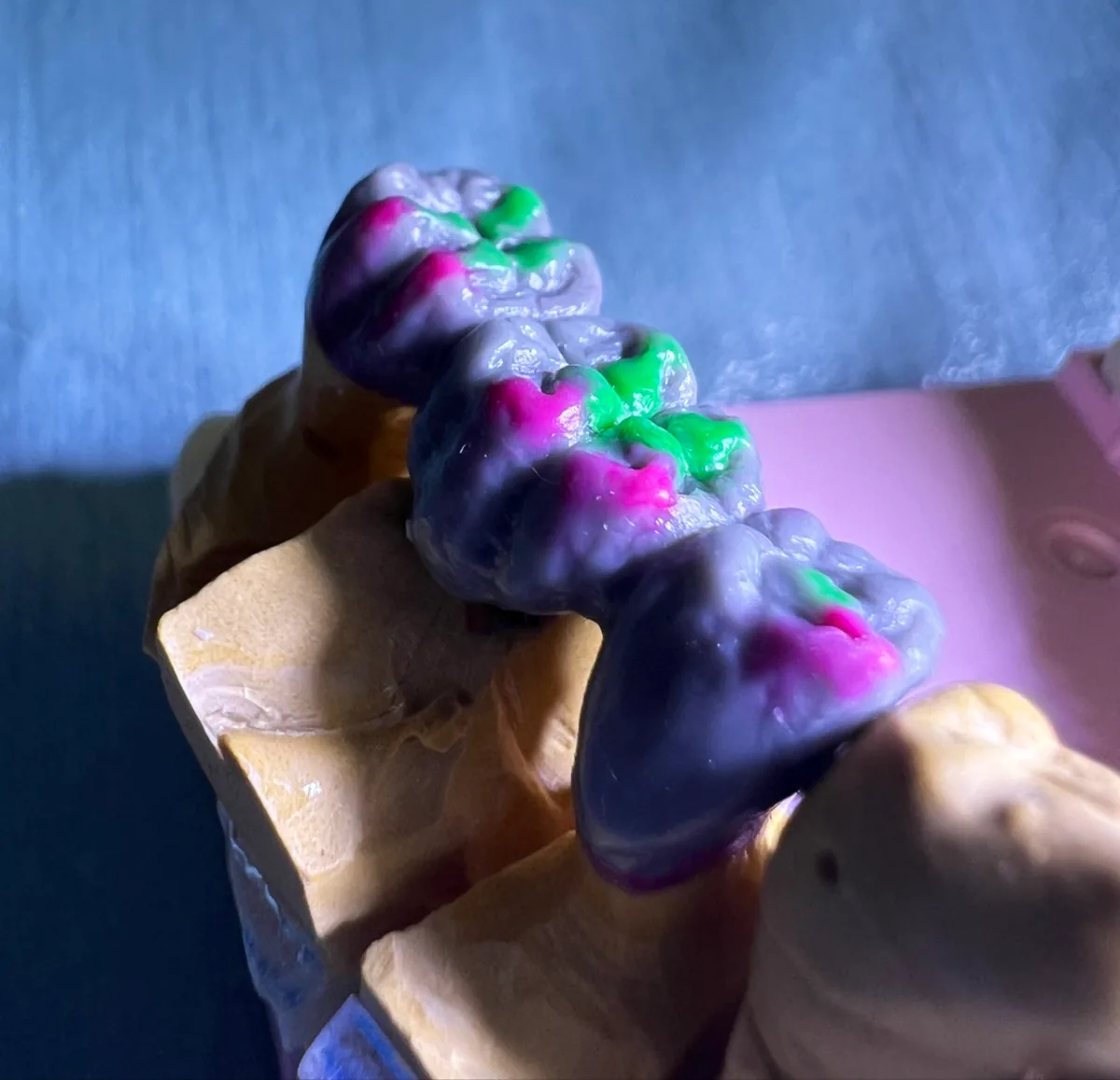
In the wax on the primary back teeth, the blue areas are left clear so that the teeth do not collide when the lower jaw moves backwards, and the green areas take on the guidance for sideways movement.
They are shaped so that lateral guidance remains even after the lower jaw has moved backwards.
The meaning of the wax colours and the process of creating the shapes are described in detail on the wax-up page.
Why we use sequential occlusion
Because we can design to the same goal, from orthodontic treatment to complete dentures
At our clinic, whether for orthodontic treatment, dentures, appliances for temporomandibular disorders (TMD) or crowns, we set the goal using the same theory of occlusion.
Even for complete dentures, rather than devising a special bite just for dentures, we give sequential occlusion on the same principles as for natural teeth.
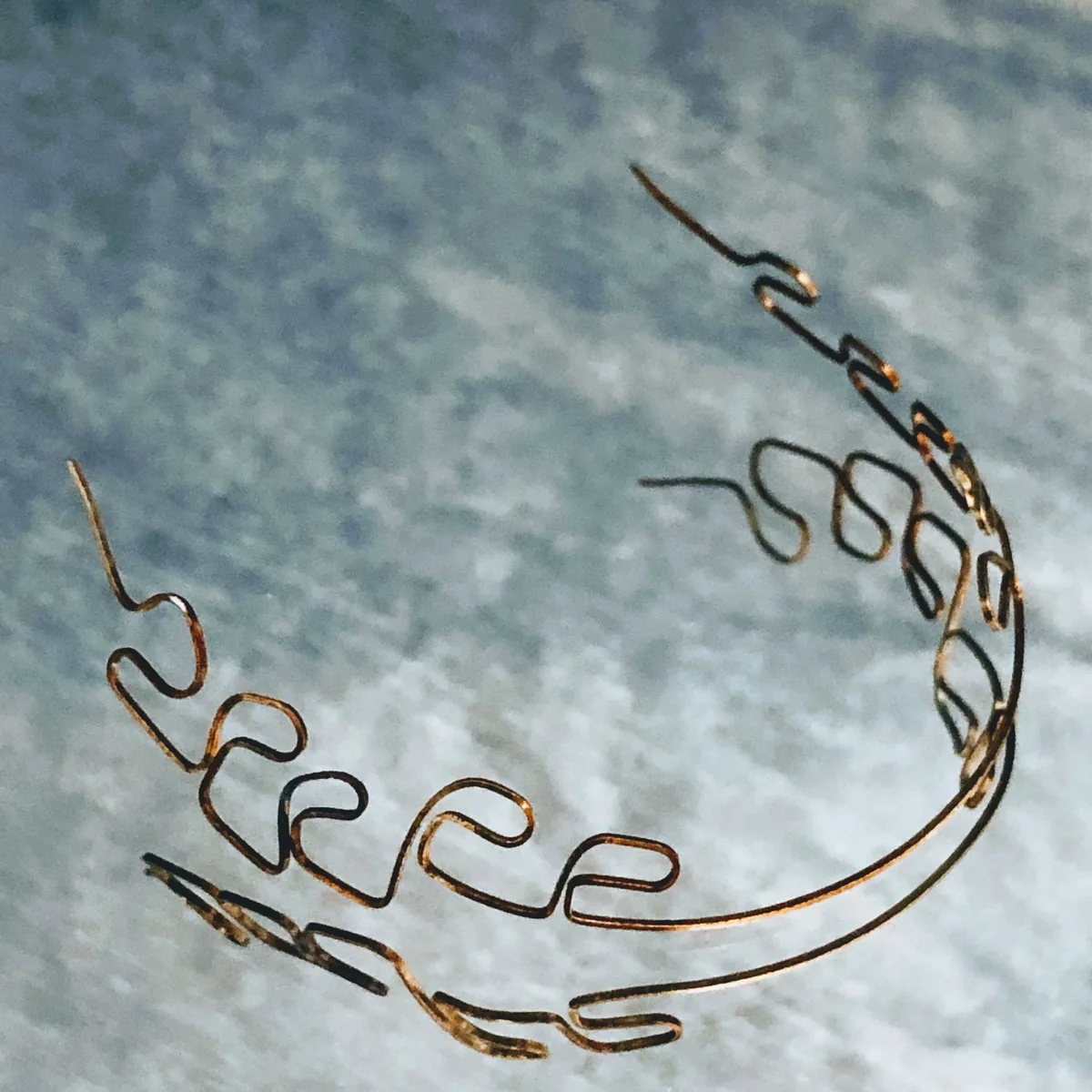
This is why the way orthodontic wires are bent and the way artificial teeth are arranged in complete dentures have many points in common.
Photos: an orthodontic wire and the artificial teeth of a complete denture
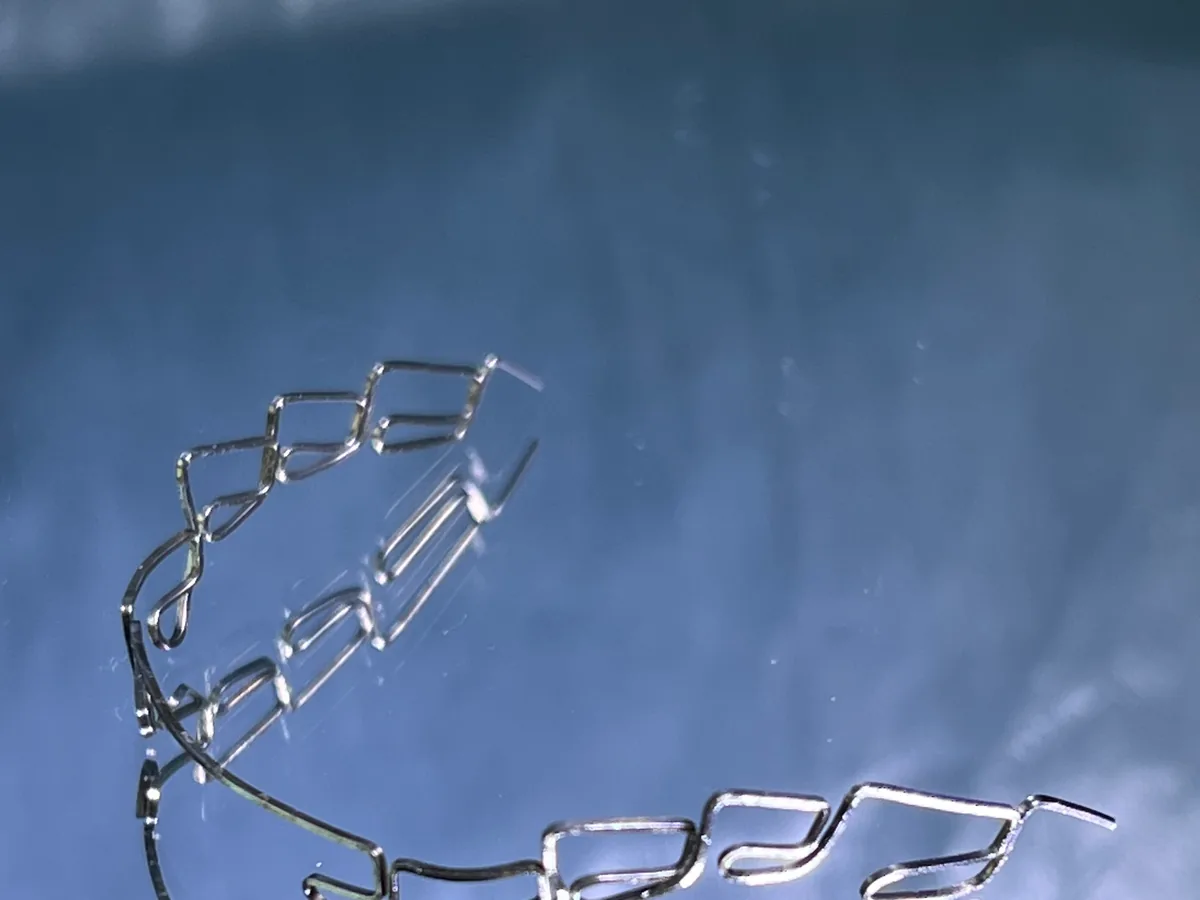
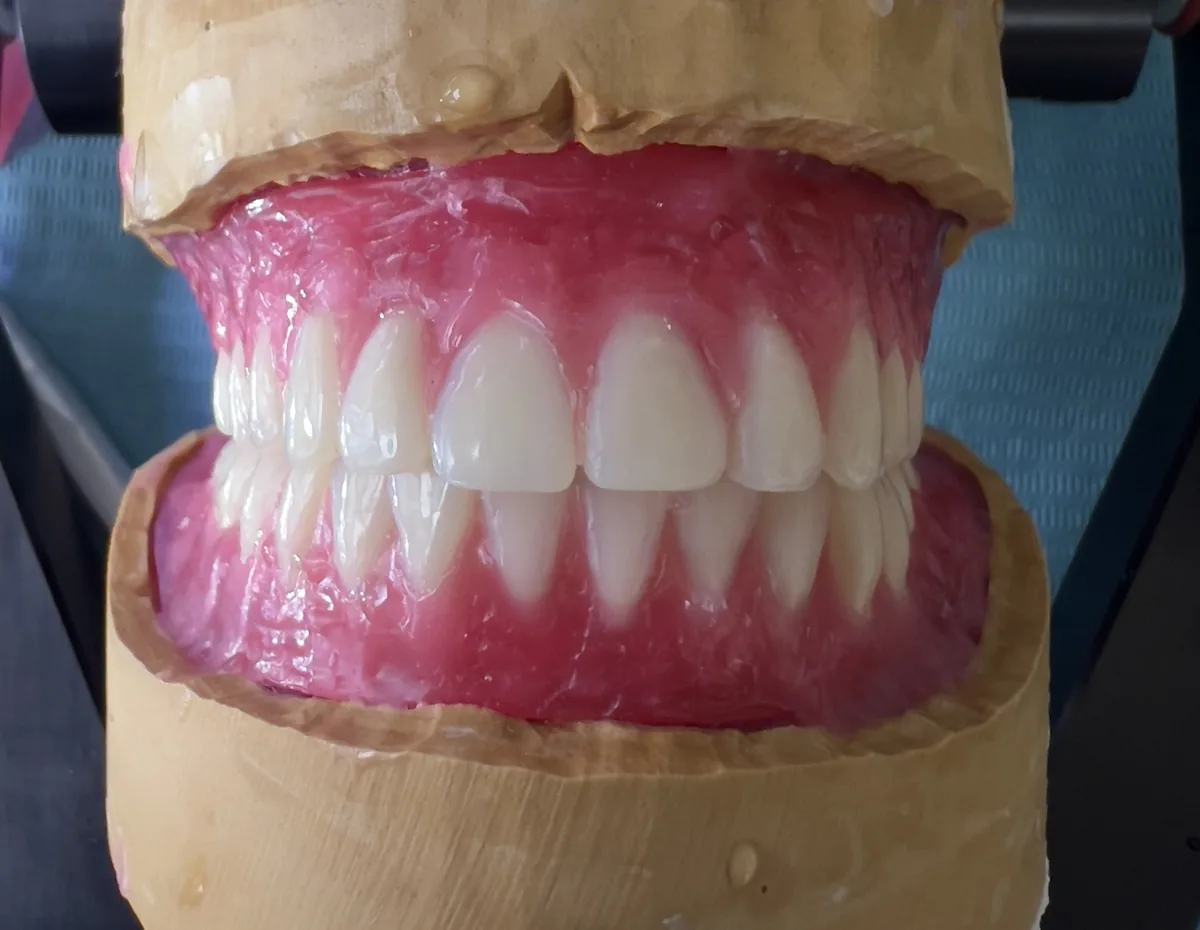
To take tooth grinding during sleep into account
During tooth grinding, strong forces may be applied while the lower jaw moves sideways or backwards.
At our clinic, we treat the bite during sleep as just as important as the daytime bite.
By having the teeth separate in order from the back during sideways movement, with teeth such as the canines guiding it, and by providing retrusive guidance for backward movement, we aim to control the forces during sleep.
To match the guidance of the teeth to the paths of the jaw joints
The angles of the teeth that guide lower jaw movement are decided to match the angles of the jaw joint paths.
Setting the canine angle slightly lower than the angle at which the jaw joint slides forward is one example of this.
In practice at our clinic
From design to confirmation
- Deciding the target jaw position: from the Cadiax records, the skeletal analysis and other data, we calculate the target position of the lower jaw for treatment (the therapeutic jaw position).
- Deciding the angle of each tooth: from values such as the angles of the jaw joint paths, we calculate the guidance angle of each tooth and set it on the articulator.
- Giving it form: we design the tooth shapes in wax and turn them into appliances, provisional restorations, dentures or crowns.
- Checking in the mouth: after fitting, we check jaw movement and tooth contact.
- Checking how it works during sleep: with BruxChecker, we check how the lateral and retrusive guidance surfaces and the support between the upper and lower teeth are working during tooth grinding in sleep.
Appliances for TMD
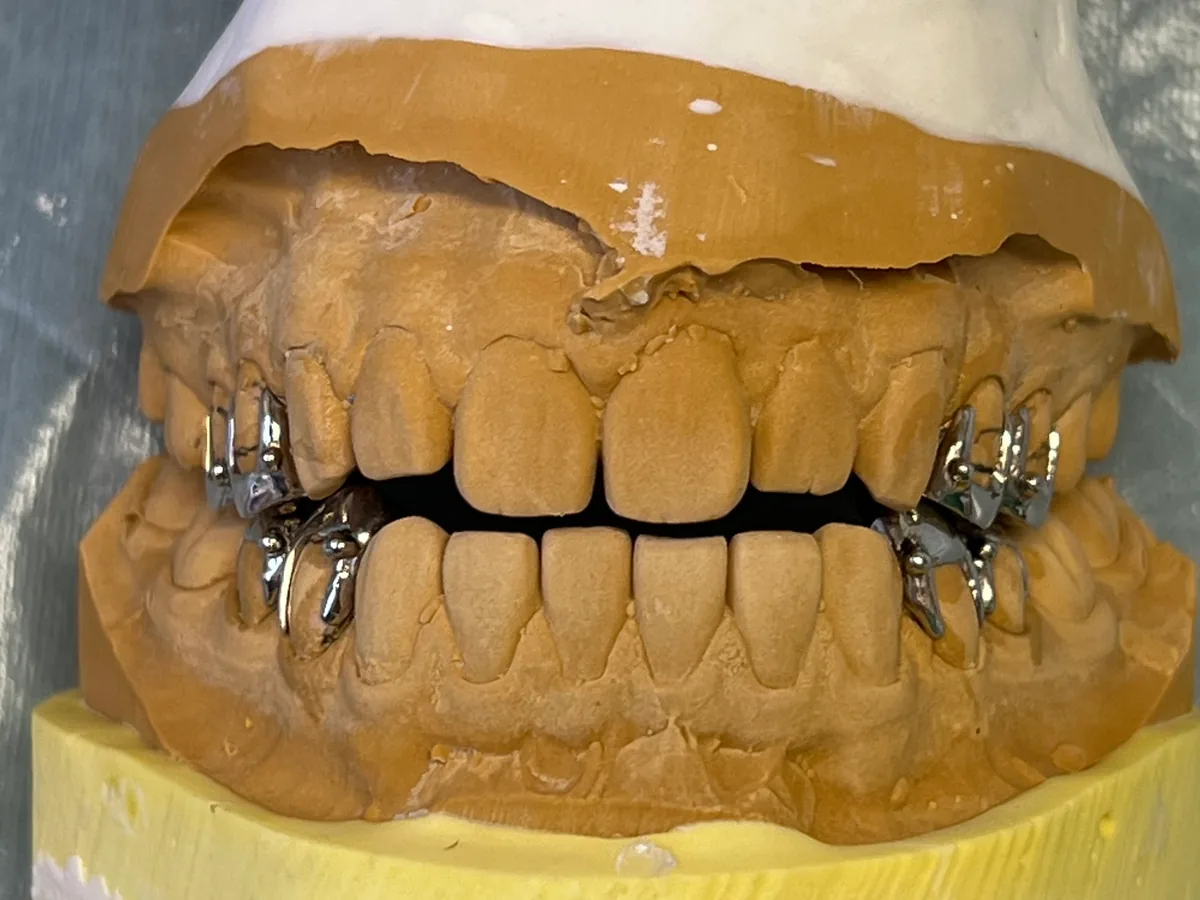
One of the appliances for TMD is a metal overlay for which the position of the lower jaw is first determined in three-dimensional space and which is then given retrusive guidance and sequential guidance.
At our clinic, we call this "SOMOTR" (from the initials of its English name).
The appliance is described on the metal overlay page.
Orthodontics
In orthodontic treatment, too, we aim for the back teeth to separate in sequence and for control of the forces during sleep.
In treating children, too, we check not only the daytime bite but also the bite during sleep.
The wire is described on the MEAW page.
Dentures
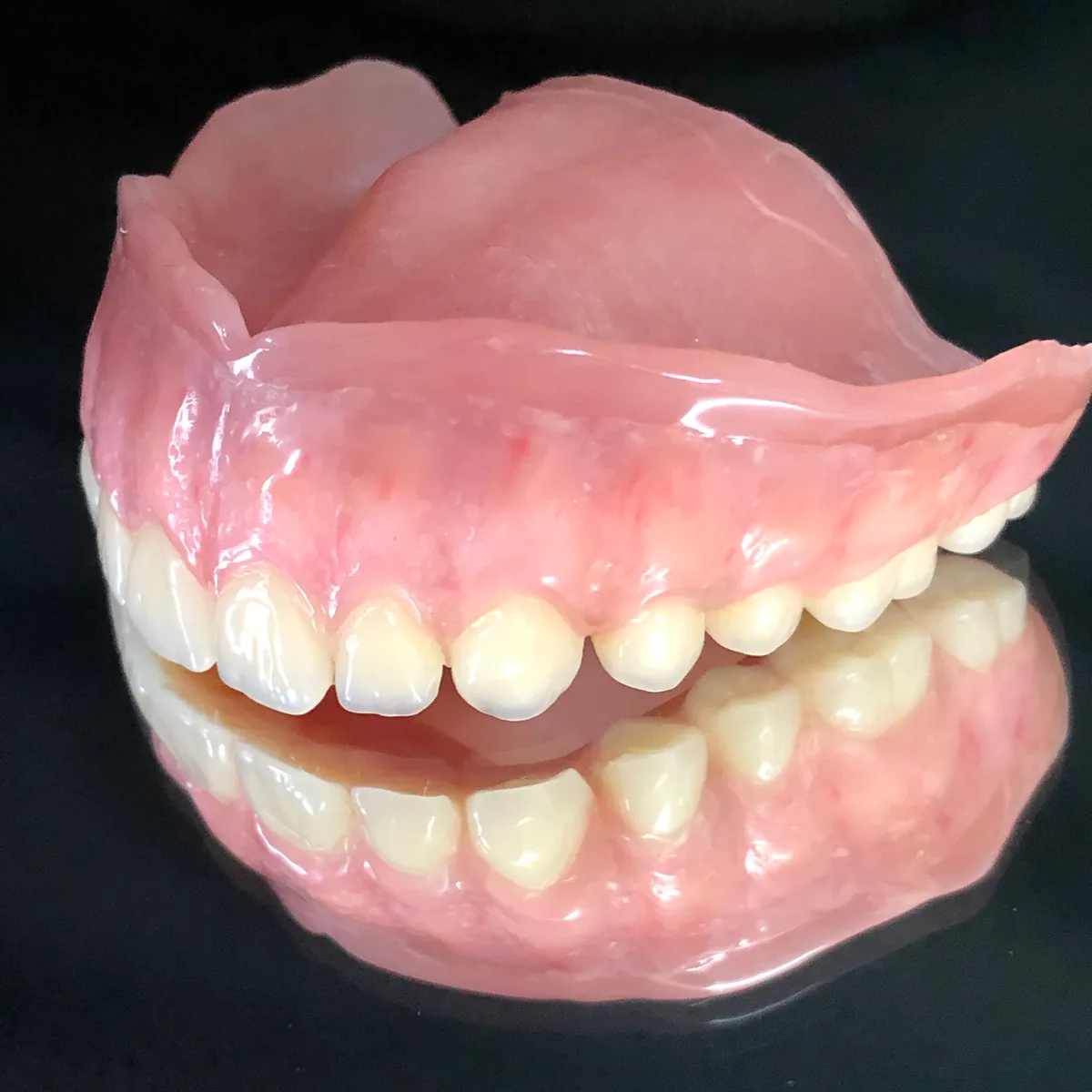
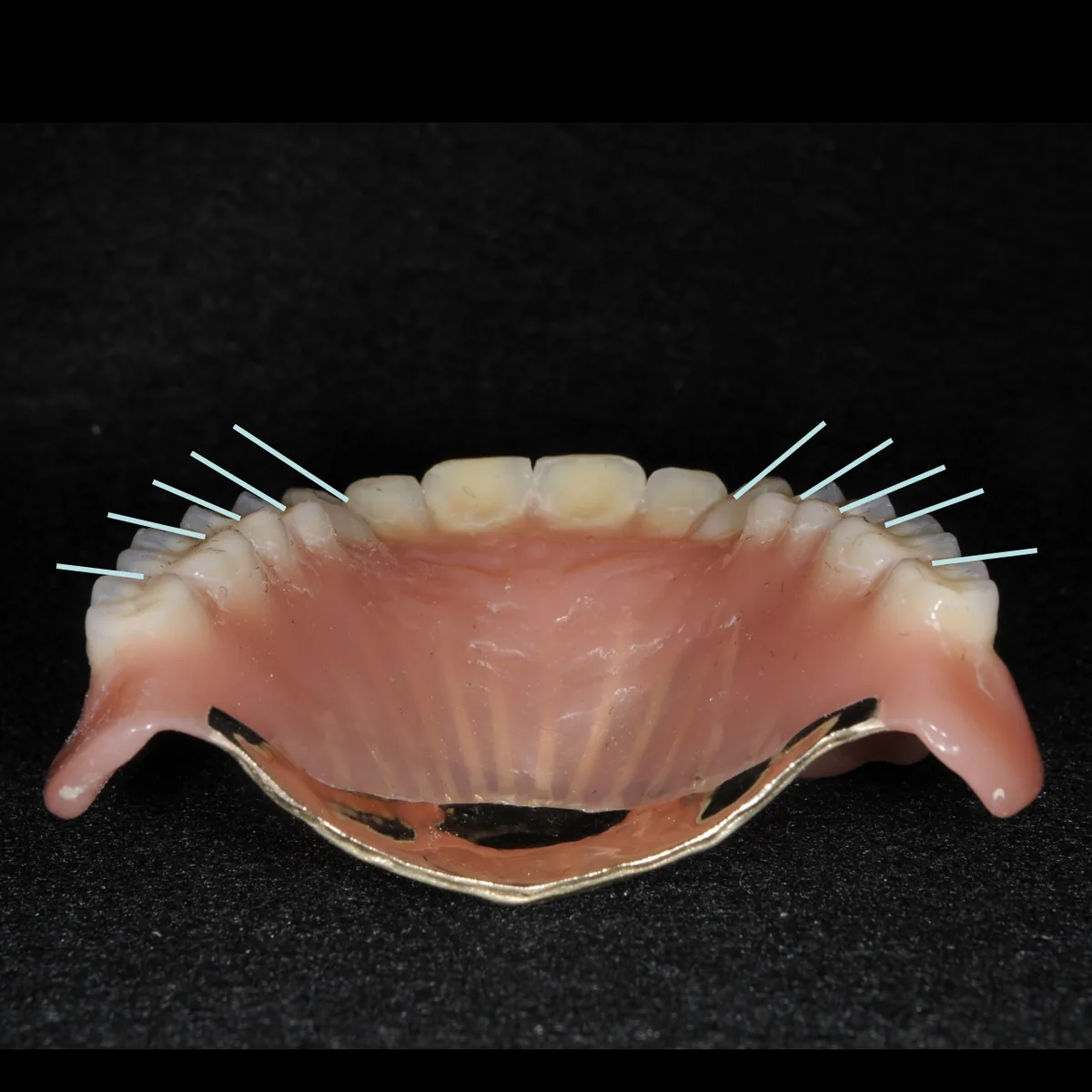
For complete dentures, we decide the height of the bite and the inclination of the biting surfaces from the skeletal analysis, and the slope angles of the artificial teeth from the Cadiax records, and give the dentures sequential occlusion.
How the artificial teeth are arranged is explained on the artificial tooth arrangement page.
Crowns
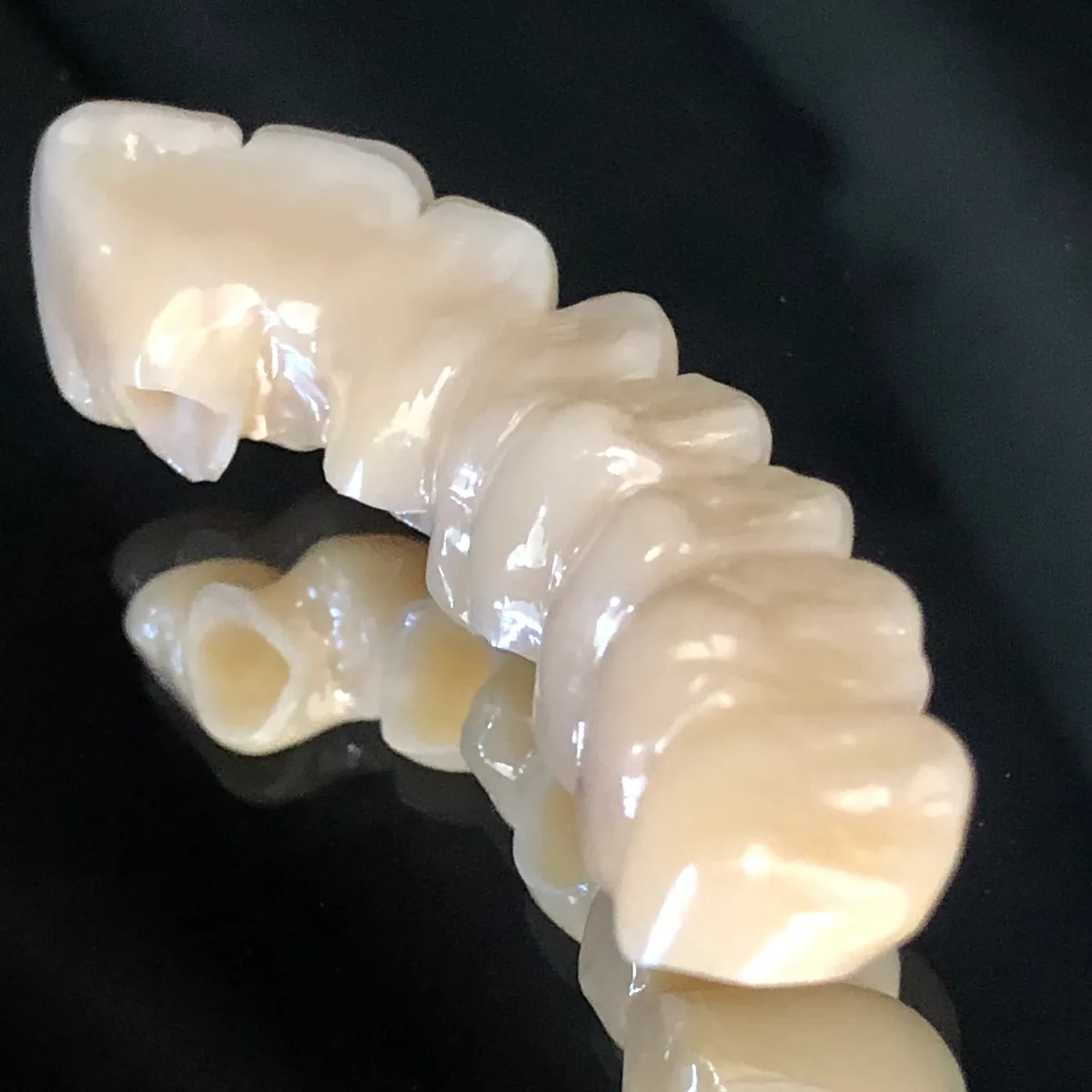
When many teeth are restored with crowns at the same time, too, we calculate the guidance angle for each tooth in advance and decide the shape on the articulator.
What sequential occlusion can and cannot do
What it can do
- Build up the angle of each tooth so that the teeth separate in order from the back when the lower jaw moves sideways
- Divide the role of guiding movement between the canines and the premolars
- Design the bite so that lateral guidance works even when the lower jaw has dropped back
- Give orthodontic treatment, dentures, appliances and crowns goals based on the same concept
What it cannot do, and how we compensate
Because sequential occlusion is a way of building the bite, there are things it cannot determine or check on its own.
At our clinic, we compensate by combining the following methods.
| What it cannot do | How we compensate |
|---|---|
| Knowing whether the designed guidance actually works during sleep | We check tooth contact during sleep with BruxChecker |
| Determining the target jaw position for treatment itself | We calculate it from Cadiax records and other data and set it on the articulator |
| Obtaining the values on which the angle of each tooth is based | We obtain them from Cadiax records, from the skeletal analysis with lateral cephalometric analysis, and from other sources |
| Checking whether the bite decided on the casts fits in the mouth | Checking while provisional restorations and appliances are in use (provisional restorations and provisional dentures) |
At our clinic, we continue to check how the teeth meet during sleep after treatment as well.
Frequently asked questions
- Are "sequential disocclusion" and "sequentially guided occlusion" the same thing?
Yes. At our clinic, we use both terms to refer to sequential occlusion.
It is a bite in which the teeth separate in order from the back when the lower jaw moves sideways.
- Do the canines alone guide sideways movement?
The canines mainly guide it, but the premolars are also given a guiding role.
So that lateral guidance works even when the lower jaw has dropped back, we may include teeth as far back as the second premolars in the guidance.
- Is this bite also given to dentures?
Yes. At our clinic, we give complete dentures sequential occlusion too, on the same principles as for natural teeth.
- Is it related to tooth grinding during sleep?
Yes. We design it taking into account the sideways and backward movement of the lower jaw during tooth grinding.
Whether the designed guidance works during sleep is checked with BruxChecker.
- Is it also considered for children's teeth (primary teeth)?
Yes. For primary back teeth, too, we may design separately the points where the teeth bite together, the parts that do not make contact during backward movement, and the lateral and forward guidance.
Related technologies and treatments
- Austrian gnathology
- Girrbach Reference SL articulator
- BruxChecker
- Metal overlay
- All the technologies we use
- Temporomandibular disorders
- Orthodontic treatment that avoids extractions where possible
- Dentures (precision dentures)
Sources we referred to
For the general explanations (the background to the concept and the order of the guidance inclinations), we referred to the following published sources. What we describe about our own methods is based on the director's posts and explanations.
- Sukalo M. "Rudolf Slavicek und die Gnathologie in Österreich". Thesis, Medical University of Vienna, 2016 (in German; PDF)
- Kulmer S, et al. Incline and length of guiding elements in untreated naturally grown dentition. J Oral Rehabil. 1999;26(8):650-660
Consultations and enquiries
Gibakai Medical Corporation
Yoshimi Dental Clinic
Square 2, Room 302 (third floor)
1-29-1 Tsukushino, Machida,
Tokyo 194-0001, Japan
TEL 042-795-1359 FAX 042-795-1398
Clinic days: Mon · Tue · Thu · Fri
10:00–13:00 / 14:30–18:00
A first visit begins with a first consultation (a private, non-insured service; 30 minutes to 1 hour) for examination and diagnosis. Questions about a diagnosis you received elsewhere are also covered within it.
In an emergency, such as being unable to chew or having severe symptoms, please call us on 042-795-1359 to discuss it.