What is parallel milling?
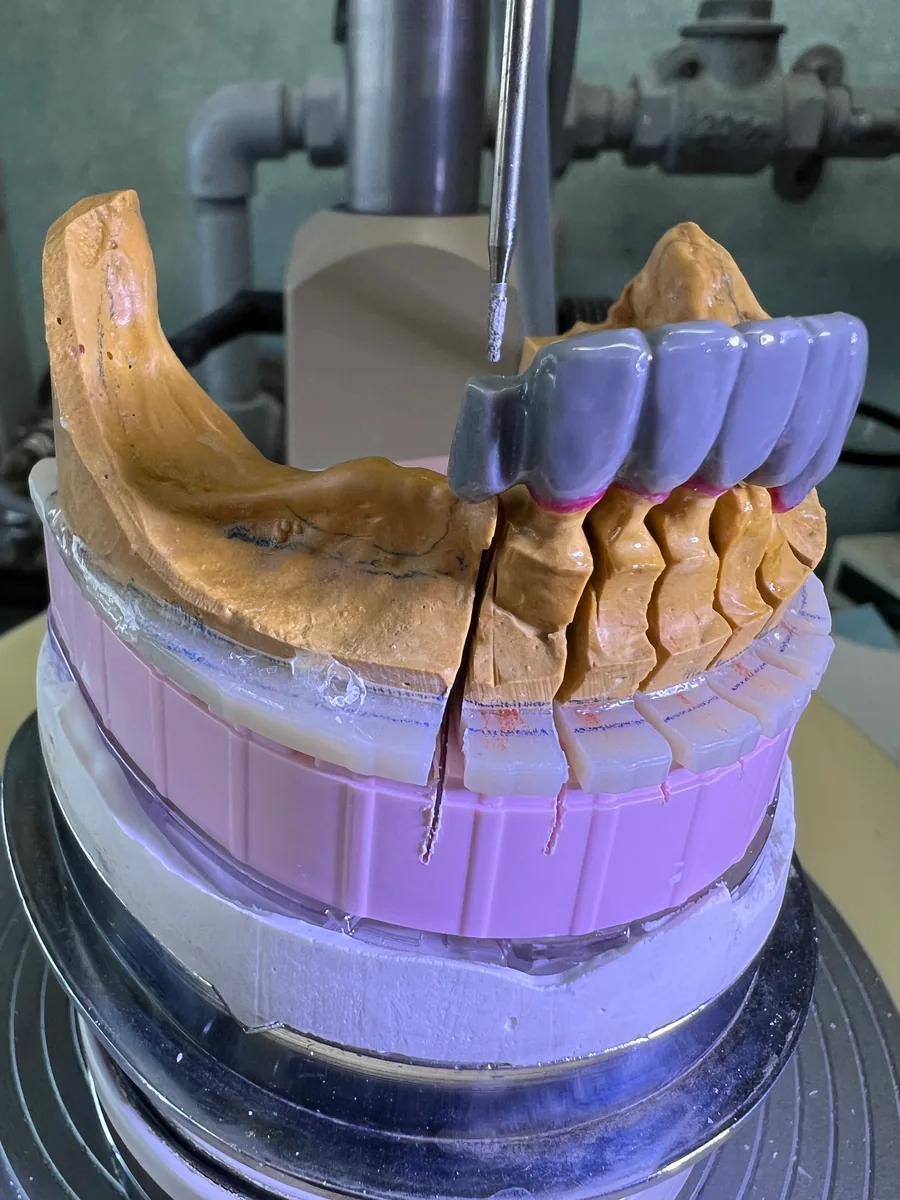
Parallel milling is a technique in which a milling machine (a parallel milling device) is used to cut the surfaces of denture components so that they are parallel to the direction in which the denture is put in and taken out.
The "parallel" in the name refers to this parallel alignment, and the technique is also called "adjusting parallelism".
It is generally described as a technique used when making removable dentures and the like with attachments (devices that connect a denture to the supporting teeth).
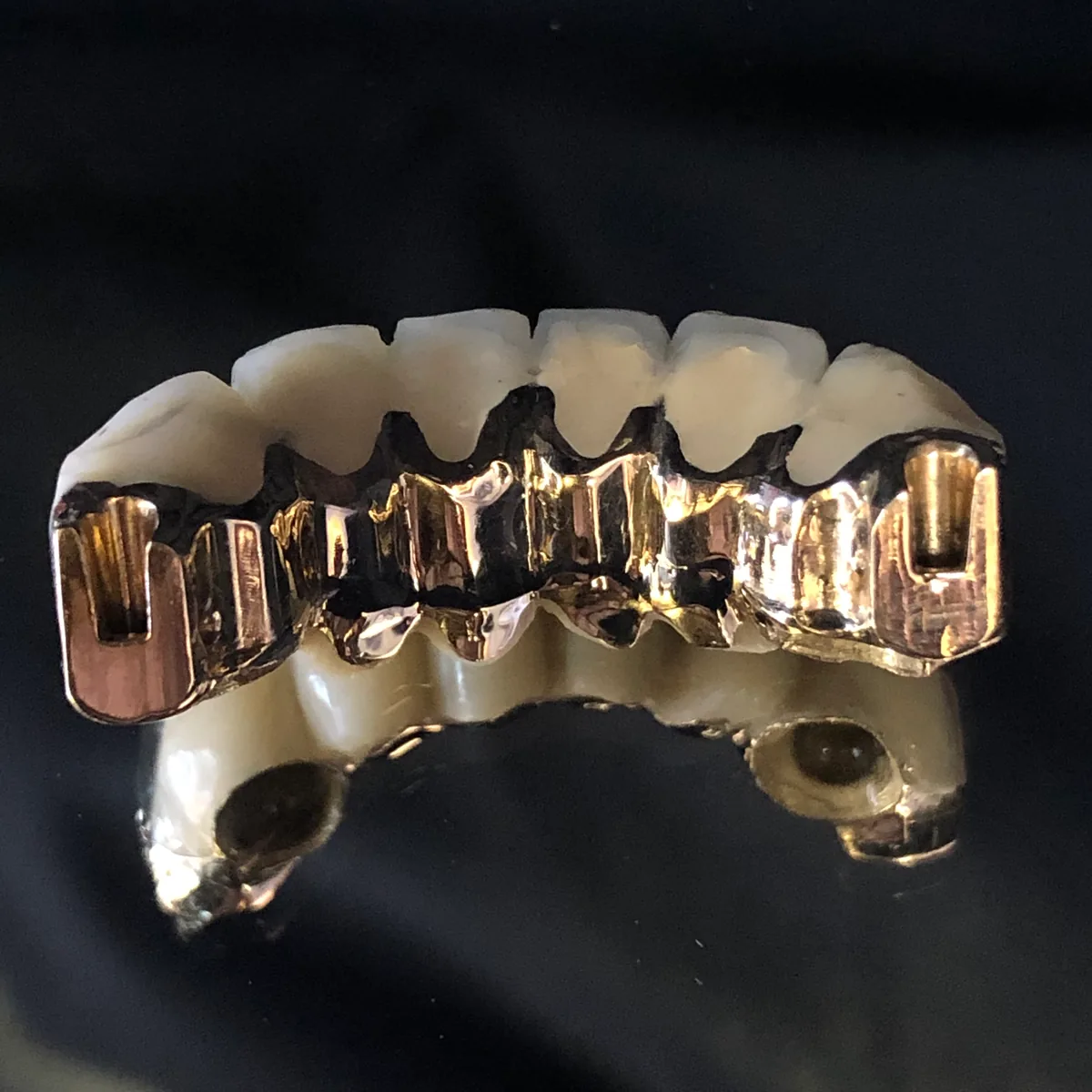
At our clinic, we use the milling machine to shape not only the components on the denture side but also the crowns placed on the teeth that support the denture (crowns with attachments).
How it differs from milling zirconia
The process of machining zirconia crowns from data is also called by the same word, "milling".
The purpose of parallel milling is not to carve out a shape but to align the orientation of surfaces with the direction of insertion and removal.
Milling zirconia is explained on the zirconia crowns page.
How parallel milling works
Here is how it works, in four stages.
- Deciding the direction of insertion and removal: on the cast, we decide the direction in which the denture goes in and the direction in which it comes out.
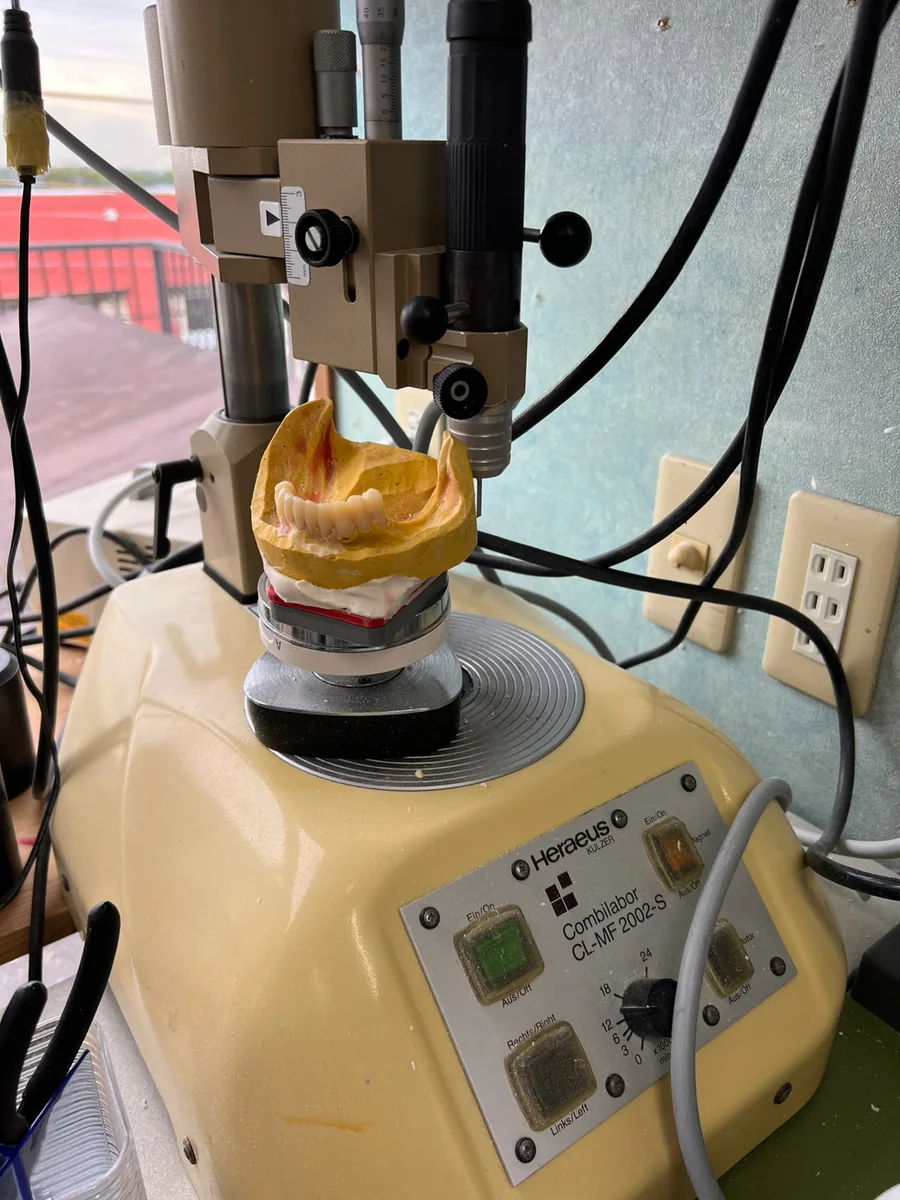
- Mounting the cast in the milling machine: we fix the cast to the table so that the chosen direction matches the orientation of the cutting tool.
- Cutting the surfaces into alignment: we cut the surfaces of the shapes made in wax, or of their metal versions (castings), parallel to the chosen direction.
- Creating a path for the denture: as the denture components follow the aligned surfaces, the denture comes to be put in and taken out in the chosen direction.
What changes when the surfaces are aligned
In partial dentures, the surfaces made on the supporting teeth so that the denture goes in and comes out in a set direction are generally called "guide planes".
Guide planes are generally said to make the denture easier to put in and take out, to reduce sideways forces on the supporting teeth, and to contribute to the stability of the denture.
An academic journal on prosthetic treatment (treatment that replaces lost teeth) also explains that contact between the surfaces of the supporting teeth and the denture components limits the directions in which the denture can move.
In other words, the orientation to which the surfaces are aligned determines the direction in which the denture goes in and comes out.
Why we use parallel milling
Because patients put in and take out their dentures themselves every day
Dentures are something patients put in and take out of their own mouths every day.
In the director's view, how smoothly and securely a denture can be used depends on how finely the direction of insertion and removal has been adjusted.
Because we want to transmit force to the supporting teeth in the direction of their roots
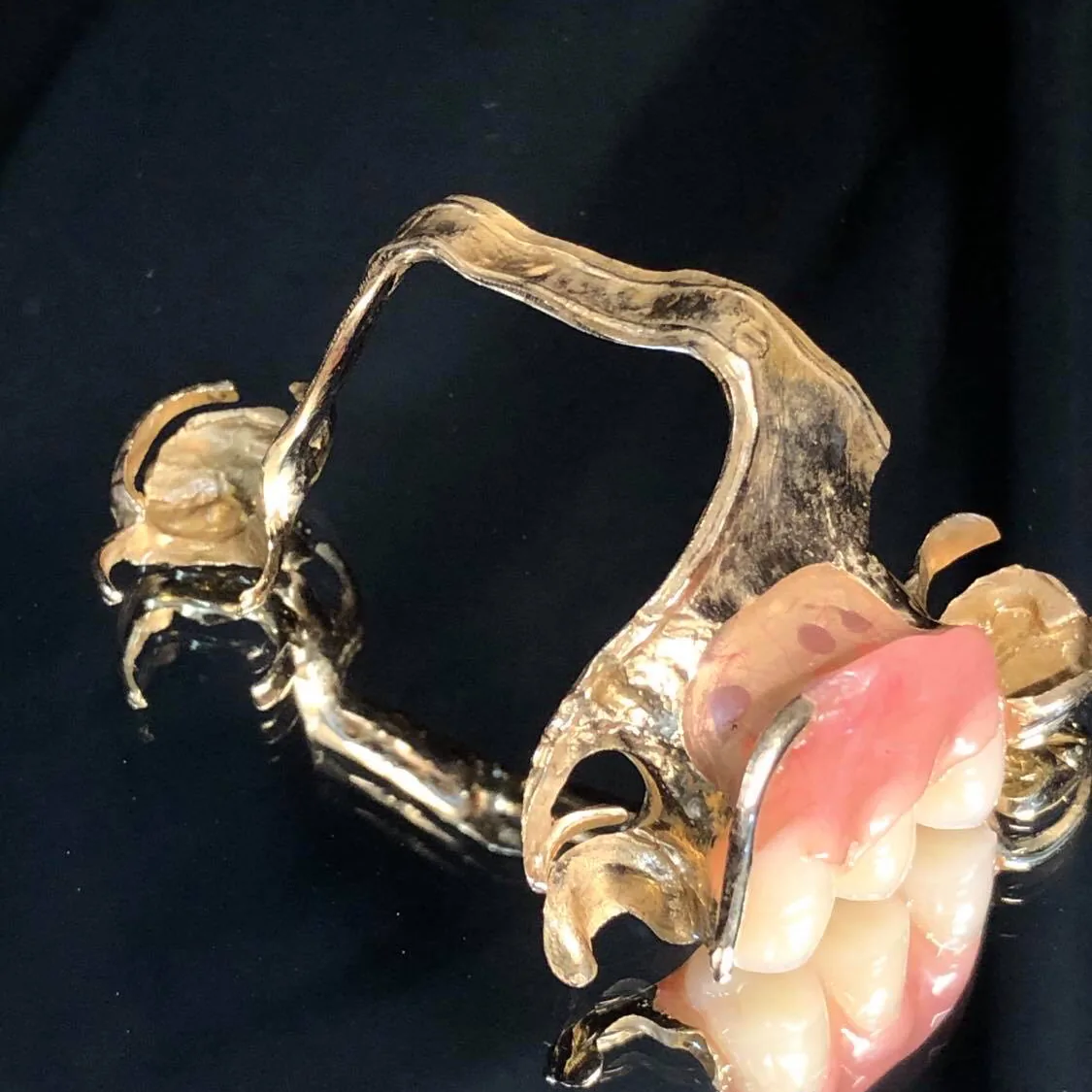
A partial denture that replaces missing teeth in a gap between teeth sinks toward the roots when you bite, just as the teeth do.
We use milling to shape the attachments so that, when this happens, force is also transmitted to the remaining teeth in the direction of their roots.
The difference in how far the supporting teeth and the mucosa where there are no teeth sink is explained on the attachments page.
To check the same mechanism with a provisional denture
At our clinic, we sometimes have patients use a provisional denture before the final denture.
A provisional denture is for checking, in use, whether the final denture will work as planned.
For this reason, we also carry out parallel milling on provisional dentures, so that they have the same mechanism as the final denture.
To build up precision through each step
A denture is made through a series of steps: design, wax, casting and milling.
In the director's view, what matters is building up the precision of each individual step.
In practice at our clinic
Where it fits in denture making
Parallel milling is carried out during the making of the components, based on the design of the denture.
It is done both when making a provisional denture and when making the final denture.
The overall process of making a denture is described on the attachments page.
Designing from the crowns on the supporting teeth
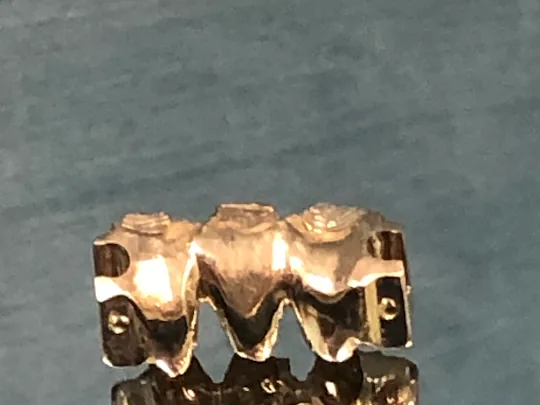
At our clinic, the design sometimes starts at the stage of the crowns (caps) placed on the teeth that support the denture, planned together with the denture.
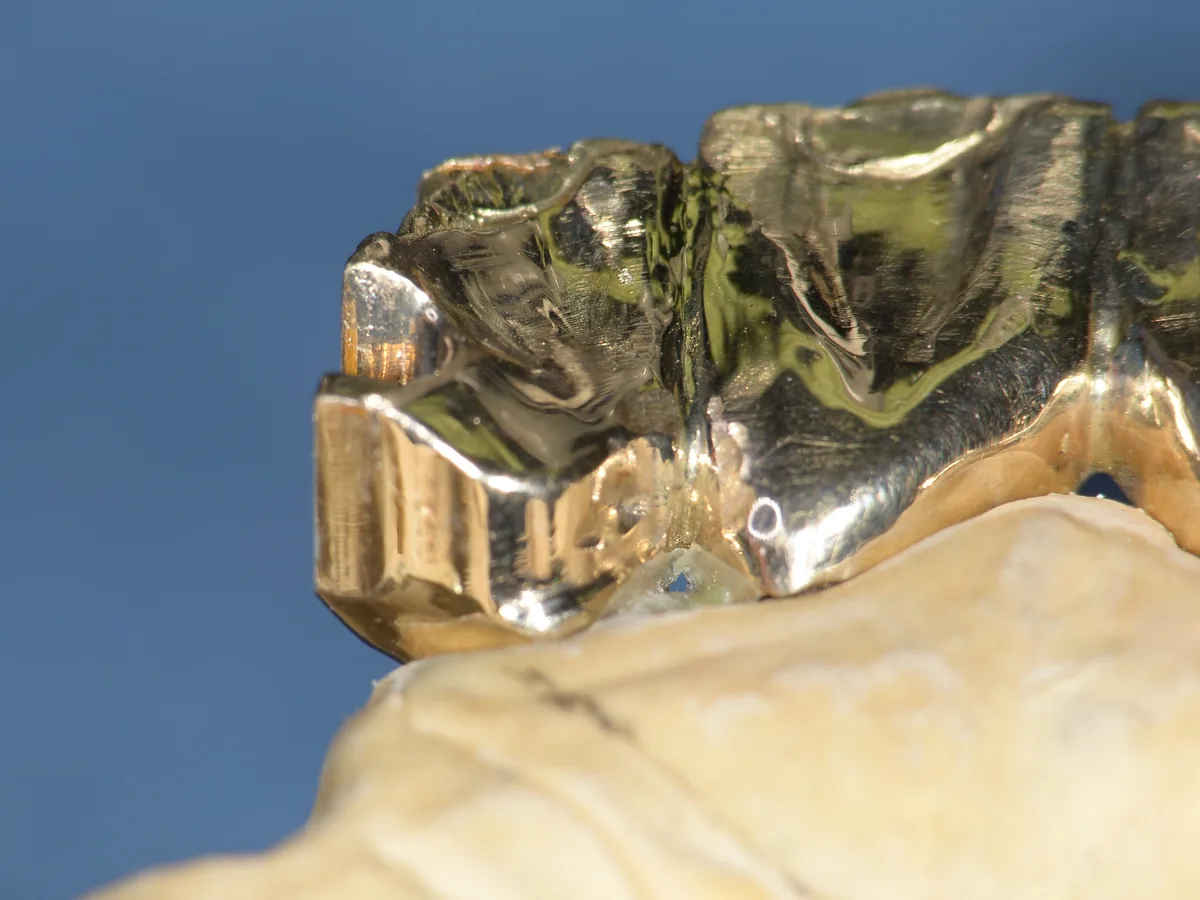
Both the surfaces of the crowns on the supporting teeth and the surfaces of the denture components are made to align with the same direction of insertion and removal.
Photos: crowns on the supporting teeth, and an attachment
With provisional dentures
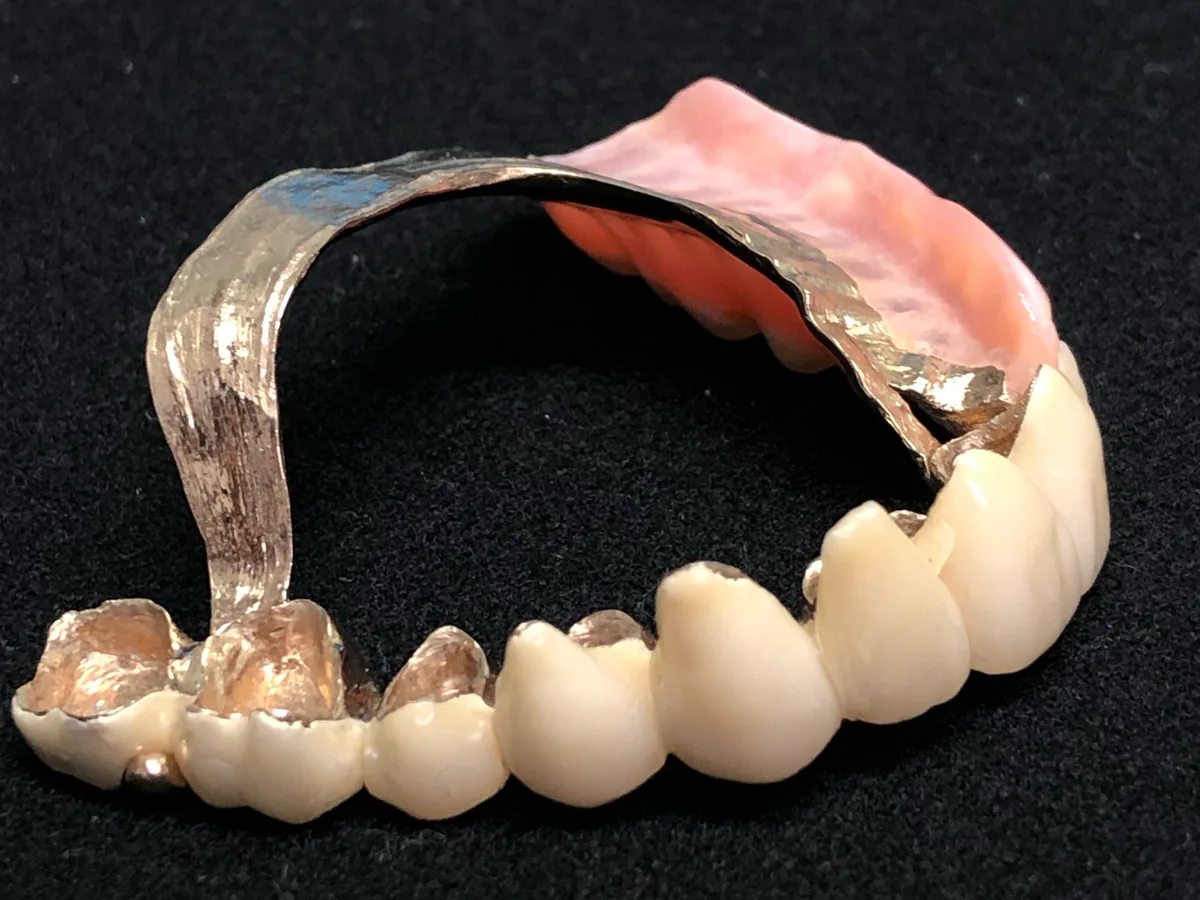
When making a provisional denture, too, we mount the cast in the milling machine and align the surfaces in the same way as for the final denture.
While you use the provisional denture, we check how it feels to put in and take out and how it works when you bite, and apply what we learn to the final denture.
For more on provisional dentures, please see the provisional restorations and provisional dentures page.
Combining it with other technologies
- Attachments: one of the components whose surfaces are aligned by milling. They connect the denture to the supporting teeth.
- Casting: the shape made in wax is converted into metal.
- Laser welding: used to join metal components and for repairs once the denture is in use.
- Provisional restorations and provisional dentures: the same mechanism as in the final denture is checked in use.
What parallel milling can and cannot do
What parallel milling can do
- Deciding the direction in which the denture is put in and taken out, and aligning the surfaces of the components with that direction
- Making the crowns on the supporting teeth and the denture components with their surfaces aligned in the same direction
- Regulating, through the shape of the attachments, the direction of the force transmitted to the supporting teeth
- Giving the provisional denture the same mechanism as the final denture
What it cannot do, and how we compensate
| What it cannot do | How we compensate |
|---|---|
| Determining how comfortable the denture is to use by milling alone | We also record jaw movement (Cadiax) and the shape of the mucosa that supports the denture (mucosal records), and match the design to them |
| Checking, with the casts alone, whether the direction decided on the casts also fits in the mouth | We check this while you use a provisional denture |
| Eliminating the load on the supporting teeth | We shape the components so that force is transmitted in the direction of the roots, and continue checks and care after the denture comes into use |
| Stopping the changes in the teeth and mucosa that occur with use | We check progress and consider adjustment, repair (laser welding) or remaking |
The main risks and side effects of dentures include discomfort until you get used to them, the need for adjustments, and remaking over time.
The condition after treatment can be affected by changes in your general health and oral environment, and by deterioration over time.
Frequently asked questions
- What is made parallel in parallel milling?
The surfaces of the denture components and of the crowns on the supporting teeth.
We decide the direction in which the denture is put in and taken out, and cut the surfaces so that they are parallel to that direction.
- Is it also done for provisional dentures?
Yes. It is done so that the provisional denture has the same mechanism as the final denture.
While you use the provisional denture, we check whether that mechanism works as planned.
- Is it the same as the "milling" used to machine zirconia crowns?
The word is the same, but the purpose is different.
Milling zirconia is the process of creating a shape from data.
Parallel milling is the process of aligning the orientation of the surfaces of denture components with the direction of insertion and removal.
- Does it eliminate the load on the supporting teeth?
We cannot say that it does.
We shape the components so that force is transmitted to the supporting teeth in the direction of their roots, but we continue to check the condition of the teeth and the denture after it comes into use.
- What kind of machine is a milling machine?
It is a parallel milling device: a machine for cutting components on a cast parallel to a chosen direction.
At our clinic, casts for provisional dentures are also mounted in this machine to align the surfaces.
Related technologies and treatments
- Attachments: devices that connect the denture to the supporting teeth
- Laser welding: joining and repairing metal components
- Casting: converting the wax shape into metal
- Provisional restorations and provisional dentures: checking the final form while in use
- All the technologies we use
- Dentures (precision dentures)
Treatment duration, number of visits, fees and risks → Fees
Sources we referred to
For the general explanations (milling techniques, guide planes and how partial dentures move), we referred to the following published sources. What we describe about our own methods is based on the director's explanations.
- OralStudio dental dictionary, "[Milling technique (for attachments)]" (in Japanese)
- Quintessence Publishing, [Concise Dictionary of Dental Terms (Clinical)], "[Guide plane]" (in Japanese)
- Yamashita S. Rethink the mechanical principles associated with removable partial dentures. Annals of Japan Prosthodontic Society. 2020;12(1) (in Japanese)
Consultations and enquiries
Gibakai Medical Corporation
Yoshimi Dental Clinic
Square 2, Room 302 (third floor)
1-29-1 Tsukushino, Machida,
Tokyo 194-0001, Japan
TEL 042-795-1359 FAX 042-795-1398
Clinic days: Mon · Tue · Thu · Fri
10:00–13:00 / 14:30–18:00
A first visit begins with a first consultation (a private, non-insured service; 30 minutes to 1 hour) for examination and diagnosis. Questions about a diagnosis you received elsewhere are also covered within it.
In an emergency, such as being unable to chew or having severe symptoms, please call us on 042-795-1359 to discuss it.