What is platinum-gold alloy?
Platinum-gold alloy is a dental alloy made mainly of gold, with platinum and other metals added.
It is also called "platinum gold", and we use both names at our clinic.
In general, it is a gold-coloured casting alloy used for denture bases, clasps (fasteners that hook onto the teeth), bars, crowns and bridges, and so on.
Dental materials manufacturers describe it as an alloy with the hardness and spring-like elasticity required for denture bases and clasps.
At our clinic, we use it mainly for metal denture frameworks, and also for retainers after orthodontic treatment, metal added in repairs, the tips of instruments and so on.
There are also cases in which a provisional denture was made of platinum-gold alloy.
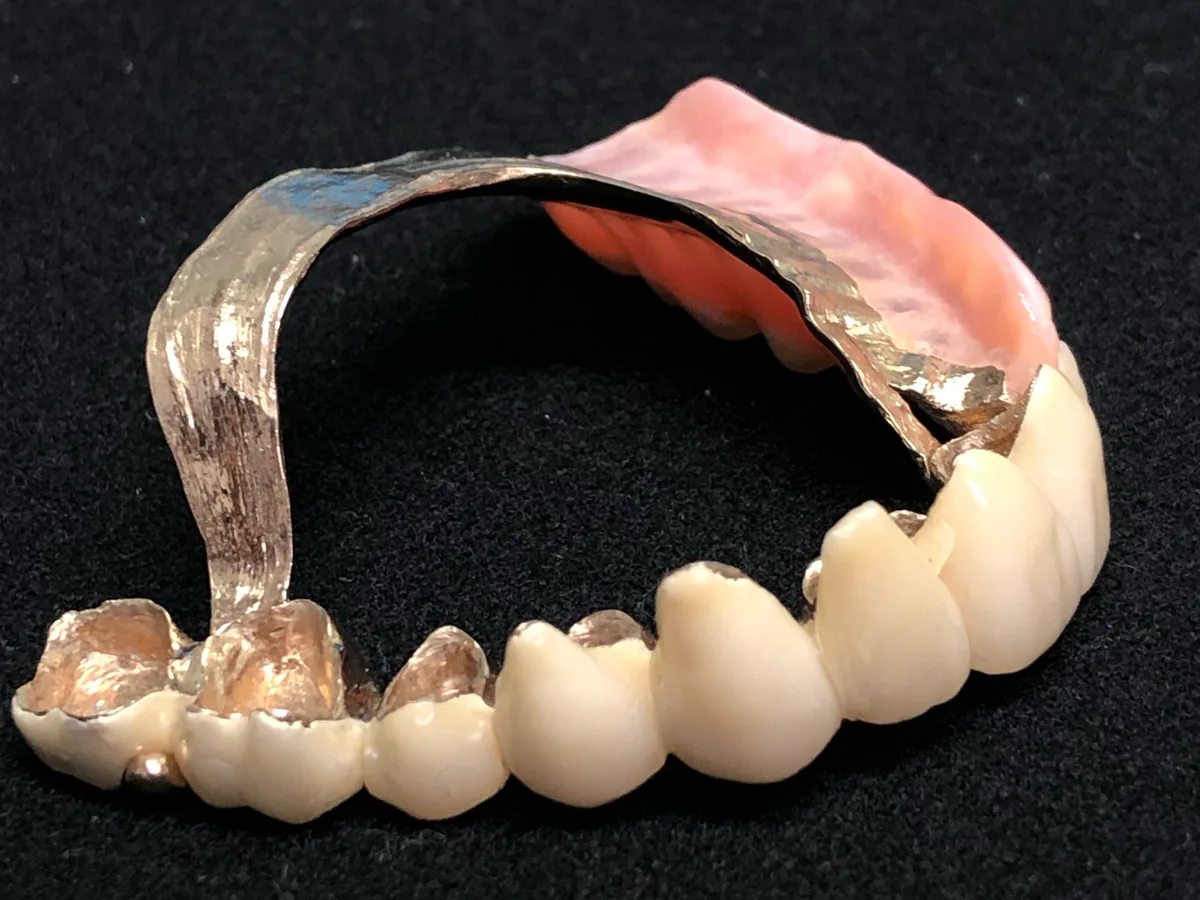
How platinum-gold alloy works
What kind of alloy it is
The proportions of the components of platinum-gold alloy differ from product to product.
In examples of products from dental materials manufacturers, gold makes up about 70 per cent and platinum a few per cent, and silver, copper and other metals are also included.
Shaping and joining
Platinum-gold alloy is shaped by casting.
For a denture framework, for example, the shape made in wax on a refractory cast is converted into 50 grams of platinum-gold alloy.
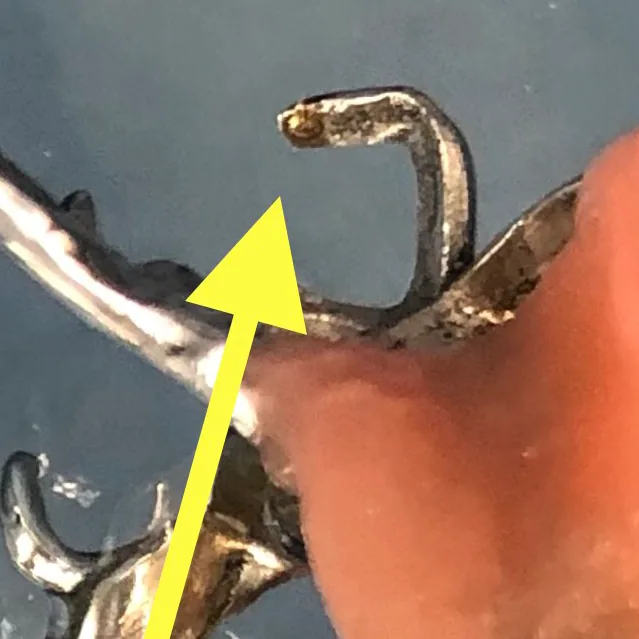
When components are joined after shaping, or metal is added in a repair, platinum-gold alloy is integrated with the original metal by laser welding.
Photos: shaping platinum-gold alloy
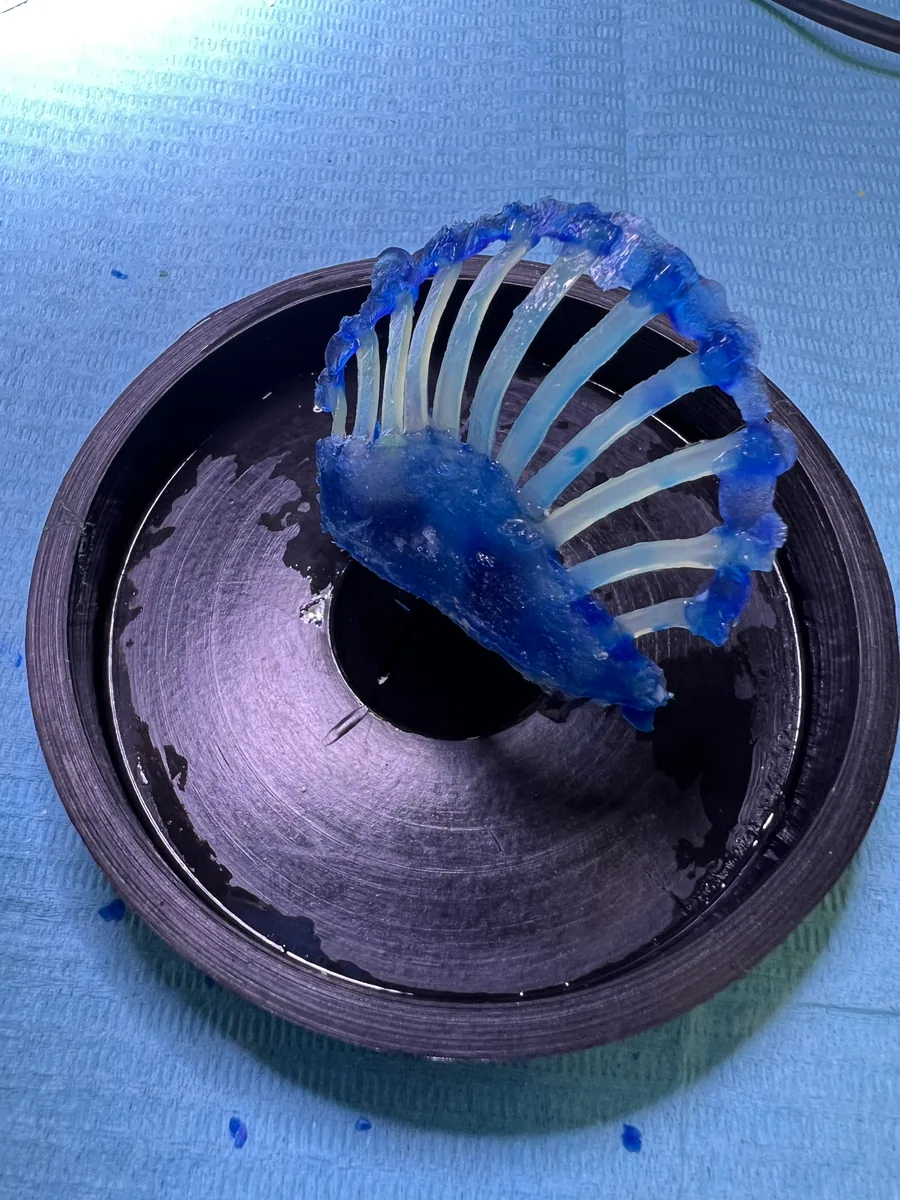
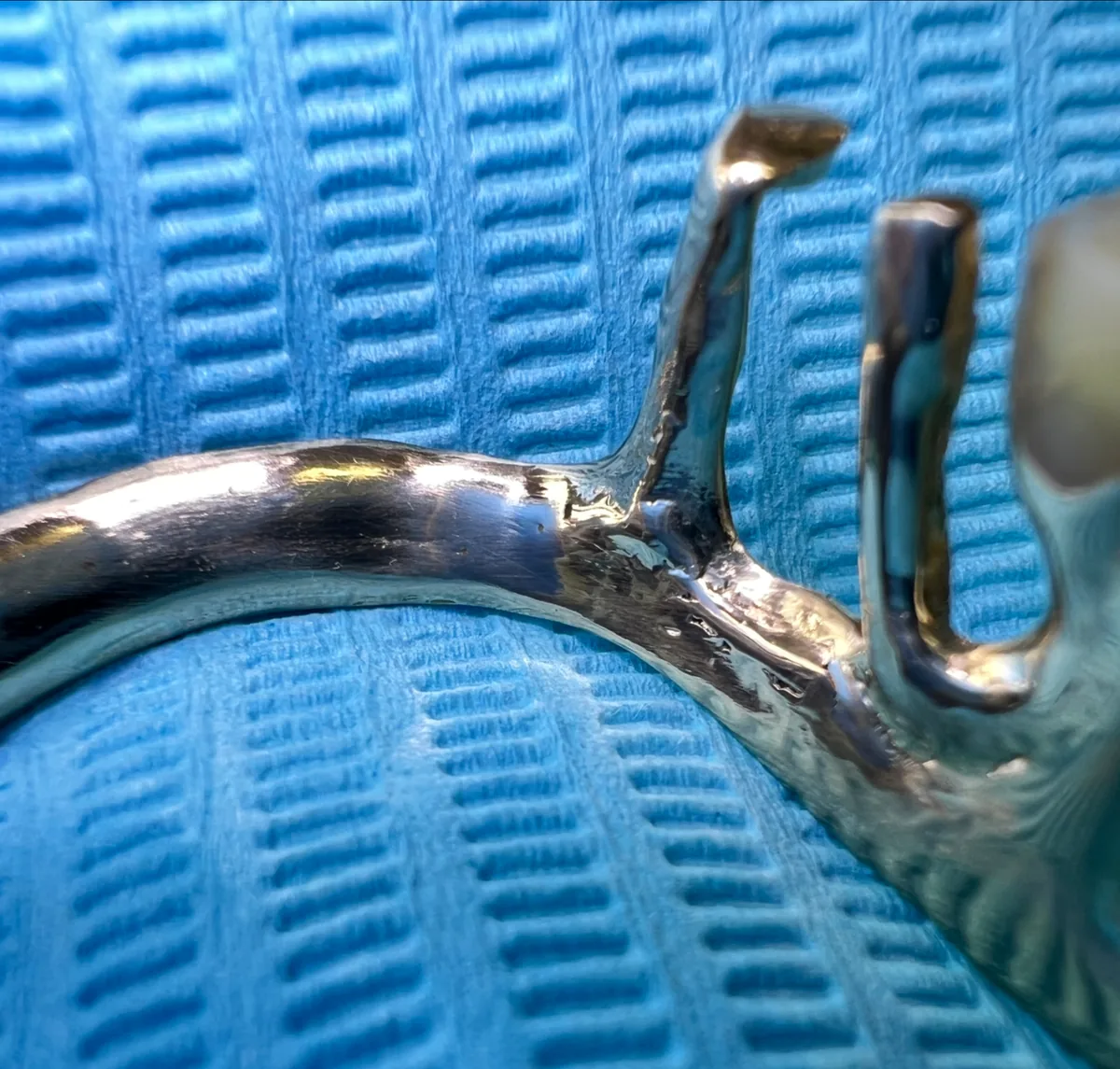
Why we use platinum-gold alloy
To allow for repairs and for adding teeth later
While a denture is in use, it may become impossible to save some of the teeth that support it.
We make metal denture frameworks in platinum-gold alloy so that, when that happens, a repair that adds teeth to the denture is possible.
Because it is easier to finish thin
The director believes that using platinum-gold alloy makes it easier to finish a denture thin.
Because it stays in the mouth for a long time, we are selective about the material
The tongue, cheeks and lips are always in contact with a denture.
For this reason, at our clinic we attach importance to how we choose the materials that go in the mouth.
As the metal added in welding
When metal is added in repairs or modifications, too, we use a thin wire of high-purity platinum-gold alloy.
Joining and adding can be done with the same platinum-gold alloy as the denture.
In practice at our clinic
What we use platinum-gold alloy for
| What we use it for | How we use it |
|---|---|
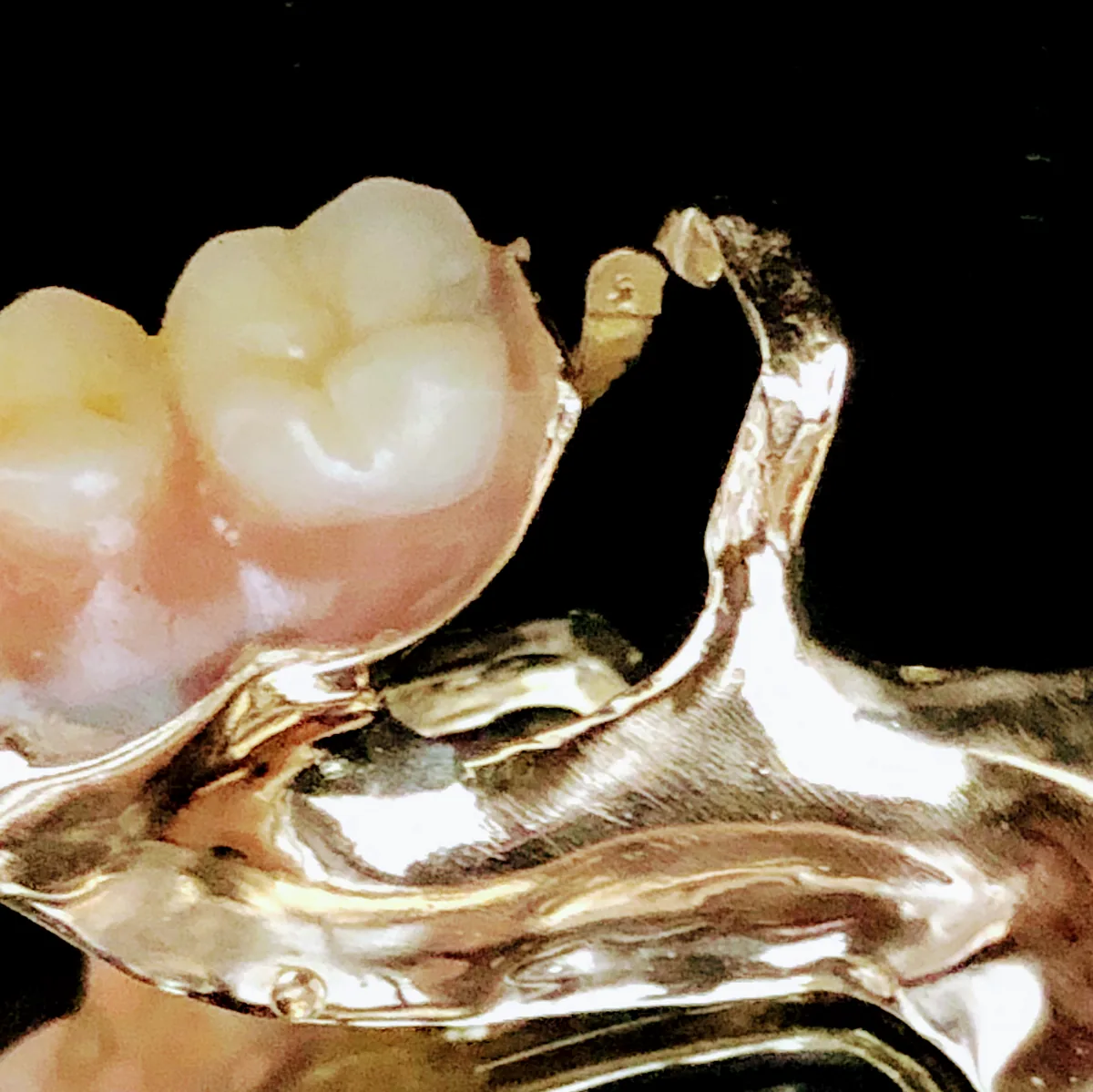
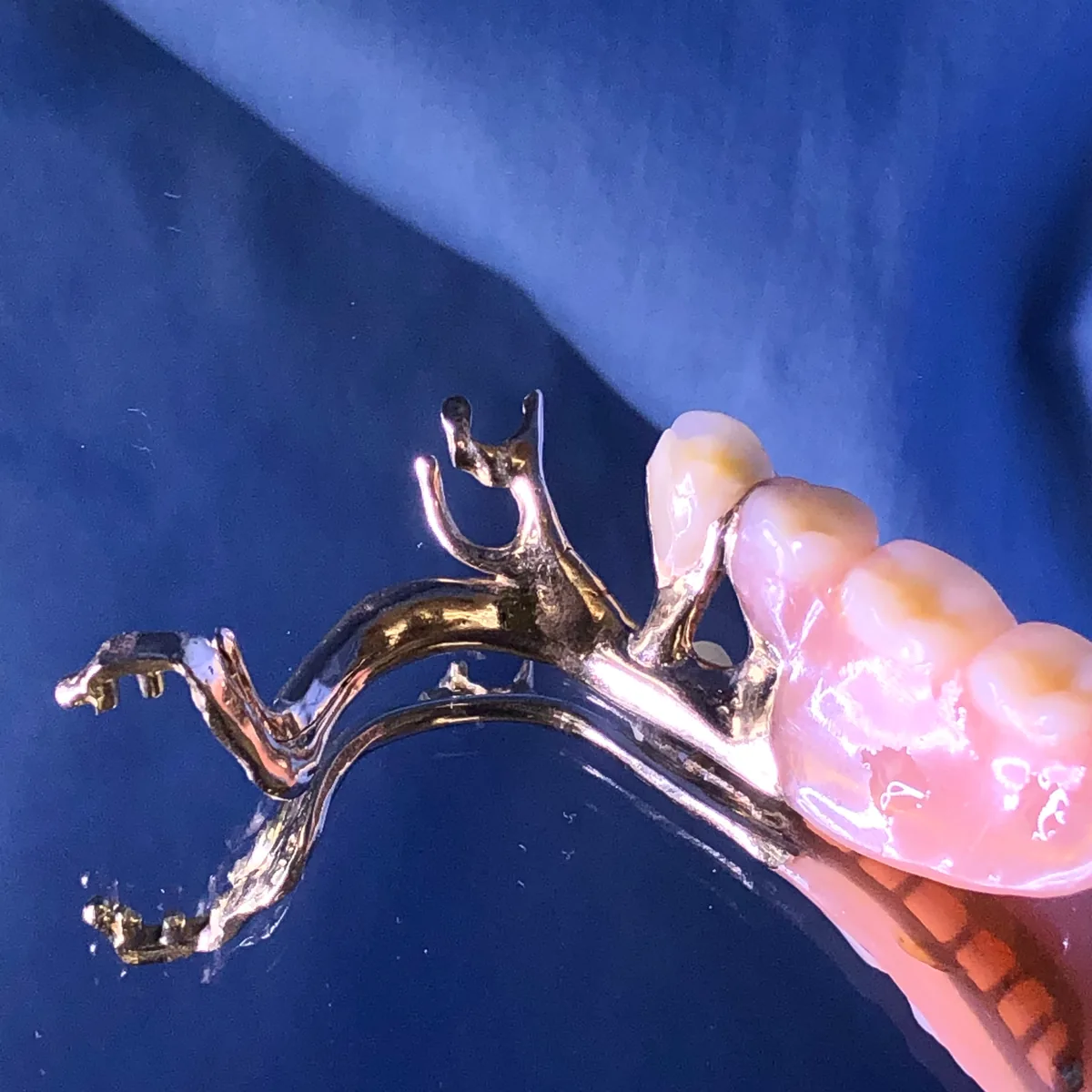
| Metal denture frameworks | Frameworks for complete and partial dentures are cast in platinum-gold alloy |
| Provisional dentures | There are cases in which a provisional denture was made of platinum-gold alloy. A provisional denture is used before the final denture to check the bite and how it functions (provisional restorations and provisional dentures) |
| Retainers after orthodontic treatment | It is sometimes used for retainers, which hold the teeth in position. This is available as an option (retainer) |
| Metal added in repairs | Platinum-gold alloy is added to the metal part of a denture (laser welding) |
| Tips of instruments and retentive components | It is welded onto the tips of orthodontic pliers and onto the tips of the retentive components of provisional dentures (the parts that hold the denture on the teeth) to shape them (plier tip modification) |
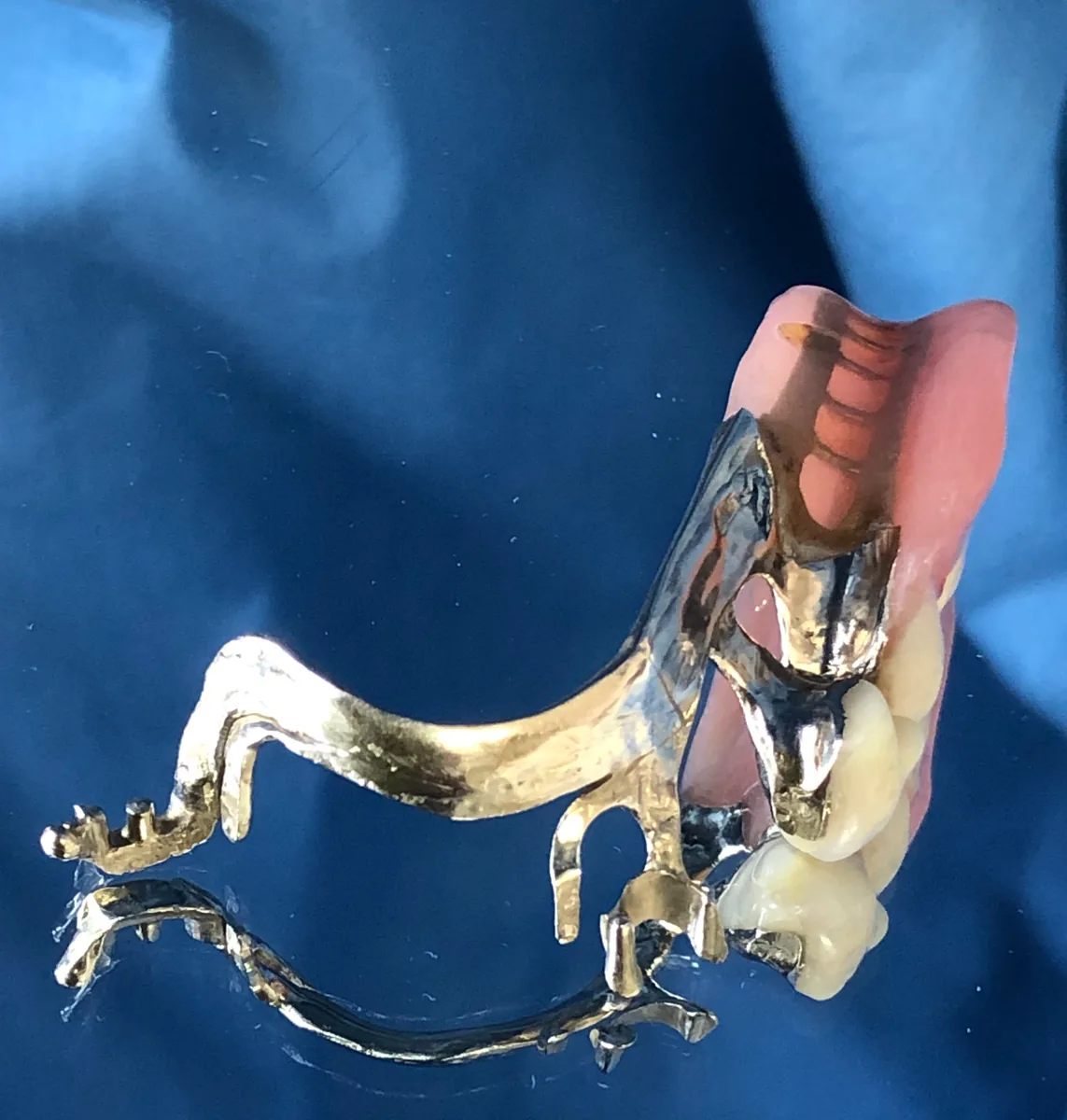
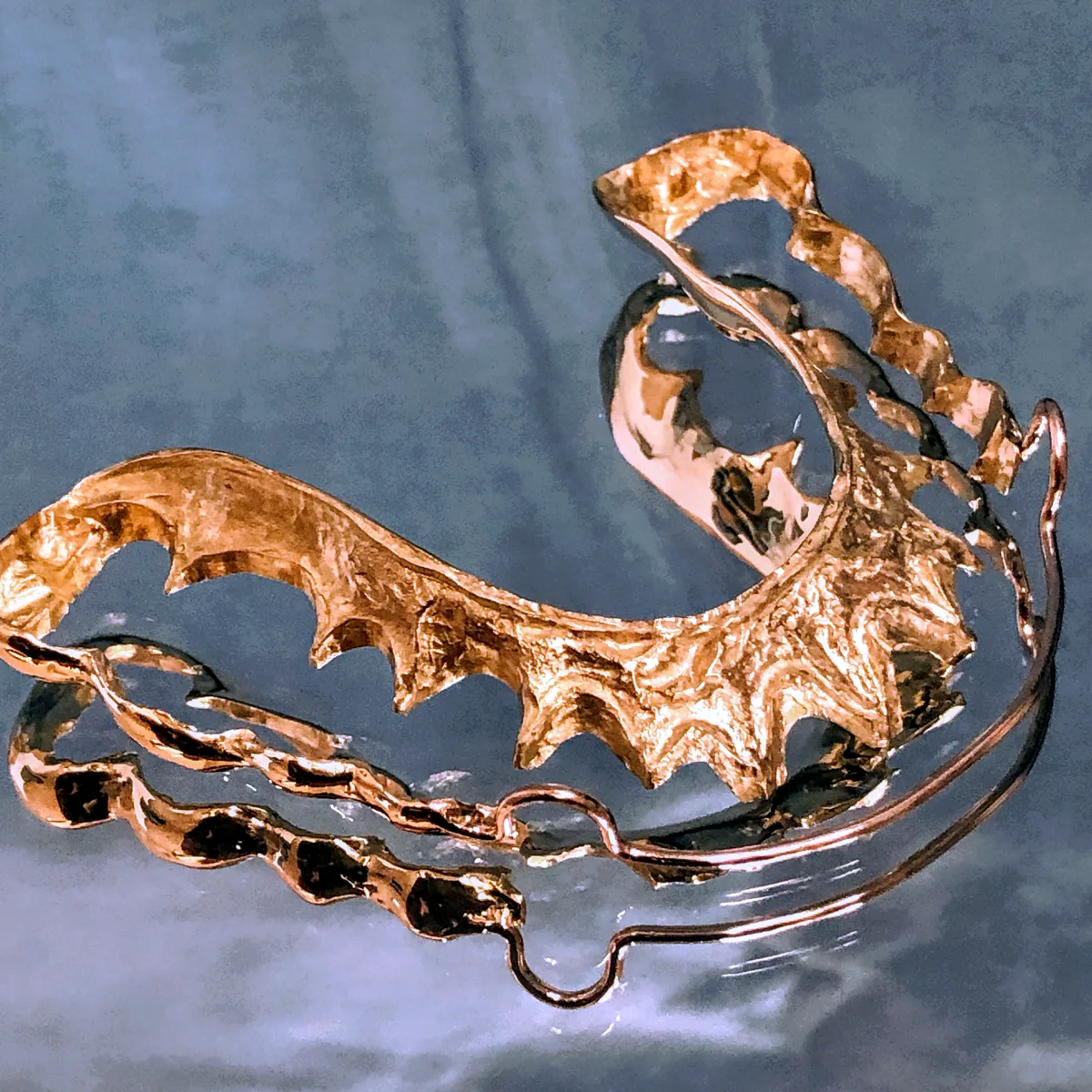
Photos: items made of platinum-gold alloy
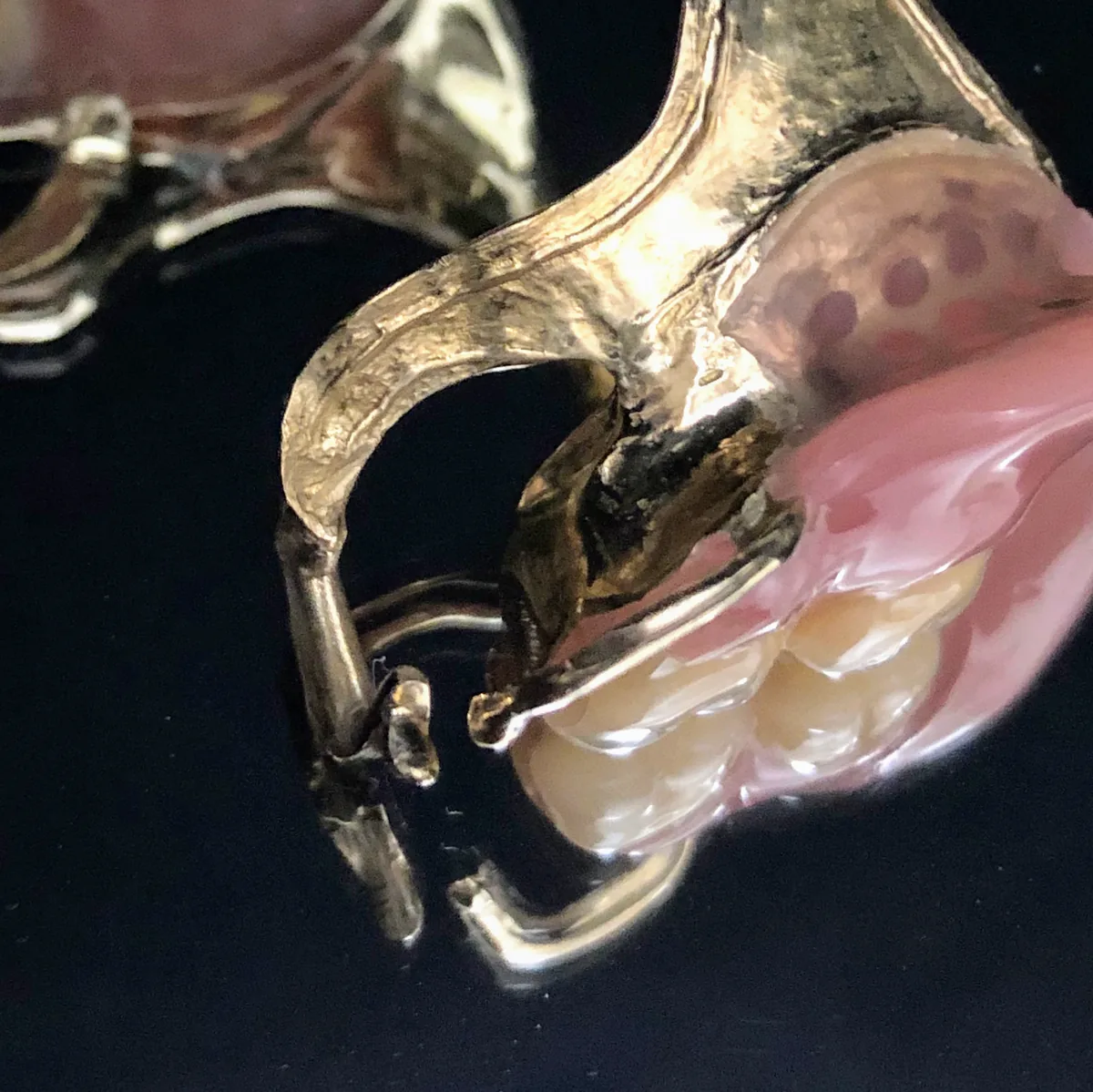
Combination with cobalt-chromium
For denture frameworks, platinum-gold alloy is sometimes combined with a different metal, cobalt-chromium.
In one case, the component connecting the left and right sides of a lower denture (the lingual bar) was given a hollow structure of platinum-gold alloy and cobalt-chromium to obtain the necessary rigidity.
The director regards the lingual bar as a part of the denture that particularly requires rigidity.
Photos: platinum-gold alloy and cobalt-chromium
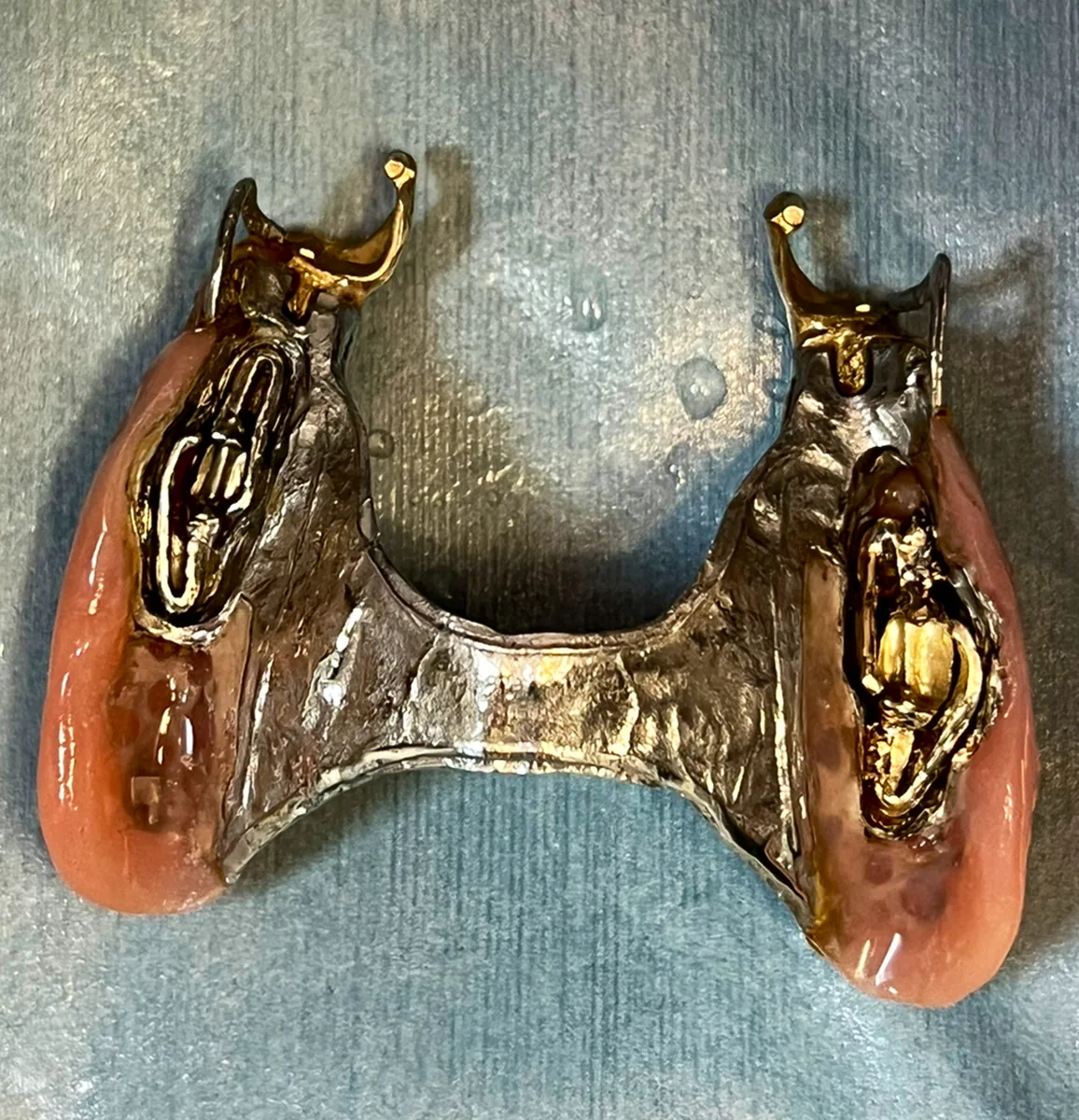
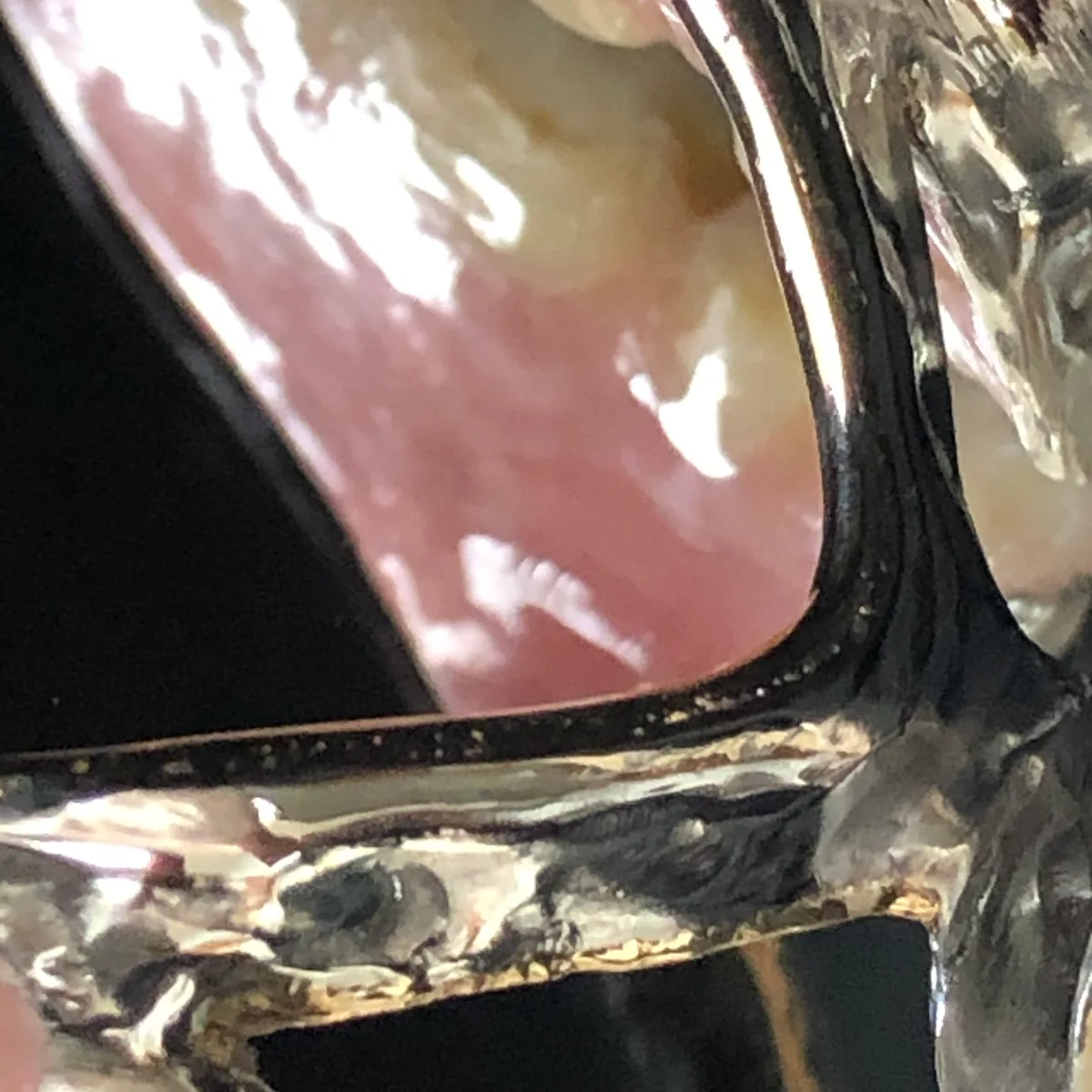
On the tips of instruments, too
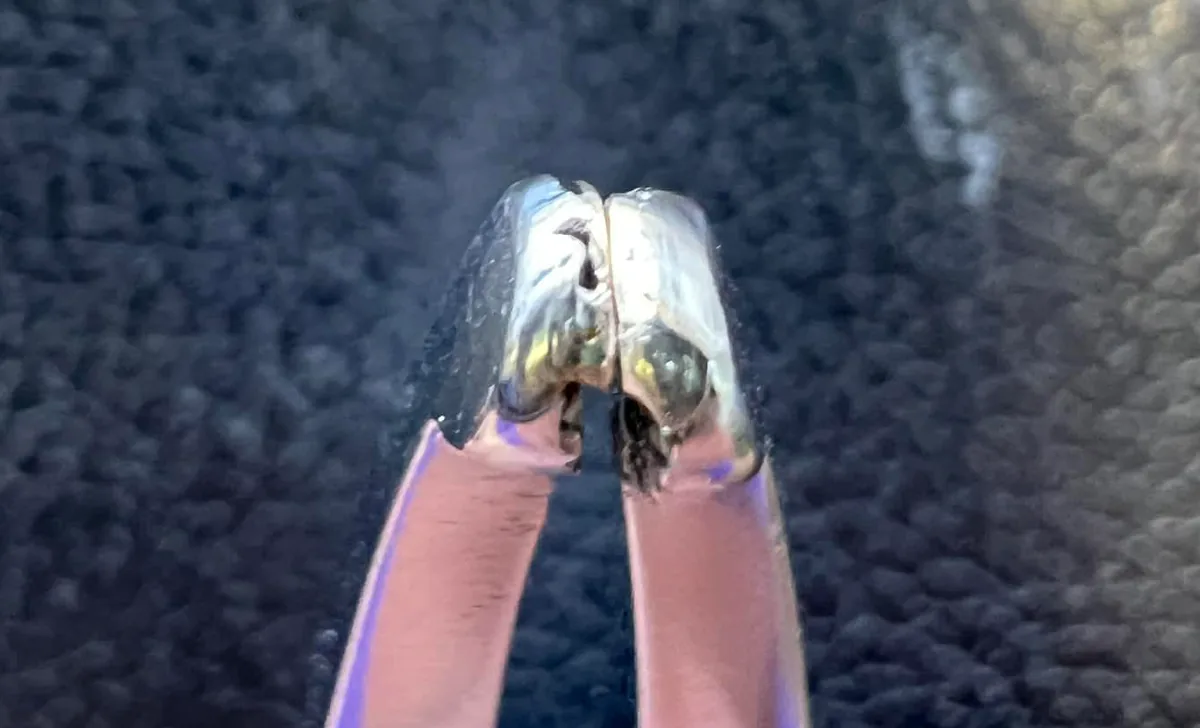
We also laser-weld platinum-gold alloy onto the tips of the pliers used in orthodontic treatment (instruments for gripping wire) to shape them.
What platinum-gold alloy can and cannot do
What platinum-gold alloy can do
- Make everything from large items such as denture frameworks to small components by casting
- Repair by adding the same platinum-gold alloy with laser welding
- Make the denture in advance so that it allows for repairs that add teeth later
- Make frameworks in combination with cobalt-chromium
What it cannot do, and how we compensate
Platinum-gold alloy, too, shrinks in casting.
Also, using platinum-gold alloy does not mean that every denture can be repaired in the same way.
| What it cannot do | How we compensate |
|---|---|
| Eliminating shrinkage in casting | We design with correction values that allow for shrinkage (casting) |
| Determining the rigidity needed for each part of a denture from the name of the material alone | To obtain the rigidity needed, we consider both the material and the cross-sectional shape (there are cases where it was combined with cobalt-chromium or given a hollow structure) |
| Carrying out the same repair on any denture | We decide what kind of repair is possible after checking the material and structure, and the condition of the mouth (laser welding) |
| Keeping the cost always the same | It varies with the market price of metals. After examination and diagnosis, we give you a written estimate (Fees) |
Frequently asked questions
- Are platinum-gold alloy and "platinum gold" the same thing?
Yes, they are the same thing.
It is a dental alloy made mainly of gold, with platinum and other metals added, and we use both names at our clinic.
- Where is platinum-gold alloy used?
We use it mainly for metal denture frameworks, and also for retainers after orthodontic treatment, denture repairs, modifying the tips of instruments and so on.
- When a denture breaks, can it be repaired if it is made of platinum-gold alloy?
We choose platinum-gold alloy so that repairs such as adding teeth later are possible.
However, what kind of repair is possible is decided after checking the condition of the denture and your mouth.
- Is the cost always the same?
For metals such as platinum-gold alloy, the cost varies with the market price.
Please see the fee table for the amounts. After examination and diagnosis, we give you a treatment plan and an estimate in writing.
- Can it also be used for orthodontic retainers?
Yes. Platinum gold is sometimes used for retainers after orthodontic treatment. This is available as an option.
Related technologies and treatments
- Casting
- Laser welding
- Zirconia crowns
- Retainer
- All the technologies we use
- Dentures (precision dentures): materials and structure
- Temporomandibular disorders & orthodontic treatment that avoids extractions where possible: orthodontics
Treatment duration, number of visits, fees and risks → Fees
Sources we referred to
For the general explanations (the alloy known as platinum-gold alloy, and examples of its uses and composition), we referred to the following published sources. They are not the same products as the platinum-gold alloy we use. What we describe about our own methods is based on the director's posts and explanations.
- Ishifuku Metal Industry, "[Platinum-gold alloys]" (dental materials manufacturer's product information; in Japanese)
- YAMAKIN, "[Platinum-gold (gold alloy for casting)]" (dental materials manufacturer's product information; in Japanese)
Consultations and enquiries
Gibakai Medical Corporation
Yoshimi Dental Clinic
Square 2, Room 302 (third floor)
1-29-1 Tsukushino, Machida,
Tokyo 194-0001, Japan
TEL 042-795-1359 FAX 042-795-1398
Clinic days: Mon · Tue · Thu · Fri
10:00–13:00 / 14:30–18:00
A first visit begins with a first consultation (a private, non-insured service; 30 minutes to 1 hour) for examination and diagnosis. Questions about a diagnosis you received elsewhere are also covered within it.
In an emergency, such as being unable to chew or having severe symptoms, please call us on 042-795-1359 to discuss it.