What is MEAW?
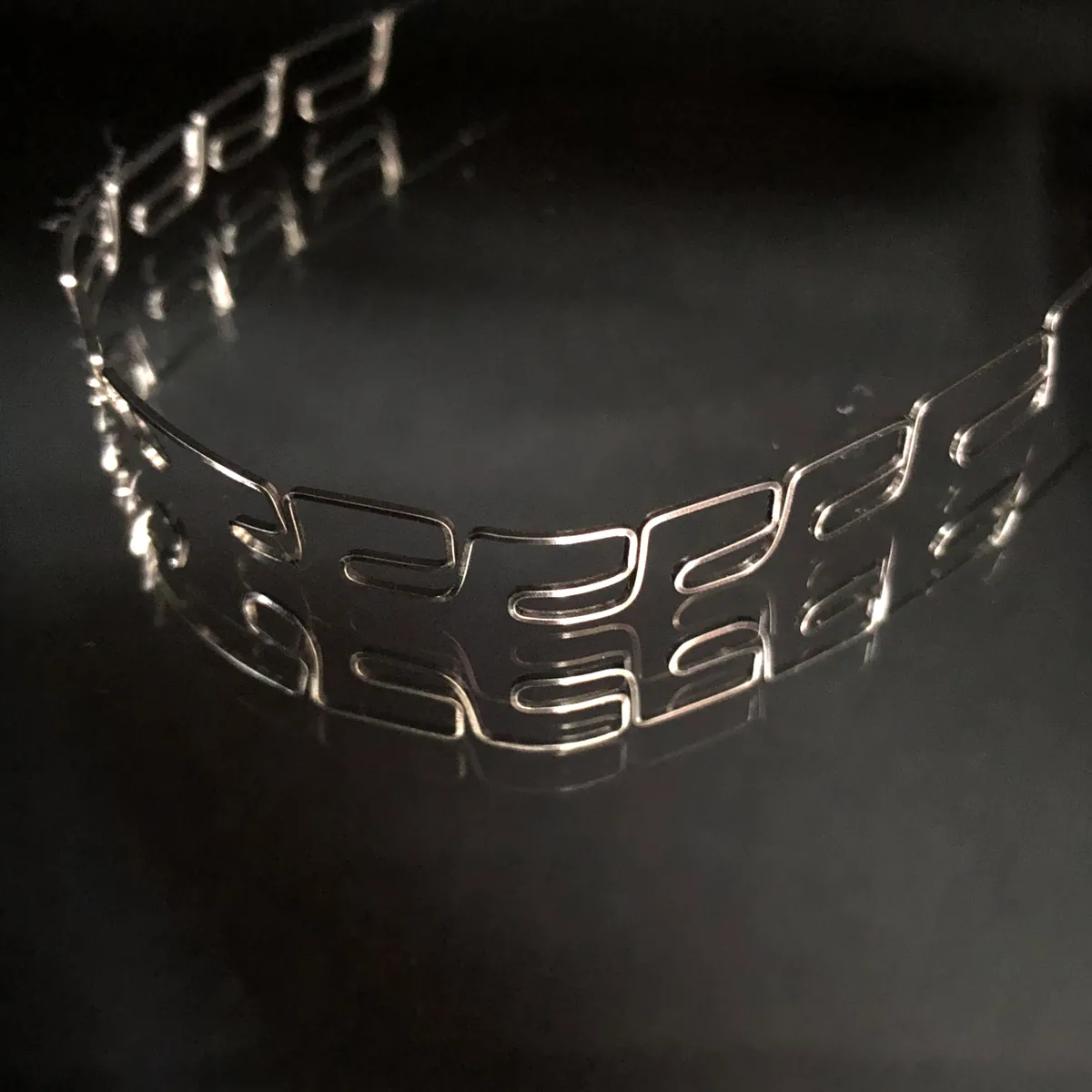
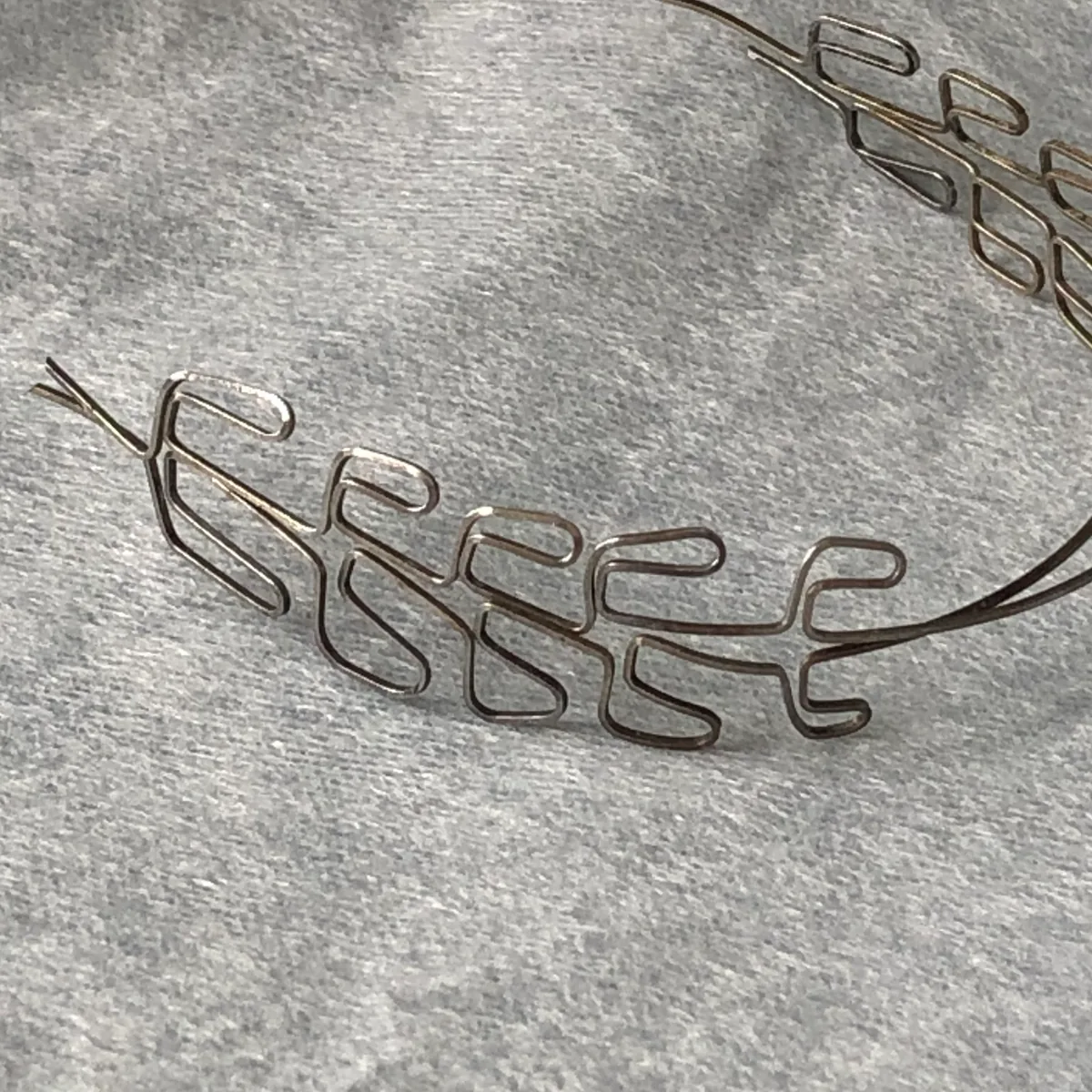
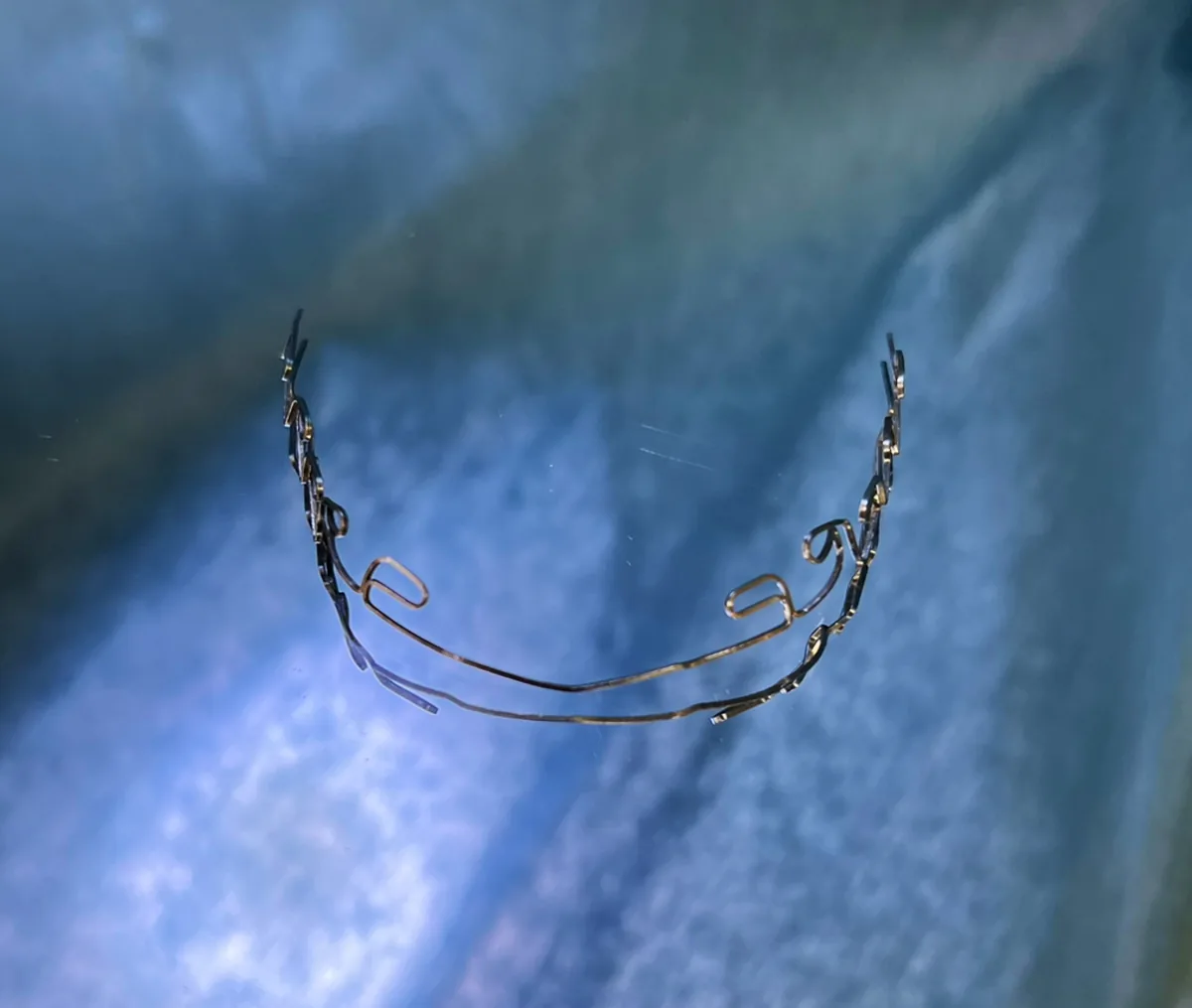
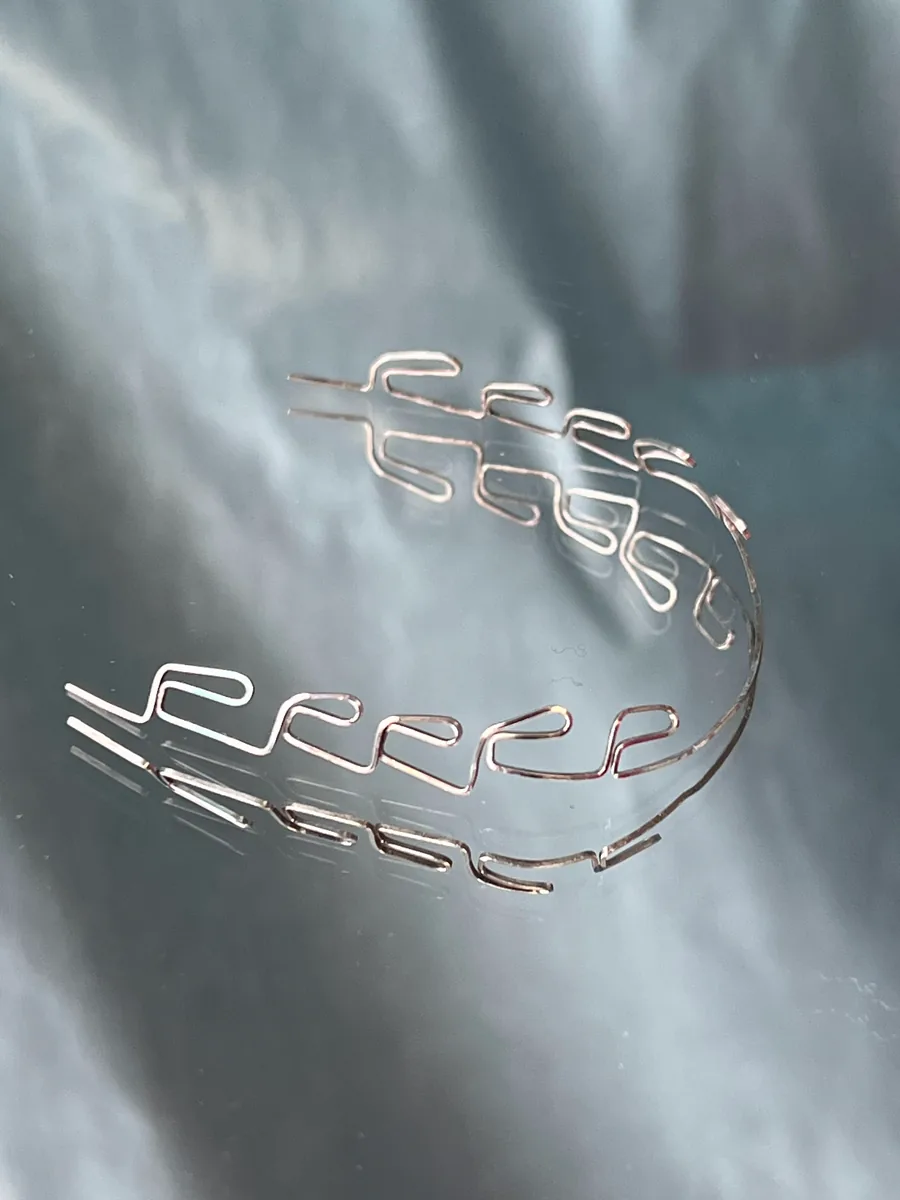
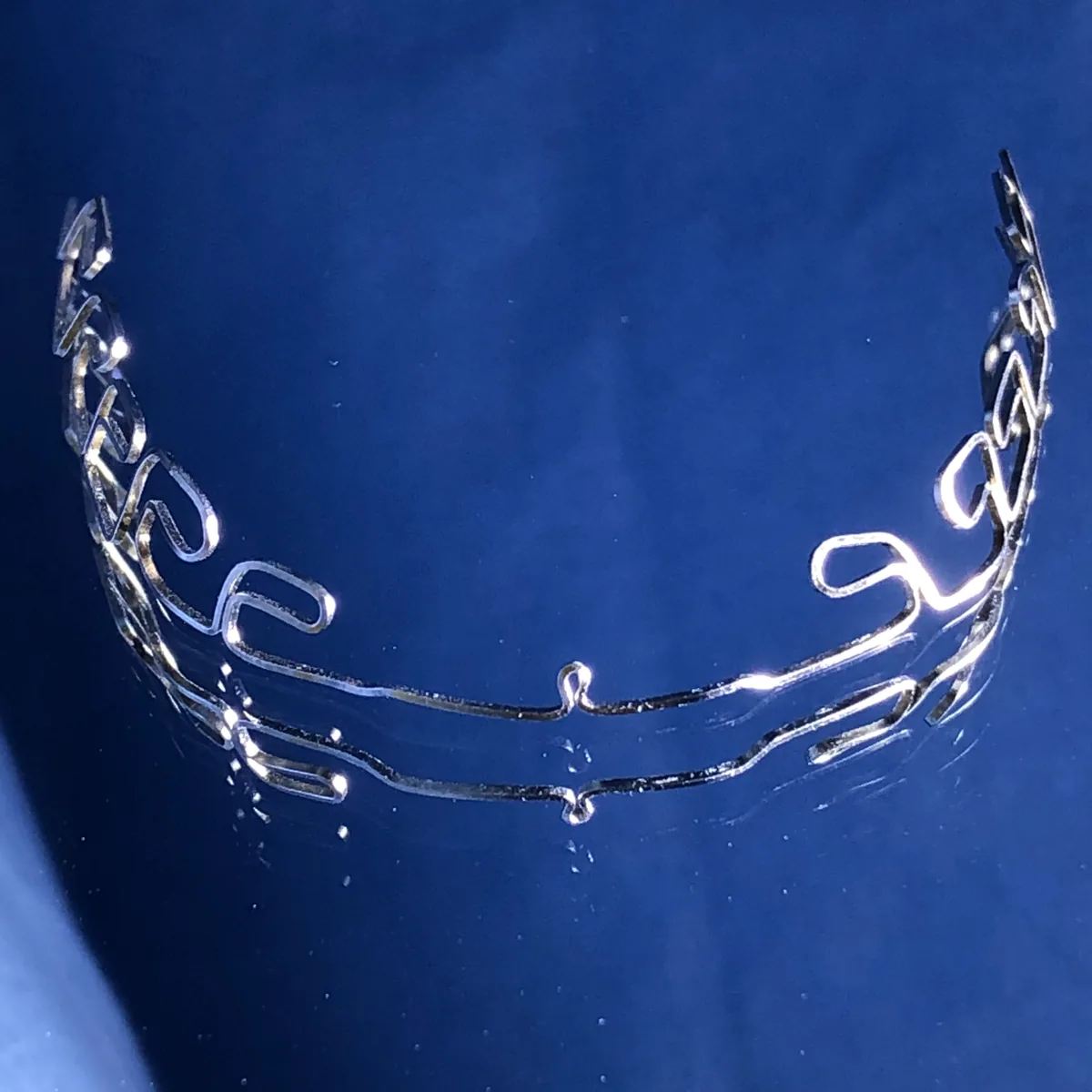
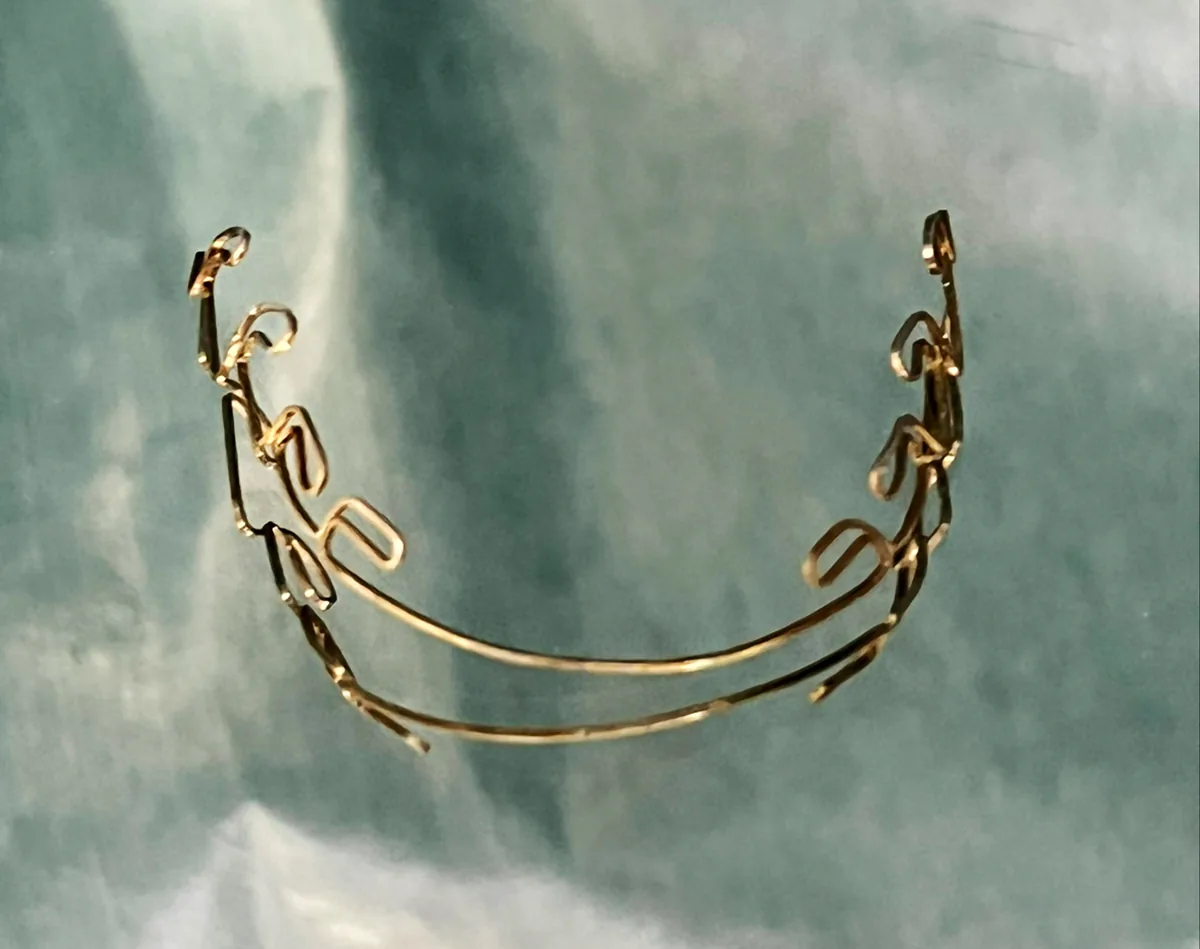
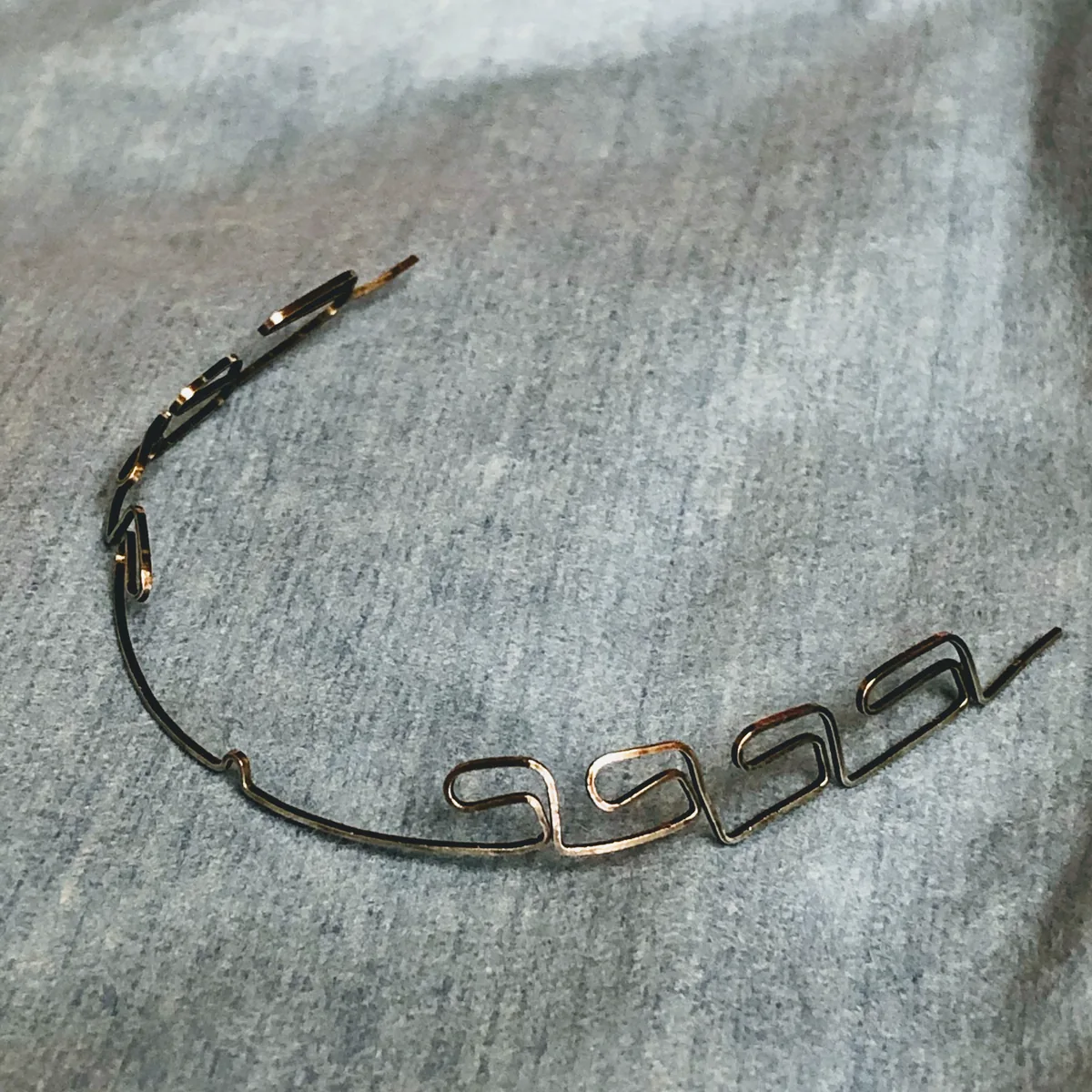
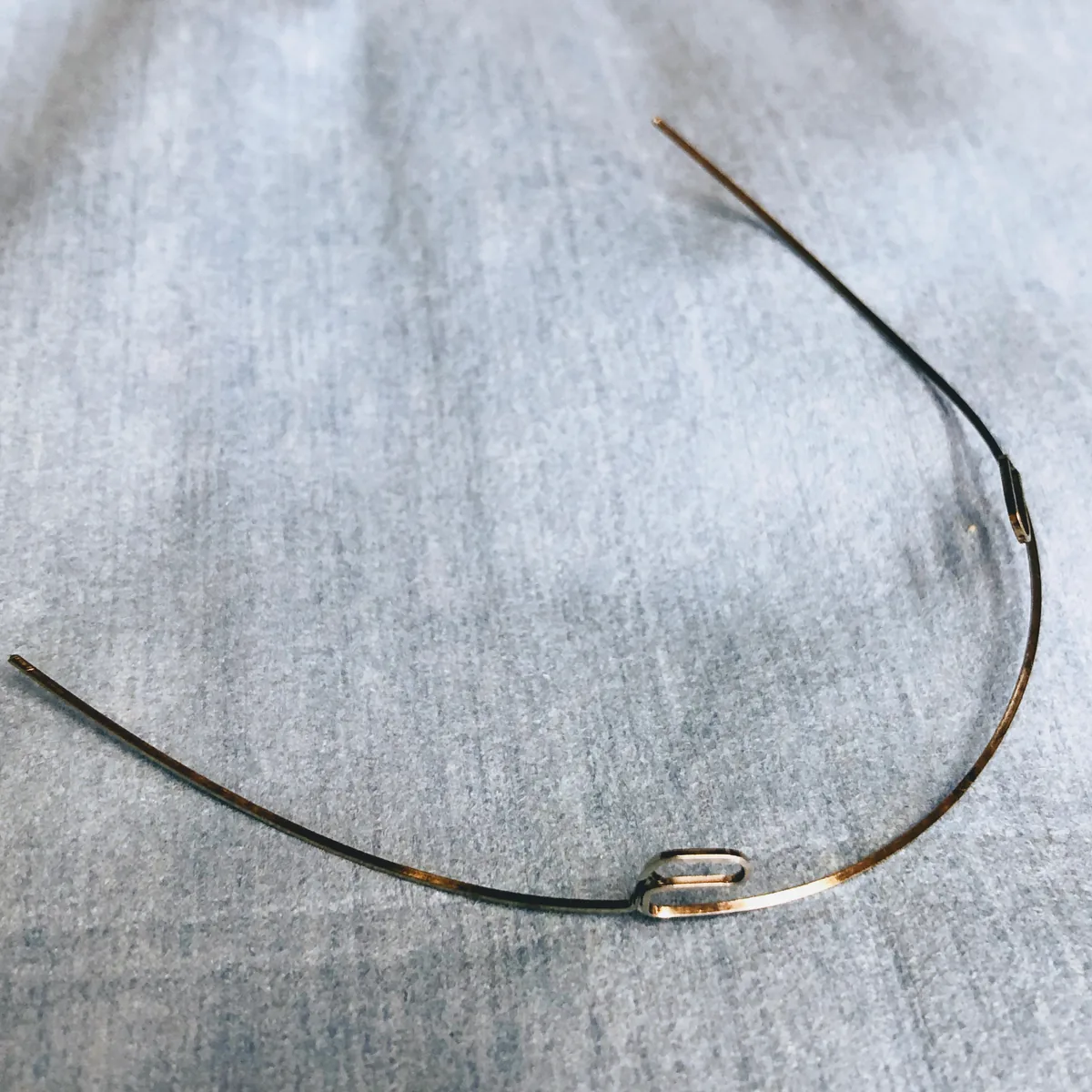
MEAW (Multiloop Edgewise Archwire) is an orthodontic wire with many small loops (ring-like bends) bent into it.
By bending the loops to a shape and angle that suit each individual tooth, the teeth are moved front to back, side to side and up and down, and in their inclination.
What the name means
MEAW is formed from the initial letters of Multiloop Edgewise Archwire.
- Multiloop: the wire has many loops
- Edgewise: it is a wire for the edgewise technique, in which a wire with a rectangular cross-section is fitted into the slots of small fixtures attached to the teeth (brackets)
- Archwire: it is a wire bent into a bow shape that follows the line of the teeth
How it was devised
MEAW is a method devised by Dr. Young H. Kim of Tufts University in the United States, and it was introduced in a 1987 paper.
It is said to have been conceived originally for treating a condition in which the upper and lower front teeth do not meet (open bite), and to have later come to be used in the treatment of other types of bite as well.
In Japan, Professor Sadao Sato of Kanagawa Dental University carried on this approach and spread it.
Under Professor Sato, the director has been involved in clinical work and research in orthodontic treatment, prosthetic treatment and temporomandibular disorders (TMD) based on this approach.
How MEAW works
How the wire is connected to the teeth
Small fixtures (brackets) are attached to the teeth, and the wire is passed through them and held in place with fine wire (ligature wire) or by other means.
The role of the loops
According to the general description, MEAW is made by bending a stainless steel wire with a cross-section of 0.016 × 0.022 inches (about 0.4 × 0.56 mm) into the shape of the dental arch.
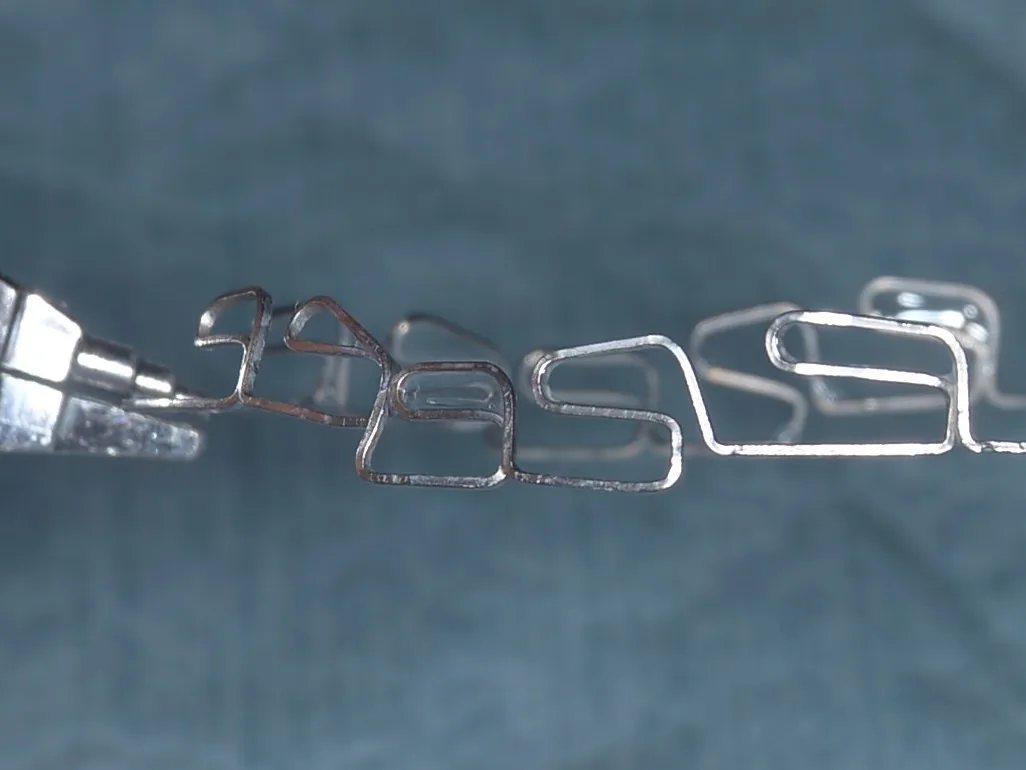
On each side, five L-shaped loops are bent into the wire in the spaces between the teeth behind the second tooth from the front (the lateral incisor).
Bending in the loops is said to make the length of wire from behind the lateral incisor to the second molar about 120 mm, compared with about 43 mm for a wire without loops.
It is said that the longer wire becomes correspondingly more flexible, and that the vertical and horizontal parts of the loops allow movements to be applied to each tooth separately.
At our clinic, we bend the loops to shapes and angles that suit each patient's examination results and treatment plan.
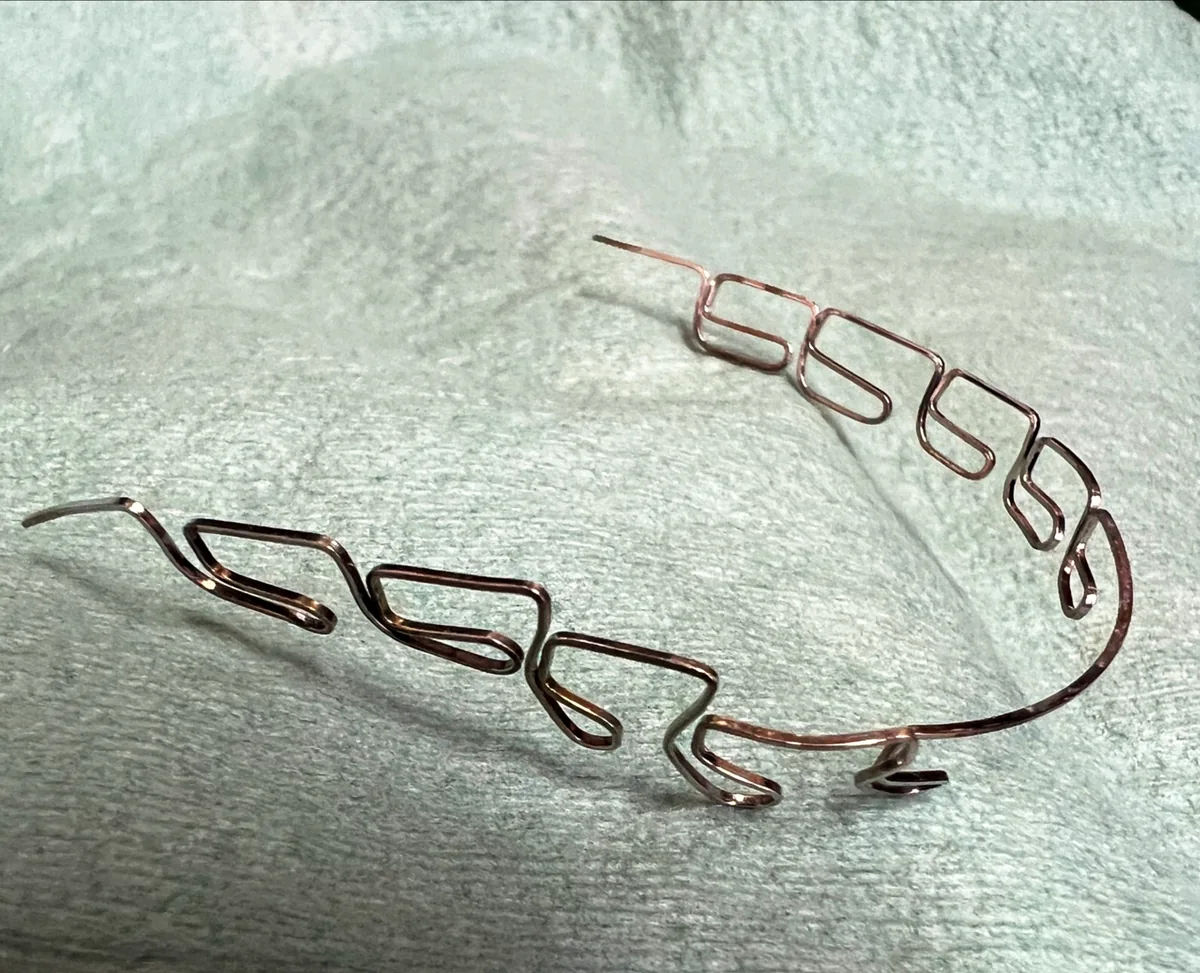
The way the wire is bent determines how the teeth move
Which tooth is moved, in which direction and by how much is determined by the way the wire is bent.
Because each tooth differs both in the position it needs and in the orientation of its axis (the tooth axis: the line running from the tip of the root to the tip of the tooth), the wire is bent differently for each tooth.
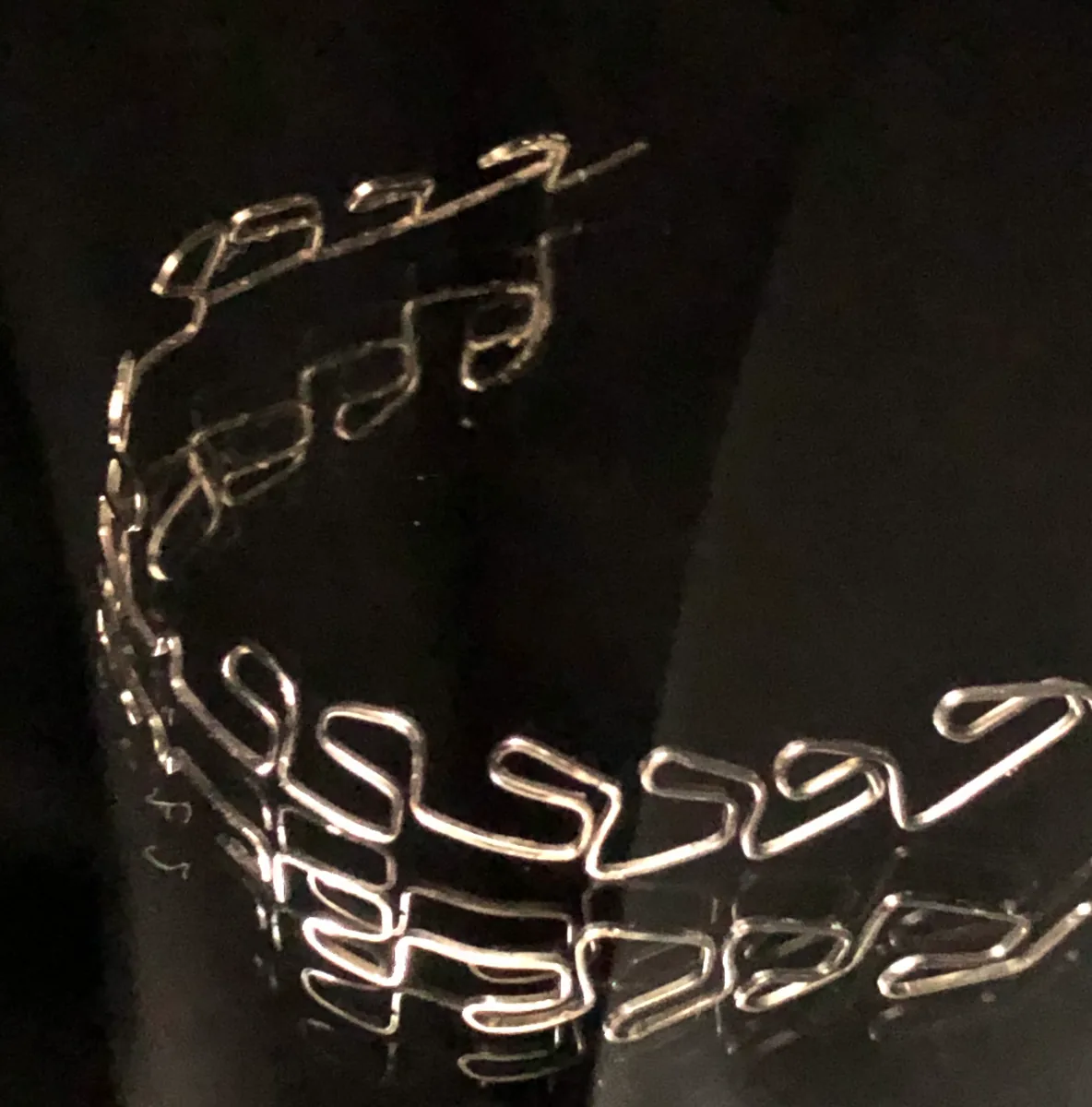
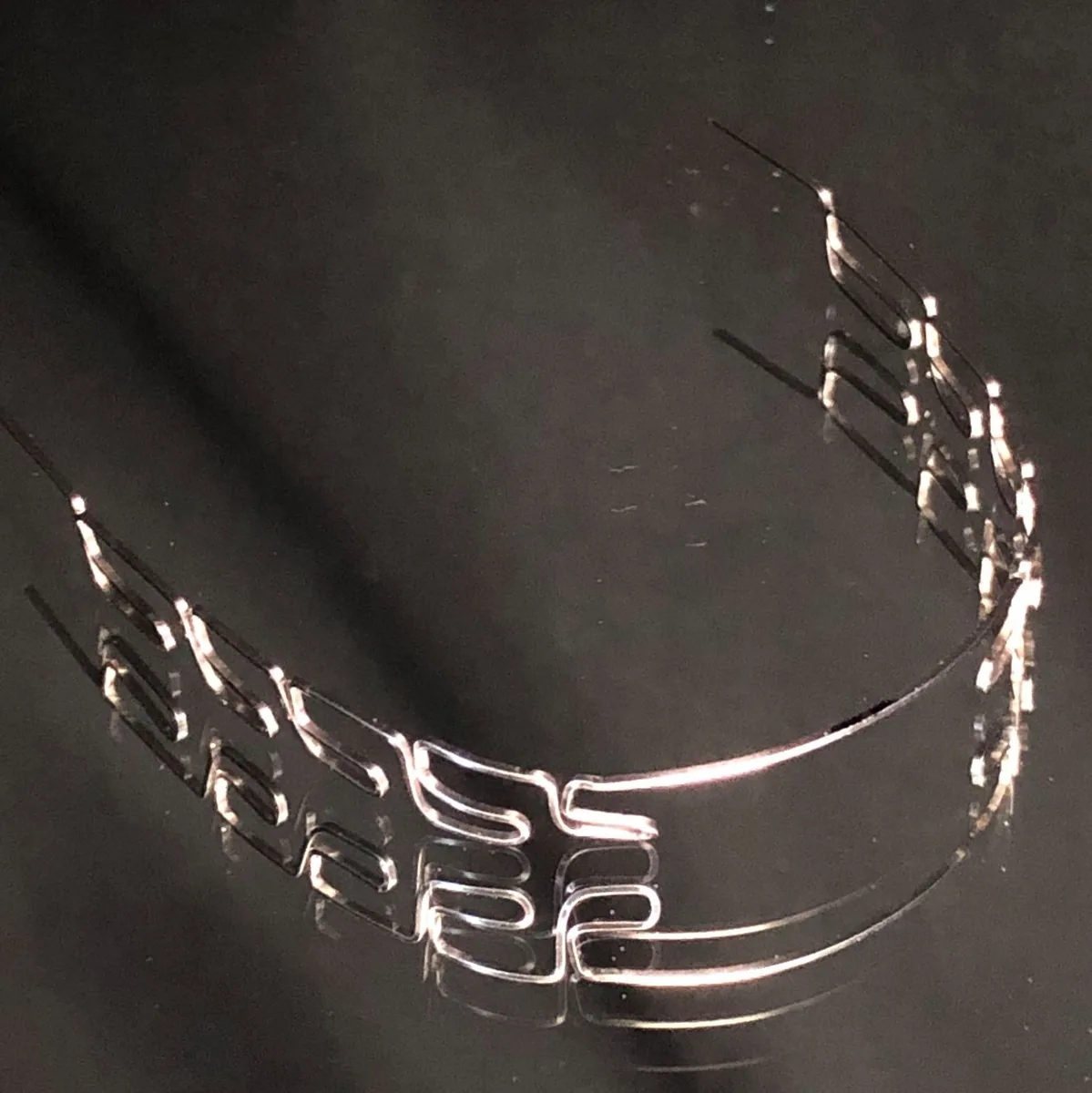
Even with the same MEAW, the way the wire is bent varies greatly depending on the condition of the bite.
For example, the angle of the bends in relation to the biting surfaces of the back teeth differs between protruding upper front teeth (maxillary protrusion) and an underbite (mandibular protrusion).
Photos: MEAW bent for each individual patient
The concept of the biting plane of the back teeth (the occlusal plane)
The plane where the upper and lower teeth meet is called the occlusal plane.
In the theory of Professor Sato, who spread MEAW, the vertical position and the inclination of the occlusal plane of the back teeth are held to be directly related to the front-to-back position of the lower jaw.
The director also explains that the angle at which the back teeth are aligned affects the front-to-back position of the lower jaw.
Combination with elastics
MEAW is generally said to be used in combination with elastics worn vertically at the front teeth.
Why we use MEAW
Because each tooth needs a different movement
Each tooth has its own role to play, and the position, height and axis orientation it needs differ from tooth to tooth.
At our clinic, we use MEAW as a method that allows positional information to be given to each tooth separately.
To adjust the height of the back teeth and the inclination of the biting surfaces
In our orthodontic treatment, we regard correcting the vertical position of the back teeth as the first key point.
Once the teeth have been moved horizontally, we use MEAW to move them vertically.
Being able to adjust not only horizontal but also vertical movement tooth by tooth is one of the reasons we use MEAW.
Because the bends can be changed at each stage of treatment
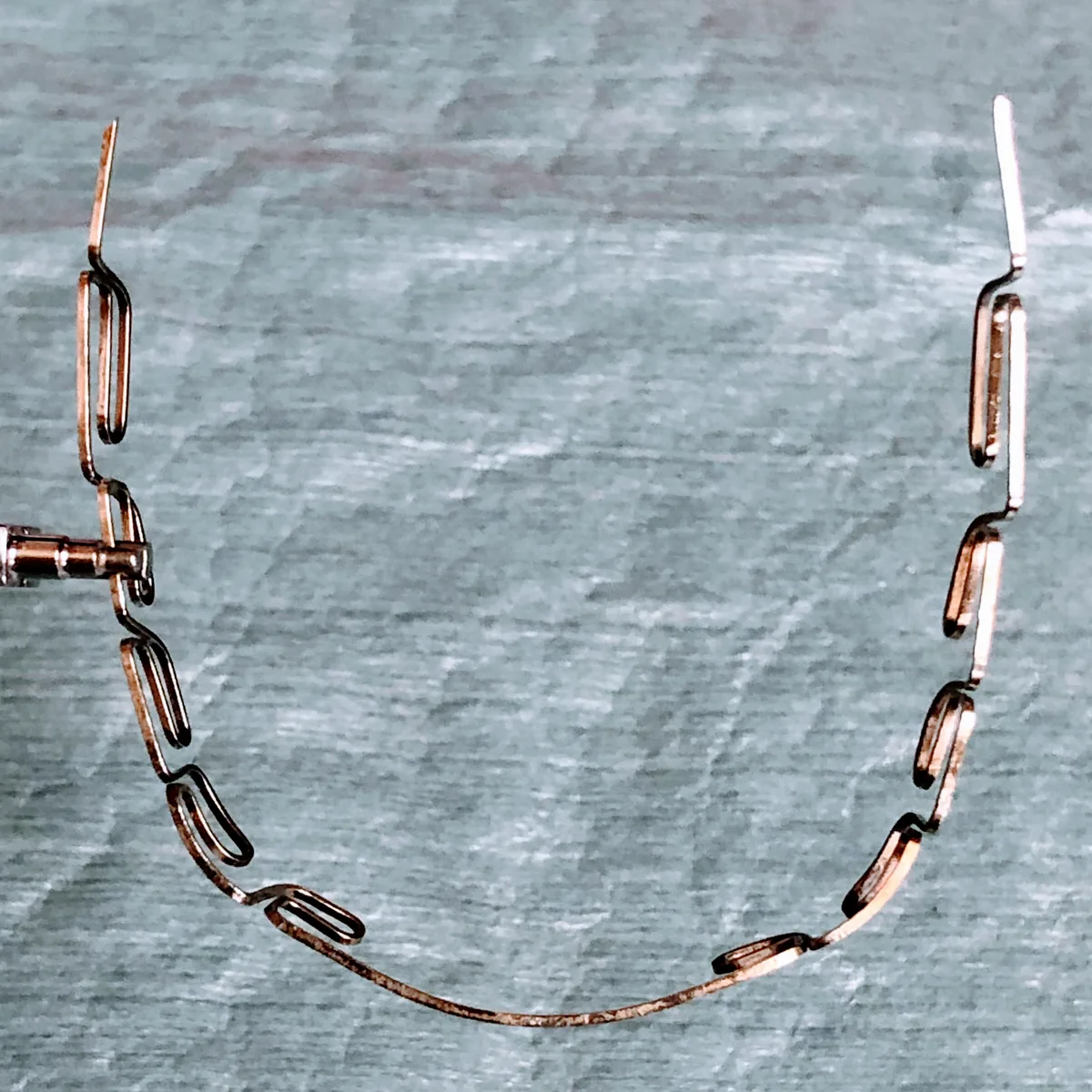
The wire is re-bent at each stage of treatment.
The closer treatment gets to the finishing stage, the more the wire takes on a simple shape that follows the basic form.
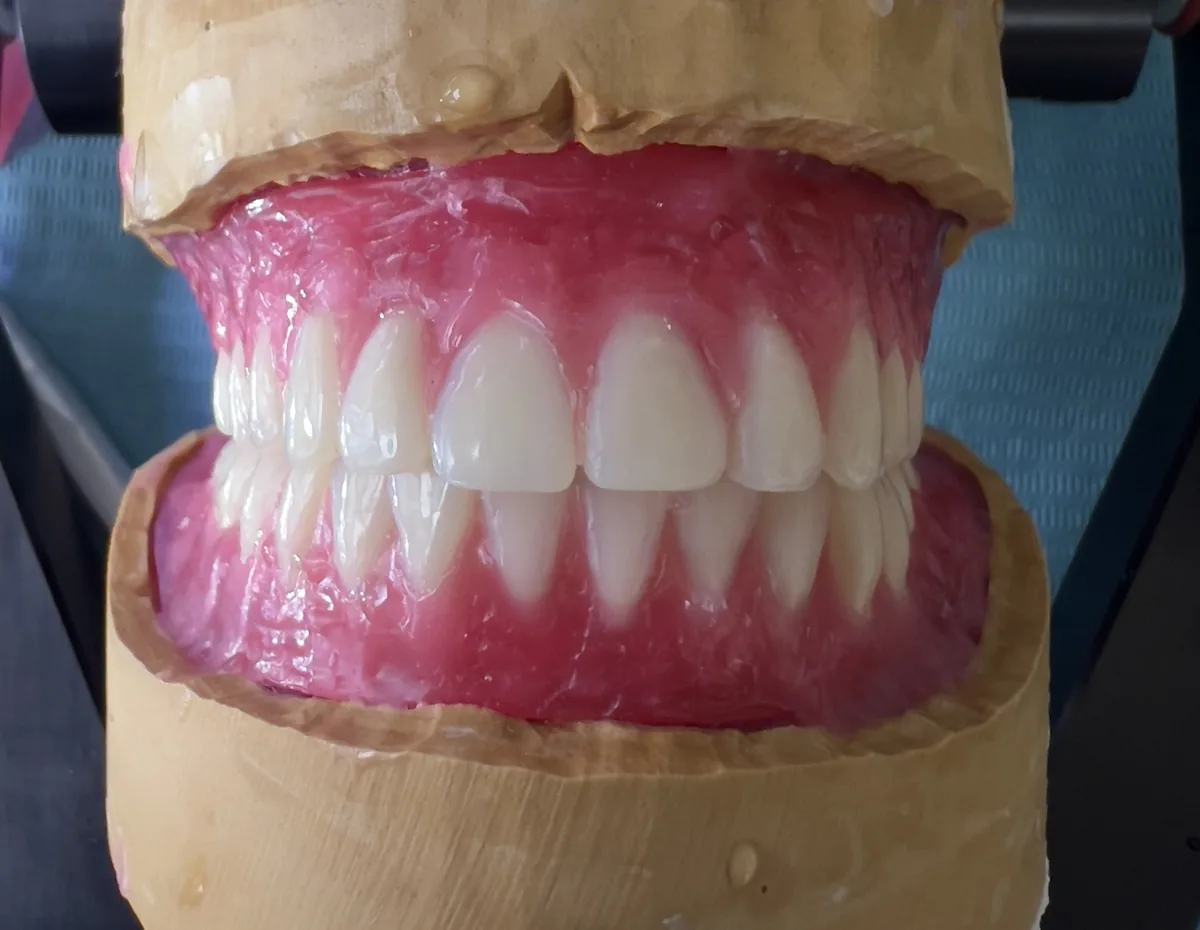
Because it follows the same approach to the bite as dentures
At our clinic, we build treatment on the same approach to the bite, whether in orthodontic treatment or in dentures.
The director explains that the way the artificial teeth of complete dentures are arranged and the way orthodontic wires are bent have much in common.
This approach is described on the sequential occlusion and Austrian gnathology pages.
In practice at our clinic
Course of treatment
- At the first consultation, we check your concerns and the condition of your mouth and explain the examinations needed.
- In the orthodontic work-up (bite examination; 2–3 visits as a guide), we examine the skeleton (lateral cephalometric analysis), jaw joint movement (Cadiax), casts of the teeth (sectioned casts), the bite on the articulator and other aspects.
- After the examinations and diagnosis, we give you the treatment plan and a cost estimate in writing.
- Wire adjustments start from the third visit. Visits are roughly once every 1.5 months.
- At each stage, the wire is re-bent at our clinic.
- Once the teeth have been moved, their positions are held with a retainer.
As a guide, orthodontic treatment takes 2–3 years. This varies greatly depending on the symptoms and the skeleton.
The examination results may lead to a decision not to carry out orthodontic treatment.
We bend the wires at our clinic
The MEAW we use is bent at our clinic on the basis of the patient's examination results and treatment plan.
For bending, we use pliers (an instrument for bending wire) whose tips have been reshaped (→ plier tip modification).
Fine points of contact are checked under magnification with a microscope (→ stereo microscope for laboratory work).
Photos: bending the wire with pliers
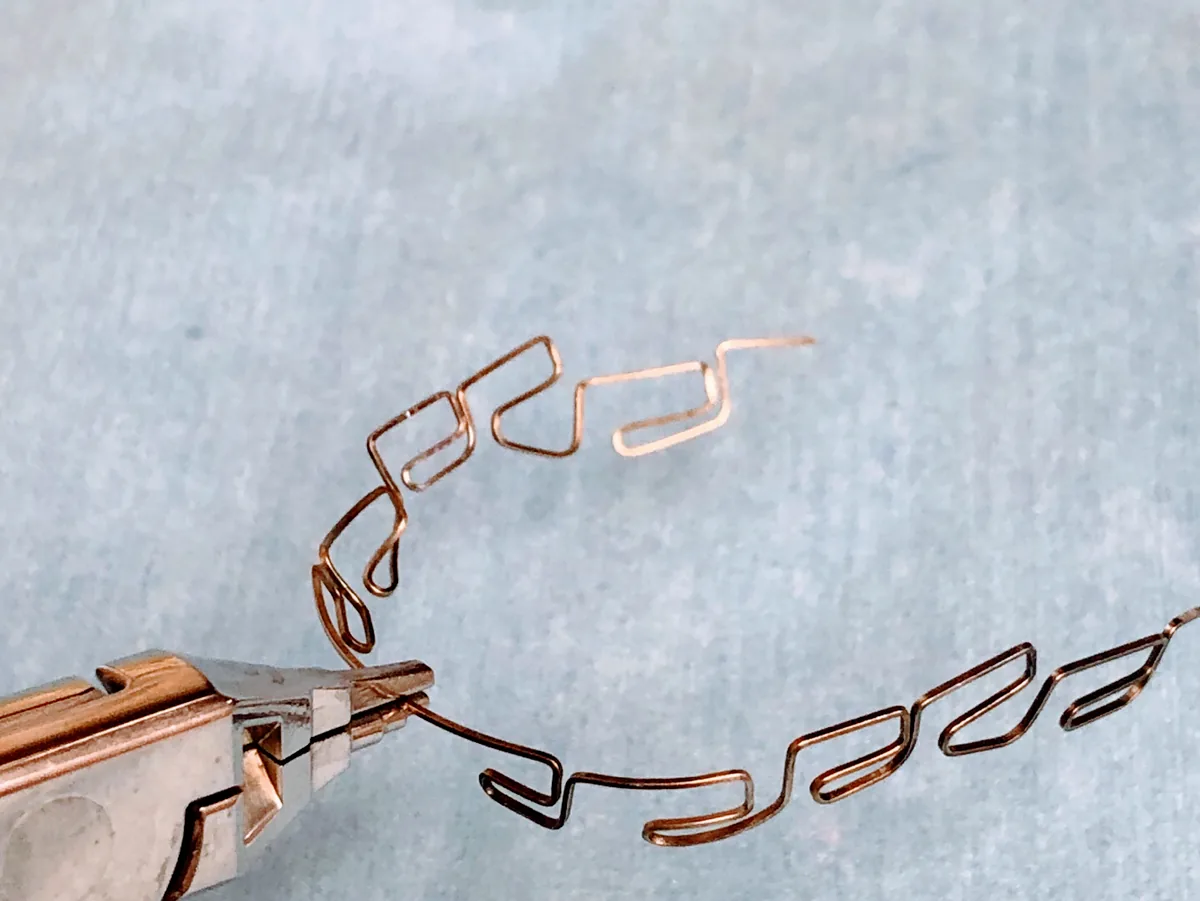
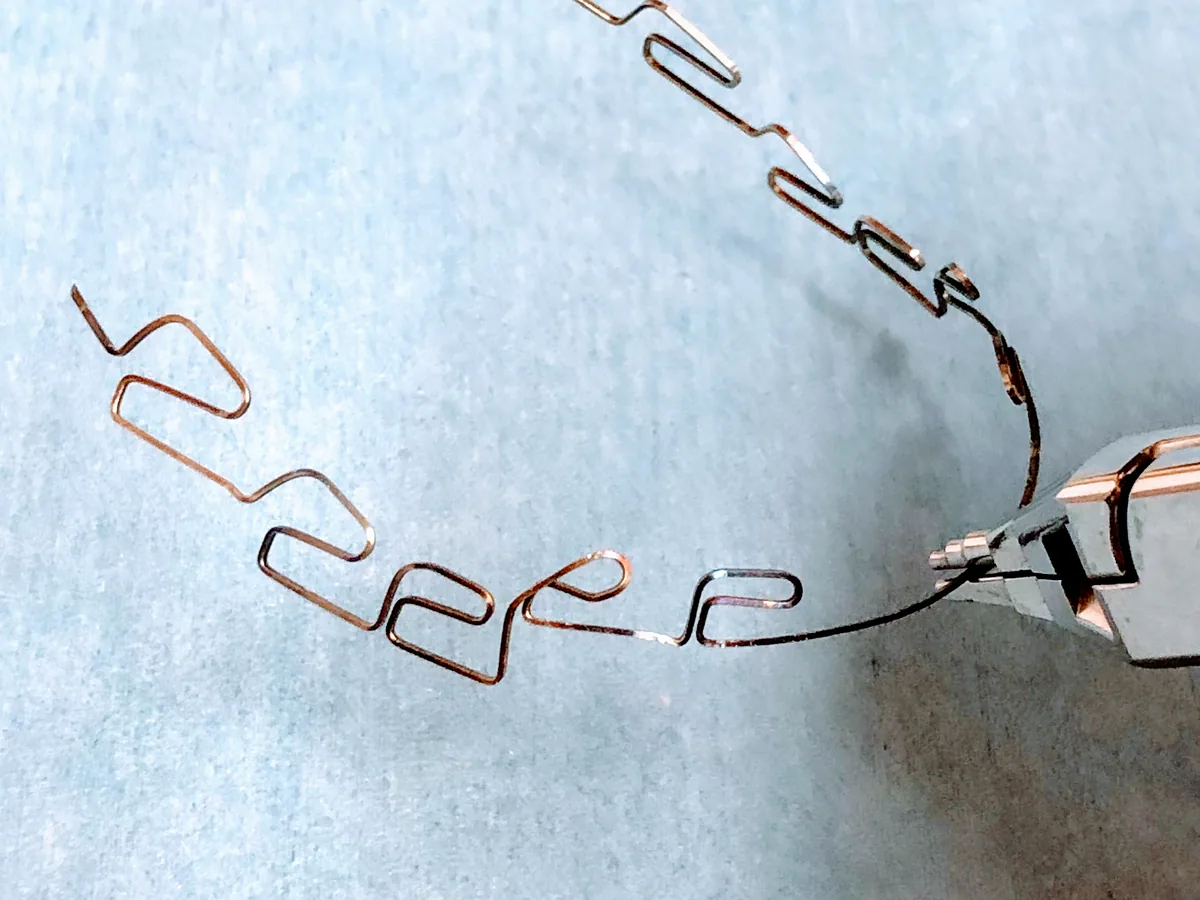
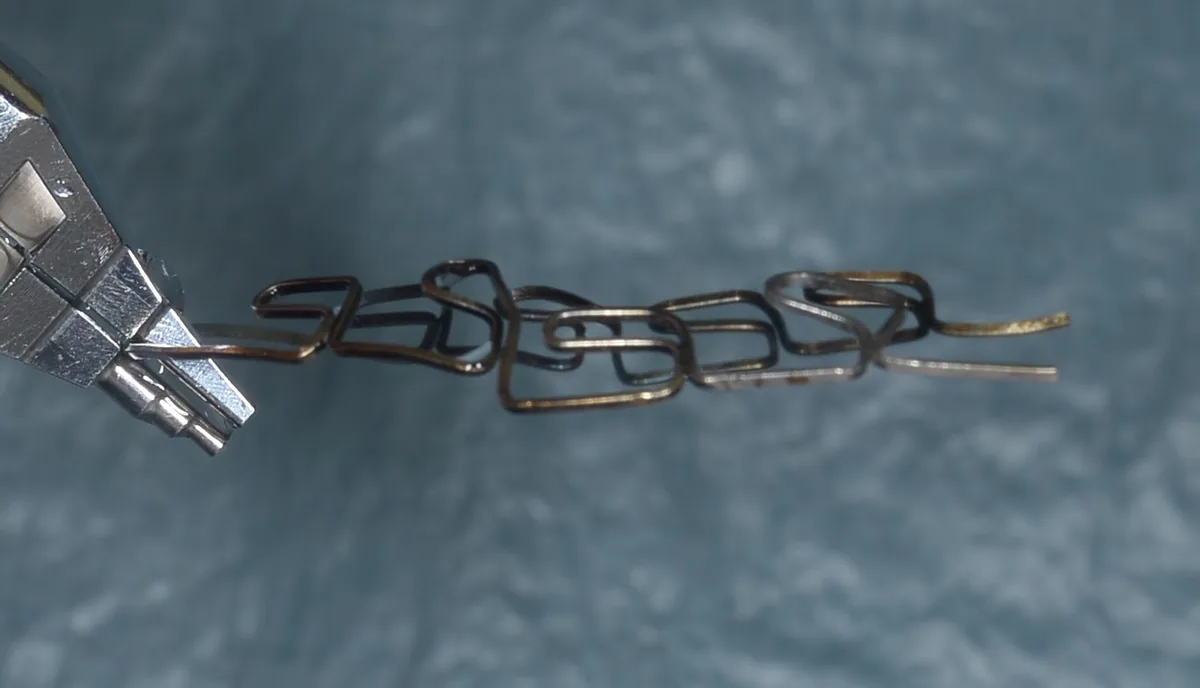
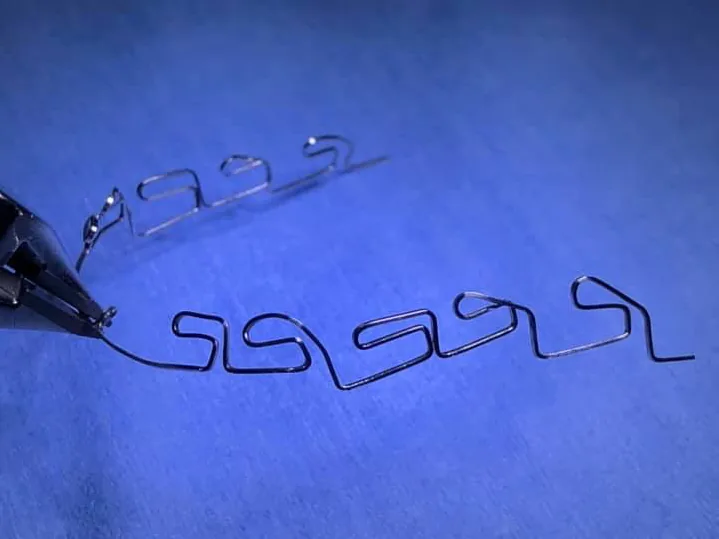
Reducing discomfort
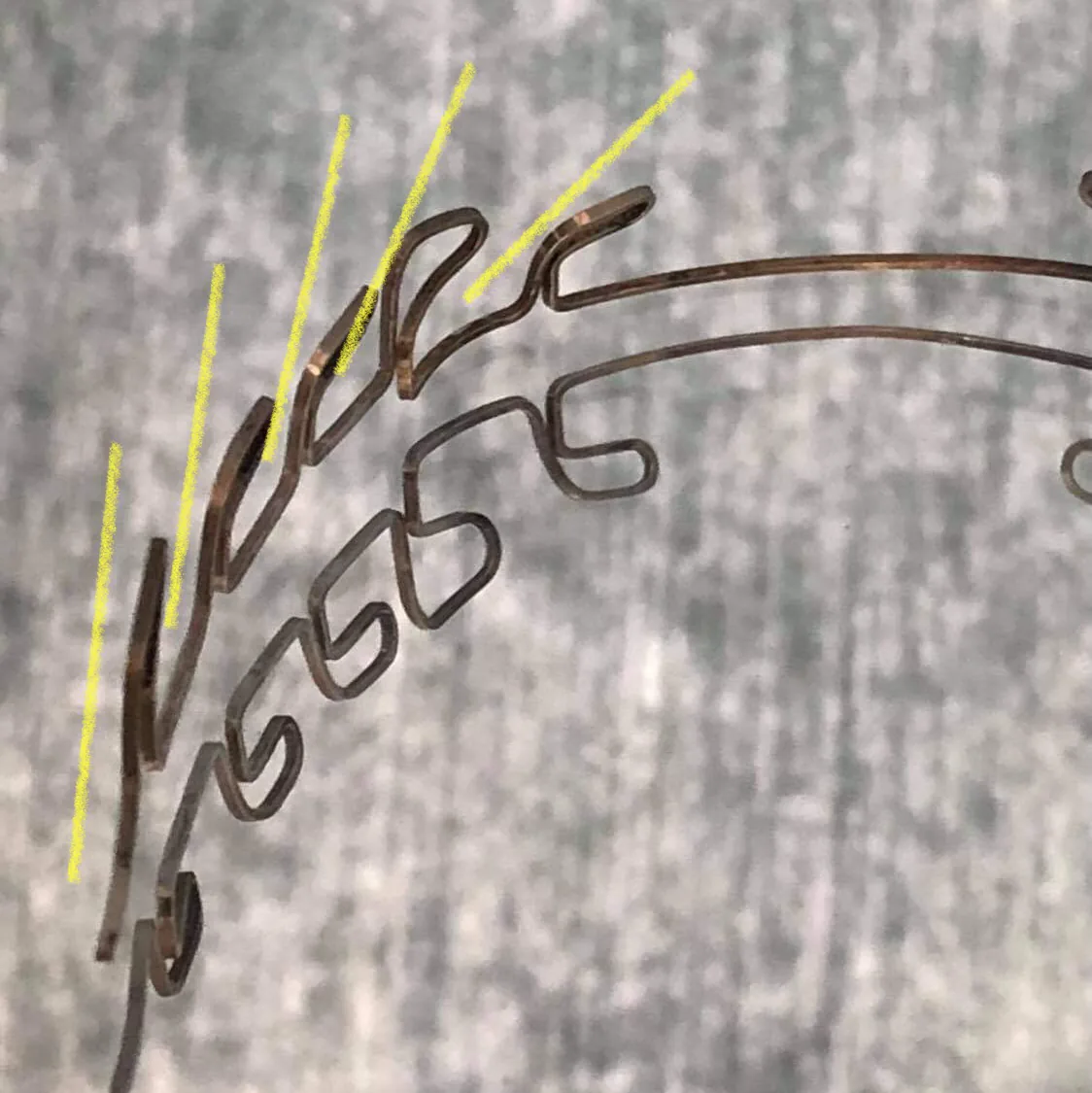
During treatment, the wire is worn for a long period.
For this reason, we bend the loops so that they sit within the space where the forces of the cheeks and tongue are balanced (the neutral zone), taking care to reduce discomfort as much as possible.
The ends of the loops are adjusted inwards little by little, following the direction in which the cheek muscles run.
Even so, discomfort may occur during treatment.
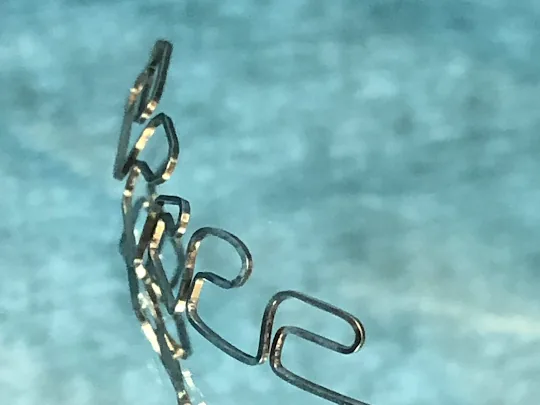
Making the wire less likely to break
At the stage when the teeth meet only at the premolars (the fourth and fifth teeth from the front), force concentrates on the wire and it becomes more likely to break.
For this reason, rather than making the corners of the bends right angles, we bend them with a large radius so that force does not concentrate in one place.
Depending on the conditions, the wire may break.
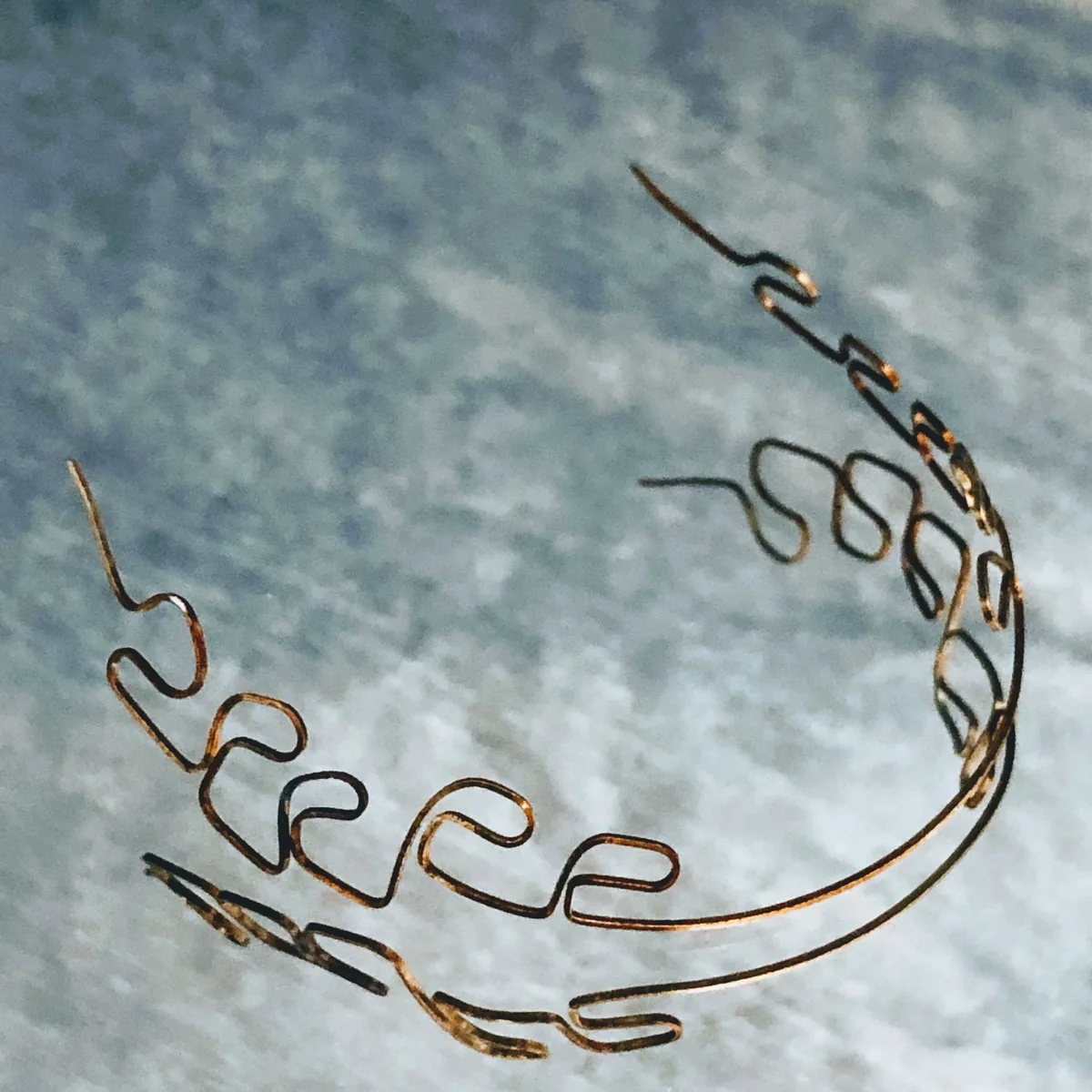
Correcting the inclination of particular teeth
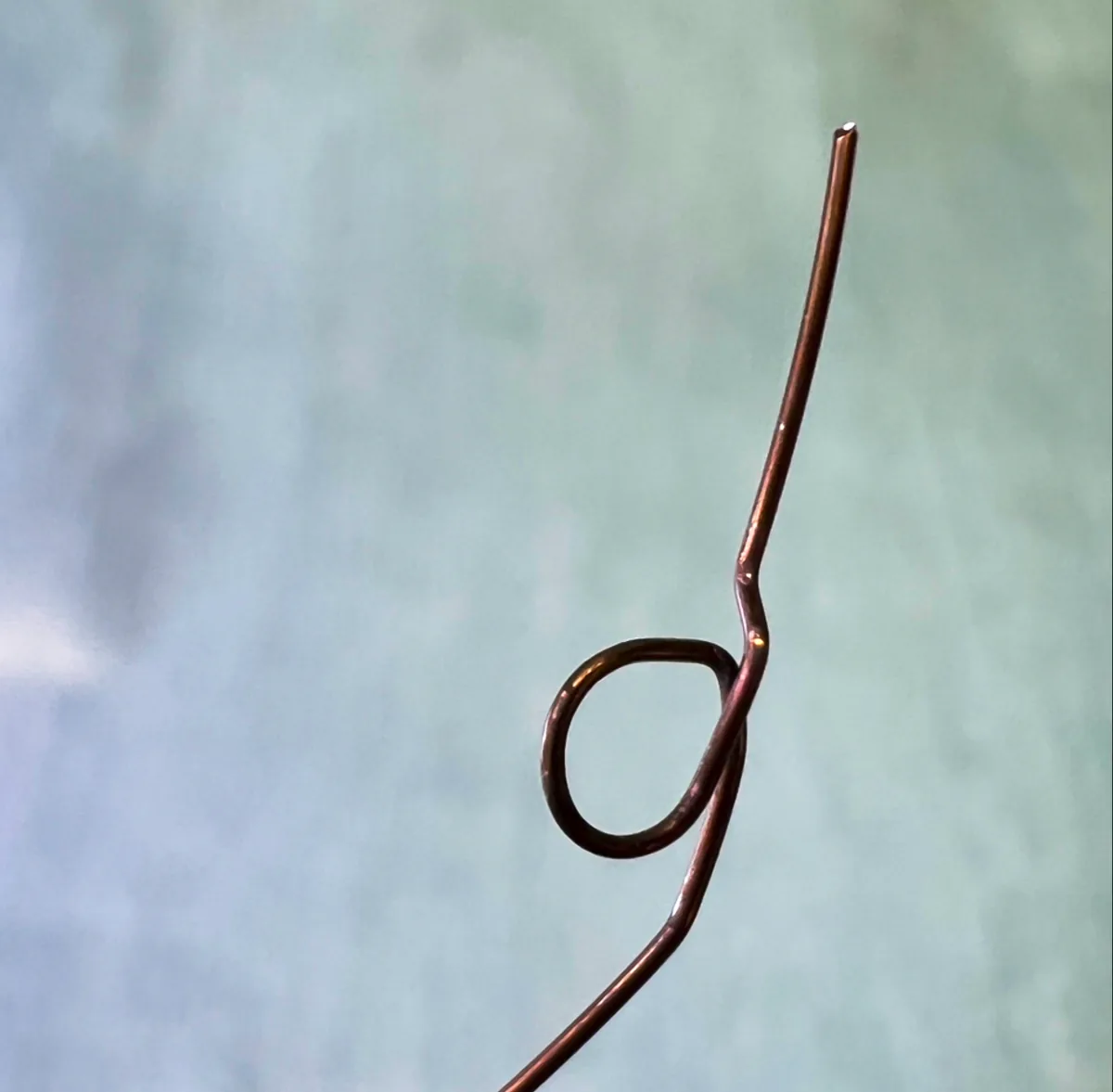
For particular teeth, for example when uprighting tilted back teeth (molars), we may add a small ring-shaped loop (an omega loop) to the wire.
An auxiliary wire for widening the upper jaw
When the upper jaw needs to be widened, we may use an auxiliary wire called a Mulligan wire in addition to MEAW.
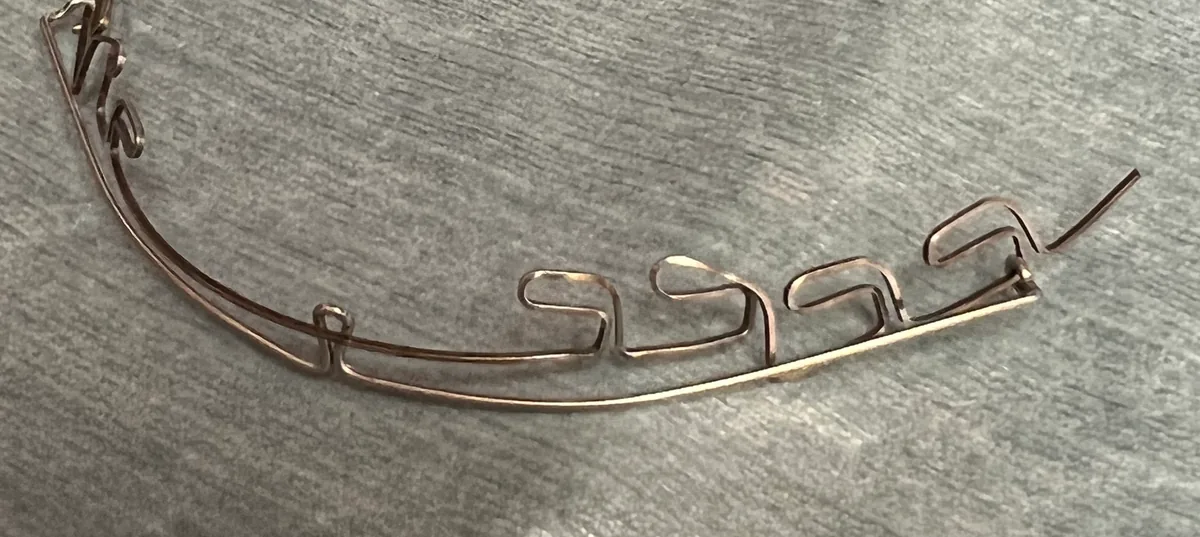
The period when primary and permanent teeth are mixed
In the period when primary and permanent teeth are mixed (the mixed dentition period), we may use a simple wire with few loops to adjust the height of the first adult back teeth to come in (the first molars).
Patients with metal allergies
There have been cases in which patients who could not use the usual cobalt-chromium wires, brackets and ligature wires because of a metal allergy were switched to titanium brackets and wires, with elastic ties used for fixation.
If you have a metal allergy, please let us know in advance.
Treatment duration, number of visits, fees and risks → Fees
What MEAW can and cannot do
What MEAW can do
- Move individual teeth front to back, side to side and up and down, and in their inclination
- Adjust the orientation of the axis of each tooth, one by one
- Adjust vertical positions once the teeth have been moved horizontally
- Act on the inclination of the biting surfaces of the back teeth
- Change the way the wire is bent to suit the stage of treatment
What it cannot do, and how we compensate
| What it cannot do | How we compensate |
|---|---|
| Deciding where to move the teeth (the treatment goal) with the wire alone | We draw up the plan from the examination records (lateral cephalometric analysis, Cadiax, Girrbach Reference SL articulator) |
| Widening the upper jaw | Where needed, we add an auxiliary Mulligan wire |
| Keeping the teeth in the positions they have been moved to | We hold them with a retainer |
| Finding out how the teeth meet during sleep | We record this with BruxChecker |
| Eliminating discomfort and wire breakage | We take care over where the loops are placed and how they are bent, but these can still happen. If anything concerns you, please tell us at your adjustment appointment |
A 2020 report summarizing research on MEAW states that most of the studies are case reports or similar, and that the level of evidence is low.
The same report states that the changes produced by MEAW are mainly within the teeth and the bone that supports them (the alveolar bone), and that long-term stability and other aspects need further investigation.
At our clinic, we take examination records again during treatment and at its end, to check the changes in each patient.
Treatment results and duration vary from person to person.
Frequently asked questions
- Why does the wire have a complex shape?
It is to move individual teeth in different directions.
The shape and angle of the loops between the teeth change the movement applied to each tooth.
- Will the wire touch my cheeks or tongue and hurt?
We bend the loops so that they sit within the space where the forces of the cheeks and tongue are balanced (the neutral zone), taking care to reduce discomfort.
Even so, discomfort may occur during treatment. If anything concerns you, please tell us at your adjustment appointment.
- Can the wire break?
Depending on the conditions, it may break.
Force tends to concentrate especially at the stage when the teeth meet only at the premolars, so we bend the corners with a large radius to keep force from concentrating in one place.
- How often will I need to come in?
Wire adjustments start from the third visit and take place roughly once every 1.5 months.
As a guide, orthodontic treatment takes 2–3 years, and this varies greatly depending on the symptoms and the skeleton.
- Can I be treated if I have a metal allergy?
There have been cases in which patients who could not use the usual wires and brackets because of a metal allergy were switched to titanium brackets and wires, with elastic ties used for fixation.
If you have an allergy, please let us know in advance.
- Is it also used for children?
In the period when primary and permanent teeth are mixed, we may adjust the height of the first molars with a simply shaped wire.
When to start depends on the change from primary to permanent teeth, the growth of the jaws and the condition of the mouth.
Related technologies and treatments
- Lateral cephalometric analysis
- Cadiax
- Retainer
- Sequential occlusion
- All the technologies we use
- Orthodontic treatment that avoids extractions where possible
- Temporomandibular disorders
Sources we referred to
For the general explanations (the name of MEAW, how it was devised, its general form and the summary of research), we referred to the following published sources. What we describe about our own methods is based on the director's posts and explanations.
- Kim YH. Anterior openbite and its treatment with multiloop edgewise archwire. Angle Orthod. 1987;57(4):290-321 (PubMed)
- Tabancis M, Ratzmann A, Doberschütz P, Krey KF. Multiloop edgewise archwire technique and denture frame analysis: a systematic review. Head Face Med. 2020;16:32
Consultations and enquiries
Gibakai Medical Corporation
Yoshimi Dental Clinic
Square 2, Room 302 (third floor)
1-29-1 Tsukushino, Machida,
Tokyo 194-0001, Japan
TEL 042-795-1359 FAX 042-795-1398
Clinic days: Mon · Tue · Thu · Fri
10:00–13:00 / 14:30–18:00
A first visit begins with a first consultation (a private, non-insured service; 30 minutes to 1 hour) for examination and diagnosis. Questions about a diagnosis you received elsewhere are also covered within it.
In an emergency, such as being unable to chew or having severe symptoms, please call us on 042-795-1359 to discuss it.