What are zirconia crowns?
Zirconia crowns are crowns that cover the teeth, made from a material called zirconia.
Zirconia is a type of metal-free ceramic.
Strictly speaking, what is used for dental crowns today is "yttria partially stabilized zirconia", to which a small amount of a component called yttria has been added.
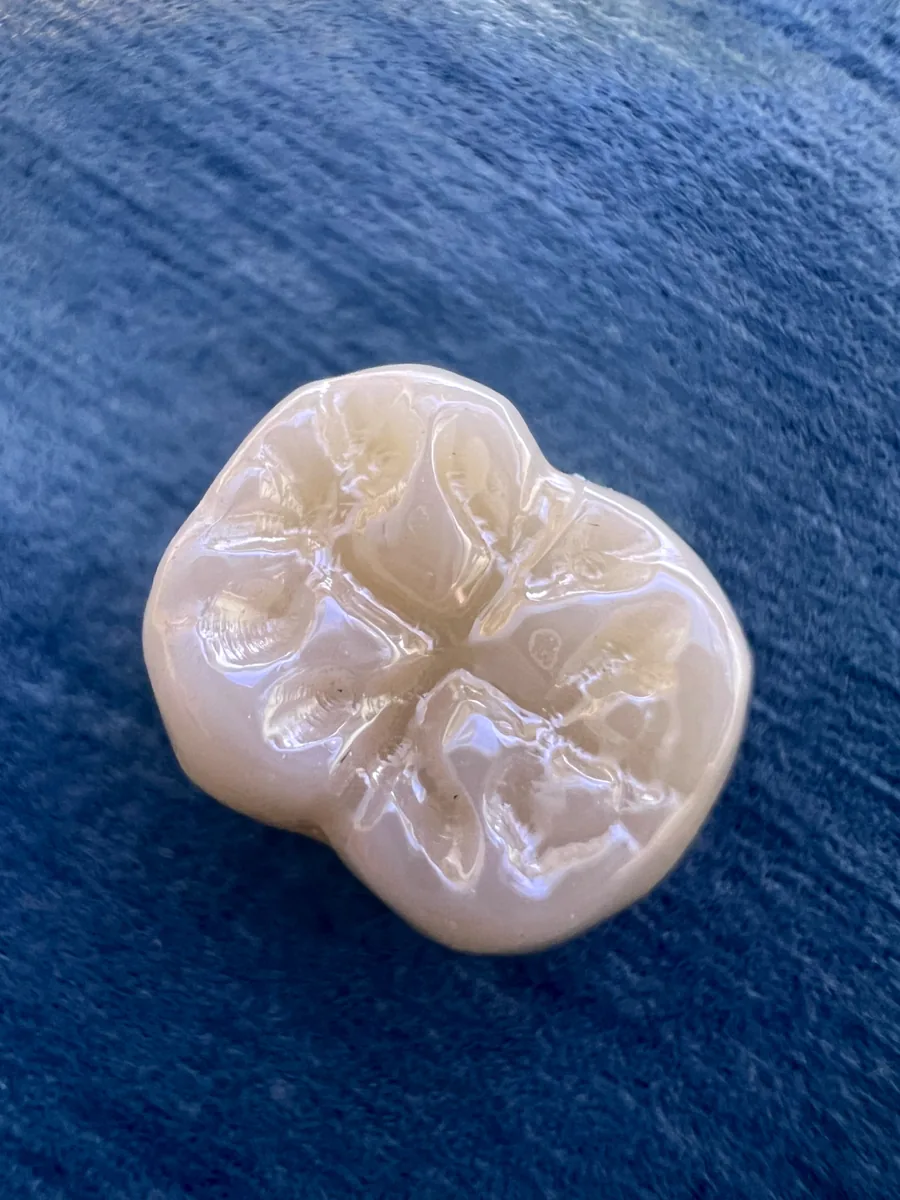
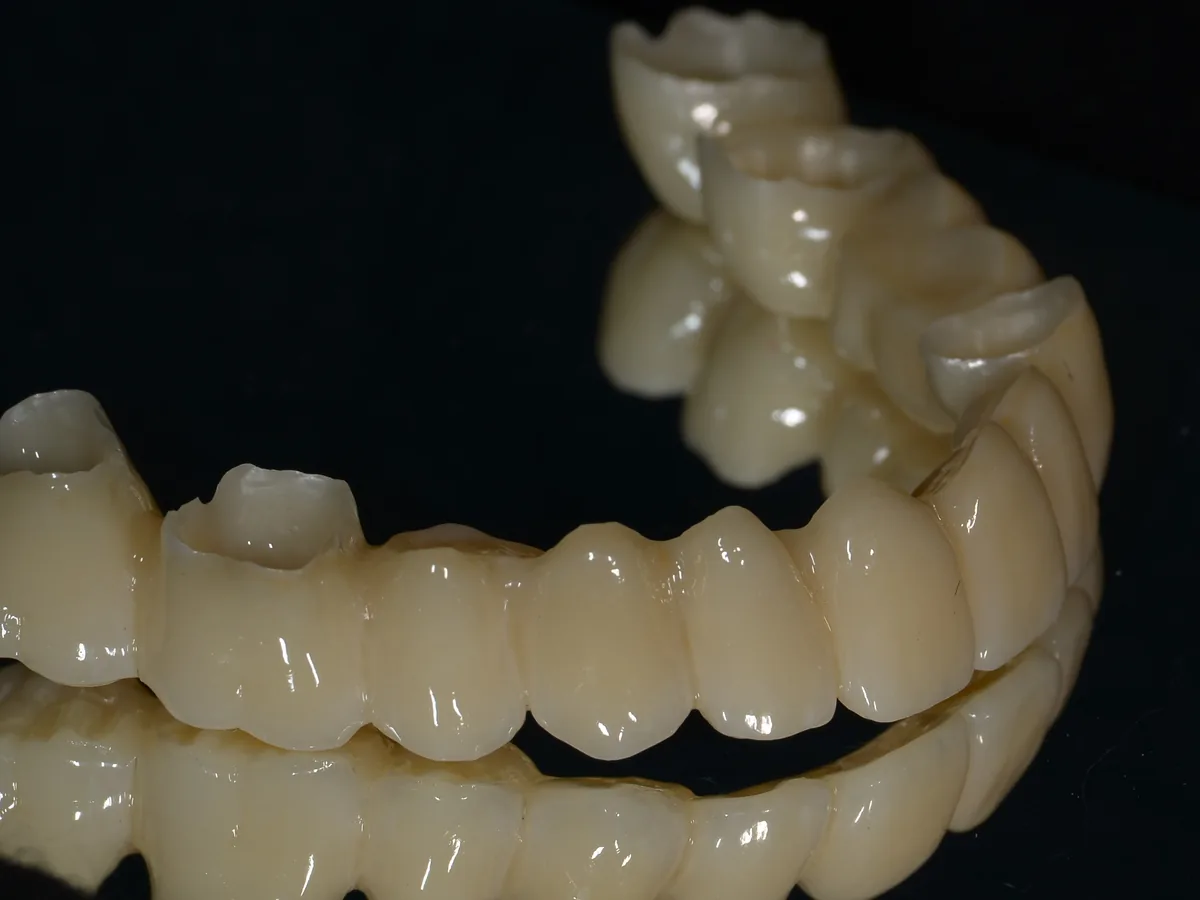
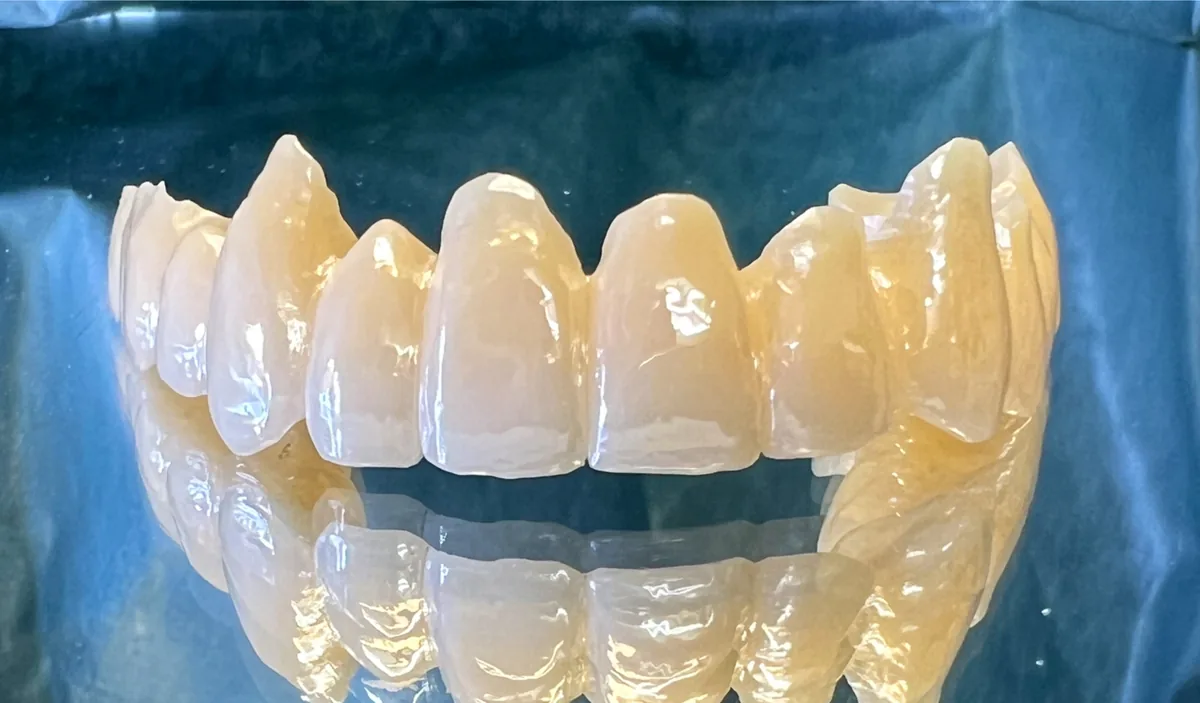
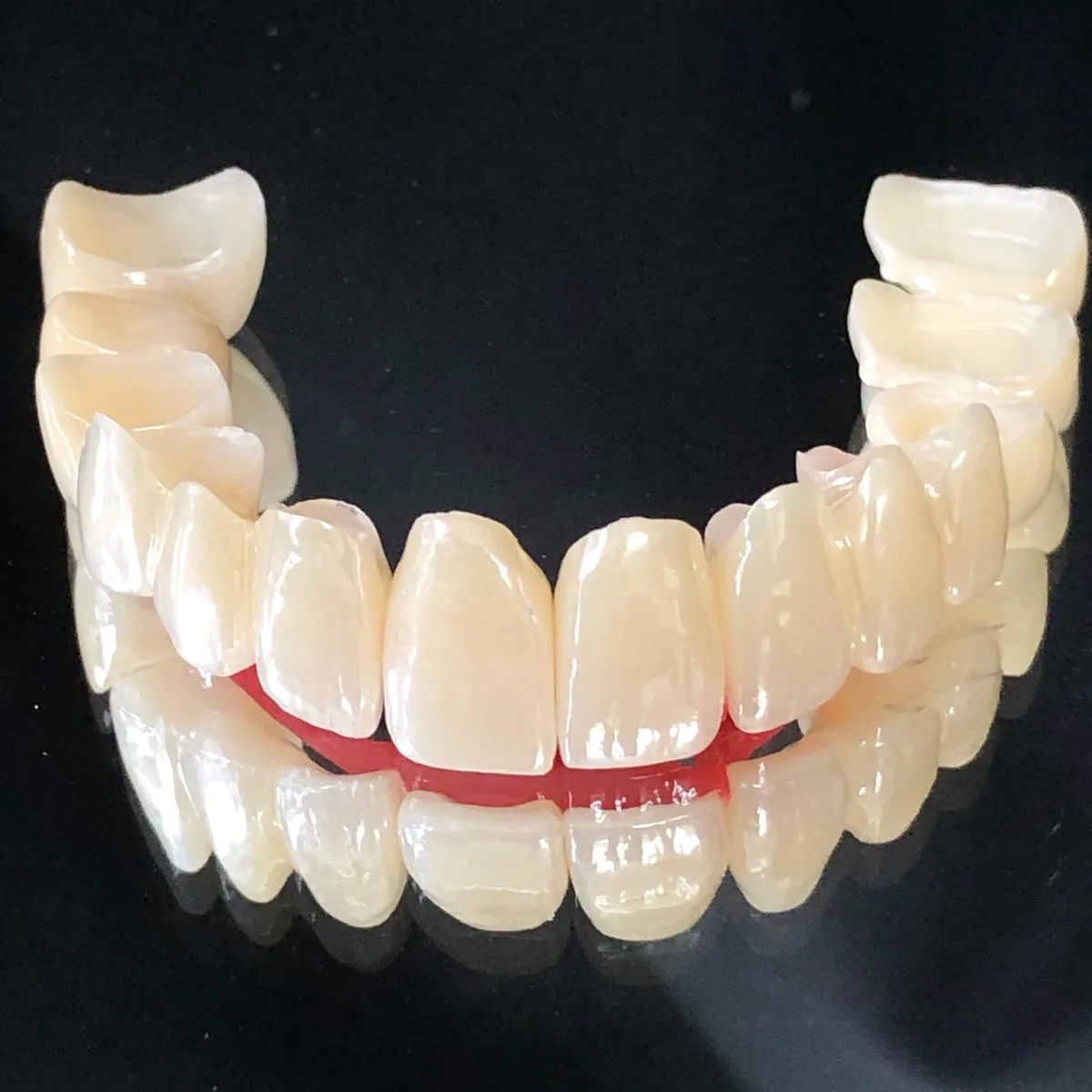
At our clinic, we make crowns entirely from zirconia, including the biting surfaces.
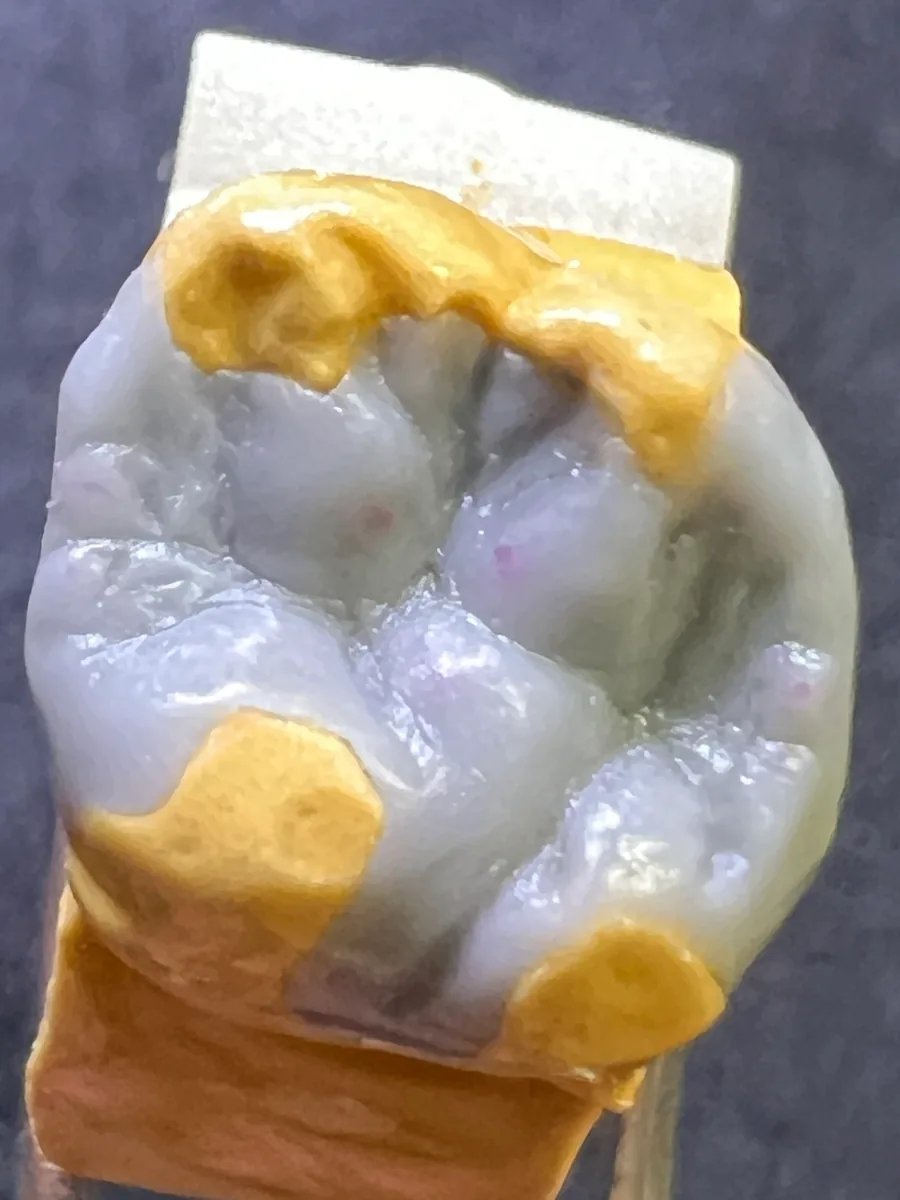
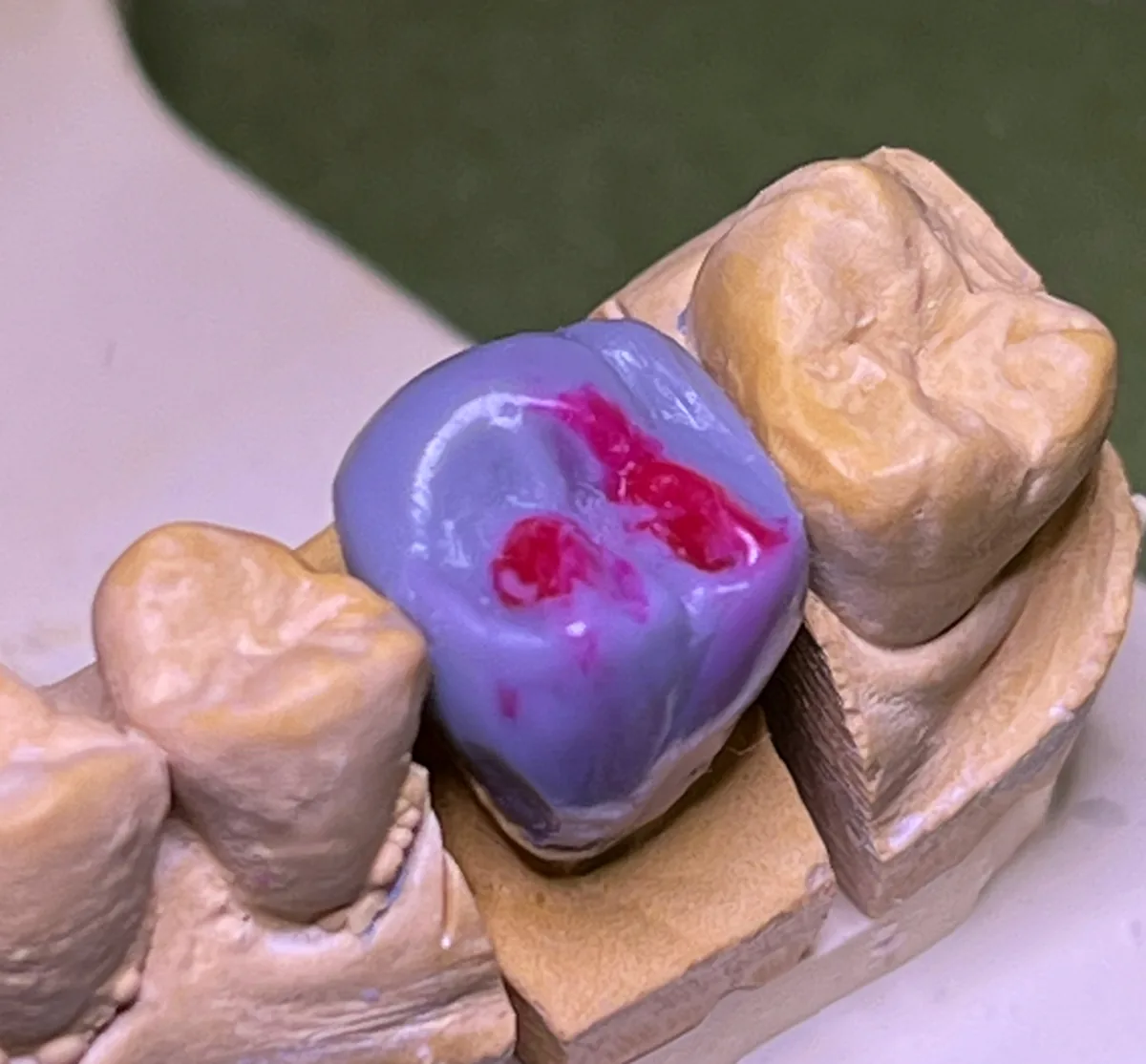
The shape is first made in wax, then converted into data and milled from zirconia.
How zirconia crowns are made
Zirconia crowns are made in the following order.
- Making the shape in wax: on the cast, the shape is made in wax, down to the grooves and inclines of the biting surfaces (wax-up).
- Scanning with light: the wax shape is read optically and converted into digital data.
- Milling: the zirconia is milled using CAD/CAM (a system in which a computer handles the shape data and a machine cuts the material according to that data).
- Sintering: the milled zirconia is heated to harden it.
- Correcting the discrepancy: after sintering, the discrepancy from the shape in the original data is corrected.
Photos: wax before the crown is made in zirconia
It shrinks when sintered
In general, zirconia is milled in a soft state before sintering and is then sintered.
During sintering, the material shrinks and becomes about 20% smaller in linear dimensions (about 18–21%, depending on the amount of yttria).
For this reason, when it is milled, it is made larger on the computer to allow for this shrinkage.
Two discrepancies that still arise
Even when it is milled with the shrinkage allowed for, the finished shape does not come out exactly as in the original data.
The director gives two reasons for this discrepancy.
| Reason for the discrepancy | What happens |
|---|---|
| The diameter of the tip of the cutting tool (milling bur) | The finished shape is affected by the diameter of the tip |
| Shrinkage during sintering | The shape drifts away from the original data |
Because these discrepancies cannot be avoided, we correct them at the end.
While cooling it with cold water, we apply a diamond tool at low pressure and low speed and bring it back to the shape in the original data.
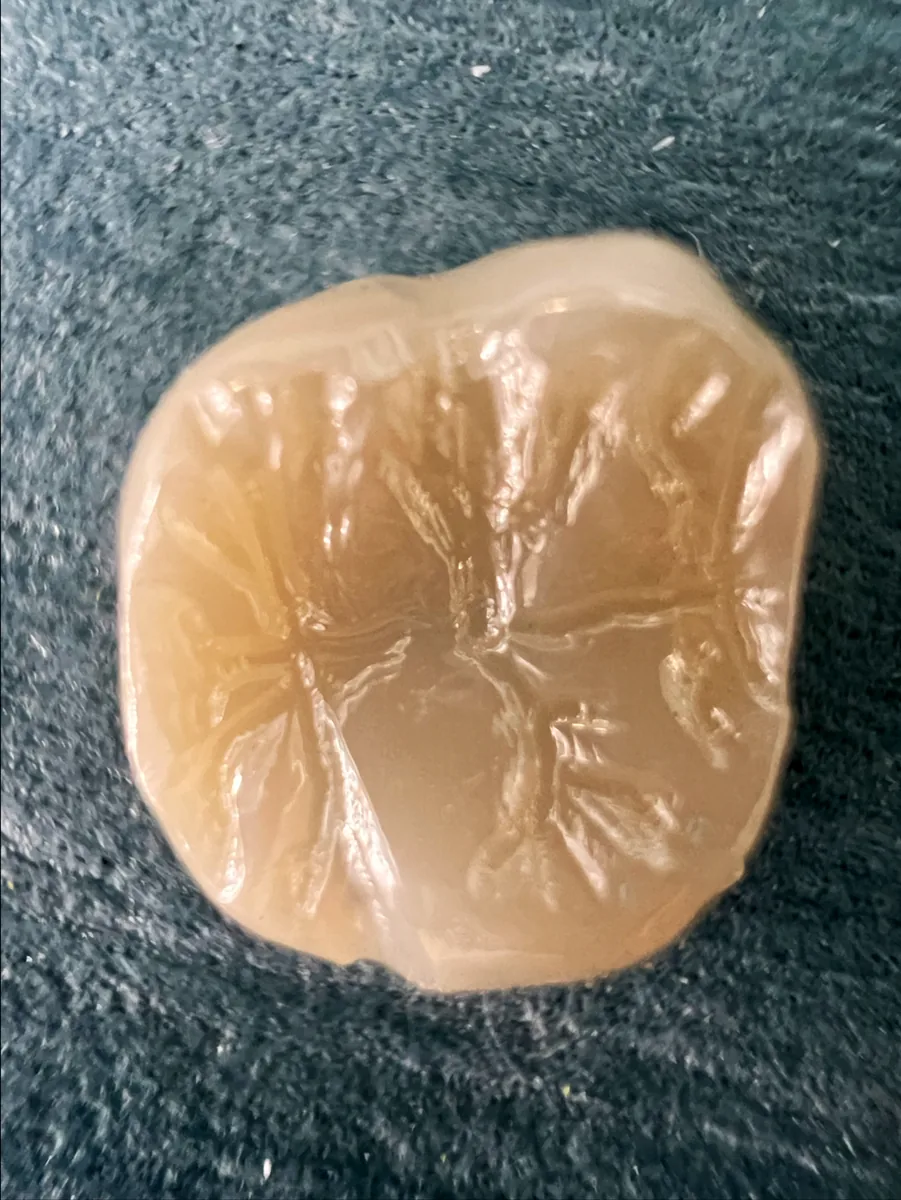
We aim to reproduce even the fine details of the biting surface.
Why we use zirconia crowns
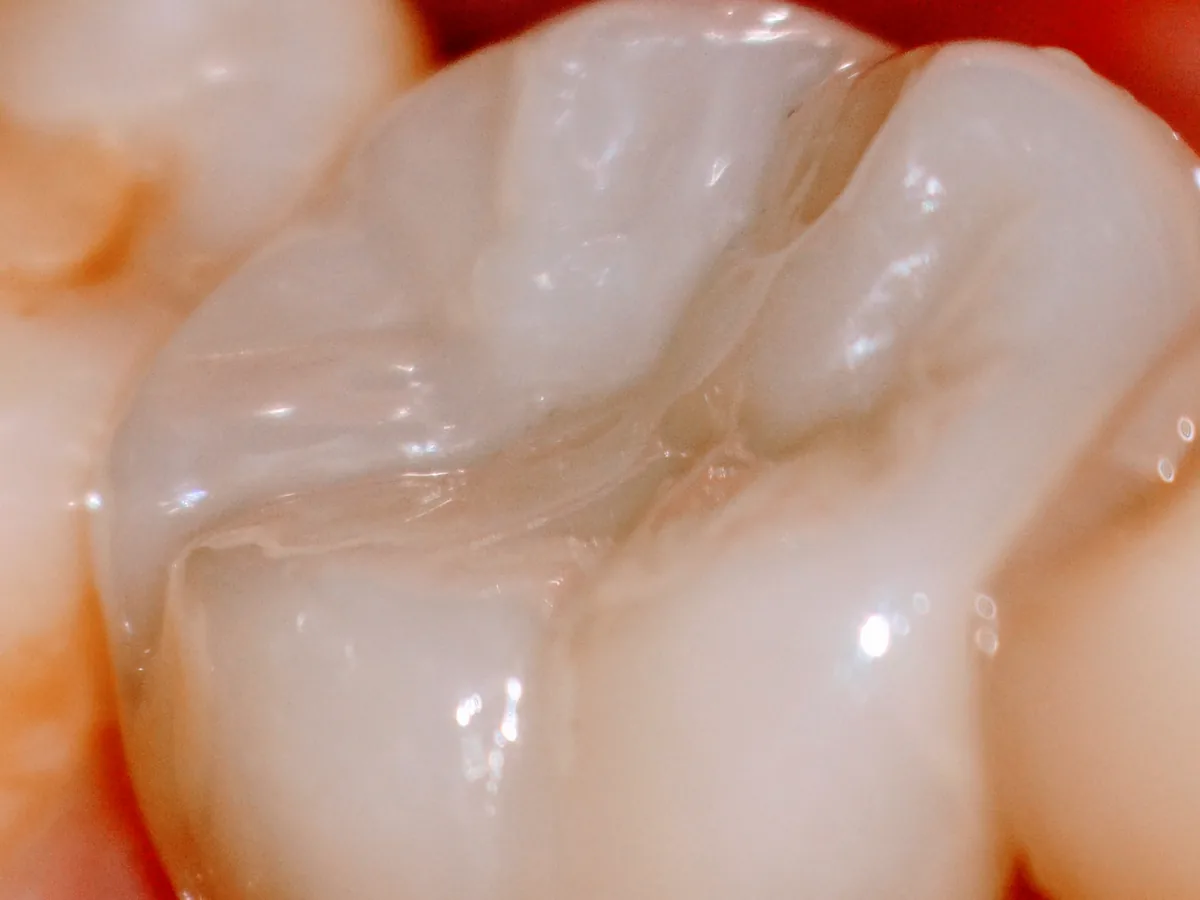
To make use of zirconia's strength on the biting surfaces too
At our clinic, we choose to make crowns entirely from zirconia, biting surfaces included, so that the strength of the zirconia surface can be used directly on the biting surfaces.
To reproduce the designed biting surface in fine detail
We aim to reproduce in fine detail the shape of the biting surface designed in wax, through the data, the milling and finally the correction.
In practice at our clinic
When we use zirconia crowns
- Crowns for aesthetic treatment (aesthetic dentistry)
- Crowns after root canal treatment: after root canal treatment, a crown is needed in many cases (root canal treatment)
- After orthodontic treatment or treatment for temporomandibular disorders (TMD): we design in wax the crowns that maintain the adjusted jaw position and bite (TMD and orthodontics)
- Full-arch crowns that restore all the teeth
The steps in making them
- We make the shape in wax on casts mounted on an articulator set to the examination values (wax-up, Girrbach Reference SL articulator).
- Before the final crown, we check the shape and the bite with a provisional restoration. Even for something small, such as an inlay (a filling that replaces part of a tooth), we make a provisional restoration (provisional restorations and provisional dentures).
- The wax shape is scanned, and the crown is milled, sintered and corrected.
- The finished crown is checked under magnification (stereo microscope in the dental laboratory).
- When the crown is placed in your mouth, we magnify the boundary between the crown and the tooth with the dental operating microscope and check the fit.
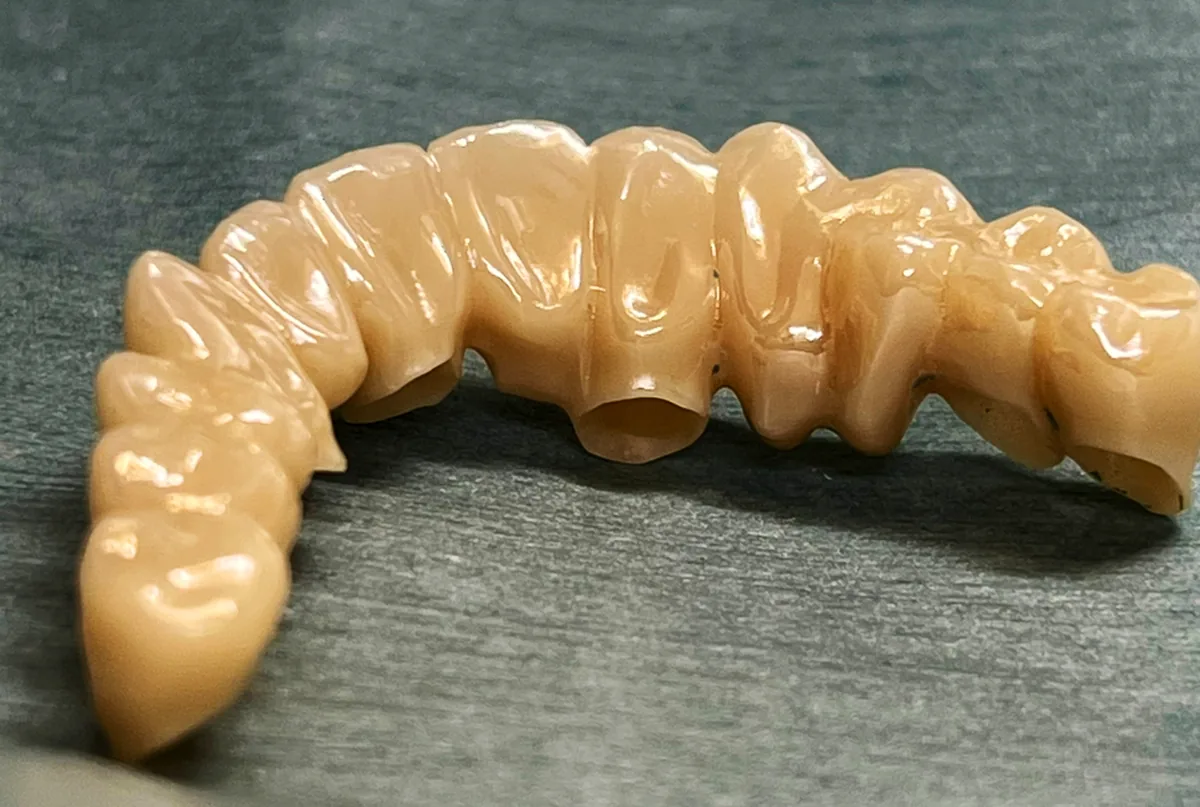
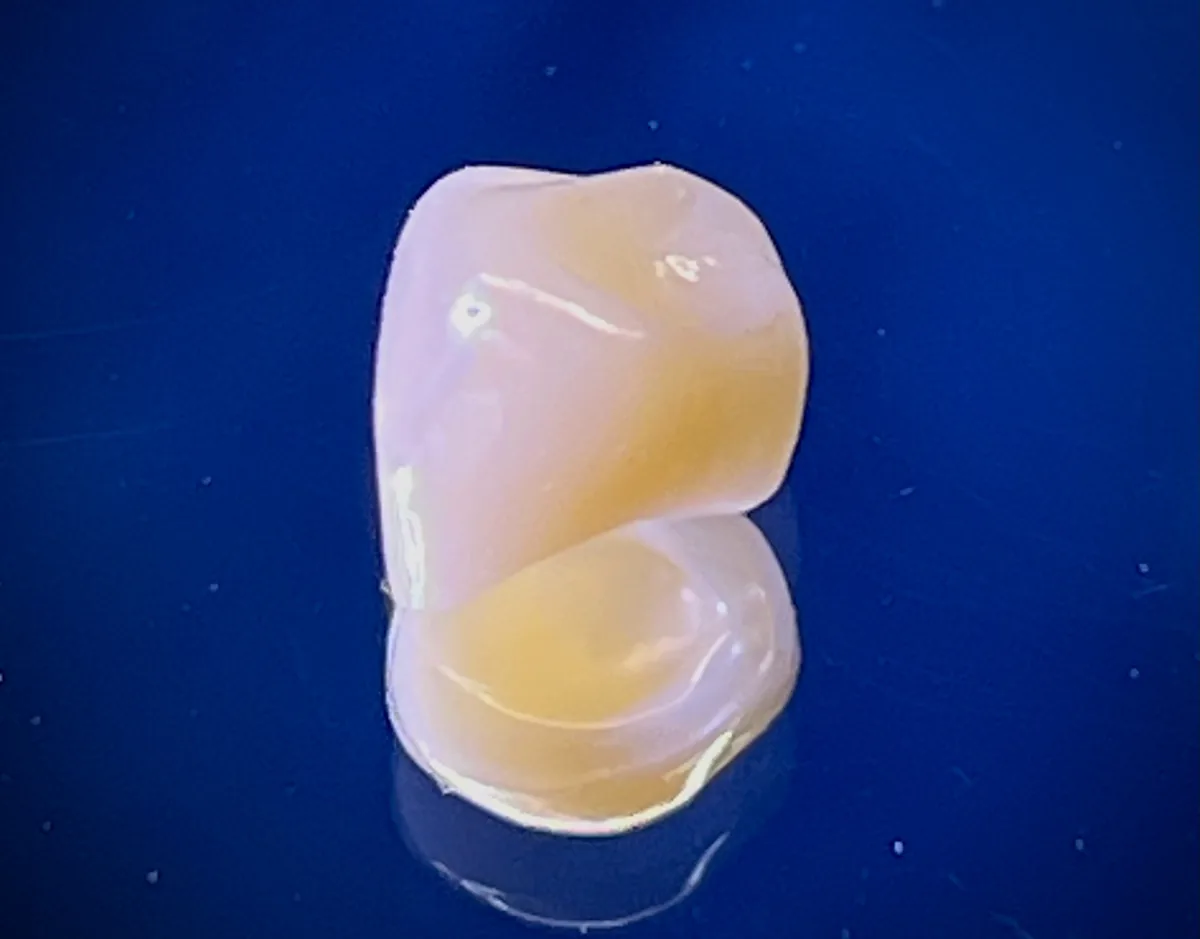
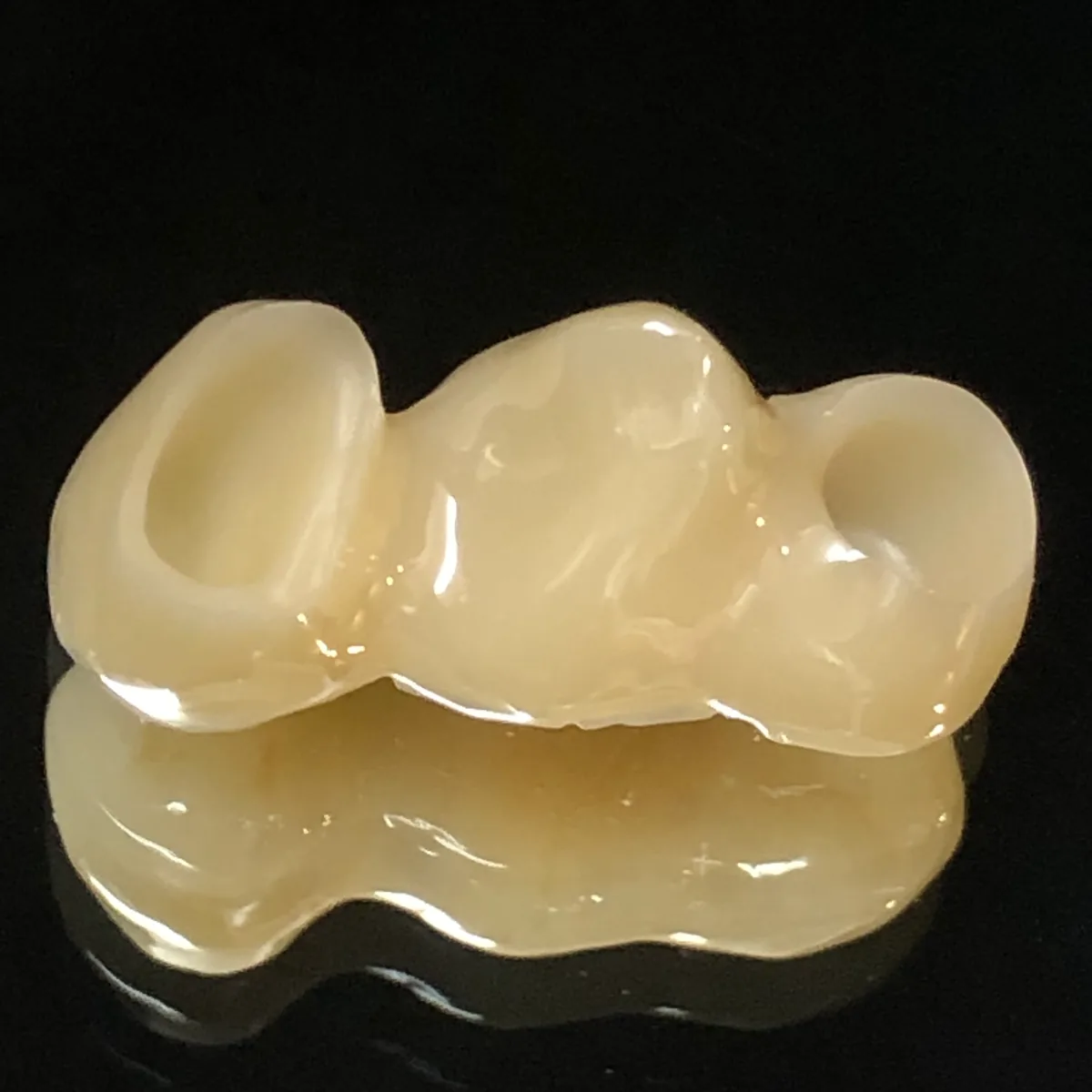
Photos: zirconia crowns made at our clinic
What zirconia crowns can and cannot do
What zirconia crowns can do
- Turn a shape designed in wax into zirconia, by way of data
- Make anything from a single crown to splinted crowns joining several teeth and full-arch crowns
- Make crowns without metal, including the biting surfaces
What they cannot do, and how we compensate
Even when the discrepancies are allowed for, milling and sintering do not produce exactly the original shape.
Also, we cannot tell from the cast alone whether a crown will fit in the mouth.
Even with zirconia crowns, tooth sensitivity, breakage or the crown coming off may occur.
| What they cannot do | How we compensate |
|---|---|
| Eliminating the discrepancies from milling and sintering by machine alone | Correcting them with a diamond tool at low pressure and low speed while cooling with cold water |
| Checking on the cast alone whether the crown fits that person's mouth | Checking by trying the shape out in a provisional restoration |
| Checking the fit at the boundary between the crown and the tooth with the naked eye alone | Checking under magnification with the stereo microscope in the dental laboratory and the dental operating microscope |
Frequently asked questions
- Are these crowns metal-free?
Yes. They are made entirely from zirconia, including the biting surfaces.
This is to make use of the strength of the zirconia surface on the biting surfaces.
- Is zirconia a ceramic?
Yes. Zirconia is a type of ceramic.
What is used for dental crowns is yttria partially stabilized zirconia, to which a small amount of a component called yttria has been added.
- Does milling with CAD/CAM produce exactly the designed shape?
Because it shrinks by about 20% when sintered, it is milled with that shrinkage allowed for, but even so, it does not come out exactly as the original shape.
At our clinic, we correct the shape at the end.
- Why is the shape made in wax first?
So that the shape the bite requires can first be formed by hand and checked.
That shape is then scanned with light, converted into data and turned into zirconia.
- With zirconia, is there no risk of the crown breaking or coming off?
We cannot say that it will not break or come off.
Tooth sensitivity, breakage or the crown coming off may occur.
Related technologies and treatments
- Wax-up
- Platinum-gold alloy
- Provisional restorations and provisional dentures
- Dental operating microscope
- All the technologies we use
- Aesthetic dentistry
- Root canal treatment
- Temporomandibular disorders & orthodontic treatment that avoids extractions where possible
Treatment duration, number of visits, fees and risks → Fees
Sources we referred to
For the general explanations (zirconia as a material and its shrinkage during sintering), we referred to the following published sources. What we describe about our own methods is based on the director's posts and explanations.
- Miyazaki T, et al. [Evolution of dental materials for CAD/CAM]. Journal of The Showa University Society. 2015;75(1):12-20 (in Japanese; J-STAGE)
- Coldea A, et al. Shrinkage Behavior of Strength-Gradient Multilayered Zirconia Materials. Materials (Basel). 2025;18(14):3217
Consultations and enquiries
Gibakai Medical Corporation
Yoshimi Dental Clinic
Square 2, Room 302 (third floor)
1-29-1 Tsukushino, Machida,
Tokyo 194-0001, Japan
TEL 042-795-1359 FAX 042-795-1398
Clinic days: Mon · Tue · Thu · Fri
10:00–13:00 / 14:30–18:00
A first visit begins with a first consultation (a private, non-insured service; 30 minutes to 1 hour) for examination and diagnosis. Questions about a diagnosis you received elsewhere are also covered within it.
In an emergency, such as being unable to chew or having severe symptoms, please call us on 042-795-1359 to discuss it.