What is plier tip modification?
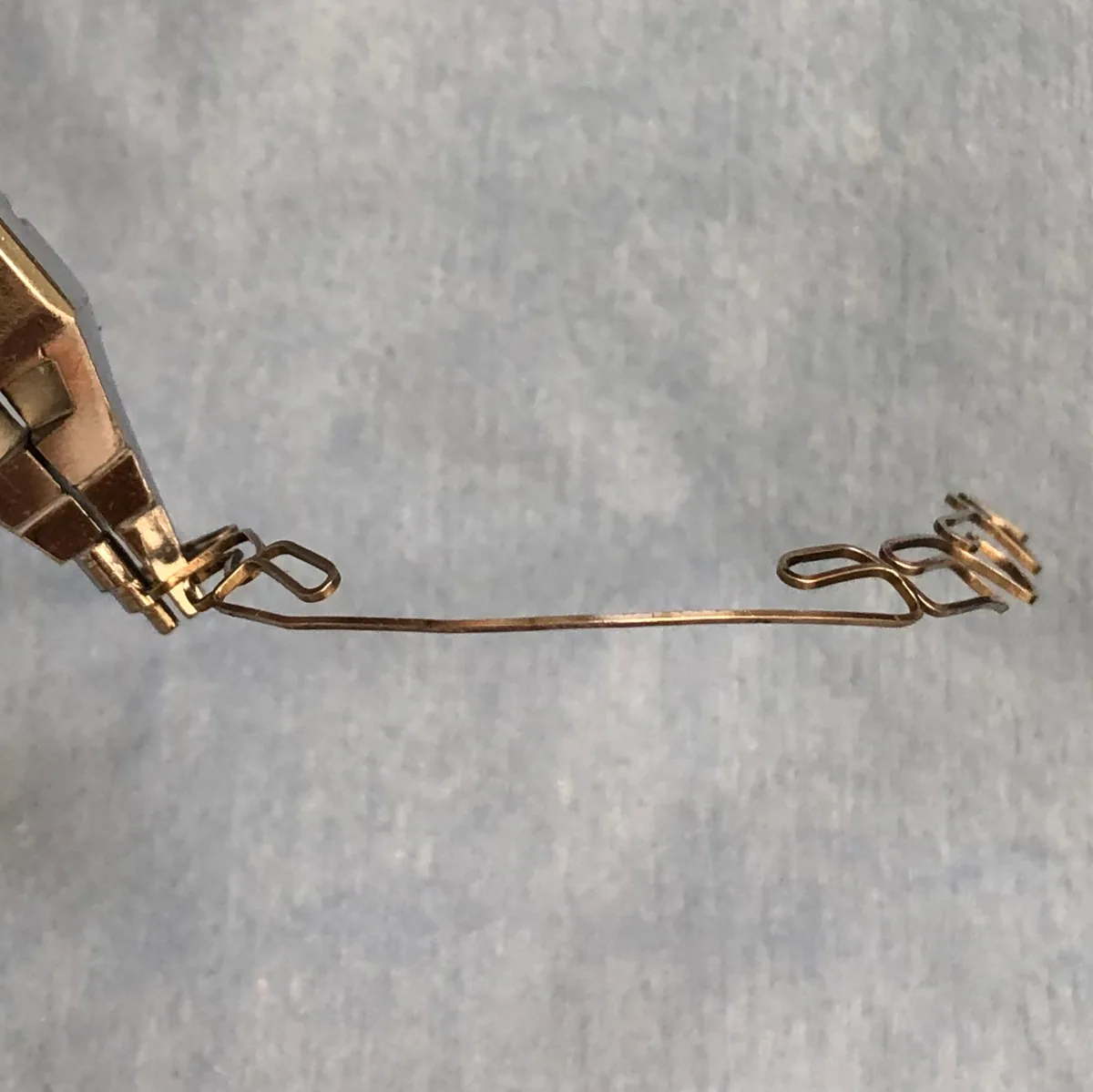
Plier tip modification is a process in which the tips of pliers used in orthodontic treatment (instruments that grip thin metal wire) are reshaped and platinum-gold alloy is laser-welded onto the tips to change the way they grip.
The pliers we modify are those that grip the thin wire used to secure the orthodontic wire to the teeth (ligature wire).
We also apply this modification to Howe pliers, an instrument we use particularly often in our orthodontic treatment.
At our clinic, the director carries out this modification under a microscope.
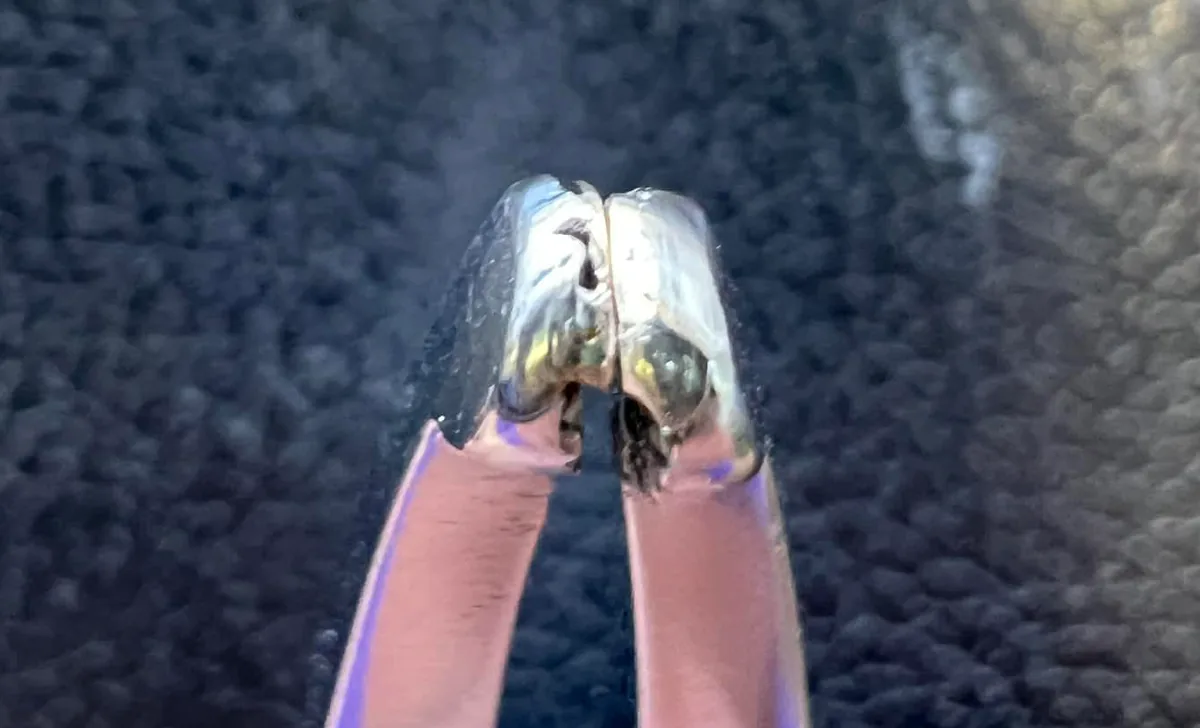
How plier tip modification works
The instrument called Howe pliers
Howe pliers are, in general, multipurpose pliers used in orthodontic treatment for tasks such as attaching wires and other parts to the appliances on the teeth or removing them, and tying with ligature wire.
Standard products have fine serrations on the tips so that they can grip wire firmly.
The modification process
Our modification involves the following.
- The shape of the tips is corrected and narrowed.
- Platinum-gold alloy is laser-welded onto the tips only. In some pliers, it is welded along the front row of the tip.
- The pliers are made so that the gripping force is applied only at the tips.
- These steps are carried out under a microscope.
Photos: modified plier tips
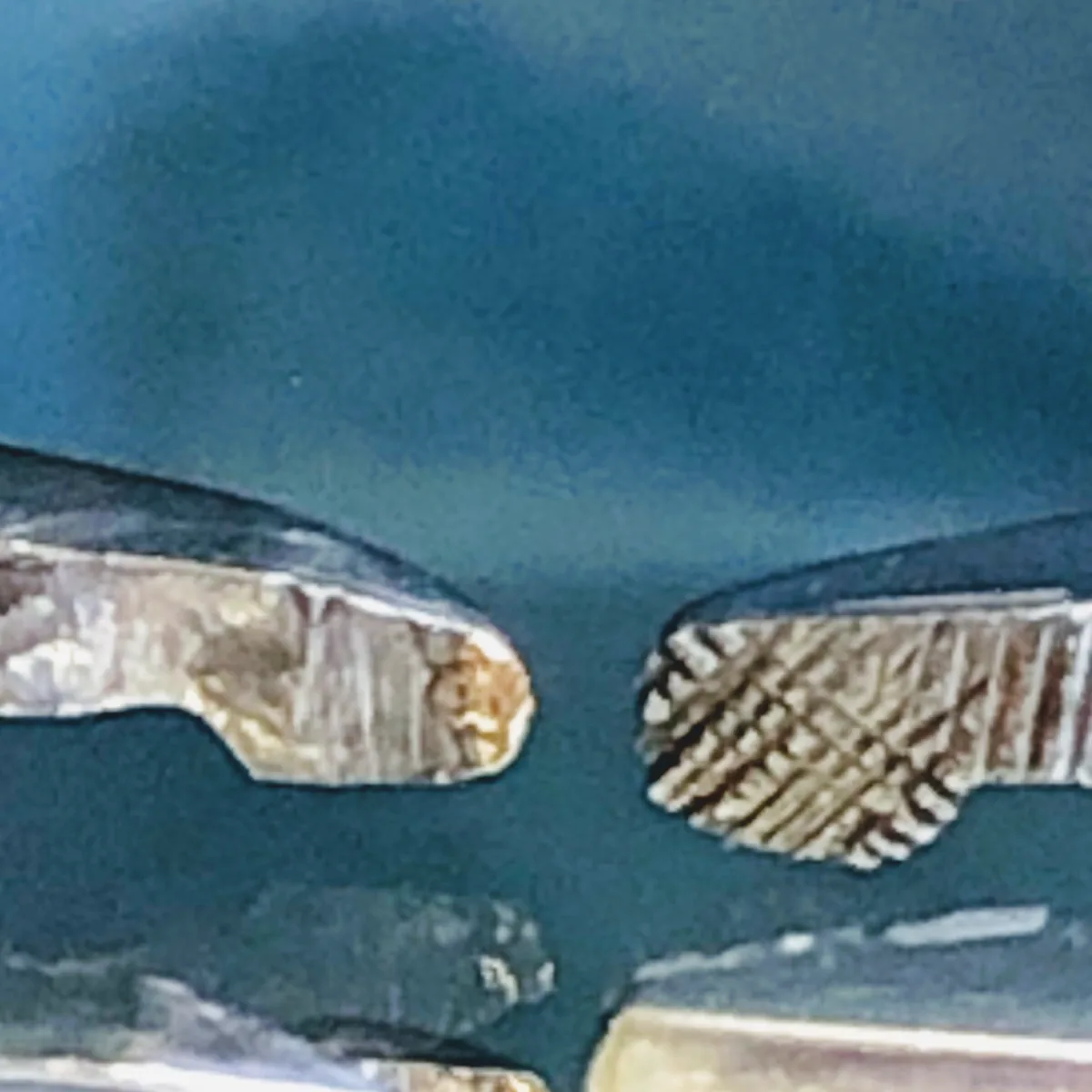
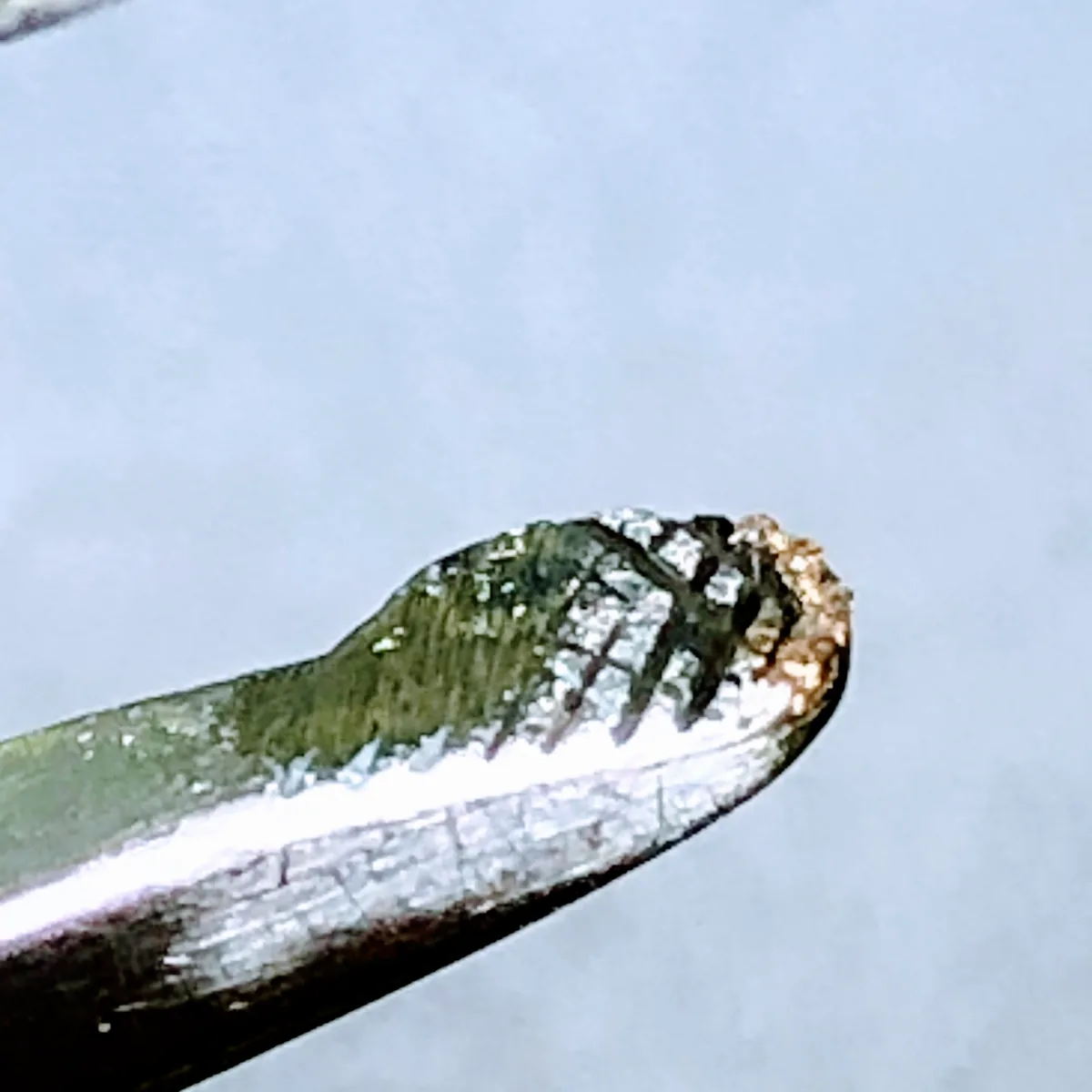
Why we modify plier tips
To secure finely bent wires firmly to the teeth
In our orthodontic treatment, we use wires bent in fine detail to suit each patient's examination results and treatment plan.
The director's view is that securing such a wire firmly to the teeth requires an instrument with narrow tips that can hold the ligature wire firmly with the tips alone.
To convey the feel of tightening the ligature wire to the hand
We modify the tips so that fine variations in the twisting force (torque) when tightening the ligature wire can be felt in the hand.
The ligature wire we normally use is made of a metal called cobalt-chromium. The tips are also made so that its flexibility can be felt in the hand.
Because treatment for temporomandibular disorders (TMD) is also carried out by adjusting the bite with orthodontic treatment
At our clinic, TMD treatment is carried out as orthodontic treatment that adjusts the bite.
The director's view is that adapting the instruments to the treatment is also one of the ways of taking that treatment forward.
In practice at our clinic
Where they are used
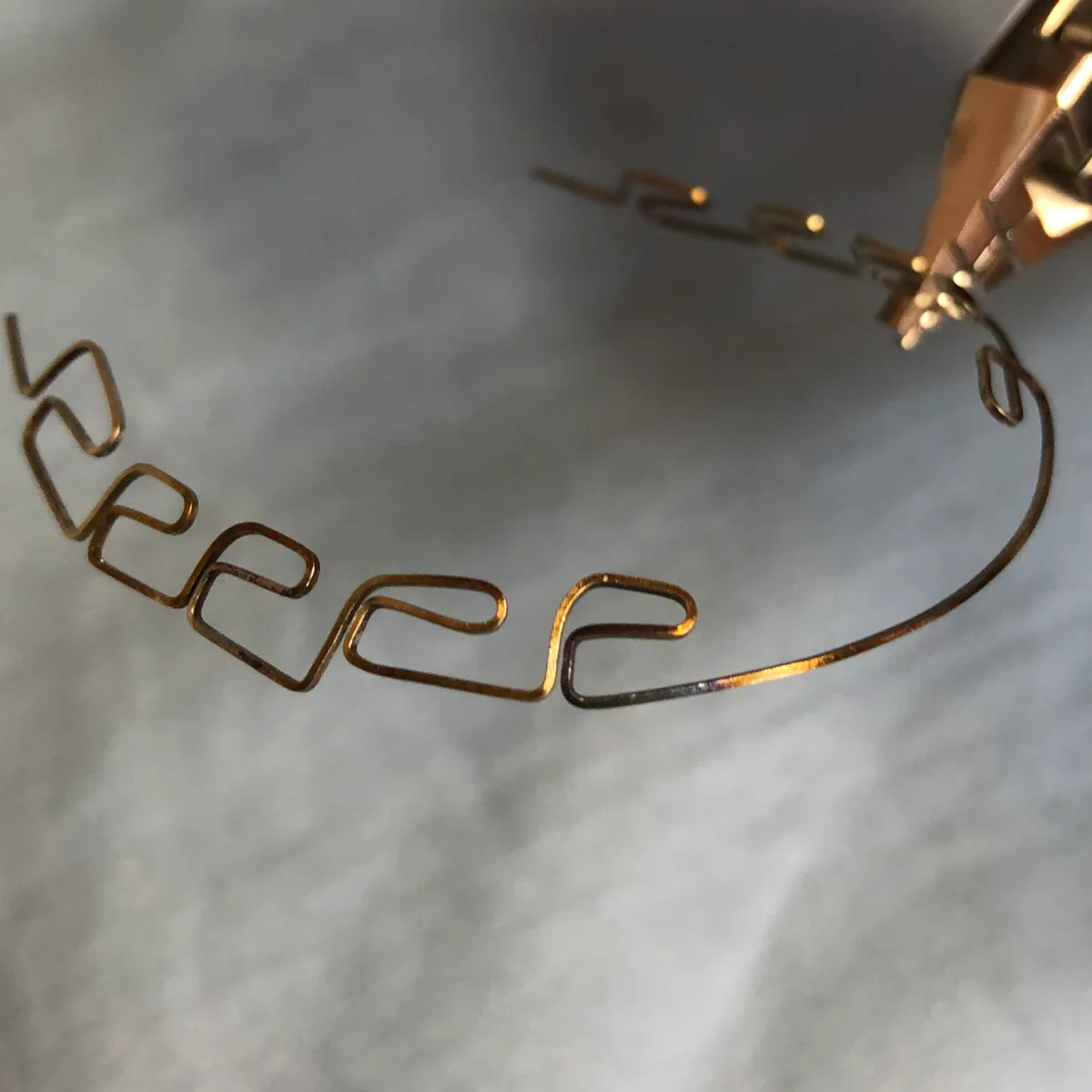
The modified pliers are used in orthodontic treatment when securing the bent wire to the teeth (ligating).
How the wire is bent is explained on the MEAW page.
Who carries out the modification, and where
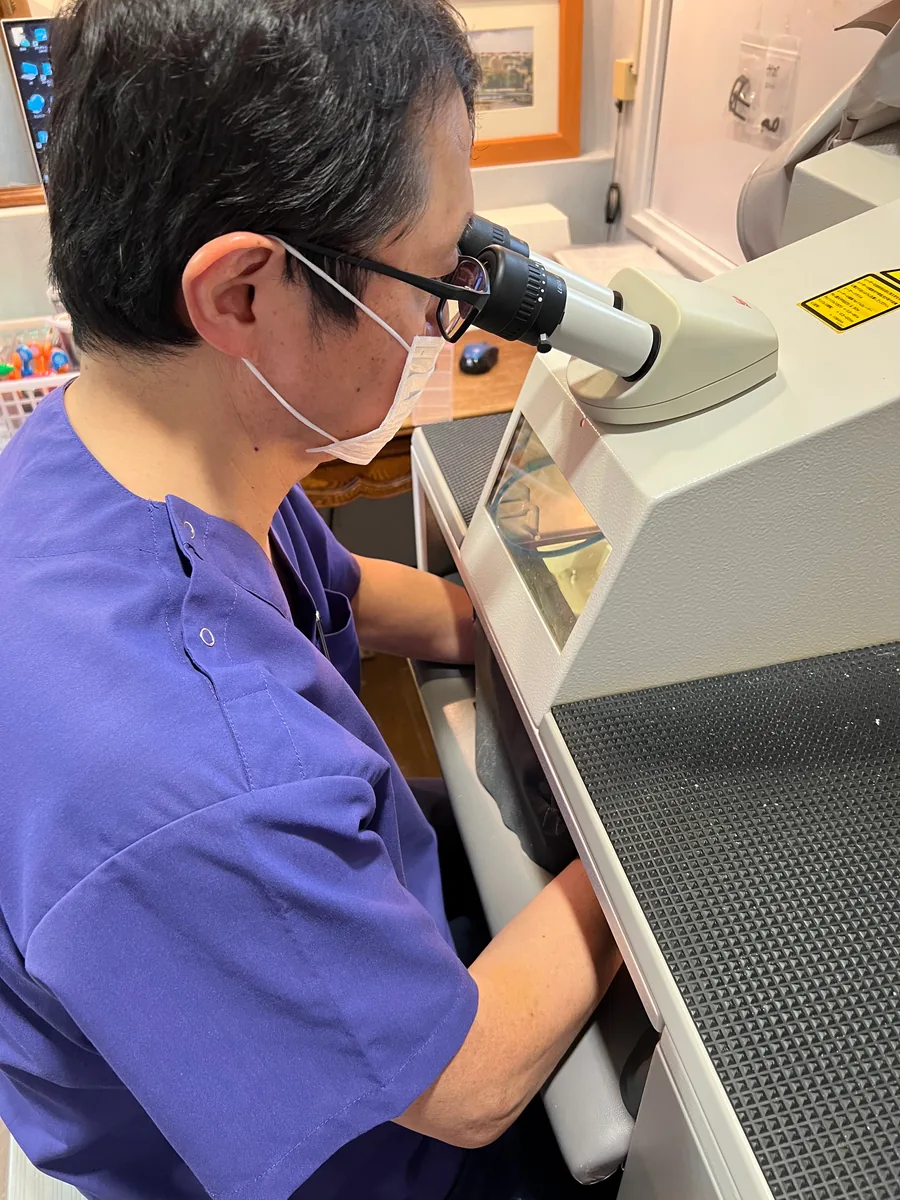
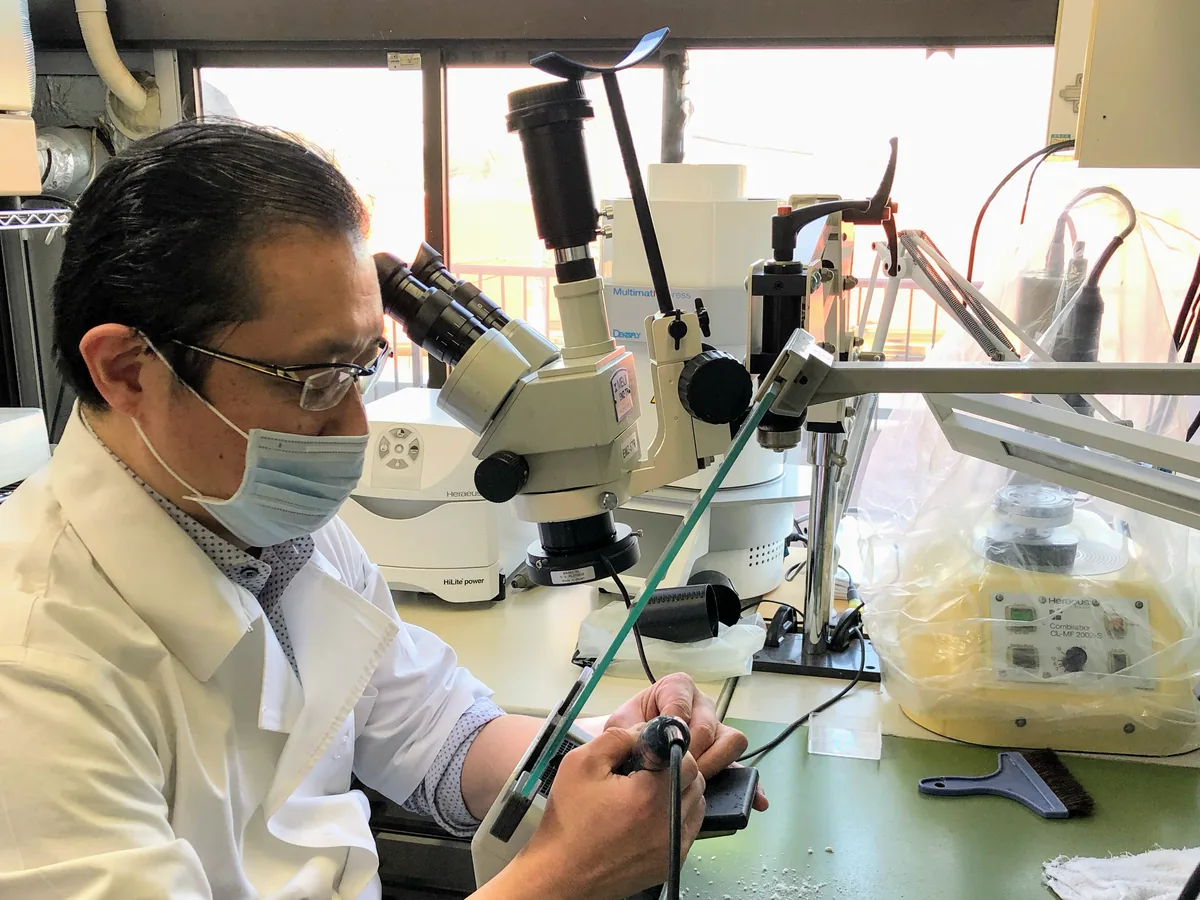
The director carries out the modification, welding the platinum-gold alloy with the laser welding machine in our in-house dental laboratory and finishing the tips under a microscope.
The microscope in the dental laboratory is described on the stereo microscope for laboratory work page.
Photos: work in the dental laboratory
Combining it with other technologies
- Laser welding: platinum-gold alloy is welded onto the tips.
- Platinum-gold alloy: the metal added to the tips.
- MEAW: an orthodontic wire bent to suit each individual patient.
- Stereo microscope for laboratory work: used for finishing the modification.
What plier tip modification can and cannot do
What plier tip modification can do
- Reshaping the tips to make them narrow
- Welding platinum-gold alloy onto the tips only, so that the gripping force is applied at the tips
- Shaping the tips so that the feel of tightening the ligature wire is conveyed to the hand
What it cannot do, and how we compensate
| What it cannot do | How we compensate |
|---|---|
| Determining the outcome of orthodontic treatment by modifying the instrument alone | We plan on the basis of examinations of the skeleton (lateral cephalometric analysis) and jaw movement (Cadiax), and proceed together with a wire bent to suit each patient (MEAW) |
| Eliminating what can happen in orthodontic treatment (pain, root resorption, relapse and so on) | We set goals based on the examination results and check progress during treatment as well. What can happen is explained on the TMD and orthodontics page and in the fee table |
The main risks and side effects of orthodontic treatment include pain, root resorption, relapse, and an increased risk of tooth decay and gingivitis.
Treatment results and duration vary from person to person.
Frequently asked questions
- What kind of instrument are pliers?
They are instruments that grip thin metal wire and other items with their tips.
In orthodontic treatment, they are used for attaching and removing wires and for tying with ligature wire.
- Why is platinum-gold alloy welded onto the tips?
It is so that the tips alone grip the ligature wire firmly and the gripping force is applied at the tips.
Another aim is to convey the feel of tightening the ligature wire to the hand.
- Who carries out the modification, and where?
The director does it in our in-house dental laboratory.
Platinum-gold alloy is laser-welded onto the tips, which are then finished under a microscope.
- In which treatments are they used?
In orthodontic treatment.
Because our TMD treatment is carried out as orthodontic treatment that adjusts the bite, they are also used in TMD treatment.
Related technologies and treatments
- Laser welding: joining platinum-gold alloy into one piece in argon gas
- Platinum-gold alloy: the metal added to the tips
- MEAW: an orthodontic wire bent to suit each individual patient
- Stereo microscope for laboratory work
- All the technologies we use
- Temporomandibular disorders & orthodontic treatment that avoids extractions where possible: orthodontics
Treatment duration, number of visits, fees and risks → Fees
Sources we referred to
For the general explanations (the uses and form of the instrument called Howe pliers), we referred to the following published sources. What we describe about our own methods is based on the director's explanations.
- JM Ortho product information, "Utility" (Howe pliers) (in Japanese)
- OralStudio dental dictionary, "[Howe pliers]" (in Japanese)
Consultations and enquiries
Gibakai Medical Corporation
Yoshimi Dental Clinic
Square 2, Room 302 (third floor)
1-29-1 Tsukushino, Machida,
Tokyo 194-0001, Japan
TEL 042-795-1359 FAX 042-795-1398
Clinic days: Mon · Tue · Thu · Fri
10:00–13:00 / 14:30–18:00
A first visit begins with a first consultation (a private, non-insured service; 30 minutes to 1 hour) for examination and diagnosis. Questions about a diagnosis you received elsewhere are also covered within it.
In an emergency, such as being unable to chew or having severe symptoms, please call us on 042-795-1359 to discuss it.