What is a retainer?
A retainer is an appliance for holding teeth that have been moved by orthodontic treatment in their new positions.
In general, once the orthodontic appliances are removed, treatment enters a stage called "retention", which keeps the teeth in their new positions.
It is said that if a retention appliance is not used, the teeth may move back towards their original positions (relapse).
At our clinic, too, we use retainers after orthodontic treatment has finished.
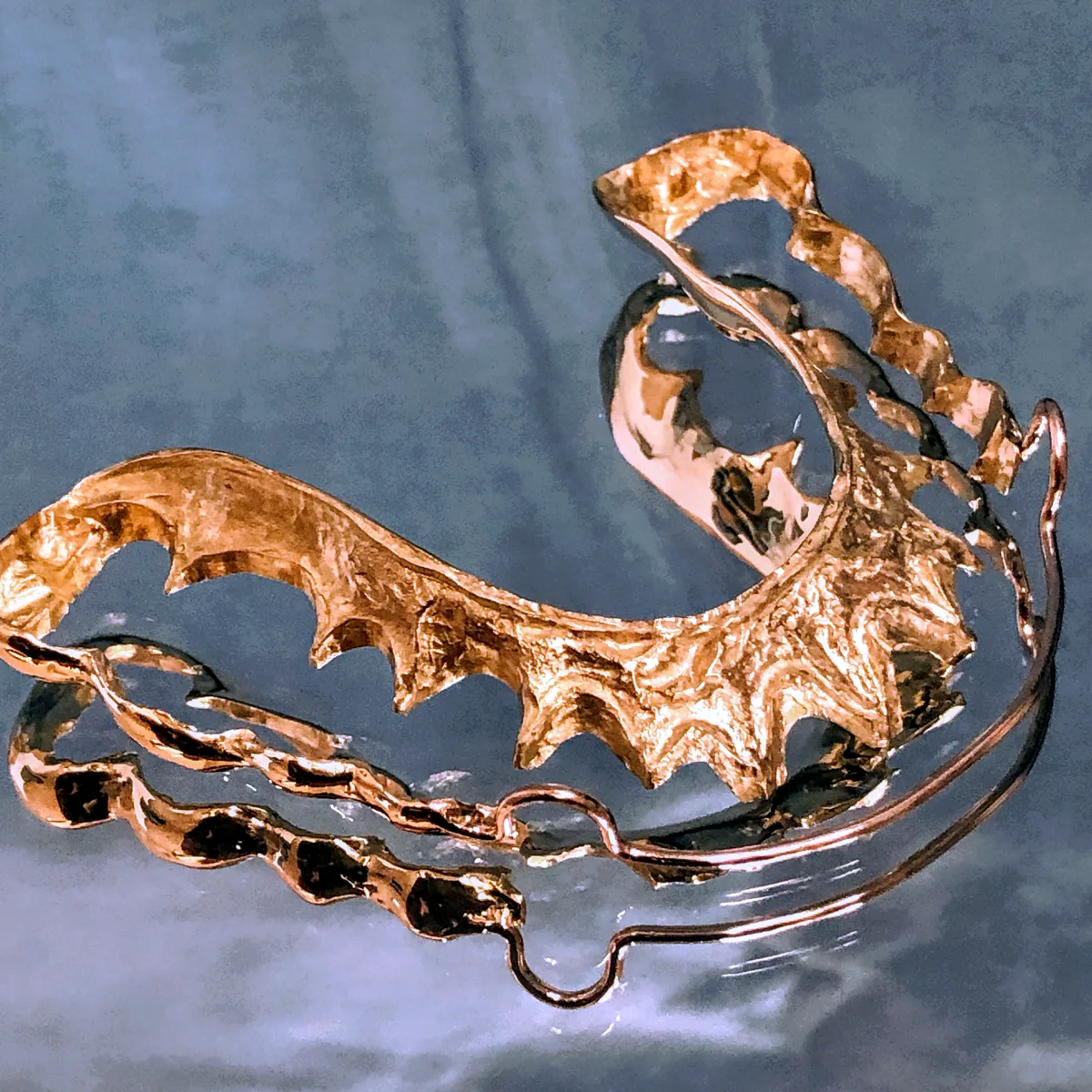
How a retainer works
The retainers we use
Our retainers are made mainly of the following two materials.
| Material | Form seen in the photos |
|---|---|
| Clear resin | A clear resin plate that follows the shape of the teeth, and a wire |
| Platinum-gold alloy | A metal framework that follows the shape of the teeth, and a thin wire |
The platinum-gold retainer is an option.
The material and form are chosen with fit to the teeth, comfort, effects on speech and other factors in mind.
Platinum-gold retainer
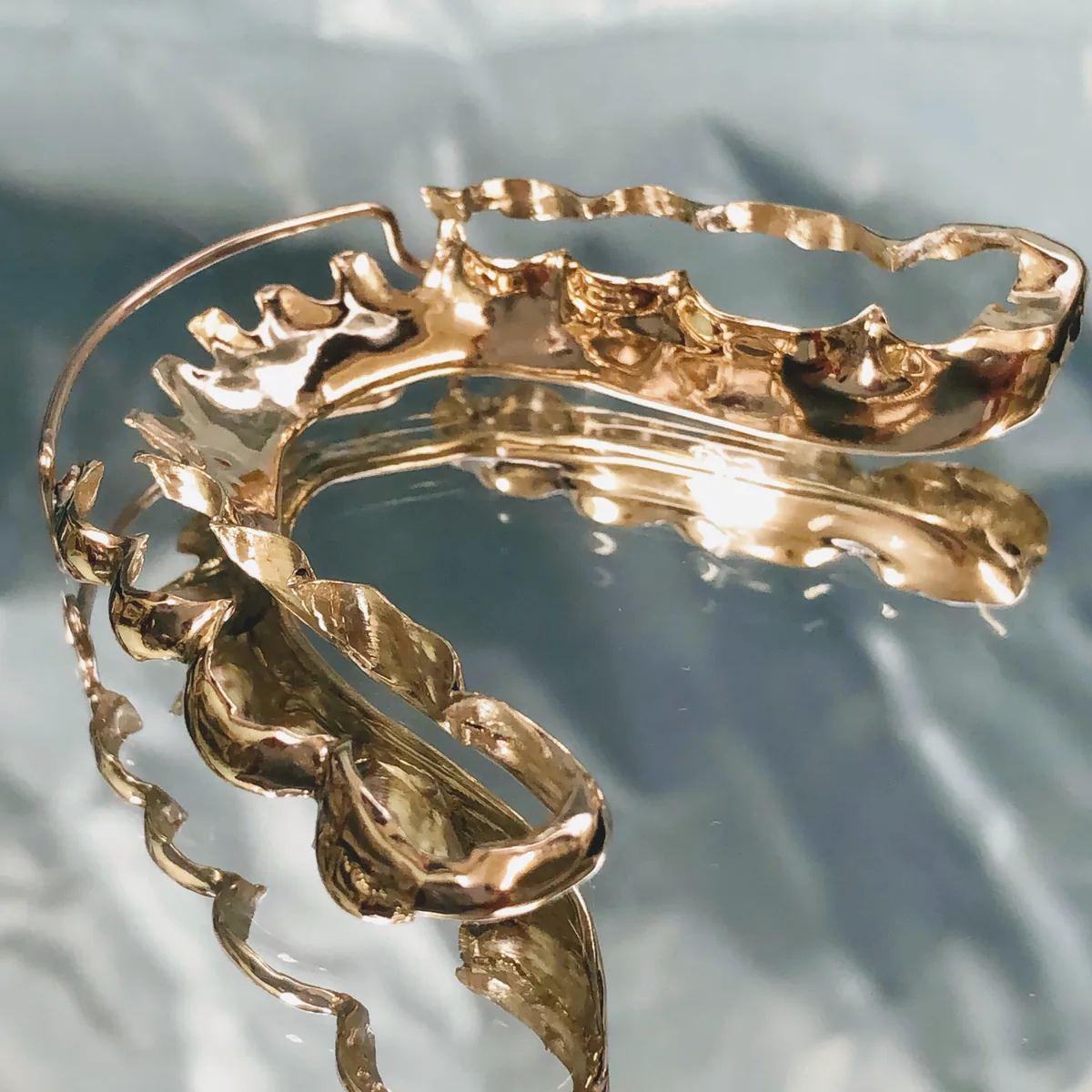
Platinum-gold alloy is a precious-metal material that our clinic also uses for metal denture frameworks and provisional dentures.
A platinum-gold retainer can be made with the thickness of the metal adjusted.
When retention is expected to continue for a long time, we may explain it as one of the options.
For details of the material, please see the platinum-gold alloy page.
Adding a small orthodontic appliance to a retainer
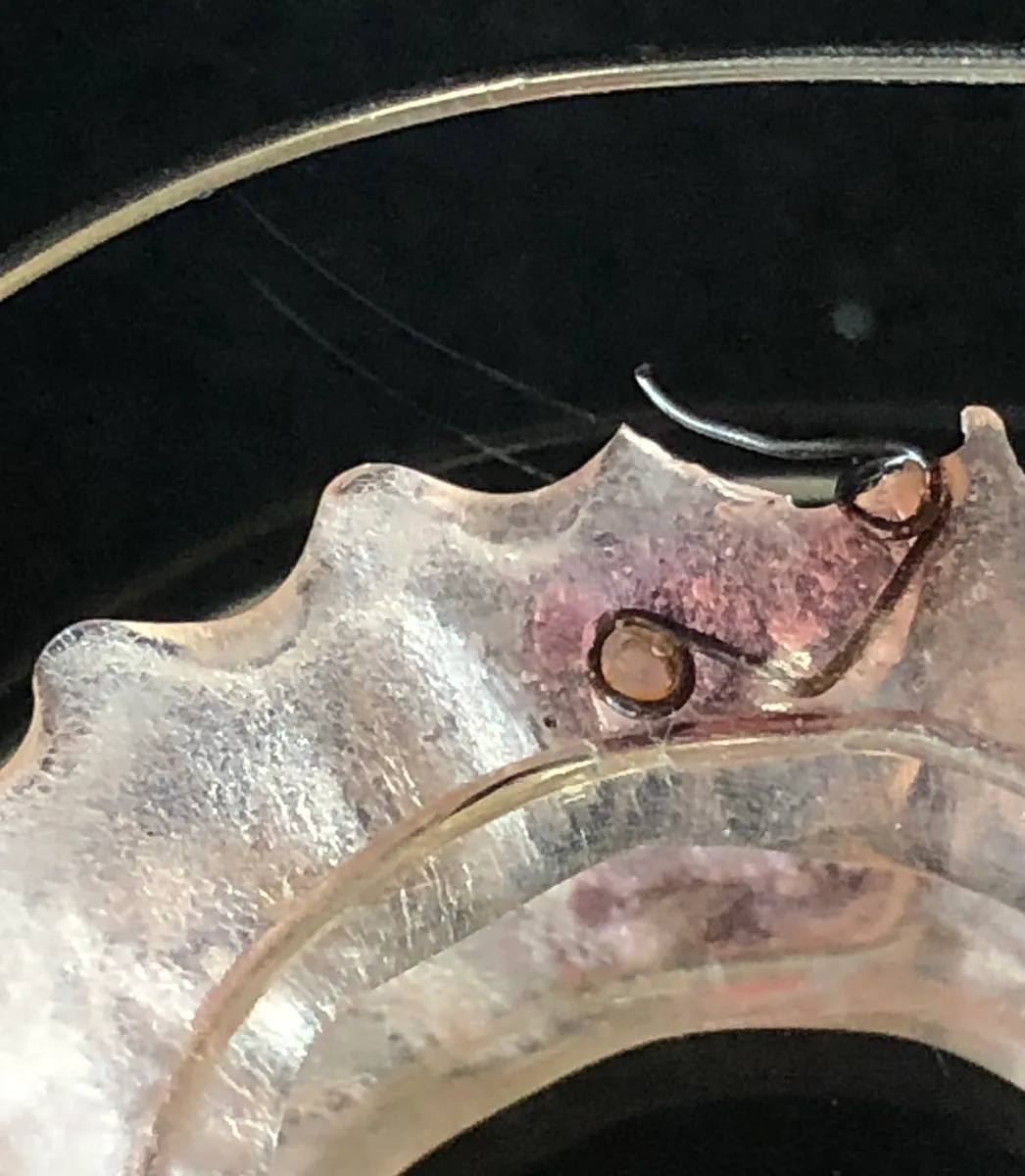
If we judge during retention that a single tooth needs to be moved slightly, we may add a wire to the retainer and use it as a small orthodontic appliance.
The photo shows a clear retainer to which wire was added and which was then hardened in a polymerization unit (a device that hardens resin).
This work is done in the dental laboratory next to the treatment room.
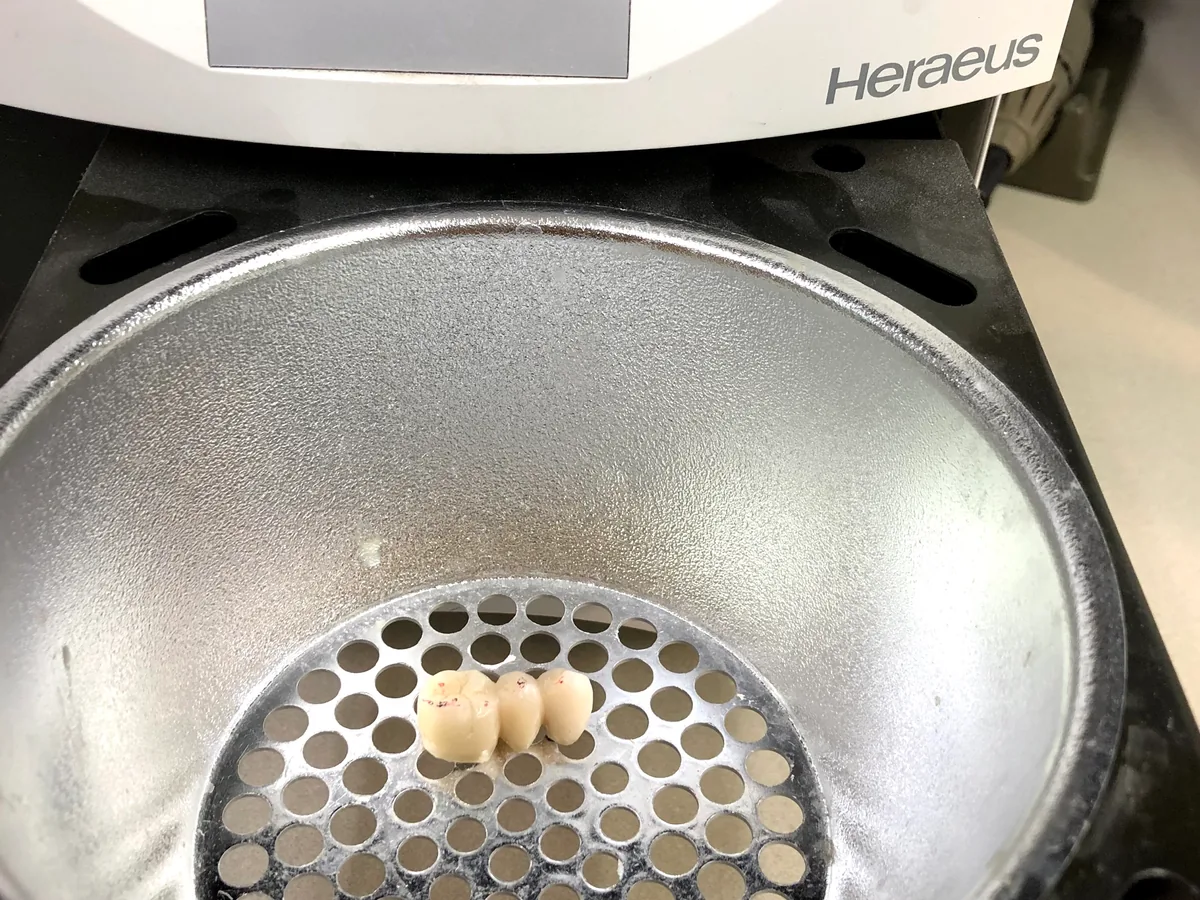
Why we use retainers
Because treatment does not end when orthodontic treatment ends
The director does not regard the completion of orthodontic treatment as the completion of treatment.
Treatment is planned to include maintaining the positions of the teeth that have been moved and the bite that has been established.
Because teeth tend to move back towards their original positions
In general, it is said that relapse can occur if a retention appliance is not used.
Our fee table, too, lists "relapse" as one of the main risks of orthodontic treatment.
To maintain the bite established in treatment for temporomandibular disorders (TMD)
When orthodontic treatment has been carried out as part of TMD treatment, too, we use a retainer after the orthodontic treatment has finished.
After treatment, too, we check the bite during sleep where needed.
Because fine adjustments may be needed even during retention
During the retention stage, a single tooth may need its position adjusted.
By adding an appliance to the retainer, we make it possible to adjust the position on the spot.
In practice at our clinic
The process up to retention
- With orthodontic treatment using MEAW or similar, the teeth are moved to their target positions.
- When orthodontic treatment has finished, we move into the stage of holding the teeth in position with a retainer.
- If we judge it necessary, we add a wire to the retainer to fine-tune the positions of the teeth.
- After treatment, too, we check the bite during sleep where needed (→ BruxChecker).
How long it is used
In general, it is said that a retention appliance needs to be used every day as far as possible for at least a year after the orthodontic appliances are removed.
At our clinic, we explain the duration of treatment and the number of visits, including retention, after the examinations and diagnosis.
If it breaks or does not fit
If a retainer breaks, we repair it.
Discomfort when wearing it and breakage are also listed in the fee table as the main risks of retainers.
Treatment duration, number of visits, fees and risks → Fees
What a retainer can and cannot do
What a retainer can do
- Hold teeth moved by orthodontic treatment in their new positions
- Fine-tune the position of a single tooth by adding a wire where needed
- Choose the material (clear resin or platinum-gold alloy) and form with fit, comfort and effects on speech in mind
- In a platinum-gold retainer, adjust the thickness of the metal when making it
What it cannot do, and how we compensate
| What it cannot do | How we compensate |
|---|---|
| Moving teeth substantially | We move them with an orthodontic wire (MEAW) |
| Completely preventing relapse | We check the bite after treatment, too, and when needed, add a wire to the retainer to make fine adjustments |
| Finding out how the teeth meet during sleep | We record this with BruxChecker |
| Eliminating discomfort when wearing it, and breakage | We choose the material and form with fit, comfort and effects on speech in mind. If it breaks, we repair it |
Frequently asked questions
- When do I start using a retainer?
It is used after the teeth have been moved and orthodontic treatment has finished.
- How long is it used for?
In general, it is said that it needs to be used every day as far as possible for at least a year after the orthodontic appliances are removed.
At our clinic, we explain the duration of treatment and the number of visits, including retention, after the examinations and diagnosis.
- When is a platinum-gold retainer used?
When retention is expected to continue for a long time, we may explain it as one of the options.
The platinum-gold retainer is an option. The cost is given in the fee table.
- Can teeth be moved slightly while a retainer is being used?
If we judge it necessary, we may add a wire to the retainer to fine-tune the position of a single tooth.
- What happens if the retainer breaks?
We repair it.
Discomfort when wearing it and breakage are also listed in the fee table as the main risks of retainers.
Related technologies and treatments
- MEAW (Multiloop Edgewise Archwire)
- Platinum-gold alloy
- BruxChecker
- All the technologies we use
- Orthodontic treatment that avoids extractions where possible
- Temporomandibular disorders
Sources we referred to
For the general explanations (retention, relapse and the usual length of retention), we referred to the following published source. What we describe about our own methods is based on the director's posts and explanations.
Consultations and enquiries
Gibakai Medical Corporation
Yoshimi Dental Clinic
Square 2, Room 302 (third floor)
1-29-1 Tsukushino, Machida,
Tokyo 194-0001, Japan
TEL 042-795-1359 FAX 042-795-1398
Clinic days: Mon · Tue · Thu · Fri
10:00–13:00 / 14:30–18:00
A first visit begins with a first consultation (a private, non-insured service; 30 minutes to 1 hour) for examination and diagnosis. Questions about a diagnosis you received elsewhere are also covered within it.
In an emergency, such as being unable to chew or having severe symptoms, please call us on 042-795-1359 to discuss it.