We look at the root tip and consider ways to keep the tooth.
- "I've had root canal treatment again and again."
- "The tooth that was treated isn't getting any better."
- "I'd like to consult you about a tooth I was advised to have extracted."
- "I'd like to know what root canal treatment involves."
This page is for people with concerns like these, and for their families.
Even when people are similarly told that they need root canal treatment,
the shape of the root canals, whether there are cracks and the state of infection differ from tooth to tooth.
That is why, at our clinic, we first examine the condition of the tooth and then consider the treatment approach.
What we value is this:
"Look at the root tip and confirm it with our own eyes. Then treat it."
That is our way of thinking.
We magnify the root canals with a microscope and proceed with treatment while checking for infection, cracks and the shape of the roots.
At Yoshimi Dental Clinic, our policy is to avoid extraction wherever possible.
However, depending on the condition of the tooth, it may not be possible to keep it.
We examine whether the tooth can be kept and what methods might be possible, and then explain this to you.
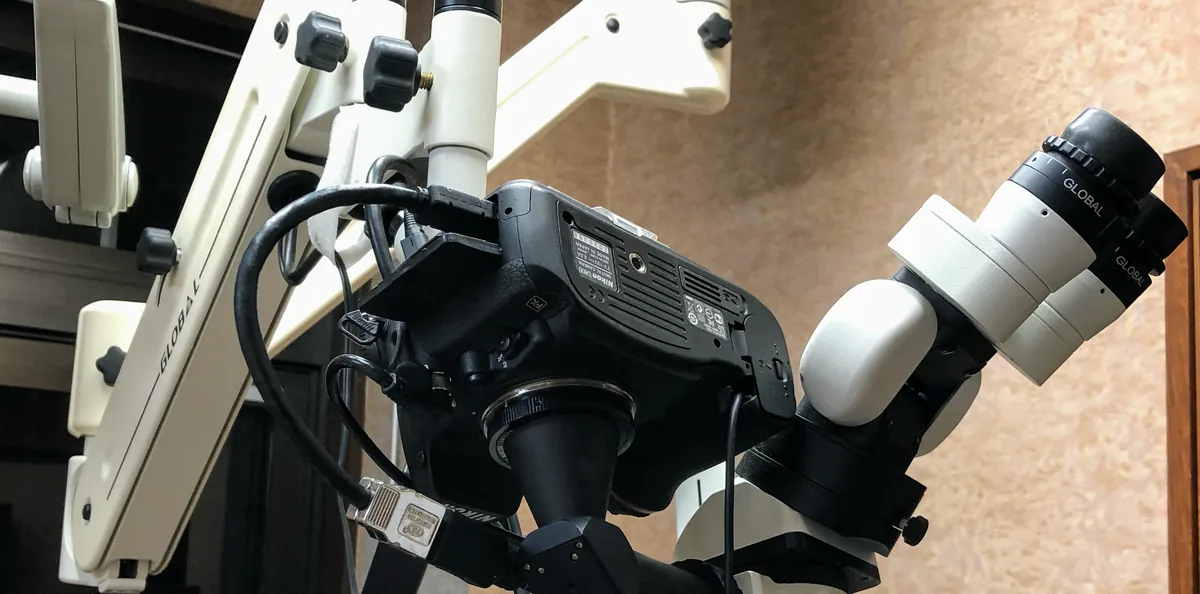
What happens during root canal treatment?
The dental pulp is the tissue commonly called the "nerve" of the tooth.
The space inside the tooth that held the pulp is called the pulp cavity.
Of this space, the narrow canal that runs through the root of the tooth is the root canal.
Root canal treatment is a procedure in which the space that held the pulp is cleaned and disinfected, and the pulp cavity is then sealed without gaps.
It is carried out when infection or inflammation has developed inside the tooth, and aims to eliminate the inflammation around the root tip.
The tip of the root is called the root apex.
The shape of the root canals and the condition of the root apex are not the same in every tooth.
Some teeth also have cracks, and depending on their condition, the difficulty of treatment and the outlook afterwards differ.
A treatment for keeping the tooth
Around the root of the tooth is a tissue called the periodontal ligament.
The periodontal ligament acts as a sensor that detects the forces applied when you bite.
At our clinic, we take these functions of the tooth into account as well, and consider ways to keep the tooth wherever possible.
Why do we look at the root tip with a microscope?
The pulp cavity and root canals have complex shapes.
Their shape differs from person to person, and the opening at the root tip, the apical foramen, is not necessarily a simple round shape.
What root canal treatment has to deal with is bacteria, cracks in the tooth and apical lateral canals.
Apical lateral canals are canals finer than a hair that branch off near the root tip.
All of these are hard to make out with the naked eye.
A dental operating microscope is a microscope designed for dentistry.
At our clinic, we magnify the root canal with the microscope and carry out procedures while illuminating it to secure a clear field of view.
Root canal treatment carried out while directly viewing the root tip is called microscopic endodontics.
At our clinic, the treatment room is equipped with a dental operating microscope.
We display the magnified image on a monitor and check it there.
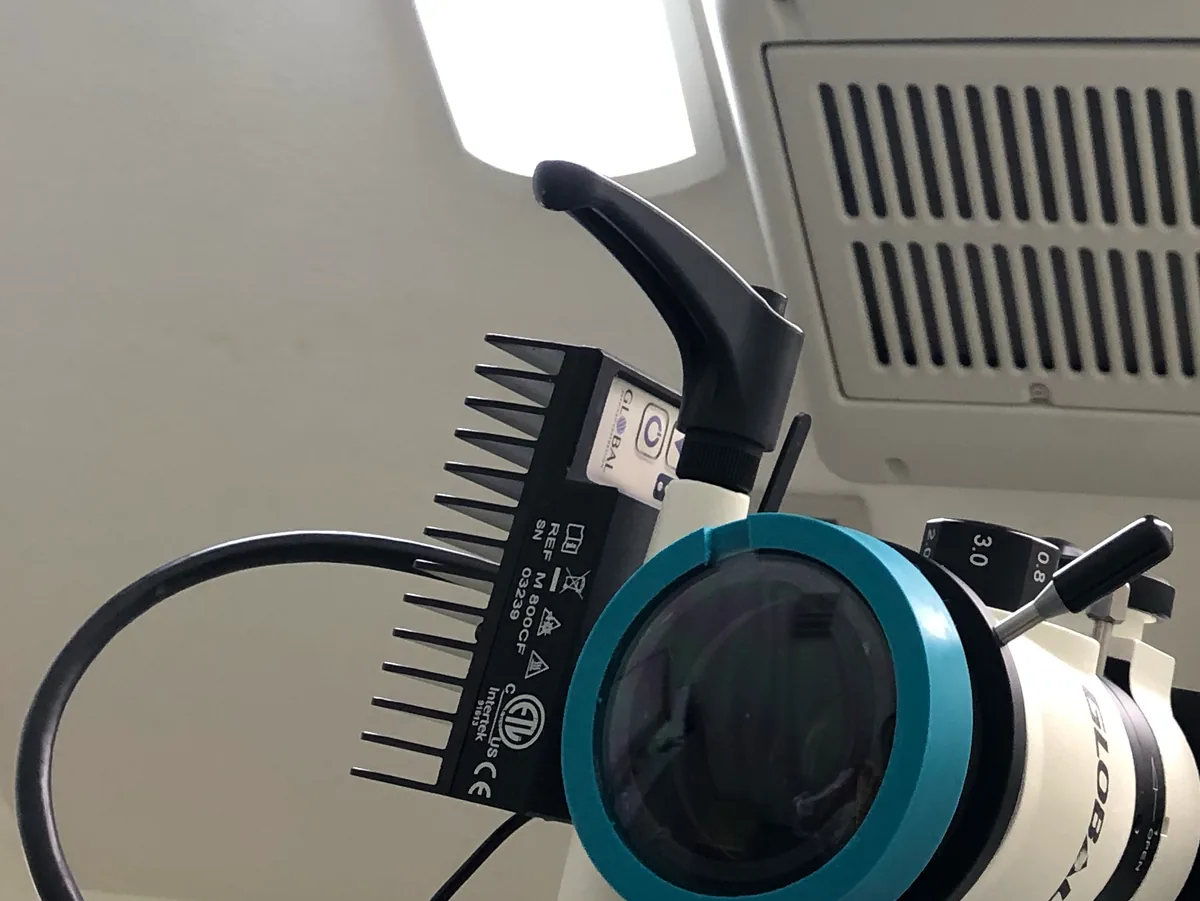
About the technology we use → Dental operating microscope
How we carry out root canal treatment
- ①
Examine the condition
We examine whether there is infection inside the tooth, whether there are cracks, and what shape the root canals have.
Even with similar problems, the treatment needed differs depending on the condition of the tooth.
- ②
Look at the root tip
We magnify the root canal with the microscope and illuminate it to check the inside.
While looking at the condition all the way to the root tip, we consider the treatment that tooth needs.
- ③
Clean and disinfect
We clean and disinfect the space that held the pulp.
We treat the inside of the tooth while checking the infection and the condition of the root canals.
- ④
Seal
After cleaning and disinfecting, we seal the pulp cavity without gaps.
The steps from cleaning to sealing are the core procedures of root canal treatment.
- ⑤
Make the foundation
After root canal treatment, we make a foundation (core) to support the crown.
In teeth whose roots point in different directions, we make the foundation in separate parts. This is called a split post core.
This is so that the foundation can be inserted into both the front root (mesial root) and the back root (distal root), to a depth beyond the edge of the bone that supports the tooth (the alveolar crest).
At our clinic, this is a method we use routinely.
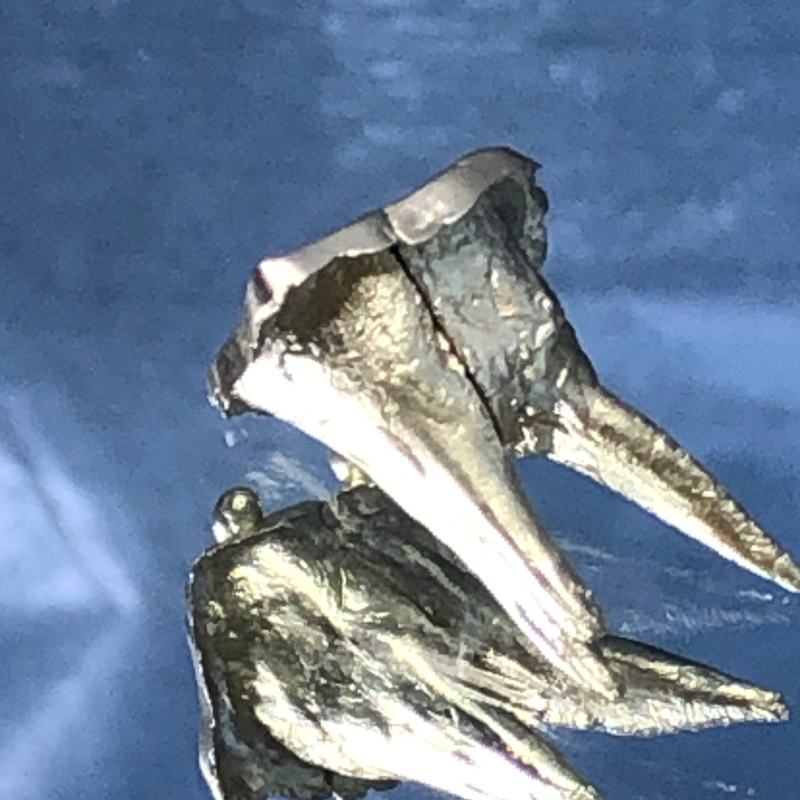
Split post core (foundation after root canal treatment; metal)
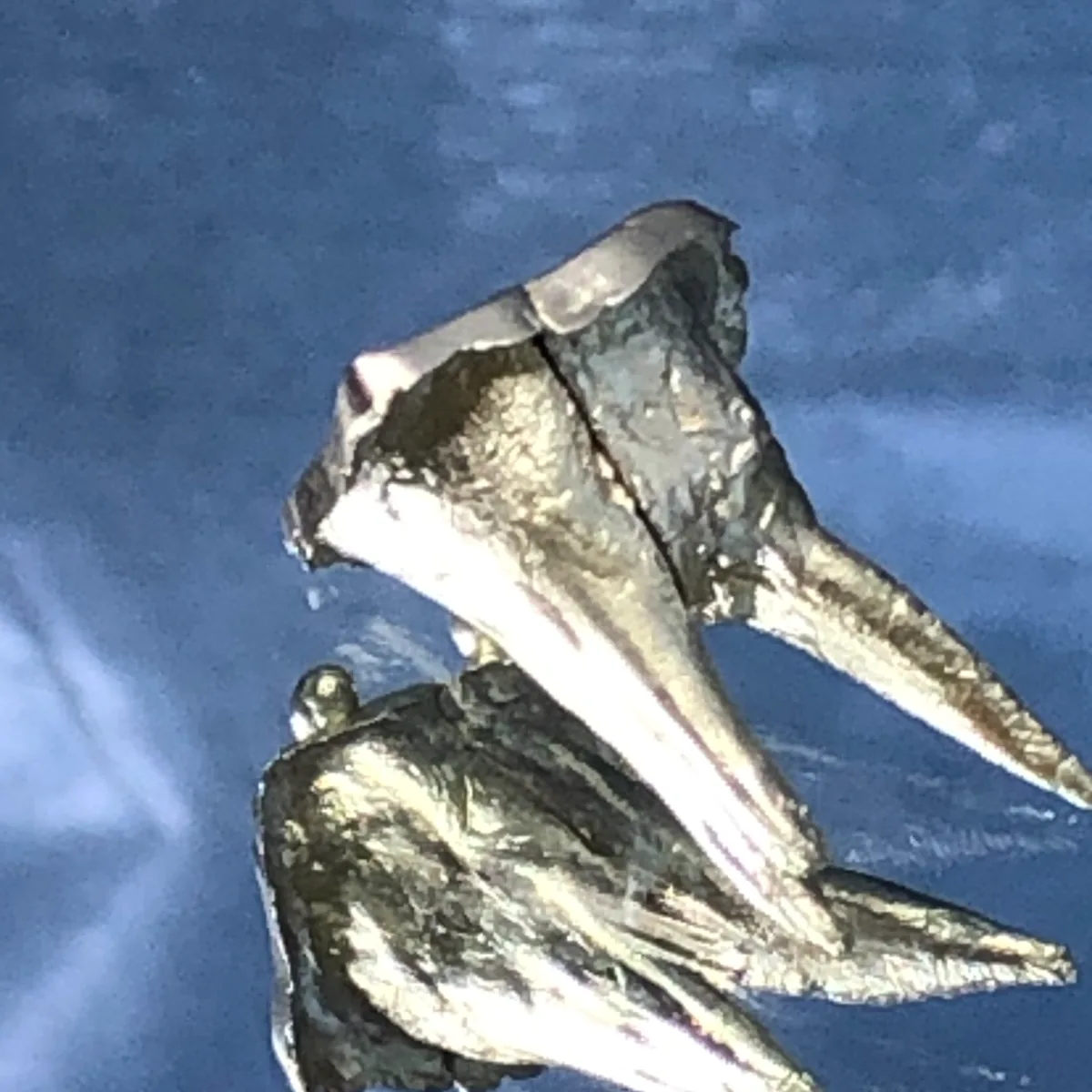
We also check the fit of the crown under magnification
After root canal treatment, a crown is needed in many cases.
A small gap between the crown and the tooth can let bacteria in.
At our clinic, we also check under magnification with the microscope whether the crown fits the tooth.
How does treatment proceed?
STEP 1First consultation
We ask about your current concerns and the treatment you have received so far.
We check the condition of your teeth, your bite and other points, then explain our current findings and the examinations needed.
The first consultation takes about 30 minutes to 1 hour.
STEP 2Examination
We check for infection and cracks, and examine the shape of the root canals and other features.
For teeth that have been retreated repeatedly, or that you have been advised to have extracted, we first check whether they are in a condition to be kept.
STEP 3Explaining the treatment plan
Based on the examination and diagnosis, we explain the possible treatment options, with their costs, duration and number of visits.
We give you the treatment plan and estimate in writing.
STEP 4Root canal treatment
We clean and disinfect while checking inside the root with the microscope.
We then seal the space that held the pulp.
STEP 5Foundation and crown
Once root canal treatment is complete, we make a foundation in the tooth and then fabricate the crown.
In teeth whose roots point in different directions, we make the foundation in separate parts (split post core).
STEP 6After treatment
If retreatment or other care becomes necessary as things progress, we examine the condition at that point and consider how to proceed.
Treatment duration
Duration of root canal treatment
2–6 weeks
as a general guide
Number of visits
2–4
as a general guide
This is a guide for root canal treatment of a single tooth only.
Including the crown, the guide is 1–3 months of treatment and 4–7 visits.
The duration and number of visits vary with the condition of the tooth and the procedures needed.
After examination and diagnosis, we explain them in line with your treatment plan.
Treatment period, number of visits, fees and risks → Fee table
Sometimes a tooth cannot be kept
At our clinic, we consider ways to keep the tooth wherever possible.
However, if the tooth cannot be kept, for example because of a root fracture, we discuss the treatment approach with you again based on the examination results.
The outlook afterwards differs depending on the shape of the root canals, cracks and the state of infection.
After treatment, retreatment may become necessary, or the tooth may not be able to be kept and may need to be extracted.
Treatment results vary from person to person.
Consultations about teeth for which extraction has been recommended, or that have had root canal treatment repeatedly, are also accepted as part of the first consultation.
We listen to your wish to keep the tooth and consider the treatment methods possible for that tooth.
Risks and points to note
Pain may occur after root canal treatment.
Reinfection may also occur after treatment, as may root fracture, in which the root of the tooth splits.
Depending on the condition, retreatment or extraction may become necessary.
The condition after treatment is not determined by the tooth alone.
It can be affected by changes in the general and oral environment, such as diabetes or stress, by smoking and drinking, and by deterioration over time.
The shape of the root canals, cracks and the state of infection differ from person to person.
Even when the same method is used, the outlook and results of treatment are not the same for everyone.
We explain the treatment and the points to note, and proceed while confirming them with you.
Technologies used in this treatment
These are the technologies we use in root canal treatment.
Frequently asked questions
- What does root canal treatment involve?
It involves cleaning and disinfecting the space inside the tooth that held the pulp (the nerve of the tooth), and then sealing that space without gaps.
It is carried out when infection or inflammation has developed inside the tooth, and aims to eliminate the inflammation around the root tip.
- What is microscopic endodontics?
It is root canal treatment carried out while magnifying the root canals and the apical foramen with a microscope and illuminating them to secure a clear field of view.
We carry out procedures while checking the complex shape of the root canals, cracks, apical lateral canals and so on.
- Why does my tooth still not feel right after root canal treatment?
Problems after treatment may be related to remaining infection, the complex shape of the root canals, cracks in the tooth and other factors.
We check the current condition through examination and consider how to proceed, including retreatment.
- Can I consult you about a tooth I have been advised to have extracted?
We take such enquiries at the first consultation and check the condition of the tooth.
We look into it on the basis of keeping the tooth wherever possible, but in some cases, such as a root fracture, the tooth cannot be kept.
- Do I need a crown after root canal treatment?
After root canal treatment, a crown is needed in many cases.
Before that, we make a foundation. In teeth whose roots point in different directions, we make the foundation in separate parts (split post core).
- About how many visits will I need?
For root canal treatment of a single tooth only, the guide is 2–6 weeks and 2–4 visits.
Including the crown, the guide is 1–3 months and 4–7 visits.
It varies with the condition of the tooth and the procedures needed.
Start by understanding your condition, not with treatment
Whether you have had root canal treatment repeatedly or have been advised to have a tooth extracted, you do not need to decide on a treatment method from the outset.
A first visit at our clinic begins with checking the current condition of your teeth and bite, and explaining what we can tell at this stage and what further examinations are needed.
Is there infection inside the tooth?
Are there any cracks in the tooth?
What shape are the root canals?
We check each of these one by one and consider whether there is a way to keep the tooth.
After examination and diagnosis, we explain the treatment options, with their costs, duration and number of visits.
Once you have reviewed these details, you can consider whether to go ahead with treatment.
Related topics
- Preserving your teeth (our policy of avoiding extraction wherever possible)
- Thorough diagnosis before treatment (14 examination items)
- Comprehensive treatment
- Aesthetic dentistry (crowns)
- About the director
Consultations and enquiries
Gibakai Medical Corporation
Yoshimi Dental Clinic
Square 2, Room 302 (third floor)
1-29-1 Tsukushino, Machida,
Tokyo 194-0001, Japan
TEL 042-795-1359 FAX 042-795-1398
Clinic days: Mon · Tue · Thu · Fri
10:00–13:00 / 14:30–18:00
A first visit begins with a first consultation (a private, non-insured service; 30 minutes to 1 hour) for examination and diagnosis. Questions about a diagnosis you received elsewhere are also covered within it.
In an emergency, such as being unable to chew or having severe symptoms, please call us on 042-795-1359 to discuss it.