What is heart rate variability?
Heart rate variability (HRV) refers to the slight fluctuations in the interval from one heartbeat to the next.
It is examined by determining each interval between heartbeats (the R-R interval) from an electrocardiogram (ECG).
The interval between heartbeats is not always the same.
These fluctuations are said to involve the activity of the sympathetic and parasympathetic nerves, which are autonomic nerves, and in research they are used as a guide to autonomic nervous activity.
Among our examination items, this corresponds to "autonomic reflex testing by heart rate variability".
We use heart rate variability in research investigating the relationship between occlusion and autonomic nervous function.
Heart rate variability is one method of recording responses occurring in the body.
Its values alone are not used to judge the cause of symptoms or the effect of treatment.
How heart rate variability works
Based on the study reported in the 2026 paper, we describe the process from recording to analysis in four steps.
- Electrodes are attached to the chest and an electrocardiogram is recorded. In our research, we used a wireless recording device (a telemetry system) that can record the electrocardiogram and the electromyogram at the same time.
- Each heartbeat is picked out from the ECG waveform, and the intervals between heartbeats (R-R intervals) are lined up in sequence.
- The fluctuations in the intervals are separated into fast fluctuations and slow fluctuations (an analysis that separates them by frequency).
- The magnitudes of the fast-fluctuation component (HF) and the slow-fluctuation component (LF), and the value of LF divided by HF (LF/HF), are calculated.
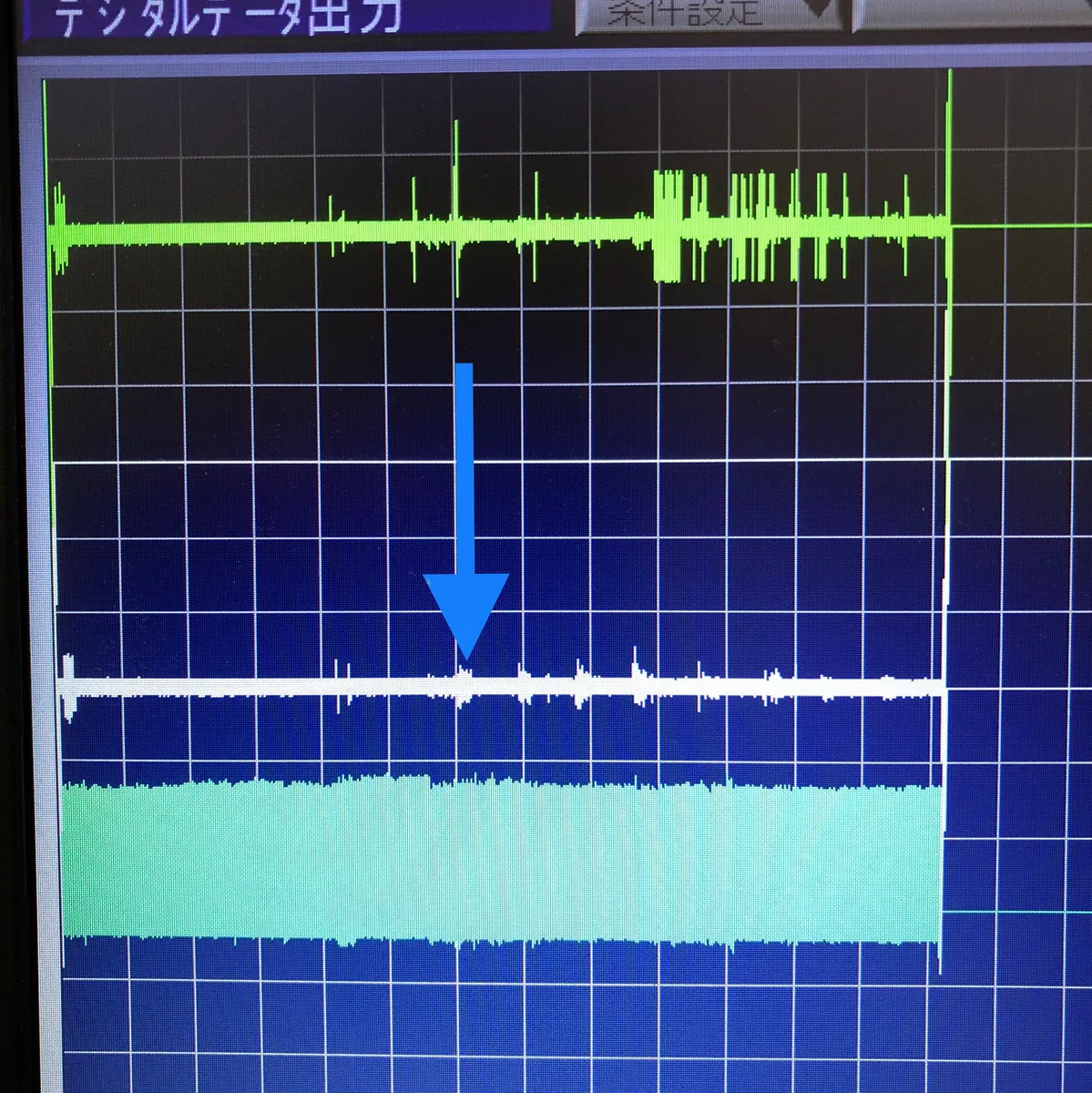
For the analysis, we use a program written for the research by a co-researcher (MATLAB).
In the 2026 study, each value was used as follows.
| Value (speed of fluctuation) | How it was used in the research |
|---|---|
| HF (fast fluctuations of 0.15–0.4 Hz) | Index of parasympathetic activity |
| LF (slow fluctuations of 0.04–0.15 Hz) | A component that reflects both sympathetic and parasympathetic activity |
| LF/HF (LF divided by HF) | Index of sympathetic activity |
Why we measure heart rate variability
To record responses while the body is moving
When a person makes tooth-grinding movements, the head and jaw move.
Because heart rate variability is less susceptible to disturbance of the recording by such movement, we chose it in our research as the method for looking at responses during tooth grinding.
To combine methods that differ in when and what they record
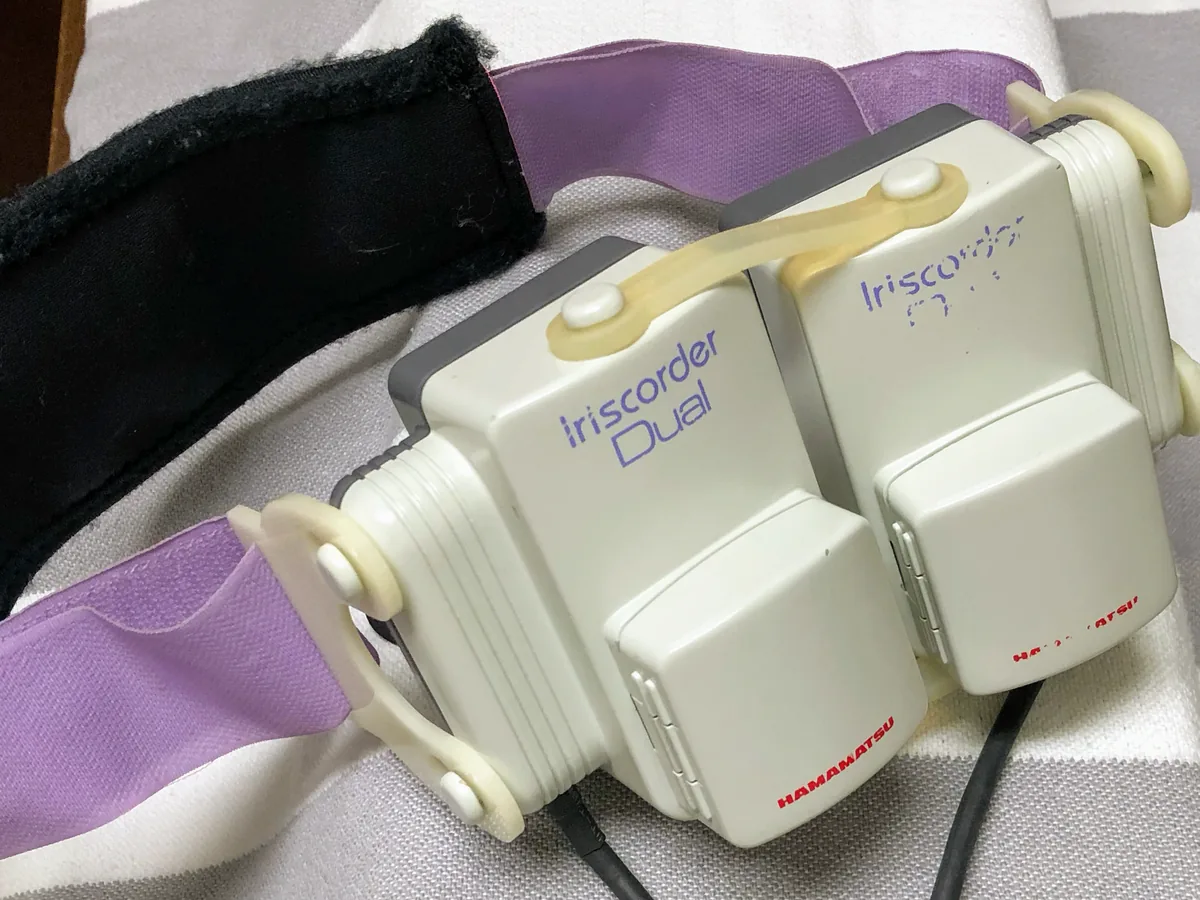
In the same study, we recorded the period during tooth grinding with heart rate variability, and the period immediately after tooth grinding with the pupillary light reflex.
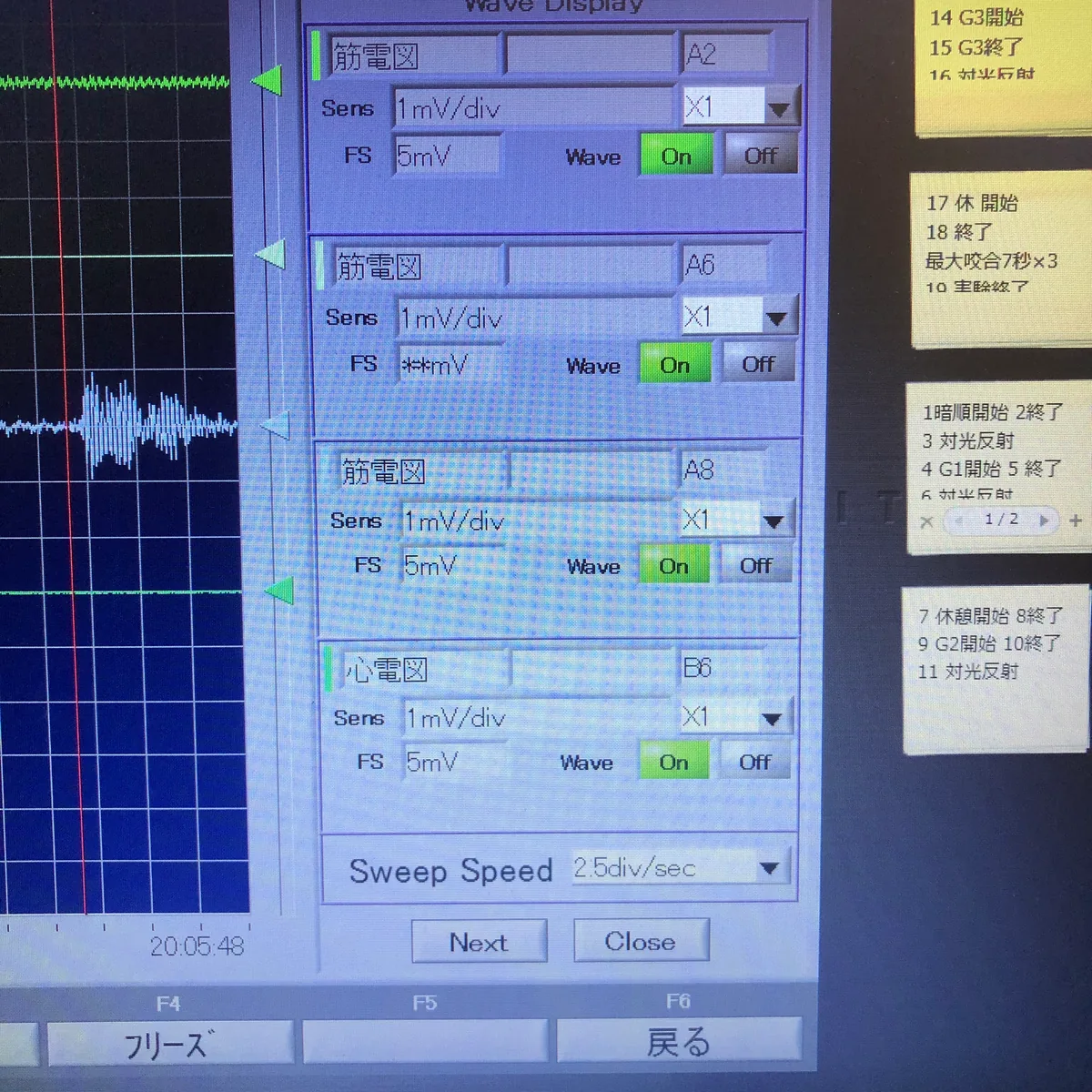
The activity of the chewing muscles was recorded with electromyography.
Each differs in when and what it records.
The director considers several recordings together, rather than a single value alone.
To examine responses as numbers and waveforms
The director has been studying the relationship between occlusion and autonomic responses in the form of numbers and waveforms.
He currently analyses autonomic responses from the pupillary light reflex and heart rate variability in a laboratory at Meiji University.
In practice at our clinic
Recording in research
In the study reported in the 2026 paper, electrocardiograms were recorded for 17 healthy adult participants in the following order.
- The participant sits on a chair in a dark, quiet room, and ECG electrodes are attached to the chest.
- The participant stays quietly like this for 20 minutes. The heart rate variability during the last 300 seconds of this period is used as the baseline for comparison.
- A removable metal appliance (metal overlay) is fitted on the teeth to change the occlusal condition temporarily.
- The participant makes tooth-grinding movements, moving the lower jaw from side to side, for 30 seconds, and the ECG during this time is recorded.
- The appliance is changed, and the same recording is made under the other occlusal condition.
In the study reported in the 2018 paper, 11 healthy men were recorded during sleep in a sleep laboratory.
Besides the electrocardiogram, the recording system included electromyography, electroencephalography, an accelerometer and an infrared camera.
Recording in clinical practice
In clinical practice, we may record heart rate variability for patients for whom we judge it necessary in detailed examinations for temporomandibular disorders (TMD).
It is not an examination we carry out for everyone; we choose it according to symptoms and condition.
Where needed, we combine it with methods that record different things, such as the pupillary light reflex and electromyography.
Examination duration, number of visits and fees → Fees
What heart rate variability can and cannot tell us
What it can tell us
- The interval from one heartbeat to the next (R-R interval)
- How that interval fluctuates over time
- The magnitudes of the fast (HF) and slow (LF) components of the fluctuations, and LF/HF
- Under defined conditions, how the recording during tooth grinding differs from the resting baseline
What it cannot tell us, and how we compensate
| What it cannot tell us | How we compensate |
|---|---|
| Determining accurately, from LF/HF alone, the relationship between sympathetic and parasympathetic activity | We do not judge from a single value; we look at it together with other recordings such as the pupillary light reflex |
| How to compare recordings made under different conditions, such as recording duration, age and sex | In our research, comparisons were made using the same person's resting recording (the last 300 seconds) as the baseline |
| Activity of the chewing muscles | Electromyography |
| Jaw joint movement | Cadiax |
| Why symptoms such as headaches, stiff shoulders and difficulty sleeping occur | We do not determine this from heart rate variability values. In some cases, assessment by a physician may be helpful |
In the 2026 study, LF/HF was used as an index of sympathetic activity.
However, there is debate among researchers about whether LF/HF accurately represents the relationship between sympathetic and parasympathetic activity.
What the paper recorded were the responses when the occlusal condition was changed temporarily with an appliance.
These do not show a relationship with occlusal conditions that have persisted for a long time, and further research is considered necessary.
The associations examined in research need to be considered separately from the reasons each person's symptoms occur and from changes brought about by treatment.
Heart rate variability values alone cannot link symptoms to the bite.
Frequently asked questions
- Is heart rate variability the same as heart rate?
It is not the same.
Heart rate is the number of heartbeats in one minute, whereas heart rate variability looks at how the interval from one heartbeat to the next fluctuates.
- What are HF, LF and LF/HF?
HF and LF are components obtained by separating the fluctuations in the interval between heartbeats by speed (frequency).
LF/HF is the value of LF divided by HF.
In the 2026 study, HF was used as an index of parasympathetic activity and LF/HF as an index of sympathetic activity.
- Does heart rate variability alone show everything about the state of the autonomic nervous system?
The overall state of the autonomic nervous system cannot be determined from a single value alone.
In particular, because the interpretation of LF/HF is debated, we look at it together with the measurement conditions and other recordings.
- Can it be recorded during tooth grinding?
In the 2026 study, the ECG was recorded while participants made tooth-grinding movements.
Heart rate variability was chosen because it is less susceptible to disturbance of the recording by movement of the head and jaw.
- Is it an examination that every patient has?
No.
We check symptoms and condition, and choose the examinations needed.
Related technologies and treatments
- Pupillary light reflex (Iriscorder Dual)
- Electromyography (EMG)
- Cadiax
- Metal overlay
- All the technologies we use
- Temporomandibular disorders & orthodontic treatment that avoids extractions where possible: headaches, stiff shoulders, tinnitus and difficulty sleeping
- Occlusion and autonomic nervous function
- Research, publications and conferences
Sources we referred to
For the general explanation of heart rate variability, we referred to the following published sources. What we describe about our own methods is based on the director's posts, papers and explanations.
- Shaffer F, Ginsberg JP. An Overview of Heart Rate Variability Metrics and Norms. Front Public Health. 2017;5:258
- Billman GE. The LF/HF ratio does not accurately measure cardiac sympatho-vagal balance. Front Physiol. 2013;4:26
- Task Force of the European Society of Cardiology and the North American Society of Pacing and Electrophysiology. Heart rate variability: standards of measurement, physiological interpretation and clinical use. Circulation. 1996;93(5):1043-1065
- Yoshimi H, Suzuki T, Ono Y. Autonomic Responses to Tooth Grinding under Different Dental Occlusal Conditions. Advanced Biomedical Engineering. 2026;15:36-45
- Nukazawa S, Yoshimi H, Sato S. Autonomic nervous activities associated with bruxism events during sleep. CRANIO. 2018;36(2):106-112
Consultations and enquiries
Gibakai Medical Corporation
Yoshimi Dental Clinic
Square 2, Room 302 (third floor)
1-29-1 Tsukushino, Machida,
Tokyo 194-0001, Japan
TEL 042-795-1359 FAX 042-795-1398
Clinic days: Mon · Tue · Thu · Fri
10:00–13:00 / 14:30–18:00
A first visit begins with a first consultation (a private, non-insured service; 30 minutes to 1 hour) for examination and diagnosis. Questions about a diagnosis you received elsewhere are also covered within it.
In an emergency, such as being unable to chew or having severe symptoms, please call us on 042-795-1359 to discuss it.