What is a split post core?
A split post core is a foundation (core) placed in a tooth after root canal treatment, made in separate parts for roots that point in different directions.
At our clinic, we use split post cores as the foundation for teeth whose roots point in different directions.
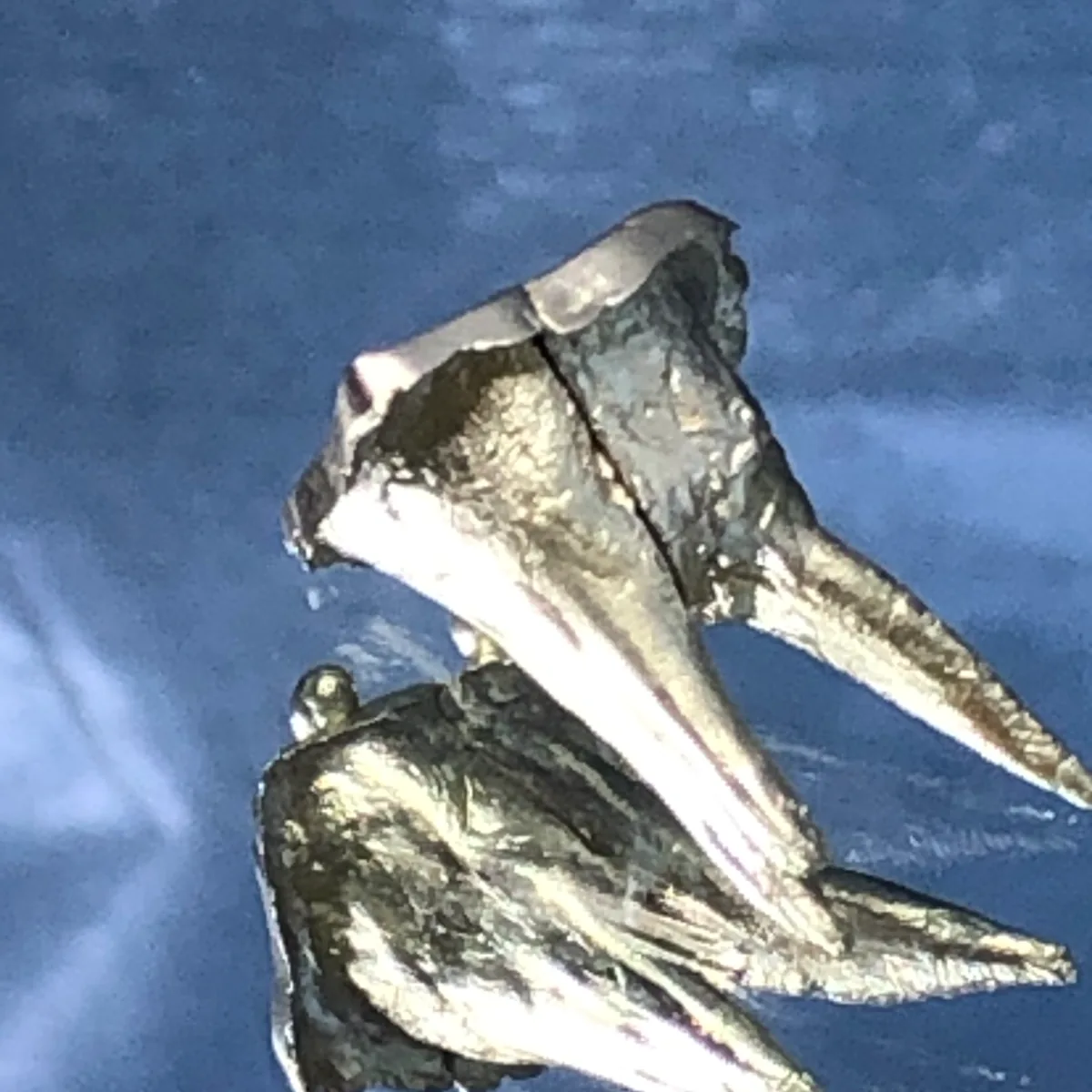
When a tooth whose nerve has been removed has lost a large part of its structure, a foundation is anchored using the inside of the root and other parts, and shaped so that it can support a crown.
This procedure is generally called "post and core build-up".
Post and core build-up is a procedure carried out on the premise that a crown or similar restoration will be placed on top of it.
Within the foundation, the leg that goes into the root is sometimes called the "post", and the part above it that supports the crown the "core".
How a split post core works
When the roots point in different directions, a single piece will not go in
Some back teeth have two or more roots.
In teeth whose roots point in very different directions, a foundation with two legs made as a single piece may not be able to go into the roots.
This is because each leg has a different direction for insertion and removal (path of insertion).
In a study of 117 lower first molars, the teeth in which the three root canals (the narrow canals inside the roots) could straightforwardly be prepared parallel to one another made up 2.7–6.8% of the total.
Making a foundation divided into two parts is given as one way of dealing with the other teeth.
Making it in parts and assembling it in the mouth
A divided foundation is generally approached as follows.
- Checking the direction of each root: the direction from which a leg will go into each root is considered.
- Making it in parts: the parts with different paths of insertion are made as separate components.
- Inserting and assembling in order: the components are placed in the roots one at a time and made into a single foundation in the mouth.
- Making the crown: a crown is made on the assembled foundation.
Several ways of combining the parts have been reported.
For example, the components may be bonded in order and the whole held together by the crown on top, or the leg of one part may be passed through a hole made in the other part and inserted.
Why we use split post cores
To place a leg in each of the roots that point in different directions
In teeth whose roots point in very different directions, it may not be possible to place legs in all the roots from a single direction.
At our clinic, we make the foundation separately for each root so that a leg can be placed in both the front root (mesial root) and the back root (distal root).
To reach a depth beyond the edge of the bone
The director believes that the reinforcement in each root is only meaningful as a foundation if it reaches a depth beyond the edge of the bone that supports the tooth (the alveolar crest).
In general, too, placing the tip of the leg in the root deeper than the edge of the bone that supports the tooth is given as one of the principles.
Because the foundation supports the crown
The foundation is the part that supports the crown.
It has long been pointed out that a foundation that is not properly made can easily become a cause of the crown coming off or the root fracturing.
At our clinic, we treat split post cores not as a special procedure but as a method we use routinely.
In practice at our clinic
Within the course of root canal treatment
A split post core is made after root canal treatment is complete and before the crown is made.
- Root canal treatment: while viewing the inside of the root magnified with the dental operating microscope, we check the length of the root with an electronic apex locator, then clean, disinfect and seal it.
- Making the foundation: in teeth whose roots point in different directions, the foundation is made separately for each root (split post core).
- Crown: a crown is made on the foundation. Whether the crown fits the tooth is also checked under magnification with the microscope.
- Following up: after treatment, too, we check the condition of the tooth and the crown.
How we carry out root canal treatment is described on the root canal treatment page.
Treatment duration, number of visits, fees and risks → Fees
What a split post core can and cannot do
What a split post core can do
- Place a leg of the foundation in each of the roots that point in different directions
- Allow the legs to be inserted from a different direction for each root
- Create, with the assembled foundation, a form that supports the crown
What it cannot do, and how we compensate
| What it cannot do | How we compensate |
|---|---|
| Checking the shape inside the root and cracks in the tooth | During the root canal treatment before the foundation is made, treating while viewing under magnification with the dental operating microscope |
| Knowing the length of the root to be treated | Checking with an electronic apex locator during root canal treatment |
| Checking whether the crown fits the tooth | Checking under magnification with the dental operating microscope |
| Restoring a fractured root (root fracture) to its original state | Discussing the treatment approach with you again based on the examination results (root canal treatment page) |
A case report describing split cast posts and cores lists as drawbacks that the work is time-consuming and technically difficult, and that extra tooth structure may be removed.
It is also said that having legs inside the roots can make it difficult to redo root canal treatment later.
A split post core does not guarantee that the root will not fracture or that infection will not recur.
The main risks of root canal treatment include pain after treatment, reinfection and root fracture.
Frequently asked questions
- What is a core (foundation)?
It is a foundation placed in a tooth after root canal treatment to support the crown.
When a large part of the tooth is missing, it is anchored using the inside of the root and other parts, and shaped so that a crown can be placed on it.
- For which teeth do you use a split post core?
Teeth that have two or more roots pointing in different directions.
We make it in separate parts so that a leg of the foundation can be placed in both the front root and the back root.
- Why do the legs go in to a depth beyond the edge of the bone?
The director believes that the reinforcement is only meaningful as a foundation if it reaches a depth beyond the edge of the bone.
In general, too, placing the tip of the leg deeper than the edge of the bone that supports the tooth is regarded as one of the principles.
- Does a split post core make the root less likely to fracture?
A split post core is a method for placing a leg of the foundation in each of the roots that point in different directions.
It does not guarantee that the root will not fracture.
The main risks of root canal treatment include pain after treatment, reinfection and root fracture.
- Can root canal treatment be redone if a split post core is in place?
In general, it is said that having legs inside the roots can make redoing root canal treatment difficult.
If it needs to be redone, we examine the condition at that time and consider how to proceed.
Related technologies and treatments
Sources we referred to
For the general explanations (the meaning of post and core build-up, how a foundation made in parts works, and the direction of the root canals in lower back teeth), we referred to the following published sources. What we describe about our own methods is based on the director's posts and the root canal treatment page.
- Japan Prosthodontic Society, "[Basic principles of post and core build-up as pretreatment of non-vital anterior teeth]" (in Japanese; PDF)
- Bansal R, et al. Management of Grossly Decayed Mandibular Molar with Different Designs of Split Cast Post and Core. Case Rep Dent. 2016;2016:2976941
- Ozaki M, et al. A study on the preparation for dowel-cores. Part 1: [angles formed by the root canals and pulp chamber of the mandibular first molar]. Nihon Hotetsu Shika Gakkai Zasshi. 1987;31(5):1195-1201 (in Japanese)
Consultations and enquiries
Gibakai Medical Corporation
Yoshimi Dental Clinic
Square 2, Room 302 (third floor)
1-29-1 Tsukushino, Machida,
Tokyo 194-0001, Japan
TEL 042-795-1359 FAX 042-795-1398
Clinic days: Mon · Tue · Thu · Fri
10:00–13:00 / 14:30–18:00
A first visit begins with a first consultation (a private, non-insured service; 30 minutes to 1 hour) for examination and diagnosis. Questions about a diagnosis you received elsewhere are also covered within it.
In an emergency, such as being unable to chew or having severe symptoms, please call us on 042-795-1359 to discuss it.