What are bacterial and saliva tests?
A bacterial test checks the acid-producing bacteria in the mouth by culturing them.
A saliva test examines how much saliva is produced and the ability of saliva to neutralize acid.
Among our clinic's examination items, they correspond to the following three.
- Bacterial testing (Streptococcus mutans, Lactobacillus)
- Salivary acid-neutralizing capacity test (buffering capacity test)
- Autonomic activity testing by salivary flow rate measurement
How bacterial and saliva tests work
How tooth decay develops, and what the tests look at
In general, tooth decay is thought to develop when time is added to the overlap of three factors: the teeth (and saliva), bacteria and food (sugar).
Among the bacteria in the mouth, Streptococcus mutans and lactobacilli produce acid from sugar.
Tooth decay develops as this acid dissolves the teeth.
Of these factors, the bacterial test looks at the "bacteria", examining how many acid-producing bacteria there are.
The saliva test looks at the saliva within "the teeth (and saliva)", examining how much saliva is produced and its ability to neutralize acid.
General methods for each test
We have summarized the general methods based on university lecture materials.
This does not describe the test kits or procedures used at our clinic.
| Test (what it examines) | General method |
|---|---|
| Bacterial test (the amount of acid-producing bacteria) | Saliva is dripped onto a culture medium and incubated, and the number of clusters of bacteria (colonies) is checked |
| Salivary flow rate (how much saliva is produced) | Flavourless gum is chewed for 3–5 minutes, and the amount of saliva produced is measured |
| Salivary buffering capacity (the ability of saliva to neutralize acid) | Saliva is dripped onto a test strip soaked in acid, and the way the colour changes is checked |
Culturing bacteria to check them by eye
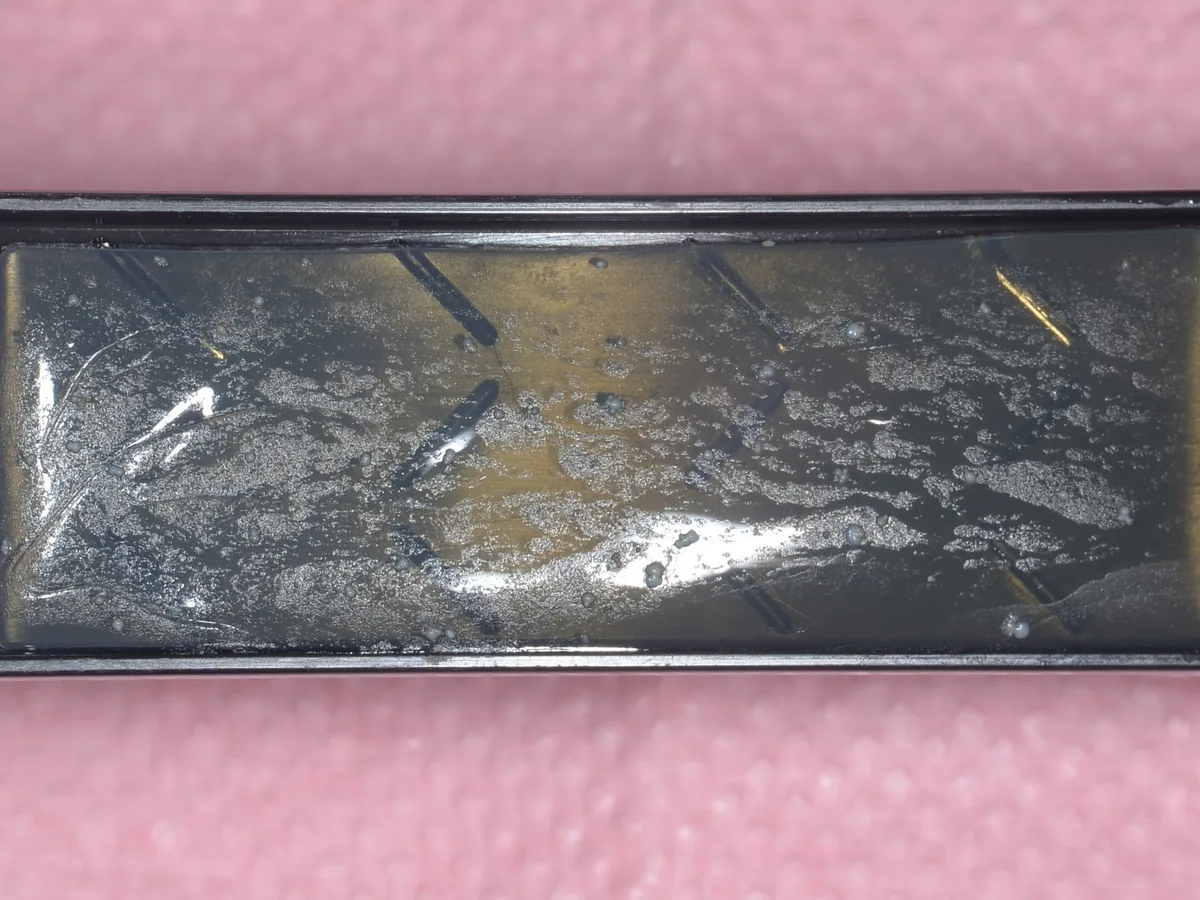
Bacterial test (culture)
Bacteria in the mouth cannot be seen by eye as they are.
When bacteria are grown on a culture medium (cultured), they multiply and form clusters (colonies) that become visible to the eye.
The photo shows Streptococcus mutans and lactobacilli that were actually cultured.
Why we carry out bacterial and saliva tests
To check the state of acid-producing bacteria before starting treatment
The director believes that when starting treatment, it is important to check the state of acid-producing bacteria and to keep them under control.
To look at both bacteria and biting forces
The director believes it is important to look at problems of the teeth and gums from the standpoint of both bacteria and biting forces.
In practice at our clinic
In which treatments, and at which stage
- Orthodontics: a bacterial test is carried out in the examinations before orthodontic treatment begins (the orthodontic work-up).
- Temporomandibular disorders (TMD): in the "Course of treatment" part of the TMD treatment guide supervised by the director, the bacterial test and a salivary function test are included in the examination stage.
About salivary flow rate
Among our examination items, we list the measurement of salivary flow rate as one of the tests of autonomic nervous activity.
Other measurements that examine autonomic nervous function include the pupillary light reflex and heart rate variability.
What the director considers important (from the director's posts)
The director believes the following are important for controlling acid-producing bacteria.
- Correct brushing
- Keeping the time during which the tooth surface is dissolved by acid (demineralization time) as short as possible, and allowing a sufficiently long time for the dissolved surface to recover (remineralization time)
- Not snacking again and again between main meals
- Regular eating habits
The director regards the time between meals as the period in which the tooth surface dissolved during meals recovers (remineralizes).
Examination duration, number of visits and fees → Fees
What bacterial and saliva testing can and cannot tell us
What it can tell us
- An indication of the amount of acid-producing bacteria (Streptococcus mutans and lactobacilli) in saliva
- How much saliva is produced
- An indication of the ability of saliva to neutralize acid (buffering capacity)
What it cannot tell us, and how we compensate
| What it cannot tell us | How we compensate |
|---|---|
| Which teeth currently have decay | Examination of the mouth, and pre-treatment intraoral photographic records (examination items) |
| The condition of the gums (periodontal pocket depth, plaque left after brushing) | Measurement of periodontal pocket depth (probing depth) and the plaque control record (examination items) |
| Problems with biting forces, such as tooth grinding during sleep | Recording tooth contact during sleep (BruxChecker) |
What the tests show is an indication of the amount of bacteria and of how saliva is working at the time of the test.
The lecture materials describe these tests as tests for predicting the likelihood that tooth decay will develop or progress in the future.
The test results alone do not determine whether tooth decay will develop.
Frequently asked questions
- What does the bacterial test examine?
It checks the acid-producing bacteria in the mouth (Streptococcus mutans and lactobacilli) by culturing them.
Tooth decay develops when the acid these bacteria produce dissolves the teeth.
- What can the saliva test tell us?
It gives an indication of how much saliva is produced and of the ability of saliva to neutralize acid (buffering capacity).
Among our examination items, we also list the measurement of salivary flow rate as one of the tests of autonomic nervous activity.
- In which treatments are these tests carried out?
At our clinic, the bacterial test is included in the examinations before orthodontic treatment begins.
For TMD, the "Course of treatment" part of the guide supervised by the director lists the bacterial test and a salivary function test in the examination stage.
- Does having the tests mean you will not get tooth decay?
The tests are for checking the state of the bacteria and saliva.
They do not guarantee that tooth decay will be prevented.
The director believes that correct brushing and regular eating habits, without snacking again and again, are important.
Related technologies and treatments
- Pupillary light reflex (Iriscorder Dual)
- Heart rate variability (HRV)
- BruxChecker
- All the technologies we use
- Orthodontic treatment that avoids extractions where possible
- Temporomandibular disorders
- Periodontal disease
- Thorough diagnosis before treatment (14 examination items)
Sources we referred to
For the general explanation of how the tests work, we referred to the following published source. What we write about our clinic is based on the director's posts and the explanations on our website.
Consultations and enquiries
Gibakai Medical Corporation
Yoshimi Dental Clinic
Square 2, Room 302 (third floor)
1-29-1 Tsukushino, Machida,
Tokyo 194-0001, Japan
TEL 042-795-1359 FAX 042-795-1398
Clinic days: Mon · Tue · Thu · Fri
10:00–13:00 / 14:30–18:00
A first visit begins with a first consultation (a private, non-insured service; 30 minutes to 1 hour) for examination and diagnosis. Questions about a diagnosis you received elsewhere are also covered within it.
In an emergency, such as being unable to chew or having severe symptoms, please call us on 042-795-1359 to discuss it.